 Whatcom County
 What Nooksack Homes Are Up Against
Nooksack sits in the river valley at the edge of Whatcom County's agricultural lowlands, close enough to the foothills that winter brings real cold snaps and close enough to the water and wetlands that summer never fully dries the air out. That combination is hard on a house. Homes here deal with long stretches of damp, overcast weather, driving rain that comes in sideways off winter storms, and shade from mature trees and farm windbreaks that keeps siding and roofing from ever getting a full day of sun to dry out. Add in the humidity that settles over the river bottom most mornings, and you've got ideal conditions for moss, algae, and slow-building moisture damage that homeowners in drier parts of the state rarely have to think about.
None of this is unique to any one street in Nooksack — it's the reality across most of Whatcom County, from the farmland around the river to the neighborhoods closer to Bellingham Bay where salt-laden air off the water adds another layer of corrosion risk to fasteners, trim, and unprotected wood. Whatcom County exterior work has to be built for wet, not just painted to look nice in the sales brochure.
Where Damage Shows Up First
- North-facing walls and shaded siding sections that stay damp longest after rain
- Roof valleys, north-facing slopes, and gutter lines where moss gets a foothold
- Window sills and trim where caulking has failed and water has started tracking behind the siding
- Deck ledger boards and fastener points where wood meets the house
- Lower wall sections near grade, splash zones, and downspout discharge points
Why James Hardie Is the Only Siding We Install
We made a deliberate call to install James Hardie fiber cement siding exclusively — not vinyl, not LP SmartSide, not Cemplank or Allura, not primed spruce or cedar. That's not a marketing position, it's a maintenance and moisture-behavior position based on what actually holds up in a climate like this one.
Vinyl is inexpensive and low-maintenance in the sense that it doesn't need painting, but it's a thin plastic product that expands and contracts with temperature swings, can crack in a hard freeze, and fades over time in a way that can't be touched up — you replace panels, not repaint them. In a county that sees both sharp winter cold snaps and long wet stretches, that combination of brittleness and fade isn't a trade-off we're willing to put on a customer's home.
LP SmartSide and other engineered wood products are wood-based at their core — treated and coated, but still wood. Any gap in that coating, any spot where a cut edge or fastener hole isn't sealed correctly, gives moisture a path into the substrate. In a climate where siding rarely gets a full dry-out period, that's the exact failure mode we see most often on wood-based products around here: swelling, delamination, and rot starting from the inside out, often not visible until it's advanced.
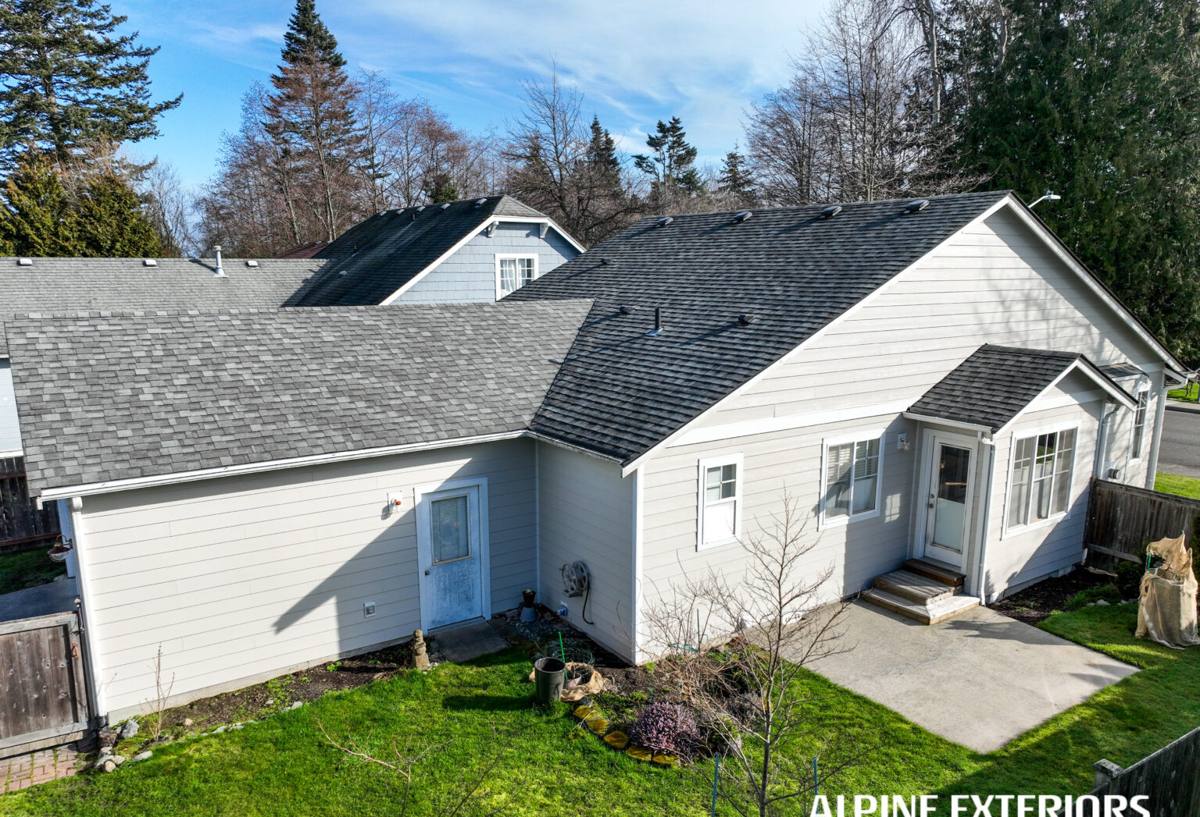
Fiber cement is cement, sand, and cellulose fiber — it doesn't rot, it doesn't feed pests, and it isn't affected by moisture the way wood-based sidings are. James Hardie backs it with a factory-applied ColorPlus finish that's baked on rather than field-painted, and their HZ5 product line is engineered specifically for the freeze-thaw cycling and moisture load of our climate zone. It costs more upfront than vinyl, and it's a heavier, more installation-sensitive product than either vinyl or engineered wood — it has to be cut, fastened, and flashed correctly to perform — but installed to spec, it's the siding we're confident standing behind on a Whatcom County home for decades.
Full Exterior Protection: Siding, Roofing, Windows, and Decks
Siding is only one piece of how a house sheds water. We work on siding, roofing, windows, and decks because those four systems overlap constantly — a roof that's shedding water wrong will rot the siding underneath it, a failed window seal will soak the wall cavity behind good siding, and a deck attached to the house without proper flashing is one of the most common sources of hidden rot we find. Treating them as one connected system, rather than four separate trades, is how problems actually get caught and fixed instead of just relocated.
Roofing
Moss and algae growth on roofs is one of the most visible signs of our climate at work, and it's not just cosmetic — moss holds moisture against shingles and shortens their life. We look at ventilation, flashing, and moss management as part of any roofing conversation, not just shingle replacement.
Windows
Failed seals and old flashing around windows are a leading cause of hidden wall damage. Replacement windows done right include correct flashing integration with the siding around them — done wrong, a new window can actually make water intrusion worse.
Decks
Ledger board attachment and flashing where a deck meets the house is a common failure point in wet climates. We build and repair decks with that connection point treated as critical, not an afterthought.
Why a Local Crew Matters
A crew that works Whatcom County regularly knows which details actually matter here versus what's fine in a drier climate. That means understanding how much overhang and flashing detail a house near tree cover or a river bottom actually needs, sequencing installation around our rain patterns instead of fighting them, and being close enough to come back for a warranty check or a quick fix without a homeowner waiting weeks for a crew to drive in from out of the area. It also means we're not guessing at county permitting requirements or local building department expectations — we deal with them regularly.
Comparing Siding Materials
| Material | Moisture Behavior in Wet Climates | Maintenance | Typical Lifespan |
|---|---|---|---|
| Vinyl | Doesn't absorb water, but can crack in cold and warp in heat; seams allow water behind panels | Low, but damaged panels must be replaced, not repaired | 20-30 years, shorter with UV fading |
| LP SmartSide / engineered wood | Wood-based substrate; vulnerable at cut edges, fasteners, and coating gaps | Moderate — coating and caulking need regular inspection | 20-30 years if coating stays intact |
| Primed spruce / cedar | Solid wood; absorbs and releases moisture constantly, prone to swelling and rot without diligent upkeep | High — repainting and sealing on a regular cycle | Highly variable, often 15-25 years |
| James Hardie fiber cement | Cement-based; doesn't rot, swell, or feed pests; factory finish resists our moisture and UV exposure | Low — occasional cleaning, caulk checks at joints | 30-50+ years with correct installation |
What Affects Your Project Cost
Every Nooksack property is a little different, but the same factors drive most siding, roofing, window, and deck quotes:
| Factor | Why It Matters |
|---|---|
| Home size and wall complexity | More corners, gables, and dormers mean more cutting, flashing, and labor time |
| Existing damage | Rotted sheathing or framing found once old siding comes off adds repair cost before new material goes on |
| Access and site conditions | Tree cover, fencing, slope, or tight lot lines affect staging and crew efficiency |
| Product line and finish | Hardie panel size, texture, and ColorPlus finish selection all shift material cost |
| Scope bundling | Combining siding with roofing, window, or deck work in one project often saves on mobilization and staging costs versus doing each separately |
Keeping Your Exterior in Good Shape Between Projects
A lot of long-term damage in this climate comes from small maintenance items that get put off. A short seasonal routine goes a long way:
- Clean gutters and downspouts before the fall rains start, and check again mid-winter
- Look at roof valleys and north-facing slopes for moss buildup at least once a year
- Walk the perimeter and check caulking around windows, doors, and trim for cracks or gaps
- Keep tree branches and shrubs trimmed back from siding to let walls dry between rains
- Check deck ledger boards and fasteners for staining or softness, especially where the deck meets the house
- Rinse siding annually to keep algae and grime from building up, especially on shaded walls
Signs It's Time to Talk to Someone
Most exterior problems are cheaper to fix early than late. Soft or spongy spots on siding or decking, paint that's bubbling or peeling in a specific area rather than evenly, persistent moss that comes back within weeks of cleaning, daylight or drafts around window frames, and dark staining below a roofline or gutter are all worth a look before they turn into a bigger repair. None of these mean the whole exterior needs replacing — sometimes it's a targeted repair — but they're worth having someone experienced take a look.
If you're in Nooksack or anywhere else in Whatcom County and want an honest read on your siding, roofing, windows, or deck, we're glad to come take a look. The estimate is free, there's no pressure, and if the answer is "you don't need to replace anything yet," we'll tell you that too.