 Whatcom County
 Exterior Work in Birchwood, Whatcom County
Birchwood sits in one of the wetter, greyer corners of Washington, and homes here show it. Between the marine air rolling in off Bellingham Bay, the long stretch of driving rain that runs from fall through spring, and the moss that seems to find a foothold on every north-facing wall, the exterior of a Birchwood home works harder than most people realize. We handle siding, roofing, windows, and decks for homeowners in this area, and we've built our approach around what actually holds up here — not just what looks good on install day.
This page is about what to expect if you're a Birchwood homeowner thinking about exterior work: what the climate does to different materials, how we handle siding specifically, and why the other trades — roofing, windows, decks — tend to fail or succeed together rather than in isolation.
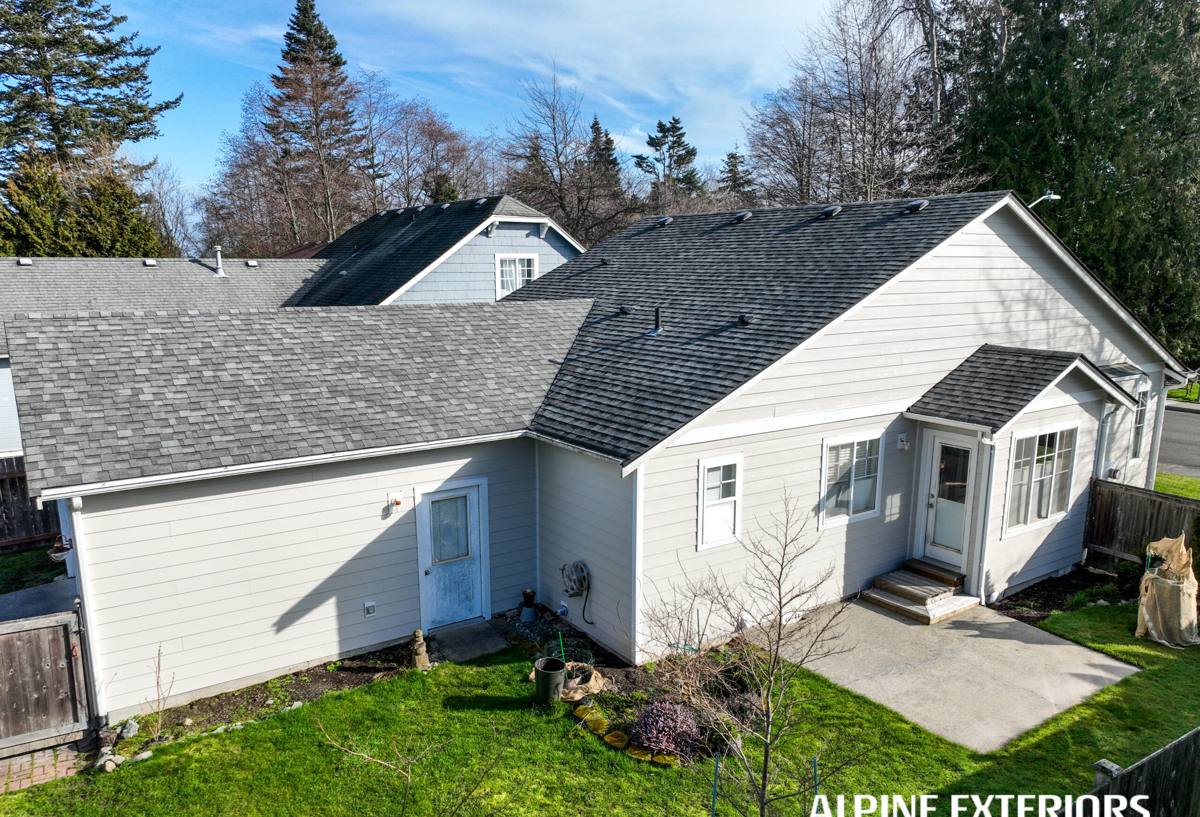
What the Whatcom County Climate Does to a House
Salt Air and Moisture
Proximity to Bellingham Bay means a steady dose of salt-laden moisture in the air, even a few miles inland. Salt air accelerates corrosion on fasteners, flashing, and any exposed metal trim, and it speeds up the breakdown of finishes that aren't rated for coastal exposure. Paint film that would last a decade in a dry inland climate can start chalking and failing years sooner out here.
Driving Rain
Whatcom County doesn't just get a lot of rain — a good portion of it comes sideways, pushed by wind off the water. That matters more than total rainfall totals suggest, because driving rain finds every gap in a wall assembly: unsealed seams, poorly lapped house wrap, undersized flashing, caulk joints that were never meant to be a primary water barrier. A siding system that's fine in a calm, straight-down rain can leak in a wind-driven storm if it wasn't installed with that in mind.
Moss and Sustained Dampness
Shaded, north- and west-facing walls in Birchwood stay damp for long stretches, especially under tree cover, which is common in this neighborhood. That sustained dampness is what lets moss and algae get a foothold on siding and roofing. It's not just cosmetic — moss holds moisture against the surface underneath it, and on materials that aren't dimensionally stable or that absorb water, that constant damp cycle is where rot and delamination start.
Why We Install Only James Hardie Fiber Cement Siding
We made a decision a long time ago to install one siding system — James Hardie fiber cement — and to say no to the rest, even when a customer specifically asks for something else. That's not a marketing position; it's a response to what we've seen hold up in this climate and what hasn't.
Fiber cement is non-combustible and dimensionally stable, meaning it doesn't swell, shrink, or cup the way wood-based products can when they take on repeated moisture cycles. James Hardie's ColorPlus factory finish is baked on under controlled conditions rather than field-applied, which matters a lot in a climate where field-applied paint has a shorter useful life to begin with. Hardie also engineers specific product lines (HZ5, for example) for regions with more moisture exposure, which is directly relevant to a place like Birchwood.
We won't install vinyl siding, LP SmartSide, Cemplank, Allura, primed spruce, or cedar. Each of those has legitimate uses and each has honest customers who like them — but each also has a real trade-off that shows up faster here than in a drier climate:
- Vinyl siding can warp or distort with heat and cold cycling, and its seams and J-channels rely heavily on correct installation to shed wind-driven rain — there's little margin for error before water gets behind it.
- LP SmartSide and similar engineered wood products are wood-based, meaning sustained moisture exposure — the kind Birchwood's shaded, damp walls see for months at a time — is their most vulnerable failure point if any edge or cut isn't fully sealed and maintained.
- Cemplank and Allura are also fiber cement, and we don't have a quality objection to the category — our decision there is about standardizing on one manufacturer's system, warranty, and factory finish rather than mixing product lines.
- Primed spruce and cedar are natural wood, which means ongoing refinishing is not optional maintenance — it's required maintenance, on a schedule that gets more demanding the wetter and shadier the site is.
None of that means those products "fail" — it means they ask more of the climate, the installer, and the homeowner's maintenance schedule than we're willing to bet a Birchwood exterior on.
Siding, Roofing, Windows, and Decks — Why We Do All Four
A house is a system, not a collection of separate products, and nowhere is that more obvious than in a wet climate. Siding failures often start at a roof-wall intersection where flashing was never tied in correctly. Window leaks often show up as siding damage six feet below the window, because water traveled down inside the wall before it ever became visible. Deck ledger connections are one of the most common rot points on older homes precisely because they penetrate the siding and, if flashed poorly, funnel water straight into the wall.
Handling all four trades means the person doing your siding is thinking about how it ties into the roof edge, how your windows are flashed into that new siding, and whether your deck ledger is doing what it should. That coordination is hard to get when four different specialty contractors each did their piece years apart without seeing the whole picture.
Roofing
In a county with this much annual rainfall, a roof's job isn't just to keep water out — it's to shed it fast enough that moisture doesn't linger at valleys, penetrations, and edges. We look at roof condition as part of any siding project, because a roof that's dumping water onto a wall or failing at the drip edge will undermine even a well-installed siding job.
Windows
Window replacement in this climate is as much about the flashing and integration with the wall assembly as it is about the window unit itself. A high-end window installed without proper head flashing and pan flashing will leak regardless of its rating.
Decks
Decks in Whatcom County take a beating from the same sustained dampness and moss growth that affects walls and roofs, plus direct weather exposure with nothing overhead. Ledger flashing, joist protection, and material choice all matter more here than in a dry climate.
Comparing Siding Options for a Birchwood Home
| Material | How It Handles Salt Air & Driving Rain | Maintenance Demand | Typical Longevity Here |
|---|---|---|---|
| James Hardie fiber cement | Non-combustible, dimensionally stable, factory finish holds up well to coastal moisture | Low — occasional wash, no refinishing on schedule | Long service life when installed to spec |
| Vinyl siding | Can distort with temperature swings; seams are a weak point in wind-driven rain | Low, but repairs are limited if panels crack or fade | Moderate; installation quality is critical |
| LP SmartSide / engineered wood | Vulnerable at cut edges and joints if moisture gets behind the surface | Moderate — edge sealing and inspection matter | Shorter if shaded/damp sites aren't well maintained |
| Cedar / primed spruce | Natural wood absorbs moisture; performs best with active upkeep | High — refinishing on a recurring schedule | Shortest without consistent maintenance |
What to Expect From a Local Crew
A crew that works Whatcom County regularly already knows which wall orientations on a house like yours tend to hold moss, which roof-wall details cause the most callbacks, and how to sequence a project around the region's rain patterns instead of getting caught mid-project by a wet week. That's a genuine advantage over a crew unfamiliar with this specific stretch of coastline and rainfall pattern.
It also means someone is reachable locally if a question comes up after the work is done — not routed through a call center for a company that installed your siding once and moved on to the next region.
What a Siding Project Looks Like
- On-site evaluation of existing siding, trim, flashing, and any visible moisture damage
- Assessment of roof-wall intersections, window flashing, and deck ledger connections that tie into the wall
- Removal of old siding and inspection of the sheathing and house wrap underneath
- Repair of any rot or moisture damage found before new siding goes on — never covering up a problem
- Installation of James Hardie fiber cement per manufacturer specification, including proper fastening, clearances, and joint treatment
- Correct flashing and sealing at all penetrations — windows, doors, vents, and roof lines
- Final walkthrough covering care and what routine maintenance actually looks like
Ongoing Care for Whatcom County Homes
Even a low-maintenance material benefits from a little attention in this climate. An annual rinse to knock back moss and algae before it takes hold, a look at caulking around windows and trim every couple of years, and keeping gutters clear so water isn't overflowing onto walls all go a long way. None of that is heavy lifting — it's the kind of upkeep that keeps a well-installed system performing the way it's supposed to for the long haul.
Get a Free Estimate
If you're a Birchwood homeowner weighing siding, roofing, window, or deck work — or just want an honest read on what your exterior is dealing with after another wet Whatcom County winter — we're happy to take a look. The estimate is free, there's no pressure, and you'll get a straight answer about what your home actually needs.