 Whatcom County
 Building a Deck That Actually Belongs in Birchwood
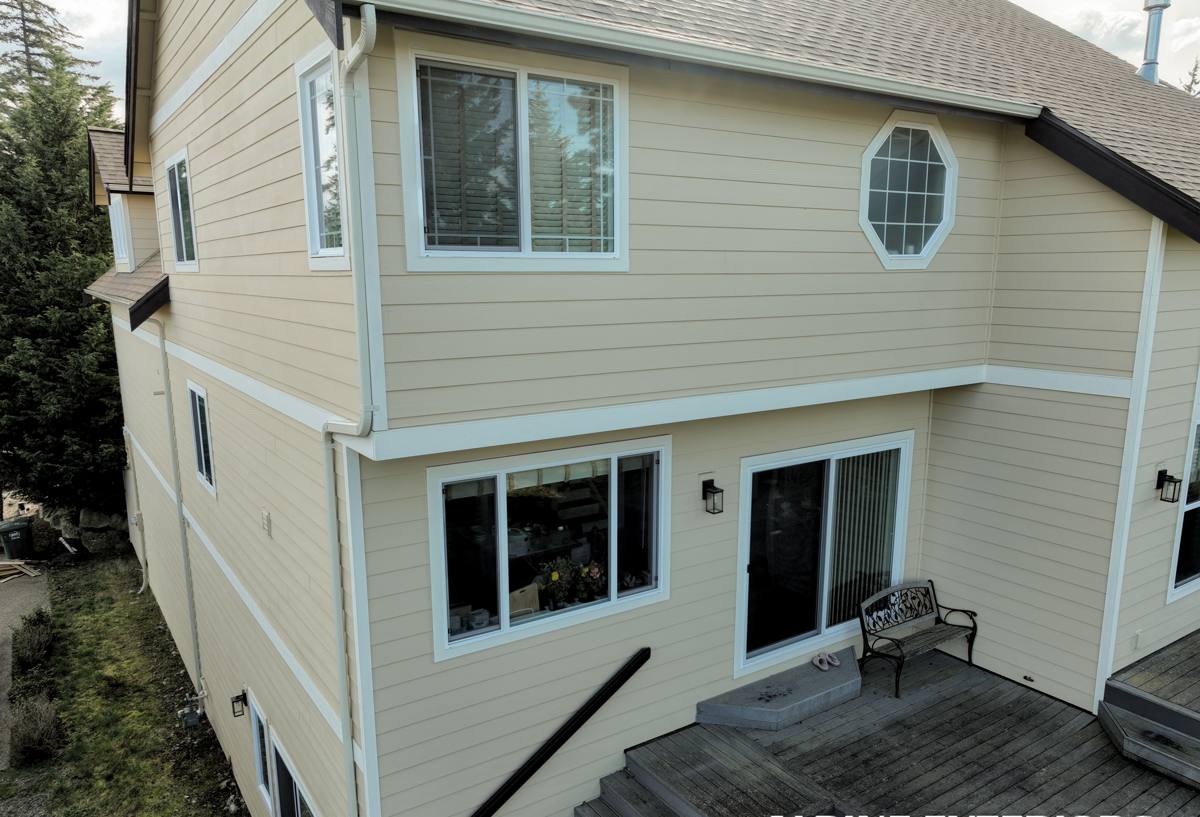
Birchwood sits close enough to the water and the marine weather pattern that comes with it that a deck built the way it would be in a drier inland town simply won't hold up the same way. Homes here deal with salt-tinged air moving in off the Sound, long stretches of driving rain through fall and winter, and a moss season that can run longer than most homeowners expect. A custom deck for a Birchwood property has to be planned around those three things from the start, not patched around them later.
That's the difference between a deck that looks good for one summer and a deck that still looks and performs well after ten Whatcom County winters. This page walks through what that actually means in practice — the materials, the details, and the process — for anyone in Birchwood thinking about adding or replacing a deck.
What the Local Climate Actually Does to a Deck
Salt Air and Slow Corrosion
You don't need to be right on the waterfront to feel the effect of salt-laden air. It settles on metal fasteners, hinges, and railing hardware and accelerates corrosion over years, especially on lower-grade or uncoated steel. A deck built with the wrong fasteners can look fine for a season or two and then start showing rust streaks, loosening screws, or staining around every connection point.
Driving Rain, Not Just Rain
Whatcom County doesn't just get rain — it gets rain that comes in sideways during winter storms, which matters more than people think. Driving rain gets pushed under railing caps, behind ledger boards, and into any gap that a calmer, more vertical rainfall would never reach. Flashing and water management details that would be optional in a drier climate are not optional here.
A Long Moss and Algae Season
Shaded, damp decking surfaces in this region can stay wet for days after a storm passes, and moss and algae take hold quickly once that pattern sets in. On some decking materials that's a cosmetic nuisance; on others it becomes a slip hazard and a maintenance burden that never really goes away between October and May.
Decking Material Choices for Birchwood Conditions
There's no single "best" decking material — there's a best material for a given budget, sun exposure, and how much maintenance a homeowner actually wants to do. Here's how the common options hold up specifically under Birchwood's conditions:
| Material | Moisture & Moss Behavior | Maintenance | Typical Lifespan Here |
|---|---|---|---|
| Pressure-treated wood | Absorbs water, needs to dry between rain events; moss takes hold quickly in shade | Annual cleaning and re-sealing recommended | 10-15 years with upkeep |
| Cedar | Naturally moisture- and insect-resistant, but still needs sealing to resist moss staining | Periodic cleaning, re-oiling every 2-3 years | 15-20 years with upkeep |
| Composite decking | Doesn't absorb water like wood, but can still grow surface algae/moss if not cleaned | Occasional wash; no sealing or staining | 25+ years, backed by manufacturer warranty |
| PVC decking | Fully moisture-resistant, least hospitable surface for moss growth | Lowest — occasional rinse | 25+ years, backed by manufacturer warranty |
For a shaded Birchwood lot where a deck sits under trees for much of the day, we generally steer homeowners toward composite or PVC decking specifically because of the moss issue — wood surfaces in constant shade are fighting an uphill battle against this climate no matter how well they're maintained. On sun-exposed decks, a well-sealed cedar deck is still a solid, attractive option.
Framing, Ledger Attachment, and Water Management
The part of a deck nobody sees is usually the part that determines how long it lasts. In a climate with as much driving rain as Whatcom County gets, three details matter more than anything else:
Ledger Board Flashing
Where the deck attaches to the house is the single most common point of hidden water damage on decks in this region. Proper flashing — installed so water sheds outward and down, never trapped behind the ledger — is non-negotiable, even when it adds a step most homeowners never see.
Joist Protection
Untreated cut ends and joist tops that sit exposed to standing water are where rot starts on an otherwise sound frame. Joist tape or an equivalent moisture barrier on top of the joists, plus sealing any field cuts, keeps water from wicking into the framing lumber over successive wet seasons.
Footings Sized for Saturated Soil
Whatcom County soil holds a lot of moisture for a lot of the year. Footings need to be set to the depth and bearing that account for that, not just poured to a minimum that works in a drier region.
Hardware and Fasteners That Resist Salt Air
This is one of the most overlooked parts of deck construction and one of the easiest to get wrong. Standard galvanized fasteners can start corroding within a few years in a coastal-influenced climate. We use stainless steel or high-grade coated fasteners rated for corrosive exposure on structural connections, railing hardware, and anywhere metal meets treated lumber — the combination of treated wood chemicals and marine air is particularly hard on lower-grade hardware.
The same logic applies to railing systems: cable rail, metal balusters, and post hardware should all be specified with the local environment in mind, not just picked for looks.
Designing for the Moss Season
Moss and algae aren't just a maintenance annoyance — on a walking surface, they're a real slip hazard once the wet season sets in. A well-designed deck reduces the problem before it starts:
- Decking boards with grooved or textured surfaces that shed water faster than smooth-face boards
- Adequate gapping between boards so water drains through rather than pooling on the surface
- Under-deck airflow so the framing and the underside of the decking can actually dry out between storms
- Material choice matched to sun exposure — shaded areas get the moss-resistant materials, sunnier areas have more flexibility
- Avoiding low spots in the deck surface where water and debris collect
How We Approach a Custom Deck Project in Birchwood
1. On-Site Assessment
We look at sun exposure, drainage patterns, how the deck ties into the house, and what the site actually does during a heavy rain — not just what it looks like on a dry day.
2. Design and Material Selection
Based on that assessment, we recommend materials and detailing suited to that specific spot on the property, including framing, flashing, and hardware specs, not just the visible decking surface.
3. Permitting
Most custom deck projects in Whatcom County require a permit, particularly for decks above a certain height or attached to the primary structure. We handle that process as part of the project so homeowners aren't navigating it alone.
4. Construction
Framing, flashing, and fastening are done to the standards outlined above, with inspections at the structural stage before decking goes down.
5. Final Walkthrough
We go over the finished deck, the materials used, and what maintenance — if any — it will need going forward.
Permits and Code Basics for Whatcom County Decks
Deck projects here typically need to account for guardrail height requirements on elevated decks, minimum footing depth for frost and soil conditions, and proper attachment to the home's structure. Setback requirements can also come into play depending on lot size and proximity to property lines. None of this needs to be something a homeowner researches themselves — it's part of what a local contractor should already know and handle.
What Affects the Cost of a Custom Deck
Every deck is priced around its own footprint, materials, and site conditions, so we don't quote off a flat rate. The factors that move the price most are:
- Overall size and shape of the deck (complex angles and multiple levels cost more than a simple rectangle)
- Decking material — pressure-treated wood is the lowest upfront cost, composite and PVC cost more up front but less over time
- Height above grade and whether stairs, multiple stairs, or guardrails are required
- Site access and how much site prep or grading is needed
- Railing style — wood, metal baluster, or cable rail all price differently
- Structural work needed at the ledger board attachment, especially on older Birchwood homes
As a broad guideline, a straightforward custom deck project generally lands in the low-to-mid five figures, with the final number depending heavily on size, material, and site conditions. We provide a specific number after seeing the site, not before.
Why Hiring a Crew That Already Works in Birchwood Matters
A contractor who builds decks across a wide range of climates might not think twice about a standard fastener spec or skip the extra flashing detail that a drier region wouldn't require. A crew that regularly works Birchwood and the surrounding Whatcom County area has already seen what happens when those shortcuts get taken — the corroded hardware, the rotted ledger board, the deck surface that's green by November. Building it right the first time, with the local climate factored into every material and framing decision, costs less over the life of the deck than repairing a deck that wasn't built for the conditions it actually has to survive.
If you're considering a new deck or replacing one that hasn't held up, we're happy to take a look and put together a free, no-pressure estimate using the form below.