 Whatcom County
 Siding in Silver Beach: Built for What This Corner of Whatcom County Throws at a House
Silver Beach sits in one of the more exposed pockets of Whatcom County when it comes to weather-driven wear on a home's exterior. Between salt-laden air drifting in off the water, rain that comes in sideways during winter storms, and a tree canopy dense enough to keep siding shaded and damp for weeks at a stretch, the cladding on a Silver Beach home works harder than siding almost anywhere else in the region. We've spent years replacing siding on homes in this area, and the failure patterns we see are consistent enough that we can usually tell within a few minutes of walking a property which direction the weather comes from and which side of the house took the worst of it.
This page walks through what actually happens to exterior materials here, how our siding, roofing, window, and deck work fits together as a system, and why we install exclusively James Hardie fiber cement siding rather than the broader mix of products available on the market.
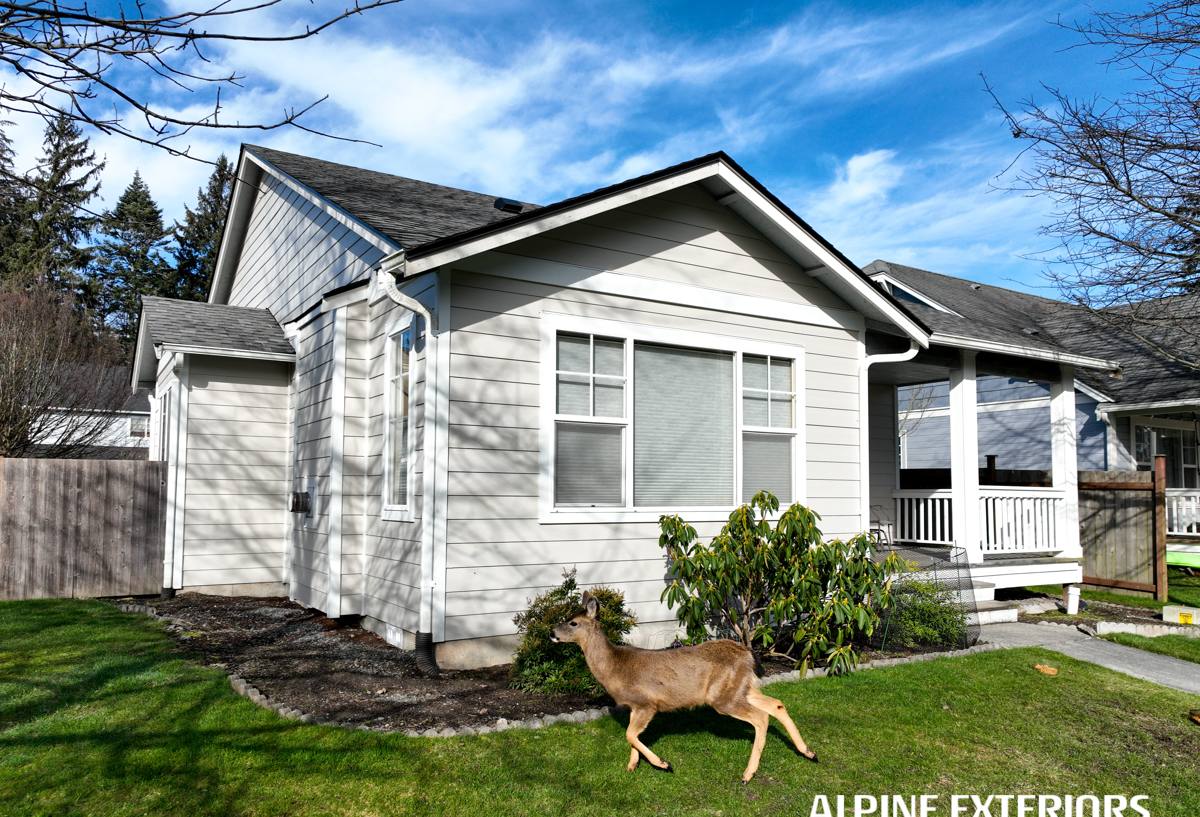
What Salt Air, Driving Rain, and Moss Season Do to a House
Salt Air and Airborne Moisture
Homes closer to open water pick up fine salt and mineral particulate in the air. Over years, that particulate settles into paint film, caulk joints, and any exposed wood grain, accelerating the breakdown of coatings and drawing moisture into the substrate faster than it would in a drier inland setting. Metal fasteners and trim hardware corrode faster too, which is one reason fastener quality and placement matter more here than in a dry climate.
Driving Rain
Whatcom County storms rarely arrive as gentle, straight-down rain. Wind-driven systems push water sideways into wall assemblies, testing every seam, joint, and piece of flashing on a house. A siding product or installation detail that would hold up fine in a calm climate can fail here specifically because the rain is being forced horizontally against the wall rather than falling past it.
Moss and Extended Dampness
Heavy tree cover and long stretches of overcast, damp weather mean moss and algae get a real foothold on north-facing walls, under eaves, and anywhere airflow is restricted. Moss holds moisture against a surface far longer than open air would, which is exactly the condition that rots wood-based siding and delaminates poorly bonded composite products from the inside out.
Why This Matters for Siding Material Choice
Every siding material reacts differently to this combination of salt, wind-driven rain, and prolonged dampness. Wood-based products, whether solid or engineered, depend on an intact factory coating and diligent maintenance to keep moisture out of the wood fiber. Once that coating is compromised — by UV exposure, impact, or just age — moisture gets in and the clock starts on rot, swelling, and eventual replacement. Vinyl sheds water reasonably well but can warp under sustained temperature swings and doesn't offer the impact resistance or paintable, long-term finish options homeowners in this area often want.
This is the core reason we standardized on James Hardie fiber cement siding and no longer install LP SmartSide, vinyl, Cemplank, Allura, primed spruce, or raw cedar. It's not that those products can't be installed correctly — it's that the maintenance burden, moisture sensitivity, or installation tolerances of those alternatives don't match what a house in this climate needs to hold up over decades with minimal upkeep.
How the Major Siding Options Compare in This Climate
| Material | Moisture Behavior | Maintenance | Typical Lifespan Here |
|---|---|---|---|
| James Hardie fiber cement | Non-combustible, engineered for moisture and freeze-thaw cycling | Low; factory finish holds color for years | Multiple decades with proper install |
| Vinyl | Sheds water but can trap moisture behind it if not vented properly | Low, but can crack or warp over time | Variable; depends on install quality |
| Engineered wood (e.g. LP SmartSide) | Relies on intact coating; vulnerable at cut edges and seams | Moderate; coating and caulk need monitoring | Depends heavily on maintenance and exposure |
| Cedar / primed spruce | Natural wood movement; absorbs moisture if finish fails | High; repainting/staining on a regular cycle | Shorter without consistent upkeep |
Why We Install Only James Hardie Fiber Cement
James Hardie's fiber cement is built from cement, sand, and cellulose fiber — materials that don't feed rot, don't provide fuel for fire, and don't swell or contract the way wood-based products can. Hardie also engineers specific product lines (their HZ5 and HZ10 designations) for different climate zones, which matters in a region that sees both heavy rain and, in some pockets, cooler winter temperatures than the Puget Sound lowlands proper.
The ColorPlus factory finish is baked on under controlled conditions rather than applied on-site, which gives it more consistent coverage and better long-term color retention than field-applied paint, especially valuable in an area where UV exposure alternates with long damp stretches. Hardie also backs its siding with a strong, transferable limited warranty — a meaningful detail for homeowners who may sell within the life of the siding.
None of this means Hardie is maintenance-free or that installation quality doesn't matter. Fiber cement is unforgiving of poor flashing details, wrong fastener spacing, or skipped caulking — which is exactly why correct installation, not just material choice, is the other half of getting decades of performance out of it.
What Correct Installation Looks Like
- Proper rainscreen or drainage plane behind the siding so any incidental moisture has somewhere to go
- Flashing integrated correctly at windows, doors, and roof-to-wall transitions — the details that matter most in driving rain
- Fastener placement and spacing that match Hardie's engineering specs, not shortcuts
- Proper joint and butt-seam treatment to prevent water intrusion at panel breaks
- Correct clearance from grade, decks, and roof lines to keep the bottom edge of the siding out of standing water and splash-back
- Caulking and sealant only where Hardie's install guide calls for it — over-caulking can trap moisture as easily as under-caulking lets it in
Siding Doesn't Work in Isolation: Roofing, Windows, and Decks
A siding job is only as good as the rest of the building envelope around it. We handle roofing, windows, and decks alongside siding because the failure points that show up on a Silver Beach house are rarely just one material — they're usually where two systems meet. A roof edge that doesn't shed water cleanly onto the wall below, a window that isn't flashed to integrate with new siding, or a deck ledger board that's trapping moisture against the house all undermine even a well-installed siding job. Addressing these as one project, or at least with one contractor who understands how they interact, avoids the gaps that show up later as call-backs and premature repairs.
Why a Local Crew Matters Here
A crew that mostly works inland or in drier parts of the state won't have the same instinct for where water actually goes on a Silver Beach home — which walls take the worst wind-driven rain, where moss builds up fastest, and which details tend to fail first in this specific microclimate. Local experience shows up in small decisions: extra attention to a north wall, a slightly different flashing detail at a problem transition, or simply knowing which parts of a property need the most scrutiny before work starts. That's the kind of judgment that comes from working Whatcom County homes repeatedly, not from a general install manual.
What to Expect When You Work With Us
Assessment
We start by walking the exterior with you, looking at current siding condition, trouble spots, and how water and moss are behaving on the property specifically.
Scope and Product Selection
We'll walk through Hardie's product lines and color options relevant to your home and explain the reasoning, not just hand you a swatch book.
Installation
Proper prep, flashing, and fastening per manufacturer spec — the details that determine whether the siding performs for decades or needs early attention.
Follow-Through
A finished exterior you can rely on, with a warranty structure that's actually transferable if you sell the home.
A Simple Checklist Before You Choose a Siding Contractor
- Do they explain why they use the products they use, or just quote a price?
- Are they familiar with wind-driven rain and moss patterns specific to this part of Whatcom County?
- Do they detail flashing and drainage plane, or gloss over it?
- Is the warranty from the manufacturer transferable to a future homeowner?
- Can they speak to how siding interacts with your roofline, windows, and any attached deck?
If your Silver Beach home's siding is showing its age, or you're planning ahead before a sale or a Whatcom County winter, we're happy to take a look and talk through honest options. Request a free, no-pressure estimate using the form below.