 Whatcom County
 "How much does new siding cost?" is usually the first question a homeowner asks, and it's almost always followed by a number that turns out to be wrong for their house. Siding pricing swings widely from job to job because the price isn't really about the material alone — it's about square footage, the condition of what's underneath, the complexity of the house, and the labor it takes to do the work correctly. This page walks through what actually drives the cost of a siding replacement in Whatcom County, so you can read a bid intelligently instead of just comparing a bottom-line number.
Why Siding Quotes Vary So Much
Two homes of the same size can get bids that differ by thousands of dollars, and it's rarely because one contractor is padding the price. The gap usually comes down to what's included: is the crew tearing off old siding down to the studs, or nailing over it? Is rotten sheathing being replaced, or covered up? Are they installing housewrap and flashing to current best practice, or just matching what was there before? A low bid that skips prep work isn't a better deal — it's a different, riskier job wearing the same name.
In Whatcom County specifically, homes near Bellingham Bay, Lake Whatcom, or anywhere close to the water deal with salt-laden air that accelerates corrosion on fasteners and trim. Homes further inland toward Ferndale and Lynden see less salt exposure but plenty of driving rain off the Sound and Strait, and the long gray moss season here means anything that traps moisture against a wall — bad siding laps, poor flashing, missing rain screen gaps — becomes a slow, expensive problem. Cost estimates that don't account for these local realities tend to under-bid the prep and over-promise the timeline.
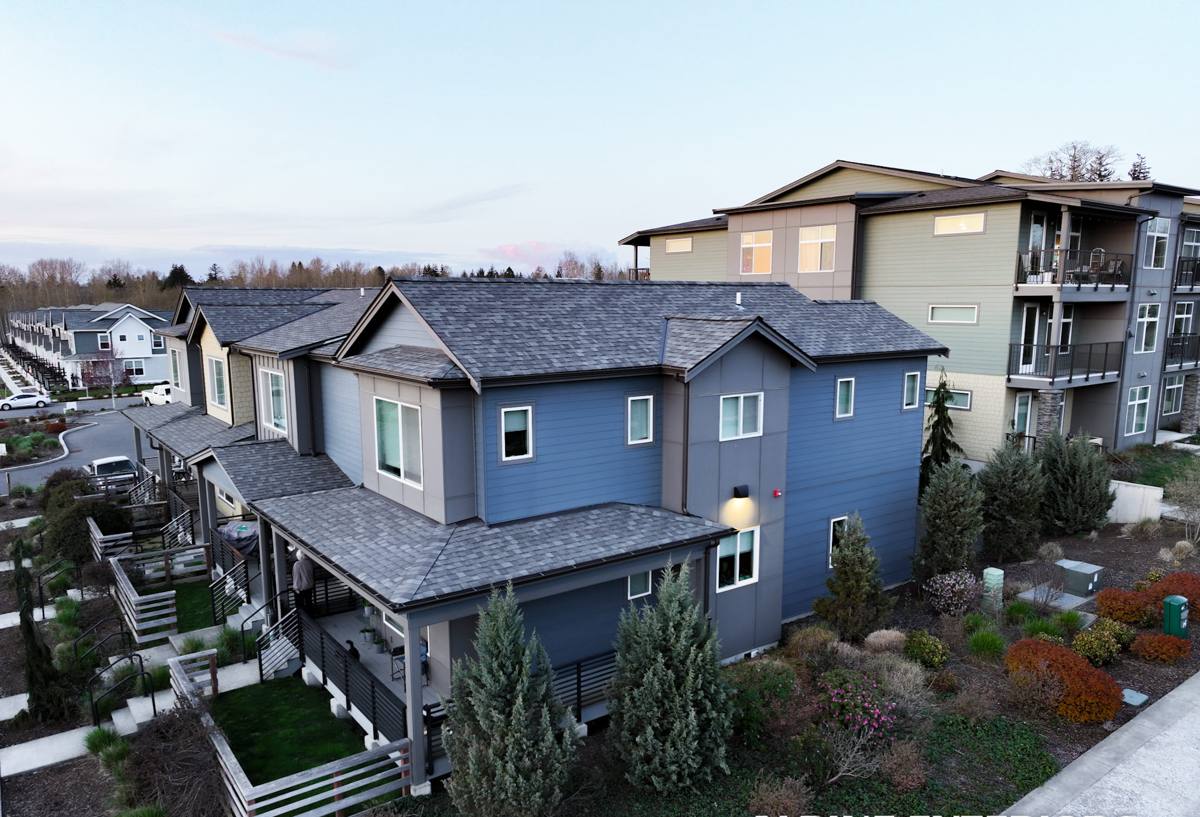
The Main Cost Factors, Broken Down
Square Footage and House Shape
This is the obvious one, but shape matters as much as size. A simple rectangular ranch is cheaper to side than a house with the same square footage but lots of dormers, bump-outs, gables, and roof-to-wall intersections. Every corner, valley, and transition adds cutting, flashing, and labor time that a flat wall doesn't require.
Tear-Off vs. Overlay
Removing old siding down to the sheathing costs more up front than installing over existing siding, but it's the only way to actually inspect and fix what's underneath. Given how much rain this region gets, we don't recommend covering over siding without knowing what condition the wall is in — hidden rot doesn't go away because it's hidden.
Sheathing and Framing Repair
This is the factor homeowners can't predict from the outside, and it's the one that most often changes a quote once the old siding comes off. Water-damaged sheathing, soft framing around windows, or rotted trim boards all need to be repaired before new siding goes on — patching over them just relocates the problem a few years down the road.
Moisture Barrier and Flashing Details
A correct install includes housewrap, properly lapped and taped seams, and flashing at every window, door, and roofline intersection. This is invisible once the job is done, which is exactly why it's the detail some lower bids skip. It's also the detail that determines whether your walls stay dry for the next 30 years or start showing problems in five.
Material Choice
Vinyl, engineered wood, fiber cement, and cedar all carry different material costs, but material is often a smaller share of the total bid than homeowners expect — labor, prep, and detailing usually make up more of the number. We'll get into material trade-offs below.
Trim, Accents, and Finish Work
Corner boards, window trim, fascia, soffit work, and any accent details (board-and-batten sections, shake-style accents, color banding) all add labor and material cost beyond the flat wall panels themselves.
A Rough Sense of Where the Money Goes
| Cost Factor | Why It Moves the Price | What to Ask About |
|---|---|---|
| Tear-off and disposal | Labor-intensive, and disposal fees add up on full tear-offs | Is full tear-off included, or is this an overlay? |
| Sheathing/framing repair | Unknown until old siding is removed; can't be accurately quoted sight-unseen | How are unforeseen repairs priced — per-sheet, hourly, allowance? |
| House complexity | More corners, gables, and transitions mean more cutting and flashing labor | Does the bid account for my home's specific shape, or is it a flat per-square-foot number? |
| Material grade | Fiber cement, engineered wood, vinyl, and cedar all price differently per square | What product line, thickness, and warranty am I actually getting? |
| Moisture barrier system | Correct housewrap, taping, and flashing take real time and can't be rushed | What weather barrier and flashing details are included? |
| Finish and trim detail | Corner boards, trim, and accent work are priced separately from field panels | Is trim included in the base bid, or itemized as an add-on? |
Why We Standardized on One Product
We install James Hardie fiber cement siding exclusively — not vinyl, not engineered wood, not cedar, not other fiber cement brands. That's a deliberate professional standard, not a marketing angle, and it affects how we price and warranty jobs. Fiber cement costs more per square than vinyl and is comparable to or somewhat more than engineered wood siding, but it's non-combustible, holds up to sustained rain exposure without the moisture sensitivity that engineered wood products carry, and comes with a factory-applied ColorPlus finish that resists the fading and chalking that repainting-dependent sidings eventually need. Hardie's HZ5 product line is engineered specifically for wet, marine-influenced climates like ours — which matters more here than in drier parts of the country.
Standardizing on one product also means our crews install it the same correct way every time, rather than switching techniques and details across five different material types. That consistency is worth more to a homeowner's long-term outcome than saving a few dollars per square foot on a product with a shorter track record in Pacific Northwest conditions.
Where Corners Get Cut — and What It Costs You Later
The cheapest bid on paper is sometimes the most expensive job over 15 years. The most common shortcuts we see quoted around Whatcom County are: installing over old siding without inspection, skipping or minimizing housewrap and flashing tape, using minimum-gauge fasteners that corrode faster in salt air, and omitting a rain screen gap on sides of the house that take the brunt of wind-driven rain. None of these show up in a walkthrough the week the job finishes. They show up as soft trim, staining, or a callback in year six or seven, usually after the original crew has moved on.
What a Fair Quote Should Include
- A written scope specifying tear-off vs. overlay, and what happens if rot is found underneath
- The specific product, line, and thickness of siding being installed — not just "fiber cement" or "Hardie" as a generic label
- The weather barrier system: housewrap brand, seam taping method, and flashing details at penetrations
- Fastener type and spacing, especially relevant for homes closer to salt water exposure
- Whether trim, corner boards, and soffit/fascia work are included or itemized separately
- A clear timeline, including what happens if weather delays the job (a real consideration in our rainy season)
- Warranty terms in writing — both manufacturer material warranty and the installer's labor warranty
- Cleanup and disposal responsibility, including old siding and any removed debris
Timing Your Project Around Our Climate
Whatcom County's weather window matters more for siding than most homeowners expect. Installation during the wet months isn't impossible, but it does slow the schedule and makes it harder to keep sheathing dry during tear-off. Late spring through early fall is generally the more efficient window for a full re-side, though repairs and smaller sections can be handled responsibly year-round with the right crew and tarping practices. If a contractor is promising a fast winter tear-off with no mention of weather contingency planning, that's worth asking about directly.
Repair vs. Full Replacement
Not every siding problem requires a full replacement. Localized damage — a cracked panel from storm debris, a section near a downspout that's taken on water damage, trim rot around one window — can often be repaired or replaced in place if the rest of the siding and sheathing are sound. Full replacement becomes the right call when the moisture barrier has failed broadly, when sheathing damage is widespread, when the existing siding is past its realistic service life, or when a homeowner is switching material types entirely. An honest contractor should be willing to tell you when a repair is the right answer instead of upselling a full tear-off.
Questions Worth Asking Before You Sign
Beyond the line-item cost, the questions that protect you most are about process: who is actually on the crew, how change orders for unforeseen repairs are priced, what the payment schedule looks like, and what recourse you have if something goes wrong after the job is done. A contractor who answers these clearly and in writing, before asking for a deposit, is telling you something important about how the rest of the job will go.
If you're weighing a siding project in Whatcom County — whether it's a full re-side or you're just trying to understand what a fair number looks like for your home — we're glad to come take a look and put together a straightforward, no-pressure estimate. Use the form below to get started.