 Whatcom County
 Why Color Choice Is a Bigger Decision Here Than Most Homeowners Realize
Picking a siding color feels like a design decision — swatches, lighting, curb appeal. In Whatcom County, it's also a durability decision. Homes here deal with salt-laden air off Bellingham Bay and the Strait of Georgia, long stretches of driving rain rolling in off the Pacific, and a moss season that can run eight or nine months in shaded, tree-covered lots from Ferndale to Lynden to the foothills east of Bellingham. A color that looks great on a sample chip in a showroom can look chalky, streaked, or moss-stained within a few winters if it isn't backed by a finish built for this climate.
That's the real conversation behind "what color should I pick." It's not just about matching your roof or your neighbor's house. It's about whether the finish holding that color will still look like that color in year twelve.
What ColorPlus Technology Actually Is
James Hardie's ColorPlus finish is a factory-applied, baked-on finish, not paint rolled or sprayed on site after installation. The color is cured onto the fiber cement under controlled conditions before the boards ever reach your house. That matters for three practical reasons:
- Consistency — every board in a batch takes the finish the same way, so you don't get the subtle color drift you can see with field-applied paint jobs, especially on large elevations.
- Adhesion — the finish is baked into the substrate rather than sitting on top of it, which matters a great deal in a climate that alternates between saturating rain and salt-air exposure near the water.
- Warranty backing — ColorPlus finishes carry their own dedicated finish warranty, separate from the product warranty on the fiber cement itself, covering fading and peeling under normal conditions.
This is one of the specific reasons this company installs Hardie exclusively. Primed spruce or cedar siding depends on the quality of a field paint job and a homeowner's repainting schedule. Vinyl doesn't take paint well at all if you want to change it later. ColorPlus removes that variable — the color arrives already matched to the material.
How the Whatcom County Climate Interacts With Color
Salt Air Near the Water
Homes closer to Bellingham Bay, Chuckanut, and the Blaine/Birch Bay corridor sit in a salt-air environment that accelerates chalking and fading on lower-quality finishes. A baked-on finish resists that breakdown far better than field-applied paint, which is one reason ColorPlus-finished fiber cement holds its color longer in these pockets of the county than materials relying on surface coatings.
Driving Rain and Moisture Cycling
Whatcom County gets a lot of horizontal rain, not just vertical rain — wind-driven storms that push moisture into every lap and joint on an elevation. Darker colors and lighter colors both handle moisture fine on ColorPlus fiber cement because the finish is bonded to a stable substrate. The bigger risk with other materials is what happens underneath the color — vinyl and wood-based products can trap or wick moisture in ways that show up as color problems (staining, streaking, warping) even when the surface finish itself is intact.
Moss Season
On shaded lots, especially under conifer cover common throughout the county, moss and algae growth is a fact of life for months at a time. Darker, cooler-toned colors tend to show moss growth and green staining less obviously than very light, warm whites, simply because the contrast is lower. This is worth factoring in if your lot has heavy tree cover or a north-facing elevation that stays damp longer through fall and winter.
Working Through the ColorPlus Palette
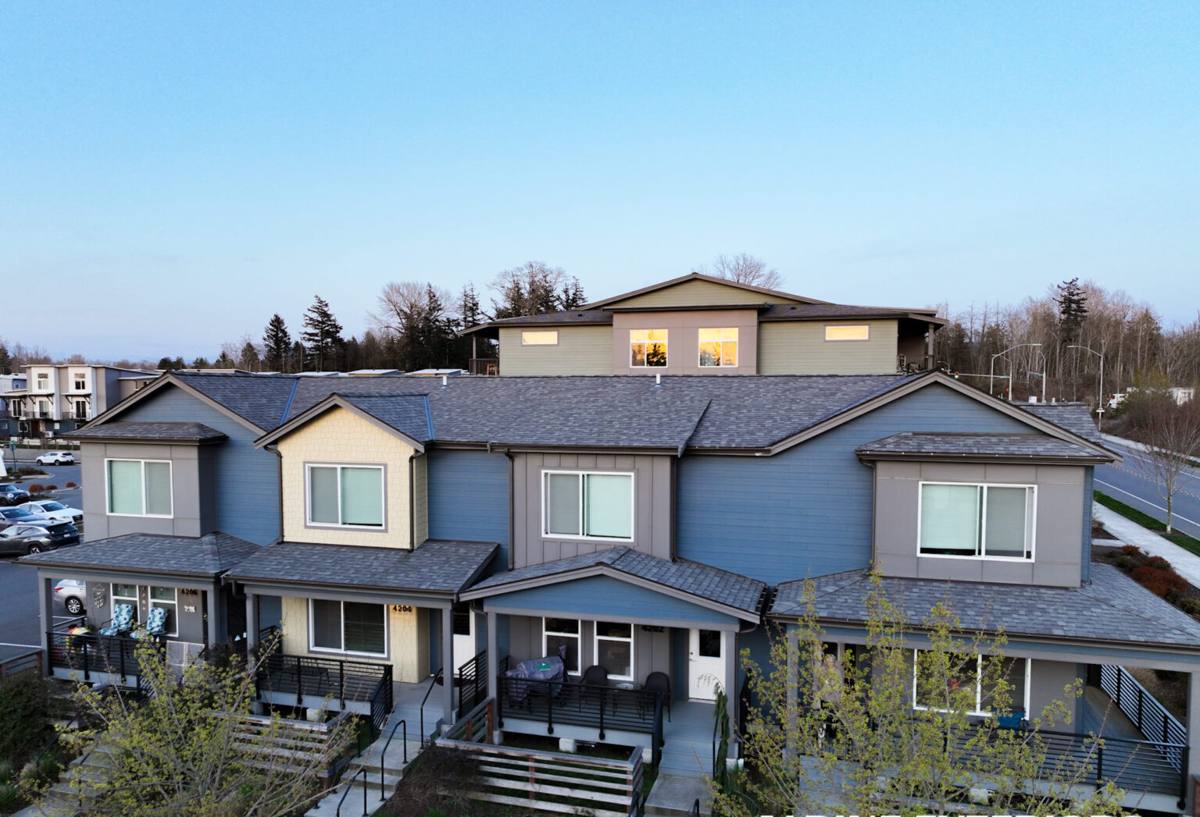
James Hardie's ColorPlus palette runs from crisp whites and warm neutrals through deeper grays, greens, blues, and near-black tones, designed to coordinate with a range of trim and roof colors rather than stand alone. A few practical groupings worth knowing before you start narrowing choices:
- Warm neutrals and whites — read as classic and match well with natural wood accents, but show moss and pollen buildup faster on shaded sides of a house.
- Cool grays and blue-grays — very common in the Pacific Northwest because they pair naturally with the overcast light here and hide seasonal grime better than pure white.
- Deep greens and navy tones — blend into wooded lots and are popular on homes with heavy tree cover, and they mask moss shading well.
- Near-black and charcoal — a growing trend for modern builds, striking in direct light but shows dust, pollen, and water spotting more visibly than mid-tones between cleanings.
There's no universally "right" answer — it depends on your lot's sun exposure, tree cover, and how much maintenance you want to do between exterior washes.
Undertone and Light: Why the Sample Chip Can Mislead You
Whatcom County's light is diffuse and gray for a large part of the year, with a shorter window of direct, warmer summer light. A color that looks neutral gray under a showroom's bright lighting can read distinctly blue, green, or even purple under our typical overcast sky. It's worth viewing large-format samples outdoors, on the actual elevation of your house, at different times of day, before committing — morning light on an east-facing wall in Lynden behaves differently than afternoon light on a west-facing wall closer to the water in Blaine.
Sheen matters too. ColorPlus finishes are engineered with a low-gloss, factory-consistent sheen rather than the high-gloss look field paint can have right after application. That low sheen actually helps in a rainy climate — it reduces glare and doesn't highlight water spotting the way a glossier finish would.
Single-Color vs. Multi-Color Approaches
Many homes in the county use a primary body color with a contrasting trim, and sometimes a third accent color on shutters, a front door surround, or a gable feature. A few practical notes:
- Trim in a brighter white or cream tends to show dirt and moss streaking fastest, since it's often positioned under roof lines and gutters where runoff concentrates.
- Board-and-batten or shake accent panels in a contrasting tone read well on craftsman and farmhouse-style homes common throughout Whatcom County.
- Keeping the palette to two or three coordinated colors, rather than four or more, tends to age better and simplifies future repairs or additions, since matching a discontinued custom blend later is far harder than matching a standard ColorPlus color.
Cost Factors to Understand Before You Choose
| Factor | What Drives the Cost | Practical Note |
|---|---|---|
| Standard ColorPlus color | Included in standard product line pricing | Widest availability, fastest lead times |
| Premium or trending colors | Slightly higher per-square pricing on some lines | Still factory-finished and warranty-backed |
| Multi-color trim/accent work | Additional labor for color-matched trim boards and detailing | Affects install time more than material cost |
| Touch-up paint kits | Minor cost, provided for cut edges and job-site touch-ups | Matched to ColorPlus formula, not generic paint |
| Repainting down the road | Avoided entirely with ColorPlus under normal warranty conditions | Where primed wood or aging vinyl loses its edge over time |
The broad takeaway: color choice within the ColorPlus lineup rarely swings the overall project budget much. The bigger cost difference is between a factory-finished product that shouldn't need repainting for decades and a field-painted material that will.
What Correct Installation Means for Color Performance
Even the best finish depends on correct installation to perform. Cut edges need to be sealed with color-matched touch-up product, fasteners need to be set correctly to avoid finish damage, and proper flashing and clearances need to be maintained so water isn't sitting against the bottom edge of boards where color breakdown shows up first. This is a place where installer experience matters as much as the product itself — a beautiful ColorPlus color installed with poor flashing detail around windows or at grade will show staining and moisture streaks regardless of how good the finish is.
A Practical Checklist Before You Commit to a Color
- View large physical samples outdoors, on your own house, in both morning and afternoon light.
- Consider how much tree cover and shade your lot gets, and whether moss visibility matters to you.
- Decide on a two- or three-color scheme (body, trim, accent) rather than a more complex palette.
- Ask how the finish warranty is structured and what it covers versus the base product warranty.
- Confirm touch-up paint will be provided matched to your specific ColorPlus formula.
- Walk the flashing and clearance details with your installer, not just the color chart.
If you're weighing colors for a new build, a full re-side, or just want to see large-format ColorPlus samples against your own home in Whatcom County's light, we're happy to bring samples out and walk the property with you. There's no pressure and no cost for a straightforward estimate — just an honest look at what will actually hold up on your specific elevation.