 Whatcom County
 One Product, One Standard
Most siding contractors in Whatcom County will install whatever a homeowner picks off a sample board — vinyl on Tuesday, engineered wood on Wednesday, fiber cement on Thursday. We don't. We install James Hardie fiber cement siding and nothing else, on every home we take on, in Bellingham, Ferndale, Lynden, Blaine, and everywhere in between.
That's not a marketing gimmick. It's a decision built out of watching the same failures show up on the same house types, decade after decade, in this specific climate. Whatcom County sits where salt air off the Strait and Bellingham Bay meets driving winter rain and a moss season that can run eight months out of the year. Most siding products are engineered for an average American climate. This isn't an average American climate, and we stopped installing products that weren't built for it.
This page explains the reasoning in plain terms — what the weather here actually does to a wall, why we stepped away from the other major siding products, and what Hardie's product line does differently.
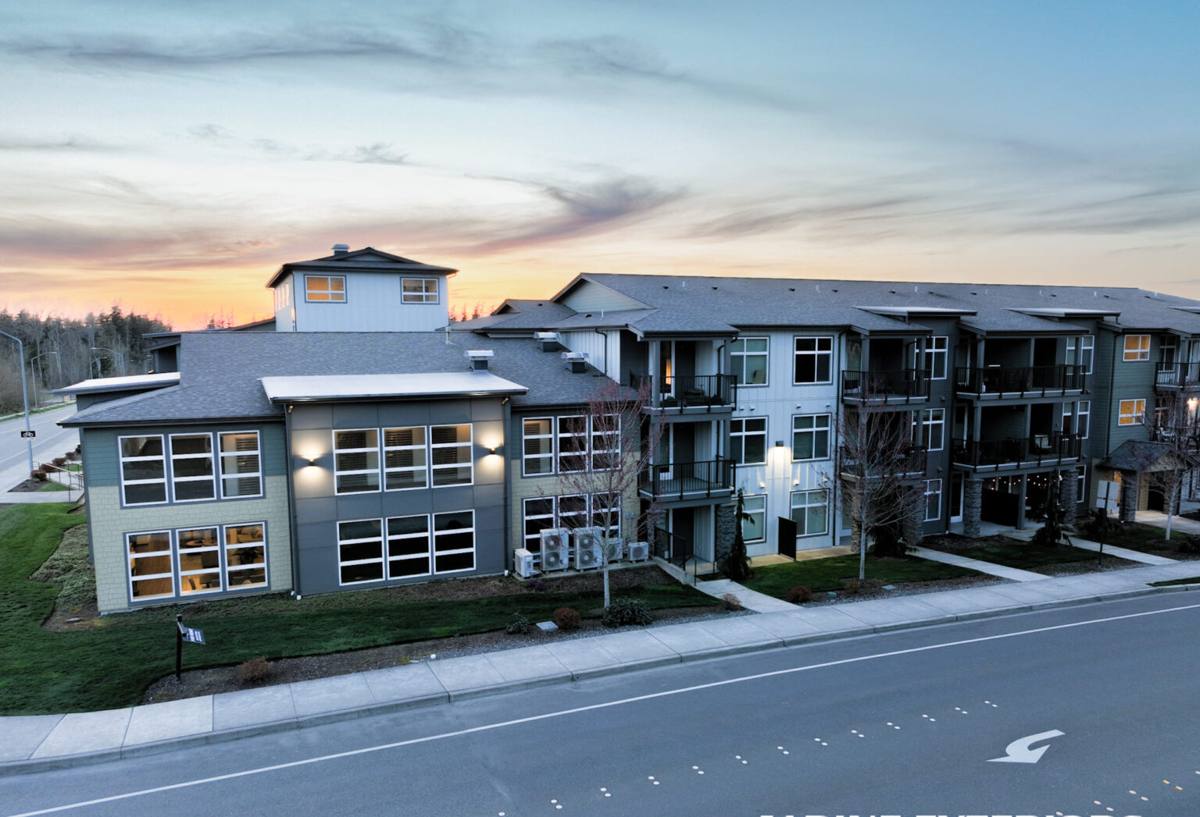
What Whatcom County Weather Does to a Wall Over 20 Years
Siding doesn't fail in year one. It fails slowly, in ways that are hard to see until they're expensive. Three things drive that failure locally:
Salt Air
Homes closer to Bellingham Bay, Semiahmoo, and the Blaine waterfront take in airborne salt that accelerates corrosion on fasteners, trim, and any material that relies on paint film to keep moisture out. Once that film breaks down, salt-laden moisture gets underneath it faster than it would inland.
Driving Rain
Whatcom County doesn't just get a lot of rain — a good share of it comes in sideways off Pacific storm systems, driven into wall assemblies that a gentle, straight-down rain would never reach. Lap siding, seams, and butt joints get tested by wind-driven rain in a way that dry-climate siding specs don't account for.
Moss and Sustained Moisture
North-facing walls, shaded lots, and the tree cover common in this county keep siding damp for long stretches, especially fall through spring. Moss and algae don't just look bad — they hold moisture against the siding surface, which is exactly the condition that causes swelling, delamination, and rot in moisture-sensitive materials.
None of this is exotic. It's just what this specific county does to a house, year after year. The siding that holds up here is the siding engineered to shrug off exactly these three conditions — not siding that's merely "good" in general.
Why We Walked Away From Other Siding Products
We used to install a broader mix. We narrowed it to one product on purpose. Here's the honest trade-off case for each of the products we no longer install — not as an attack on the product, but as our reasoning for why it's not what we put on homes in this climate anymore.
LP SmartSide and Other Engineered Wood
Engineered wood siding is a legitimate product, and it's lighter and easier to handle than fiber cement. Its weak point here is moisture. It's still a wood-based composite, and wood-based composites depend on an intact factory coating and disciplined caulking at every cut edge and joint to keep water out. In a climate with this much sustained wet weather and moss cover, any gap in that maintenance — a missed touch-up, a cracked caulk line — is an opening for the material to absorb water and swell. We were repeatedly called back to homes with edge swelling at butt joints and around penetrations, almost always tracing back to a maintenance gap rather than a manufacturing defect. We stopped installing it because it asks homeowners to maintain a perfect moisture seal indefinitely in a climate that doesn't forgive lapses.
Vinyl Siding
Vinyl is inexpensive and low-maintenance in the sense that it doesn't need painting. But it's a thin plastic product that expands and contracts with temperature, relies on lap-over-lap installation (not a sealed rain barrier) to shed water, and is combustible — it can soften and deform from heat sources like a nearby grill or fire pit. It also telegraphs every imperfection in the wall behind it and can't be repainted to a different color if a homeowner wants to update a home's look later. For coastal, moss-prone Whatcom County specifically, vinyl's biggest practical downside is that dirt, algae, and moss show up clearly against its uniform surface, and pressure-washing it aggressively enough to remove that growth risks driving water behind the panels.
Cemplank and Allura (Other Fiber Cement Brands)
These are genuine fiber cement competitors to Hardie, not lesser materials — the core composition is similar. Our reason for standardizing on Hardie over these isn't the raw material; it's the system around it: Hardie's ColorPlus factory finish, its HZ climate-zone product engineering, its national distribution and warranty backing, and the volume of Pacific Northwest installation data behind its specs. Running one product system also means our crews install it the same correct way on every job, with one set of flashing details, fasteners, and gaps to get right — rather than switching install specs between brands and increasing the odds of a mistake.
Primed Spruce and Cedar
Wood siding, primed or raw cedar, is the most climate-vulnerable option on this list in a market this wet. It requires the most frequent repainting, is the most attractive material to moisture and pests, and shows moss and rot fastest of anything we've listed. Cedar has real appeal — it's a genuinely handsome, natural material — but on an exterior wall in Whatcom County, it's a high-maintenance choice that needs real commitment from the homeowner to keep ahead of.
What James Hardie Fiber Cement Actually Is
Hardie siding is made from cement, sand, and cellulose fiber, cured into a dense, stable board. It doesn't burn — it's non-combustible, not just fire-resistant. It doesn't expand and contract with temperature the way vinyl does. It doesn't absorb water and swell the way wood-based products can, because cellulose fiber in a cured cement matrix behaves very differently from raw or engineered wood. And it holds paint and factory finish far longer than wood substrates because the surface itself is dimensionally stable underneath the coating.
That combination — fire-safe, dimensionally stable, moisture-resistant — is why it's become the standard material for siding replacement across most of the wetter parts of the country, not just here.
HZ5: Built for the Pacific Northwest
Hardie doesn't make one generic product for the whole country. Its HZ (HardieZone) system engineers the board formulation for regional climate demands, and Whatcom County falls in the HZ5 zone — the specification built around sustained moisture exposure, freeze-thaw cycling, and moss and mildew resistance rather than extreme heat. That's a meaningful difference from siding specs written for the Southwest or the Southeast and shipped nationwide without regional adjustment. We install HZ5 product specifically because it's engineered for the weather this county actually produces, not a national average.
ColorPlus Technology: Why Factory-Applied Finish Matters
A large share of siding failure isn't the substrate — it's the paint film on top of it breaking down and letting water reach the substrate underneath. Hardie's ColorPlus finish is baked on in a controlled factory setting, in multiple coat layers, before the board ever reaches a job site. That produces a more even, more durable finish than field-applied paint, which is subject to weather conditions on install day, spray technique, and the limits of painting outdoors.
ColorPlus finish also comes with its own dedicated finish warranty, separate from the substrate warranty, and touch-up product is formulated to match factory color — so small repairs down the road don't leave a visible patch.
The Warranty Difference
Warranty structure is one of the most overlooked parts of a siding decision, and it varies more between products than most homeowners expect.
| Product | Typical Substrate Warranty | Finish Warranty | Transferable |
|---|---|---|---|
| James Hardie Fiber Cement | 30-year limited | Separate ColorPlus finish warranty | Yes, to subsequent owners |
| Vinyl Siding | Varies widely by manufacturer, often prorated | Color fade coverage usually limited | Often limited or non-transferable |
| Engineered Wood (LP-type) | Typically 5-year workmanship plus longer prorated limited warranty | Tied to factory coating condition | Varies by manufacturer |
| Cedar / Primed Spruce | Material warranty is uncommon; performance depends on maintenance | No factory finish warranty (field-painted) | N/A |
A long substrate warranty only means something if it's backed by a large, established manufacturer and if the product was installed to that manufacturer's published specifications — which is the other half of the equation.
Installation Is Half the Product
Fiber cement siding installed wrong will fail regardless of how good the board is. Hardie publishes detailed installation requirements, and skipping them is the single most common cause of premature siding failure we see on inspection of other contractors' work. Before we close up a wall, our crews confirm:
- Correct minimum clearance between siding and grade, decks, roofing, and other hard surfaces
- Proper weather-resistive barrier and flashing at every window, door, and penetration
- Manufacturer-specified fastener type, spacing, and embedment depth
- Correct gap and caulking at butt joints, trim, and any dissimilar material transitions
- Field-cut edges sealed or back-primed per manufacturer spec, not left exposed
- Proper panel overlap and drainage plane behind the siding, not a sealed-face installation
- Painted or factory-finished touch-up applied to any field cuts before the wall is closed
Every one of those items matters more in a wet, salt-exposed climate than it would somewhere dry. A flashing detail that's "good enough" in Arizona is a moisture path waiting to happen in Whatcom County.
What It Costs, and Why
Fiber cement generally costs more up front than vinyl and is comparable to or somewhat above engineered wood, depending on style and trim complexity. The honest way to think about it is total cost over the life of the siding, not just the install invoice.
| Factor | Vinyl | Engineered Wood | James Hardie Fiber Cement |
|---|---|---|---|
| Upfront material cost | Lowest | Mid | Mid-to-higher |
| Repainting needed | Not paintable to change color easily | Follows factory coating life | ColorPlus finish rated for decades before repaint |
| Fire performance | Combustible | Combustible | Non-combustible |
| Moisture sensitivity | Low absorption, but seams leak | Moderate — depends on maintained coating | Low, engineered for HZ5 conditions |
| Typical substrate lifespan installed to spec | 20-30 years | 20-30 years | 30-50+ years |
Cost is a legitimate factor and we'll talk through it honestly with any homeowner — we're not going to pretend price doesn't matter. But we don't offer the cheaper products as a lower-cost alternative on the same house, because a siding job that needs to be redone in 15 years isn't actually the cheaper option once you count the second install.
Where This Leaves You as a Homeowner
You don't have to take our word for any of this. Ask any siding contractor you're evaluating why they install the products they install, and whether they'd put the same product on their own house in this climate. We're comfortable answering that question because we already made the decision — we install James Hardie, in the HZ5 formulation built for the Pacific Northwest, installed to Hardie's published specifications, because that's what we've seen actually hold up against Whatcom County salt air, rain, and moss.
If you're planning a siding project and want a straight answer about what it involves and what it'll cost on your specific home, we're happy to take a look and put together a free, no-pressure estimate.