 Whatcom County
 Siding in Everson: Built for Whatcom County Weather, Not Just Installed Here
Everson sits along the Nooksack River in Whatcom County, close enough to the Cascade foothills to catch heavier rain totals than Bellingham most winters, and close enough to the Salish Sea corridor that the same damp, salt-tinged air that ages siding along the coast still finds its way inland. Homes here deal with a long wet season, frequent freeze-thaw swings in the colder months, and enough shade from mature trees and river-bottom fog to keep siding damp for days at a stretch. That combination is exactly what wears out the wrong exterior product fast, and exactly why we've standardized on one material for every siding job we do: James Hardie fiber cement.
We're not a national franchise dispatching a different crew every visit. We're a local exterior contractor working Whatcom County full-time, which means we see how siding, roofing, windows, and decks actually hold up here over five, ten, fifteen years — not just how they look on installation day.
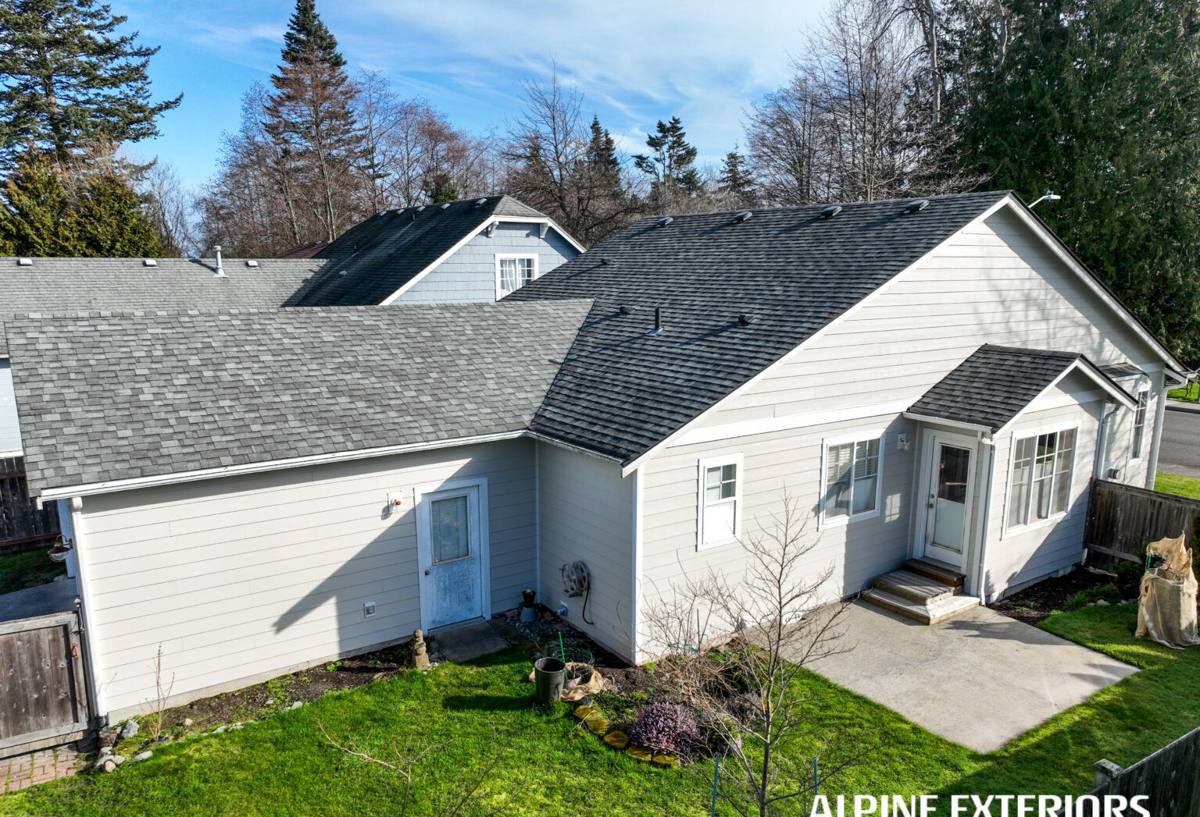
What Everson Homes Actually Face
Moss and Sustained Moisture
Whatcom County's moss season isn't a two-month nuisance — it's most of the year. On north-facing walls, under eaves, and anywhere a house sits close to trees or a fence line, siding stays damp longer than it dries. Materials that absorb or trap moisture at the seams give moss and mildew a foothold, and once organic growth gets established on a wall, it's a maintenance cycle that never really ends.
Driving Rain and Wind-Driven Wetting
Rain in this part of the county rarely falls straight down. Storms off the water push rain sideways into siding, which means the material's water resistance at the surface matters as much as what's happening behind it. Poor flashing details or a siding product that swells and cups when wet will show problems at exactly the joints and butt seams where water gets driven hardest.
Freeze-Thaw and Temperature Swings
Whatcom County isn't brutally cold, but it does freeze — and it thaws again days later, repeatedly, all winter. Materials that hold moisture and then freeze are prone to cracking, splitting, and delaminating over time. That slow cycle is often invisible until a homeowner notices paint failing or boards separating at the seams years earlier than expected.
Salt-Influenced Air
Homes closer to the water and the broader Whatcom County coastline deal with airborne salt that accelerates corrosion on fasteners and finishes. Even inland, that same marine air pattern brings extra humidity that keeps exterior surfaces from ever fully drying out between storms.
Why We Only Install James Hardie Fiber Cement
We get asked regularly why we don't offer vinyl, LP SmartSide, primed spruce, cedar, or other fiber cement brands like Allura or Cemplank. The honest answer is that we made a call as a company: we'd rather install one product extremely well, back it with a strong warranty, and stand behind it for years — than offer five options and end up putting something on a wall that we know struggles in this climate.
- Vinyl is affordable and low-maintenance, but it expands and contracts with temperature swings, can crack in a hard freeze, and doesn't hold up structurally the way fiber cement does over decades.
- LP SmartSide is engineered wood — it performs reasonably when installed and maintained perfectly, but any breach in the factory coating lets moisture into the wood substrate, and wood-based siding is inherently more vulnerable to the sustained dampness common in this county.
- Primed spruce and cedar are traditional, attractive options, but they require repainting on a real schedule and are the most moisture-sensitive choice available — a tough match for a climate that doesn't give siding much time to dry out.
- Other fiber cement brands (Allura, Cemplank) are legitimate products, but James Hardie has the strongest track record, the most climate-specific engineering (its HZ5 product line is formulated for regions with freeze-thaw cycles like ours), and a warranty structure we trust enough to put our name behind.
James Hardie fiber cement is non-combustible, resists moisture-driven swelling and warping far better than wood-based products, and comes finished with the ColorPlus factory paint system — a baked-on finish that holds color and resists fading and chipping far longer than field-applied paint. It's not the cheapest material on the market, but it's the one we're comfortable standing behind for the life of a Whatcom County home.
James Hardie Product Lines We Install
| Product | Best Use | Why It Fits This Climate |
|---|---|---|
| HardiePlank lap siding | Most common wall siding | Traditional look, engineered for wind-driven rain and freeze-thaw durability |
| HardiePanel vertical siding | Accent walls, gables, modern designs | Clean lines with the same moisture and impact resistance |
| HardieTrim boards | Corners, window and door surrounds | Resists rot at the joints where water collects most |
| HardieShingle siding | Accent gables, Craftsman-style homes | Shingle look without the maintenance burden of cedar shakes |
How a Siding Project Works, Start to Finish
- On-site assessment — we walk the exterior, check for moisture damage, rot, and flashing issues before quoting anything.
- Product and color selection — you choose from Hardie's ColorPlus palette or a field-painted option if you're matching an existing scheme.
- Removal and inspection of the old siding — this is when hidden water damage or sheathing problems usually surface, and we address them before anything new goes up.
- Weather barrier and flashing details — the single biggest factor in how long siding lasts here isn't the siding itself, it's what's behind it and how water is directed away from seams, windows, and penetrations.
- Installation to Hardie's fastening and clearance specs — proper nail placement, joint spacing, and ground clearance all affect warranty coverage and long-term performance.
- Final walkthrough — we go over the finished work with you before calling the job done.
Siding Is One Piece of the Exterior
A lot of siding failures we see in Whatcom County aren't siding problems at all — they're roof, gutter, or window problems that showed up as siding damage. A leaking roof valley or a window without proper flashing will rot the wall beneath it no matter how good the siding is. Because we handle roofing, windows, and decks in addition to siding, we look at the whole exterior envelope rather than quoting a wall replacement in isolation. If a job needs roofing or window work addressed first, we'll tell you before we start, not after.
Signs Your Everson Home May Need Siding Attention
- Moss or dark streaking that returns within months of cleaning
- Soft spots, bubbling, or visible warping, especially on north-facing walls
- Paint that's peeling or chalking faster than it should
- Gaps opening up at seams, corners, or trim boards
- Rising energy bills that suggest the wall assembly isn't sealing the way it used to
- Visible rot at the bottom edges of boards near grade or splash zones
What Drives Cost on an Everson Siding Job
| Factor | Why It Matters |
|---|---|
| Home size and wall complexity | More corners, gables, and dormers mean more cutting, trim, and labor |
| Condition of the sheathing underneath | Rot or water damage found during removal adds repair work before new siding goes up |
| Product line and finish | Lap vs. panel vs. shingle profiles, and factory-finish vs. field-painted, price differently |
| Access and site conditions | Tree cover, slope, and setbacks common on Nooksack-area lots can affect staging and labor time |
| Scope beyond siding | Bundling trim, flashing repair, or window replacement into one project is usually more efficient than separate visits |
Why a Local Crew Matters
Whatcom County's climate isn't uniform — a wall that stays shaded and damp near the river bottoms behaves differently than one exposed to open wind on higher ground. A crew that works this county every week knows which details to prioritize on a given lot: where to expect extra moisture, which orientations need extra attention to flashing, and how the local freeze-thaw pattern actually plays out over a winter. That local knowledge doesn't show up on a spec sheet, but it shows up in how the siding performs five years down the road.
We also carry the manufacturer training and installer status that keeps James Hardie's transferable warranty intact — a detail that matters if you ever sell the home, since a properly documented, correctly installed system passes that protection on to the next owner.
If your Everson home is due for new siding, or you're not sure whether what you're seeing is a siding issue or something underneath it, we're happy to take a look. Estimates are free, there's no pressure, and we'll tell you honestly what we find.