 Whatcom County
 Windows Built for Everson's Wet, Windy Climate
Everson sits in the Nooksack River valley, close enough to the water that marine air off the Strait moves through on a regular basis, carrying salt-tinged moisture, driving rain, and long stretches of gray, damp weather. That combination is hard on windows. Old aluminum-frame windows conduct cold straight through the metal, wood sashes swell and stick after a wet winter, and single-pane glass fogs up the moment the furnace kicks on. Add Whatcom County's moss season — which, on shaded north-facing walls, can run most of the year — and you have a climate that punishes any window that isn't sealed and flashed correctly.
Energy-efficient windows address the comfort and utility-bill side of that equation. But in Everson, the bigger issue is often what's happening around the window, not just the glass itself. A high-performance window installed with sloppy flashing will still let wind-driven rain behind the siding. We treat the two as one job.
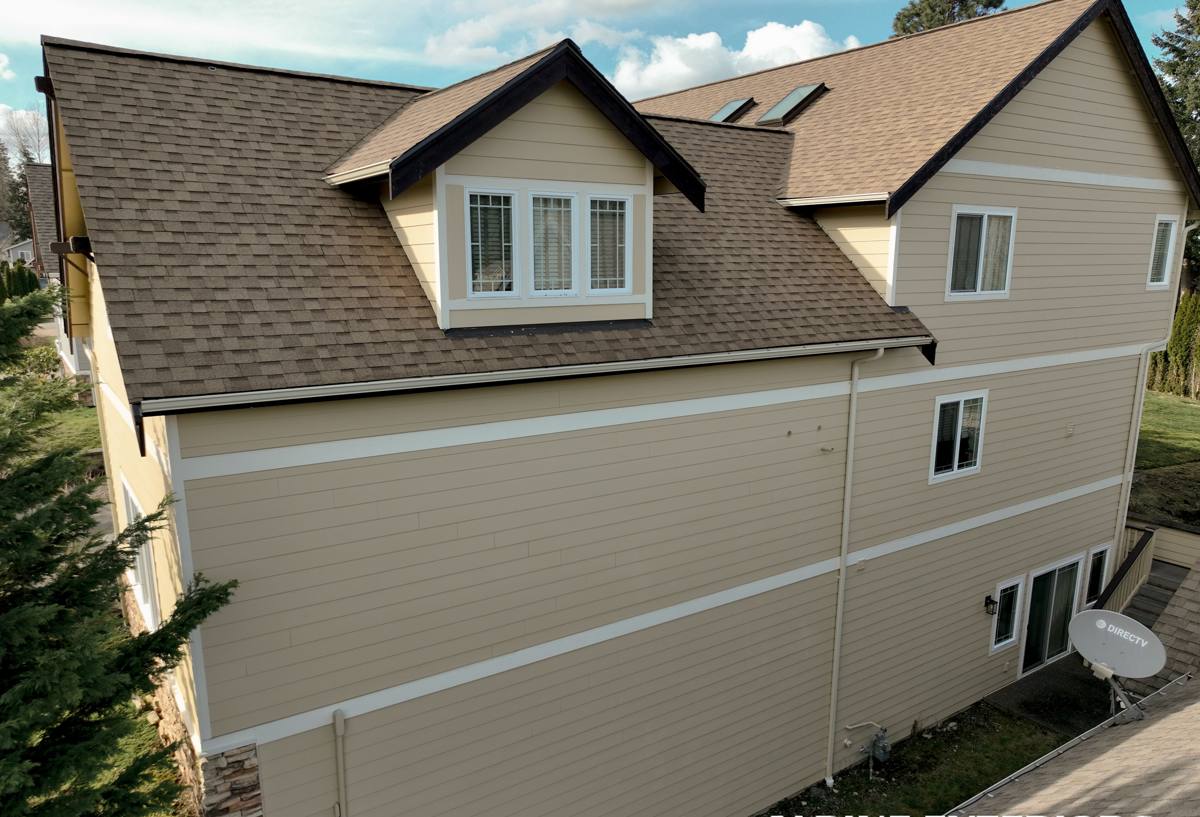
Signs Your Current Windows Are Working Against You
Most homeowners don't think about their windows until something forces the issue. Here's what we look for during an inspection, and what you can check yourself:
- Condensation or fog trapped between panes of double-glazed glass — the seal has failed and the gas fill is gone
- Cold air noticeably moving near the frame on a windy day, even with the window latched shut
- Wood sashes or sills that are soft, discolored, or swelling after rain
- Visible moss, algae, or dark streaking on the sill or the siding directly below the window
- Sashes that are hard to open or close, or that no longer latch tight
- A noticeable temperature difference standing near a window versus the middle of the room
- Rising heating bills without a change in how the home is used
Any one of these on its own isn't necessarily urgent. Several together, especially on the same wall, usually means water or air is getting past the window assembly and it's worth a closer look before it turns into rot repair.
What "Energy-Efficient" Actually Means
The term gets used loosely, so here's what it comes down to on a spec sheet:
U-Factor
This measures how much heat the window lets escape — lower is better. In a climate like ours, where the furnace or heat pump runs a good chunk of the year, U-factor is usually the number that matters most for your monthly bill.
Solar Heat Gain Coefficient (SHGC)
This measures how much solar heat passes through the glass. In Whatcom County's climate, we're generally less concerned with blocking summer sun and more concerned with keeping winter heat in, so this factor gets weighed differently here than it would on a south-facing wall in a hot climate.
Low-E Coatings and Gas Fills
A low-emissivity coating is a microscopically thin layer that reflects heat back into the room without noticeably changing how much light comes through. Argon or krypton gas between the panes adds another layer of insulation over plain air. Together they're the difference between a window that's "double-pane" on paper and one that actually performs.
NFRC Labels
Legitimate windows carry a National Fenestration Rating Council label with U-factor, SHGC, and air leakage numbers. If a quote doesn't reference these numbers, ask for them directly.
Choosing a Frame Material for This Climate
Frame material affects energy performance, upkeep, and how the window handles years of Whatcom County rain. There's no single right answer for every home — it depends on your budget, your home's style, and how much maintenance you want to take on.
| Frame Material | Energy Performance | Moisture Tolerance | Maintenance | Typical Installed Cost* |
|---|---|---|---|---|
| Vinyl | Good; multi-chamber designs insulate well | Very good — won't rot or corrode | Low; occasional cleaning | $500–$900 per window |
| Fiberglass | Very good; low expansion/contraction | Excellent | Low | $700–$1,200 per window |
| Wood (clad exterior) | Good with proper detailing | Fair — exterior cladding protects the wood, but seams need monitoring | Moderate; interior wood may need refinishing over time | $900–$1,600+ per window |
| Aluminum | Poor unless thermally broken | Good structurally, but conducts cold and can show condensation | Low | Varies; less common as a full replacement here |
*Broad ranges only — actual pricing depends on window size, glazing package, and site conditions. We'll give you real numbers after we see the openings.
For most Everson homes, we lean toward vinyl or fiberglass because both shrug off the wet-dry cycling and salt-laced air that this valley sees without needing repainting or re-caulking every few years. Wood-clad windows have their place on homes where the look matters and the owner is comfortable with a bit more upkeep, but we're honest about that trade-off up front rather than after the sale.
What a Correct Installation Actually Involves
The window itself is only part of the job. Most of the failures we get called out to fix — drafts, staining, soft framing — trace back to installation shortcuts, not the product. A correct install includes:
- Removing the old window and inspecting the rough opening for hidden rot or moisture damage before anything new goes in
- Installing a sloped sill pan flashing so any water that does get past the window sheds outward, not into the wall cavity
- Integrating window flashing with the home's weather-resistive barrier and siding in the correct shingle-lap order, so water is always directed down and out
- Setting the window level, plumb, and square, then securing it per the manufacturer's fastening schedule
- Insulating the gap between the window frame and the rough opening — without overpacking it, which can bow the frame
- Sealing the interior air barrier separately from the exterior weather seal, so the assembly can still manage any incidental moisture
- Finishing exterior trim so it sheds water and ties in cleanly with the siding profile already on the house
That flashing and sequencing step is where we spend the most care, because it's invisible once the trim goes back on — and it's exactly the part that determines whether a window stays dry through twenty winters of valley rain or starts leaking in five.
Our Process, Start to Finish
1. On-Site Assessment
We measure every opening, check the condition of the framing and siding around it, and talk through what's actually bothering you — drafts, condensation, appearance, or all three.
2. Product Selection
We walk through frame material, glazing package, and grille or style options that fit your home and budget, and explain the U-factor and SHGC numbers in plain terms rather than sales language.
3. Written Estimate
You get a clear, itemized quote — no vague allowances — so you know what you're paying for before any work starts.
4. Removal and Inspection
Old windows come out carefully, and we check the framing underneath for water damage before installing anything new. If we find rot, we tell you before proceeding, not after.
5. Flashing and Installation
New windows go in with proper sill pan flashing, correctly lapped weather-resistive barrier integration, and manufacturer-specified fastening.
6. Trim, Sealant, and Siding Tie-In
We finish the exterior trim and reintegrate it with your existing siding so the wall looks and performs as one system, not a patch job.
7. Walkthrough and Cleanup
We test each window's operation with you, clean up the work area, and make sure you know how to care for the new windows before we leave.
Why a Crew That Already Works in Everson Makes a Difference
Window installation looks similar on paper anywhere in the country, but the details that keep a window performing for decades are regional. A crew that works Whatcom County regularly knows how far wind-driven rain can travel up a wall during a winter storm off the valley, which sides of a house tend to grow moss and algae first, and how older Everson homes — many built well before modern energy codes — are typically framed around their window openings. That local pattern recognition is what turns a standard install into one that actually holds up here.
It also matters for follow-through. If a question comes up two years after installation, you're calling a crew that's still working in the same area, not chasing down a company that moved on to another region. We stand behind our work because we're not going anywhere.
Caring for Your New Windows
Energy-efficient windows are close to maintenance-free, but a little seasonal attention extends their life:
- Rinse frames and tracks periodically to clear pollen, dust, and the algae film that develops in our damp climate
- Check exterior caulking annually, especially after a hard winter, and have any cracked sealant redone before it lets water in
- Keep gutters and downspouts clear so roof runoff isn't sheeting down onto window heads
- Operate each window through its full range a few times a year so hardware doesn't seize up from disuse
- Watch for moss buildup on nearby siding or trim — it holds moisture against the wall and is worth removing before it spreads
None of this is difficult, but skipping it is how a well-installed window ends up with an avoidable problem five or ten years down the road.
Get a Straight Answer on Your Windows
If you're dealing with drafts, fogged glass, or a window that's starting to show its age, we're happy to take a look and give you a straight, no-pressure assessment of what's actually going on and what it would take to fix it. Use the form below to request a free estimate, and we'll walk your home's windows with you in person.