 Whatcom County
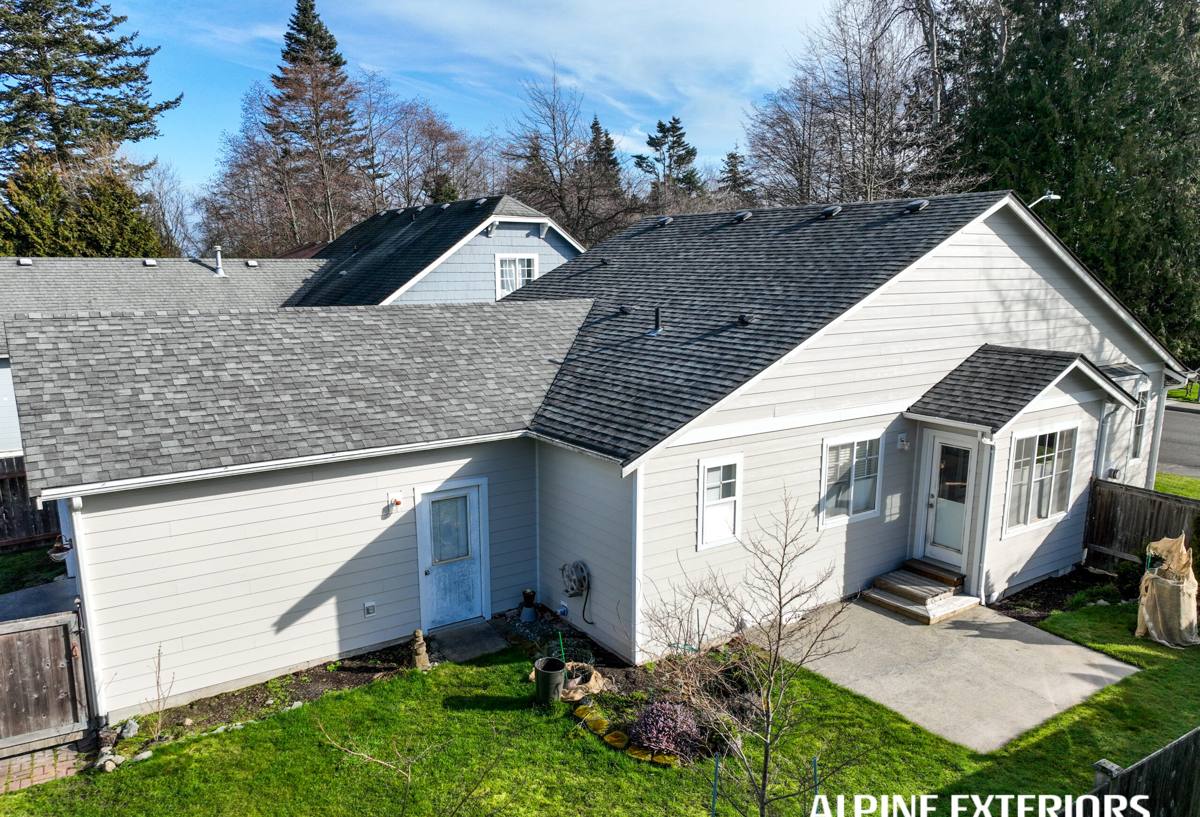
 Siding for South Hill Homes
South Hill sits close enough to the water and open enough to weather that its homes take a different kind of beating than houses tucked inland. Salt-laden air moves through on marine winds, driving rain comes in sideways during winter storms, and the long stretch of wet, mild months between fall and spring gives moss, algae, and mildew months to establish themselves on anything that stays damp. If you've owned a home here for more than a few years, you've probably already seen what that combination does to exterior siding that isn't built for it.
We install James Hardie fiber cement siding exclusively. Not as one option among several, but as the only product we put on homes. That's a deliberate standard, and it comes out of watching what actually holds up in Whatcom County conditions versus what looks good on a spec sheet. This page walks through what South Hill homes tend to face, how our siding, roofing, window, and deck work fits together as a system, and why the product we choose matters as much as the crew installing it.
What the Climate Does to Exterior Materials Here
Salt Air and Moisture
Proximity to Bellingham Bay and the greater Puget Sound means airborne salt is a real factor for exterior materials, even a few miles inland. Salt accelerates corrosion in fasteners and metal trim, and it interacts with certain siding coatings in ways that speed up fading and surface breakdown. Materials that aren't formulated to resist that exposure show it first in the paint or finish, then eventually in the substrate underneath.
Driving Rain
Whatcom County doesn't just get a lot of rain — it gets rain pushed horizontally by wind off the water often enough that water intrusion at seams, laps, and penetrations is a constant risk rather than an occasional one. Siding systems that rely on caulk and paint film alone to keep water out tend to fail at these joints over time, especially where installation wasn't precise to begin with.
Moss and Sustained Dampness
Because the region rarely gets a hard, dry stretch, moss and algae get a long runway to take hold on north-facing walls, shaded siding, and anywhere airflow is limited. On wood-based and wood-derived products, sustained dampness plus organic growth is a direct path to rot. On fiber cement, it's mostly a cosmetic issue that a wash resolves — a meaningful difference in long-term maintenance burden.
Why We Standardized on James Hardie
James Hardie fiber cement is engineered from cement, sand, and cellulose fiber — there's no wood content to absorb water and swell, rot, or feed fungal growth. It's factory-primed or finished with ColorPlus Technology, a baked-on coating that resists fading and chipping far better than field-applied paint, and it's non-combustible, which matters increasingly as wildfire smoke and dry-season risk become a bigger part of the Pacific Northwest conversation even in a historically wet county like this one.
Hardie also makes climate-specific product lines — HZ5 and HZ10 — engineered for different moisture and freeze-thaw profiles across the country. We install the line appropriate for Western Washington's conditions, not a generic national spec. Combined with a strong transferable warranty, that adds up to a product that's built for exactly the kind of weather South Hill sees, rather than one that merely tolerates it.
We get asked why we don't offer LP SmartSide, vinyl, Cemplank, Allura, or primed wood siding as alternatives. The honest answer: those products aren't defective, and plenty of contractors install them well. But each carries trade-offs — engineered wood's dependence on unbroken paint film, vinyl's expansion and impact limits, or less consistent factory finishes on some fiber cement competitors — that we've decided aren't worth the risk on a home we're putting our name behind in this particular climate. Standardizing on one proven system also means our crews install it constantly, which shows up in the quality of the finished product.
What a South Hill Siding Job Actually Involves
Assessment First
Before we talk siding, we look at the whole exterior envelope. Failing siding is frequently a symptom of a moisture problem that started somewhere else — a roof leak, a flashing gap, a window that's no longer sealing properly. Replacing siding without fixing the underlying cause just delays the same damage.
Weather-Resistant Barrier and Flashing
Given how much wind-driven rain this area sees, the water-resistive barrier and flashing details behind the siding matter as much as the siding itself. We pay particular attention to window and door flashing, deck ledger connections, and butt joints — the spots where most real-world leaks actually originate.
Installation to Manufacturer Spec
Fiber cement performs the way it's rated to perform only when it's installed to spec: correct fastener placement, proper clearances from grade and roof lines, and gaps left where the manufacturer calls for them. Shortcuts here are invisible on installation day and expensive to fix five years later.
Beyond Siding: Roofing, Windows, and Decks
We do siding, roofing, windows, and decks because these systems protect the same home from the same weather, and they intersect constantly. A roof that's shedding water improperly can wet the top course of siding for years before anyone notices. A window that's not flashed correctly can rot the wall cavity behind siding that otherwise looks fine. A deck attached without proper ledger flashing can be a chronic water source against the house. Handling these as one coordinated scope, rather than four separate trades that don't talk to each other, is part of how we keep a South Hill exterior performing as a system instead of a collection of parts.
Comparing Exterior Siding Options
| Material | Moisture Behavior | Maintenance | Finish Durability |
|---|---|---|---|
| James Hardie Fiber Cement | No wood content; resists rot and swelling | Occasional wash; no repainting on ColorPlus finish for years | Factory-baked ColorPlus resists fading/chipping |
| Engineered Wood (e.g. LP SmartSide) | Wood-based; performance depends on intact paint/coating | Requires diligent caulk and paint upkeep | Vulnerable if finish is breached |
| Vinyl | Doesn't rot but can trap moisture behind it | Low, but limited repair options if damaged | Can fade and become brittle over time |
| Primed Cedar/Spruce | Natural wood; needs consistent sealing | Highest — regular refinishing needed | Depends entirely on maintenance schedule |
Cost Factors for South Hill Projects
Every home is different, but a few factors consistently move the price on siding projects in this area:
- Home size and the amount of wall surface actually being sided
- Whether existing siding needs to be removed or there's sheathing/moisture damage to address first
- Number and complexity of corners, dormers, and trim details
- Siding profile chosen (lap, shingle, panel) and whether accent details are included
- Accessibility — steep sites, tight setbacks, or limited equipment access can add labor time
- Whether roofing, window, or deck work is bundled into the same project
We give exact numbers only after seeing the home in person — broad estimates without an inspection tend to be wrong in one direction or the other.
A Homeowner's Pre-Project Checklist
- Walk the exterior and note any soft spots, staining, or visible gaps around windows and trim
- Check for moss buildup on north-facing or shaded walls as an early moisture indicator
- Ask any contractor bidding the job whether they carry manufacturer certification for the product they're installing
- Get the warranty terms in writing — both the material warranty and the installer's workmanship warranty
- Confirm whether the bid includes removal and disposal of existing siding, not just new material and labor
- Ask how flashing and water-resistive barrier work will be handled, not just the visible siding
Why a Local Crew Matters
A crew that works Whatcom County year-round knows what a South Hill winter actually throws at a house, not just what a training manual describes. That shows up in small decisions — how tight to run a reveal, how much clearance to leave at grade, where to expect wind-driven rain to find a weak spot — that a crew unfamiliar with this specific coastal, wet-winter climate might get wrong. It also means we're accountable locally if something needs attention after the job is done, not a name on an invoice from somewhere else.
If you're weighing a siding project in South Hill — or want a second opinion on roofing, windows, or a deck while we're already looking at the exterior — we're happy to come take a look. The estimate is free, there's no pressure attached to it, and you'll get a straight answer about what your home actually needs.