 Whatcom County
 We get asked about Allura more than any other fiber cement brand besides the one we actually install. It's a fair question to ask a contractor who says "we only do James Hardie" — because unlike vinyl, LP SmartSide, or cedar, Allura isn't a different category of material. It's fiber cement, built from roughly the same recipe James Hardie uses. So the honest answer isn't "Allura is bad." It's more specific than that, and it's worth walking through in plain terms rather than a sales pitch either way.
Same Basic Material, Different Story
Allura manufactures fiber cement lap siding, panels, and trim from Portland cement, sand, and cellulose fiber, pressed and cured into a rigid board. That's the same fundamental chemistry behind James Hardie's siding. Both are non-combustible. Both resist the rot, swelling, and pest damage that eventually catches up with wood and engineered wood siding. Both hold paint and factory finishes far better than vinyl. If you're comparing Allura to cedar or vinyl, Allura wins that comparison on durability, and we won't pretend it doesn't.
So the real question for a homeowner in Bellingham, Ferndale, Lynden, or anywhere else in Whatcom County isn't "is this real fiber cement." It is. The question is what separates two fiber cement brands once you get past the raw material, and whether that difference is worth building a company standard around. We think it is, and here's why.
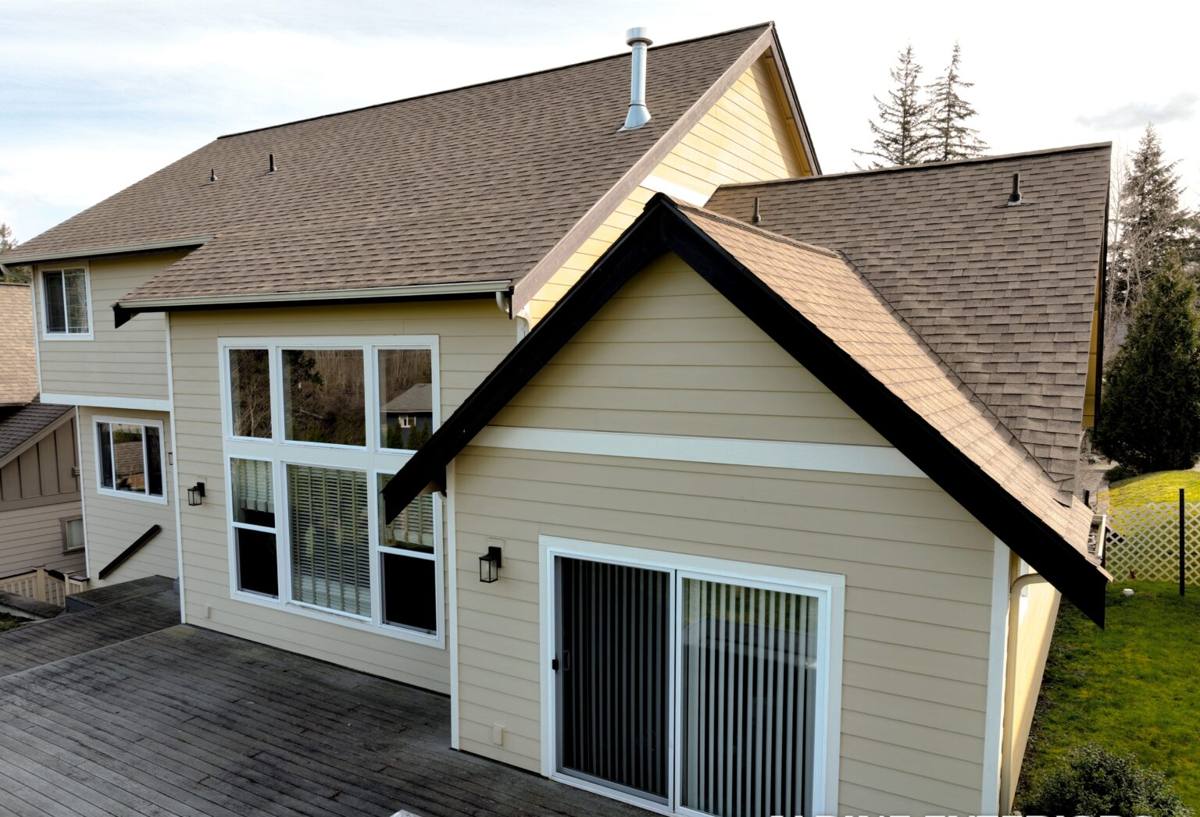
What Allura Gets Right
Credit where it's due. Allura is a legitimate manufacturer, not a discount knockoff riding on fiber cement's reputation. Its boards hold a straight reveal, resist moisture-driven warping, and are sold through real building supply channels, including some that reach the Pacific Northwest. Some of its plank profiles are functionally close to what Hardie offers, and it's typically priced a step below Hardie at the material level, which is exactly why it comes up in bid comparisons. A carefully installed Allura job by a crew that knows the product isn't a disaster waiting to happen. We're not making that claim. What we're explaining is why, given a choice, we don't put our name behind it.
The System Behind the Siding
Fiber cement siding isn't really a single product — it's a system that has to work together for 20 to 30 years: the lap boards, the trim, the soffit, the caulk, and the touch-up paint. If those pieces don't age and weather at the same rate, you end up with a wall that looks fine for a few years and then starts showing seams — literally. Color drift at the trim joints, caulk that lets go before the siding does, a repair patch that never quite matches the original finish.
Finish and Touch-Up Matching
James Hardie bakes its ColorPlus finish on in a factory process and backs it with a warranty on the finish itself, separate from the board underneath. It also sells a matched caulk and touch-up kit specifically so a repair five or ten years down the road blends in instead of standing out. Allura offers factory-finished options too, but the depth of dealer stock for exact-match touch-up product in this region is thinner. That's not a flaw in the board — it's a gap in the support network around it, and it's the kind of thing you only notice after a ladder scrapes a corner board or a downspout gets replaced.
Trim and Accessory Coordination
The other piece is trim. Hardie engineers its lap siding, trim, and soffit as one coordinated system with a shared spec sheet. With some Allura installations, the trim and accessories end up sourced from whatever the local supply house happens to stock that week, because the fully matched system infrastructure isn't as built out here. On its own, that's a small thing. Over a couple of decades of Whatcom County weather, small things compound.
Whatcom County's Climate Doesn't Forgive Small Gaps
None of this would matter as much in a dry, mild climate. It matters here. Salt air off Bellingham Bay and the Strait accelerates corrosion on fasteners and breaks down caulk and finish coatings faster than an inland home would see. Storms coming off the water drive rain sideways into walls instead of letting it run straight down, which puts sustained pressure on every seam, joint, and piece of flashing on a house. And the shaded, tree-covered lots common across this county support a moss season that can run most of the year on north- and west-facing walls, feeding on any surface that holds moisture and organic debris.
That climate is exactly why fiber cement, done right, is the correct call here over wood or vinyl in the first place. But it also raises the cost of any small mismatch between siding, trim, and finish. A house with a thin dry season to recover in doesn't give a marginal system much room for error.
Allura vs. James Hardie at a Glance
| Factor | Allura Fiber Cement | James Hardie Fiber Cement |
|---|---|---|
| Core material | Portland cement, sand, cellulose fiber | Portland cement, sand, cellulose fiber |
| Fire resistance | Non-combustible | Non-combustible |
| Moisture resistance | Strong, as with any fiber cement product | Strong, as with any fiber cement product |
| Climate-specific formulation | General-purpose product line | Regional HZ product lines engineered for zones like the Pacific Northwest |
| Factory finish system | Available; smaller regional network of matched touch-up products | ColorPlus baked-on finish with a widely stocked, color-matched touch-up system |
| Trim and accessory match | Not always sourced as one coordinated system in this region | Siding, trim, and soffit engineered and marketed together |
| Local installer familiarity | Fewer crews with deep, repeated experience in this county | Well-established base of experienced local installers |
| Typical material cost | Somewhat lower | Somewhat higher |
Both rows start from the same material. The differences live in the depth of the system, the finish infrastructure, and the local track record standing behind the board once it's on a wall.
Warranty and What It Means Ten Years Out
Allura backs its siding with a manufacturer's warranty, and we have no reason to doubt it's honored when a legitimate claim comes in. What we weigh differently is how that warranty plays out in practice over the life of the siding: how many local crews are experienced enough with the product to make a warranty-compliant repair a decade from now, how easily an exact-match plank or touch-up kit can be sourced locally if something gets damaged, and how familiar local home inspectors and appraisers are with the brand when the house eventually goes up for sale. Hardie's warranty and finish system have a long, well-documented history in this region, which makes those future moments — a repair, an addition, a resale — more predictable.
Why We Standardized on One Manufacturer
We made a deliberate decision to install a single fiber cement system rather than quoting whichever brand is cheapest that month. James Hardie's climate-specific product lines, factory ColorPlus finish, matched trim system, and a strong transferable warranty add up to fewer small mismatches over a house's real service life. Just as important, installing one system exclusively means our crews are genuinely expert in it — the fastening schedule, the caulk joints, the finish repair process — instead of splitting attention across two brands and being fully fluent in neither. That's the standard we're comfortable putting on a home dealing with salt air, driving rain, and a moss season that doesn't take much of a break.
Questions Worth Asking Before You Sign a Contract
If you're comparing bids and one is built around a brand other than Hardie, these questions will tell you more than the glossy brochure will:
- Are the siding, trim, and touch-up paint all coming from the same manufacturer, or is the crew mixing brands based on what's in stock?
- How many jobs has this contractor completed with this specific brand in Whatcom County, and can they describe how those houses have held up?
- What does the manufacturer's warranty actually require for the installation to stay valid — and is that spelled out in writing?
- If a plank gets damaged in five or ten years, how easily can a matching replacement be found locally?
- Is the color a factory-baked finish, or will it depend on field-applied paint down the line?
- How well-known is this brand to local inspectors and appraisers if the home is ever sold?
Our Standard, Not a Verdict on Allura
We're not telling Whatcom County homeowners that Allura siding is going to fail on their house. It's a genuine fiber cement product, and in the hands of a crew that installs it regularly and carefully, it can perform reasonably well. What we're telling you is why we looked at the depth of the matched system, the local installer base, the finish and repair network, and the warranty track record in this specific marine climate, and decided that standing behind one fully coordinated system gives homeowners the most predictable result over 20 to 30 years of salt air, sideways rain, and moss pressure. That's a professional standard built around what holds up here — not a claim about any particular Allura job.
If you're weighing siding options for a home anywhere in Whatcom County, we're happy to take a look at your property, talk through your exposure and current siding condition, and give you a straight answer about what we'd recommend. Reach out for a free, no-pressure estimate.