 Whatcom County
 Siding Built for Edgemoor's Waterfront Exposure
Edgemoor sits above Bellingham Bay, and that position is a mixed blessing for the homes here. The views are part of what makes the neighborhood desirable, but the same exposure that gives you those views also puts your siding in the direct path of salt-laden air, wind-driven rain, and a moss season that can run eight or nine months out of the year. Whatcom County's marine climate is demanding everywhere, but bluff and waterfront lots like the ones common in Edgemoor take an extra dose of it — more wind, more moisture pressure on the windward walls, and faster biological growth in the shaded, damp spots under mature tree canopy.
We're a local crew that works this exposure regularly, and it changes how we think about a siding job here compared to a more sheltered lot inland. The product, the flashing details, and the maintenance conversation all shift when salt air and standing moisture are part of the picture.
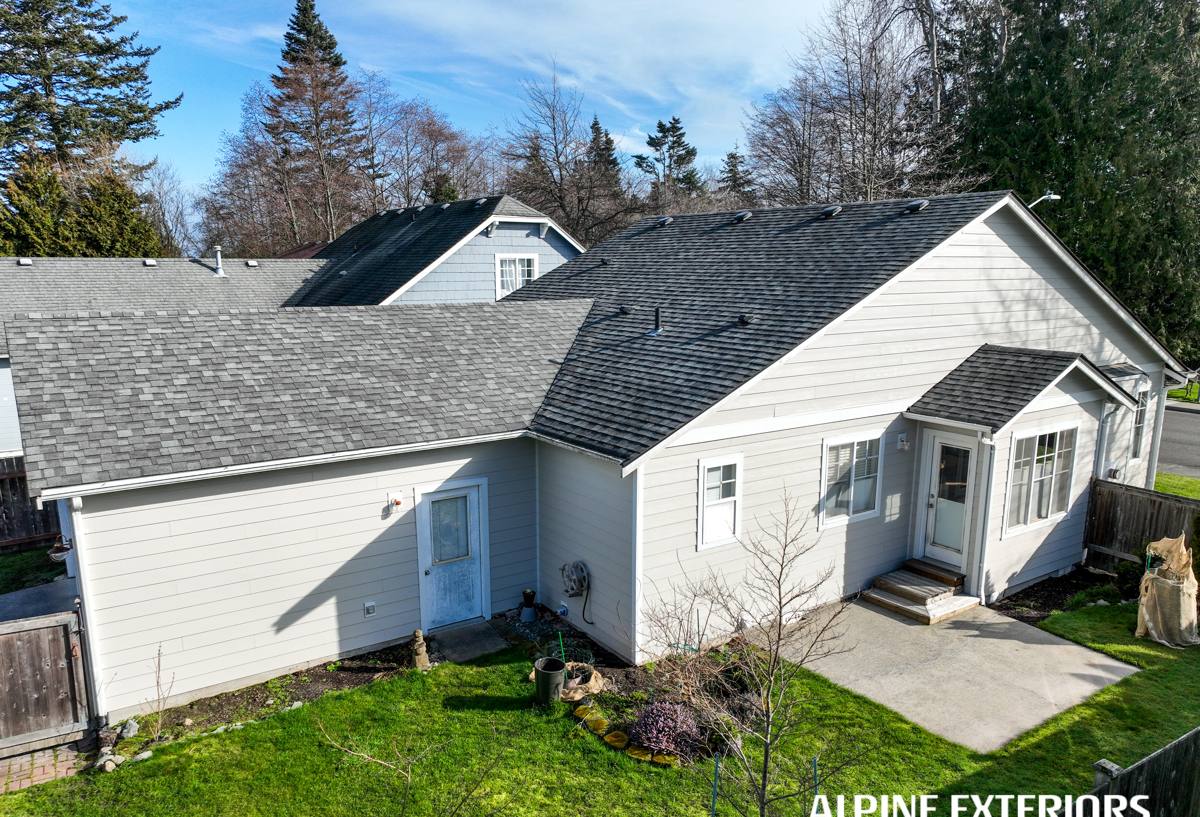
What Salt Air Actually Does to Exterior Materials
Salt air doesn't just sit on a surface — airborne salt is hygroscopic, meaning it pulls moisture out of the air and holds it against whatever it lands on. On a home near Bellingham Bay, that means fasteners, trim, and siding faces see more sustained dampness than the same materials would a few miles inland, even on days that aren't raining. Over years, this accelerates corrosion on the wrong fastener types and speeds up the breakdown of finishes that aren't formulated to shed water and resist salt exposure.
Where It Shows Up First
- Fastener heads and any exposed metal trim, especially on the windward (bay-facing) elevation
- Butt joints and seams where water can wick in behind the surface finish
- Lower courses near grade, where splash-back and settled moisture combine with salt residue
- Paint or coating failure points — chalking, peeling, or blistering — showing up years earlier than they would on a sheltered inland home
Moss, Shade, and the Long Wet Season
Edgemoor's tree cover is part of the neighborhood's character, but mature evergreens mean a lot of shaded wall area that doesn't dry out between Whatcom County's frequent rain events. Moss and algae need exactly that combination — moisture and low sun exposure — and once established, they hold water against the siding surface, which is worse for the material underneath than the moss itself. On wood-based products, sustained moss coverage can contribute to rot at the surface level over time. On any siding, it's a maintenance headache and a curb-appeal problem that keeps coming back if the underlying material doesn't resist it well.
We don't promise any siding product is moss-proof — moss will grow on almost any exterior surface given enough shade and moisture. What matters is how the material holds up to the cleaning and pressure-washing it takes to keep it in check, year after year, without the surface degrading.
Why We Install Only James Hardie Fiber Cement
We standardized on James Hardie siding for every job we do, including here in Edgemoor, and the reasoning comes directly from conditions like these. Fiber cement is not organic material — it doesn't feed moss or algae the way wood-based products can, and it doesn't absorb and swell with moisture the way engineered wood siding does. That matters a lot on a bay-facing bluff lot where the walls stay damp longer than average.
What Makes Hardie Specifically Suited to This Climate
- Non-combustible core — not a factor from salt air, but relevant given regional wildfire smoke seasons and insurance considerations
- ColorPlus factory finish — baked-on finish engineered to resist fading and hold up to UV and moisture better than field-applied paint, which matters when repainting a bluff-exposed home is a bigger job than a sheltered one
- HZ5 product engineering — Hardie's HZ product lines are formulated by climate zone; Pacific Northwest installations use the moisture-and-freeze-cycle-appropriate formulation rather than a one-size-fits-all product
- Dimensional stability — fiber cement doesn't swell, cup, or delaminate the way wood-based sidings can when they take on repeated moisture cycling
We made a deliberate choice not to install LP SmartSide, vinyl, or cedar and primed-wood products. Each of those has legitimate uses and honest strengths — cedar has real appeal, vinyl is inexpensive, engineered wood siding installs quickly — but on a marine-exposed, moss-prone lot, we've seen where each of those trade-offs shows up over a 10-to-20-year horizon, and it's not where we want to put our name on the work. Fiber cement's moisture resistance and finish durability are the better match for what Edgemoor's exposure actually does to a house.
How We Approach an Edgemoor Siding Job
Assessment First
Every job starts with a walk of the exterior, elevation by elevation. A bay-facing wall and a tree-shaded side wall on the same house can need different flashing and ventilation attention even though they're getting the same siding product. We look at existing moisture damage, check window and door flashing, and note where moss or algae staining tells us where water is lingering.
Install Details That Matter Here
- Correct fastener spacing and type — stainless or hot-dipped galvanized fasteners where salt exposure calls for it, installed to Hardie's published fastening schedule
- Proper rainscreen/drainage plane behind the siding so any moisture that does get past the surface has somewhere to go
- Careful flashing and kick-out details at rooflines and windows, since that's where most real-world water intrusion actually starts, not through the field of the siding itself
- Caulking and sealant only where Hardie's install specs call for it — over-caulking traps moisture rather than shedding it
Siding Doesn't Work Alone — Roofing, Windows, and Decks
On a bluff or waterfront property, siding is one piece of a building envelope that has to work together. We handle roofing, windows, and decks alongside siding for exactly this reason — a new siding job with an aging roof or failing window flashing upstream of it is set up to fail early, no matter how good the siding install is. When we scope a project in Edgemoor, we look at the whole exterior, not just the walls, and flag anything upstream that's likely to undermine new siding work.
Cost Factors for This Area
| Factor | Why It Matters Here |
|---|---|
| Wall exposure (bay-facing vs. sheltered) | Windward walls may need upgraded fastener specs and more attention to drainage detailing |
| Existing moss/moisture damage | Sheathing repair or added drainage plane work adds cost but prevents repeat failure |
| Tree canopy and access | Shaded, tight-access lots can affect scaffolding, staging, and cleanup time |
| Trim and detail complexity | Bluff-view homes often have more window and trim detail, which affects labor hours |
| Tear-off vs. overlay | Full removal of failing material costs more upfront but avoids trapping moisture behind new siding |
We give straight, itemized estimates rather than vague per-square-foot numbers, because the factors above vary a lot from one Edgemoor lot to the next even within a few blocks of each other.
Maintenance Expectations After Install
No siding eliminates maintenance entirely, and we're upfront about that. Fiber cement dramatically reduces the maintenance burden compared to wood-based or vinyl products in this climate, but a bay-facing or shaded home in Whatcom County still benefits from periodic gentle washing to keep moss and salt residue from building up, and from an occasional look at caulking and trim paint (on painted trim elements) to catch anything early. We'll walk you through a realistic maintenance schedule specific to your lot's exposure at the time of install — it's different for a full-sun south wall than it is for a shaded north wall under fir trees.
Why a Local Crew Matters
A crew that works Whatcom County exteriors regularly knows the difference between a job on a sheltered inland street and one on an exposed bluff lot before they ever pull a tape measure. We know how the marine layer behaves through the seasons here, which elevations take the worst of it, and where past jobs in similar spots have run into trouble. That local pattern recognition is worth more than a generic install crew working off a spec sheet with no feel for the site.
If you're planning a siding project in Edgemoor — or want a second opinion on a roofing, window, or deck issue tied into it — we're happy to walk the property and give you a straight, no-pressure estimate. There's no obligation, just an honest look at what your home actually needs.