 Whatcom County
 Two Very Different Materials, Often Compared as if They're the Same
Homeowners in Bellingham, Ferndale, Lynden, and around Whatcom County frequently ask us to weigh James Hardie fiber cement against LP SmartSide when they're planning a re-side. It's a fair question — both are marketed as upgrades over vinyl, both come pre-primed or pre-finished, and both are installed by reputable contractors across the Pacific Northwest. But they are not variations on the same idea. One is a cement-based product engineered to be dimensionally stable and non-combustible. The other is an engineered wood product — strands of wood fiber bonded with resin under heat and pressure, then coated with a resin-saturated overlay. That core difference in chemistry drives almost everything else in this comparison, especially in a climate like ours.
James Hardie: Fiber Cement
James Hardie siding is made from portland cement, sand, and cellulose fiber, cured into a rigid, stable board. It doesn't expand and contract the way wood does with humidity swings, it doesn't support combustion, and it doesn't feed rot fungi the way organic wood fiber can. Hardie's HardieZone system also lets manufacturers formulate products specifically for wetter, more humid regions like ours (HZ10), rather than a single national formula.
LP SmartSide: Engineered Wood
LP SmartSide is a genuine improvement over old-school primed spruce or cedar lap siding — it's engineered for better consistency, and LP backs it with a real warranty and a resin-saturated strand technology (SmartGuard) designed to resist moisture better than raw wood. But at its core, it is still a wood-based product. Wood fiber, even engineered and treated, is organic material, and organic material behaves differently than cement when it's exposed to sustained moisture over decades — which is exactly the condition Whatcom County siding lives in.
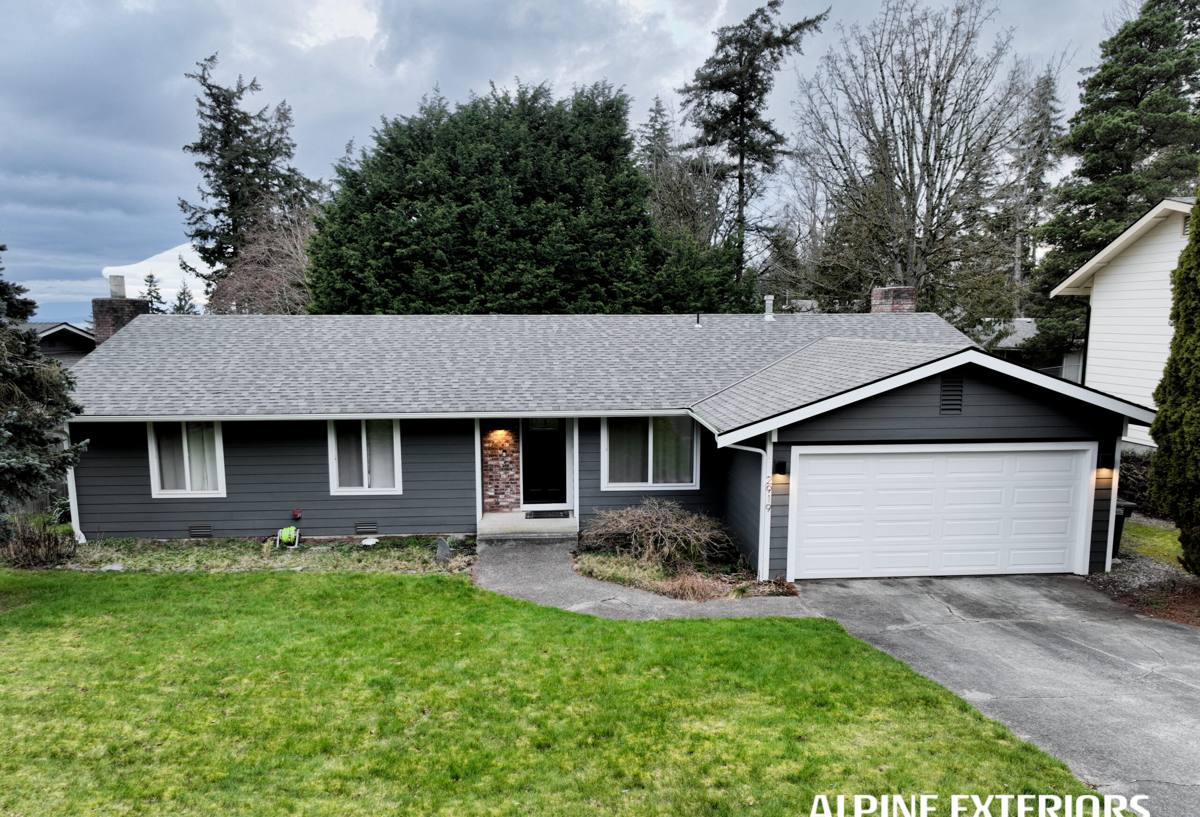
How Each Product Holds Up in Whatcom County's Climate
This is the part of the comparison that actually matters for your house, not just on a spec sheet. Whatcom County sits in a temperate rainforest zone: salt air off Bellingham Bay and the Strait of Georgia, driving rain that comes in sideways during winter storms, and a long moss and mildew season that can run eight months out of the year on north- and west-facing walls. Siding here doesn't just get rained on — it stays damp, in shade, for extended stretches, especially under eaves, behind shrubs, and on the shady side of the house.
Fiber cement doesn't absorb water into its structure the way wood strand product does. It can get wet on the surface and dry out without the underlying material swelling, cupping, or breaking down. Engineered wood siding, even with a resin overlay, is more dependent on that surface layer staying fully intact — every cut edge, nail penetration, and field seam is a place where moisture can find its way into the wood strand core if it isn't sealed and maintained exactly as specified. In a climate that gets this much sustained wet weather, that maintenance margin matters more here than it would in a drier region.
Moisture Is the Whole Story
Manufacturers of engineered wood products have made real advances in moisture resistance compared to old primed wood siding, and LP's SmartGuard process is a legitimate engineering improvement. But no wood-based product, however well engineered, becomes immune to water. The failure mode for engineered wood siding is almost always the same: moisture gets past the factory coating at an unsealed cut end, a nail hole, a butt joint, or a caulk line that's failed, and it wicks into the strand substrate. Once that happens, swelling, delamination, and eventual softening can follow — and because it's happening from the inside out, it's often not visible until it's advanced.
Fiber cement has a fundamentally different relationship with water. It's not waterproof — no exterior cladding is — but it's not degraded by water contact the way an organic material can be. That's not a marketing claim, it's just what portland cement is. This is the single biggest reason we standardized on Hardie for a market like ours, where the number of consecutive damp days each year is high.
Fire Performance
Fiber cement is non-combustible. Engineered wood siding, even treated, is a wood product and will burn. Wildfire risk is lower on the west side of the Cascades than in Eastern Washington, but insurance underwriting increasingly factors in cladding material regardless of region, and it's a straightforward, non-debatable difference between the two products worth knowing before you decide.
Maintenance and Long-Term Ownership
Every siding product needs some maintenance. The difference is in what kind, and how much is riding on you keeping up with it.
| Factor | James Hardie Fiber Cement | LP SmartSide Engineered Wood |
|---|---|---|
| Repainting cycle | ColorPlus factory finish: typically 15+ years before repaint is needed | Factory-primed or prefinished; repainting generally needed on a shorter cycle, especially on sun/rain-exposed elevations |
| Cut-edge sealing | Recommended for best appearance, but material won't rot if missed | Required — unsealed cut ends are a primary moisture entry point |
| Moisture vulnerability | Doesn't absorb/swell; not a food source for rot fungi | Can swell, delaminate, or soften if coating is compromised over time |
| Combustibility | Non-combustible | Combustible (wood-based) |
| Pest resistance | Not a food source for insects | Treated against fungal decay and insects, but still organic material |
Installation Sensitivity
Both products are warranty-sensitive to installation quality — that's true of essentially every modern siding system, and it's one reason we're picky about crew training regardless of the brand. But engineered wood siding tends to have less margin for error. Manufacturer specs on caulking, flashing, ground clearance, and cut-end sealing are not optional details; skipping any of them shortens the path to moisture intrusion. Fiber cement has its own installation requirements — proper fastening, clearances, and joint treatment matter a great deal for both performance and warranty coverage — but the consequence of a missed detail tends to be cosmetic rather than structural, because the base material itself isn't degrading from moisture contact the way wood strand can.
Warranty Structure
James Hardie backs its siding with a non-prorated limited warranty (30 years on most lap and panel products) and a separate finish warranty on ColorPlus prefinished color, and that warranty is transferable to a new owner if the home sells — a real factor in resale. LP SmartSide also offers a substantial limited warranty on its products, and it's a legitimate, honored warranty from an established manufacturer. Where the two diverge most is in what tends to void coverage: warranty claims on engineered wood products are more frequently tied to strict adherence to installation and maintenance requirements (sealing, coating maintenance, ground clearance) than fiber cement warranty claims are.
Cost Factors to Weigh
- Material cost: LP SmartSide typically has a lower material cost than James Hardie; Hardie carries a premium tied to its cement-based composition and factory finish.
- Installation cost: Comparable in most cases — both are professional-grade products installed by trained crews.
- Repainting over 20-30 years: ColorPlus-finished Hardie generally needs repainting far less often than a primed or prefinished wood-based product, which can close or reverse the up-front cost gap over the life of the siding.
- Repair costs: Localized moisture damage on engineered wood, if it occurs, can require board replacement; fiber cement's exposure to that specific failure mode is lower.
- Resale and appraisal: Fiber cement is widely recognized by appraisers and buyers as a premium, low-maintenance material, which can support home value.
Why We Only Install James Hardie
We're not going to tell you LP SmartSide is a bad product — it isn't. It's a legitimate, warrantied, widely used engineered wood siding that plenty of reputable contractors install well. But we made a decision as a company to specialize in one material rather than offer several, and we chose fiber cement because of what this specific climate does to a house over 20 or 30 years. Whatcom County's combination of salt air, sustained driving rain, and a moss season that runs most of the year rewards materials that don't depend on an unbroken factory coating to stay structurally sound. Fiber cement fits that requirement in a way that no wood-based product, however well engineered, fully can. Add in the non-combustibility, the long factory finish life, and the transferable warranty, and Hardie is what we're willing to put our name behind and install on Whatcom County homes.
Get an Honest Look at Your Home
If you're comparing siding options for a home in Bellingham, Ferndale, Lynden, or elsewhere in Whatcom County, we're happy to walk your property, talk through what our climate does to different materials, and give you a straightforward, no-pressure estimate for a James Hardie install.