 Whatcom County
 Siding in Sunnyland Has to Answer to Bellingham Bay
Sunnyland sits close enough to Bellingham Bay and the surrounding waterways that homes here deal with a version of Pacific Northwest weather that's a step harsher than what you'd find further inland in Whatcom County. Salt-tinged air, wind-driven rain off the Sound, and long stretches of gray, damp months add up to real wear on an exterior — and it shows up first on the siding, since that's the material standing between the weather and the framing behind it.
We've worked on homes throughout this neighborhood and across Whatcom County long enough to know that what holds up on a dry-side house in Eastern Washington doesn't necessarily hold up here. Sunnyland's mix of older homes and newer infill means we see a wide range of siding conditions on any given street — some houses are on their second or third re-side, others are still wearing original wood siding that's finally reached the end of its service life. Either way, the climate math is the same: this is a marine environment, and the exterior needs to be built for it.
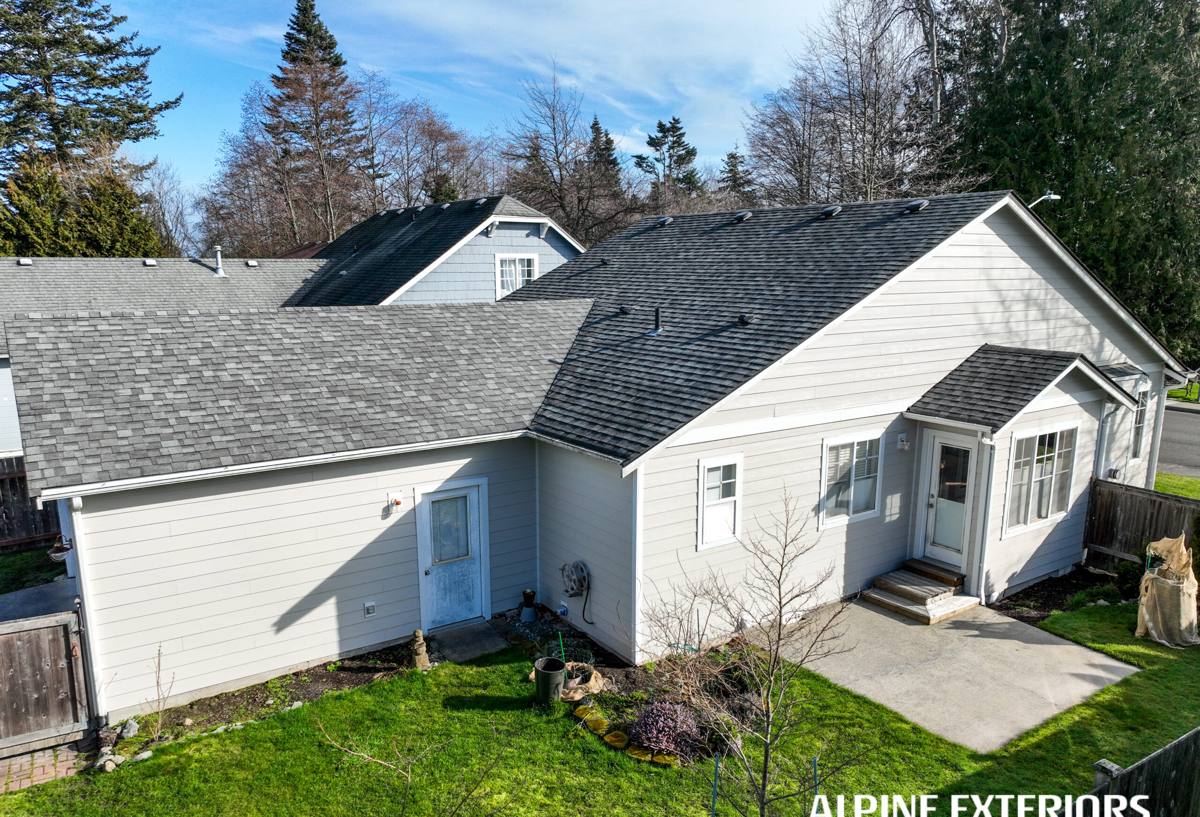
What Salt Air, Driving Rain, and Moss Actually Do to Siding
Salt-Laden Air
Proximity to saltwater means airborne salt settles on exterior surfaces over time. It's not dramatic, but it's persistent — salt is hygroscopic, meaning it pulls moisture out of the air and holds it against whatever surface it's on. On metal fasteners and trim, that accelerates corrosion. On wood-based sidings, it keeps the surface damper than it would be a few miles inland, which shortens the life of paint film and speeds up rot at seams and end cuts.
Driving Rain
Whatcom County doesn't get the heaviest rainfall totals in the state, but Bellingham's exposure to wind off the water means rain often arrives at an angle rather than falling straight down. Driving rain finds every gap in a siding system — poorly lapped joints, unsealed penetrations, nail heads that were left exposed. Once water gets behind the siding, it doesn't dry out quickly in our climate, and that's when sheathing rot and mold start.
Moss and Organic Growth
Long, mild, wet stretches from fall through spring are exactly what moss, algae, and mildew need to establish themselves on north-facing walls, under eaves, and anywhere shade keeps a surface from drying. On wood and wood-composite sidings, organic growth holds moisture against the material and can work into seams over years. It's more of a cosmetic and maintenance issue on properly installed fiber cement, but it's a real structural concern on materials that absorb water.
Why We Only Install James Hardie Fiber Cement
We made a deliberate decision as a company to install one siding system — James Hardie fiber cement — rather than offer a menu of products with different climate tolerances. In a coastal Whatcom County market, that's not a marketing angle, it's a practical one. Fiber cement is non-combustible, doesn't support the kind of moisture-driven rot that wood-based products are prone to, and holds its factory finish far longer than field-applied paint.
James Hardie also engineers its product line by climate zone, and homes in our region qualify for the HZ5 formulation, built specifically for wetter, harsher weather patterns like the ones Whatcom County sees. The ColorPlus factory-applied finish process gives the material a baked-on, UV-cured coating that resists fading and chipping better than paint applied on site, which matters when a house is going to spend a decade or more getting rained on sideways.
The other piece is the warranty. Hardie's product warranty is transferable to a new owner if the home sells, which is worth something to a homeowner thinking about resale value down the road — buyers in this market increasingly ask what the siding is and when it was done.
What We Don't Install — and the Honest Reasons Why
Part of being straight with homeowners is explaining what we've chosen not to work with, and why, rather than just pushing our own product.
Vinyl Siding
Vinyl is inexpensive and low-maintenance in mild climates, but it's a petroleum-based product that expands and contracts significantly with temperature swings, and it can become brittle over time. In a wind-exposed coastal setting, panels are more prone to cracking on impact and to blowing loose at the edges than fiber cement is.
LP SmartSide and Other Engineered Wood Products
Engineered wood siding has improved a lot over the years, but it's still a wood-based product at its core, which means it's more sensitive to sustained moisture exposure than fiber cement. In a marine climate with a long wet season, we'd rather not put a product on a house that depends on flawless caulking and touch-up maintenance to keep water out long-term.
Cedar and Primed Spruce
Natural wood siding has real appeal, and we understand why some homeowners want it. But it requires a maintenance commitment — refinishing on a regular cycle, vigilant caulking, and prompt attention to any spot where the finish fails — that most homeowners underestimate until they're a few years in. In Bellingham's climate, that maintenance window shrinks faster than it would somewhere drier.
Cemplank and Allura
These are also fiber cement products, and they're not inherently bad materials. We simply standardized on one manufacturer's system so our crews install to one spec, one set of manufacturer details, and one warranty structure — consistency that pays off in installation quality.
How We Approach a Siding Job in Sunnyland
Inspection and Tear-Off
Every job starts with pulling back existing siding to check the sheathing and framing underneath, especially around windows, doors, and any spot where past leaks may have gone unnoticed. This is often the first real look anyone's had at the wall assembly in decades, and it's where we catch problems before they get covered up again.
Weather Barrier and Flashing
Given how much of Sunnyland's siding wear comes down to water management, we pay close attention to the weather-resistive barrier and flashing details — window heads, sills, deck ledgers, and anywhere two building planes meet. This is the layer that does the real work of keeping driving rain out, and it matters more than the siding material itself.
Installation to Manufacturer Spec
James Hardie's warranty depends on installation following their published specifications — proper fastener spacing, clearances, and joint treatment. We install to that spec as a baseline, not an upsell.
Finish Details
Trim, caulking at transitions, and touch-up on any factory-finish cuts are what keep the final look clean and keep water from finding a way in at the small joints.
Beyond Siding: Roofing, Windows, and Decks in the Same Climate
Siding doesn't work in isolation — a roof that's shedding granules, windows with failed seals, or a deck that's trapping moisture against the house all put extra load on the exterior envelope. We handle roofing, windows, and decks as well as siding, which means we can look at a Sunnyland home as a whole system rather than patching one component while ignoring another that's contributing to the same moisture problems.
Moss on a roof, for instance, often mirrors moss on siding — it's a sign of persistent shade and moisture, and it's worth addressing both at once rather than separately. Similarly, older windows with failed flashing are one of the more common sources of hidden water damage we find when we open up walls during a siding project.
What Siding Replacement Typically Depends On
Every home is different, but these are the main factors that drive scope and cost on a Sunnyland siding project:
| Factor | Why It Matters |
|---|---|
| Home size and wall complexity | More corners, gables, and trim details mean more labor and material |
| Condition of sheathing underneath | Rot or water damage found during tear-off adds repair scope |
| Existing siding material | Removal effort varies between wood, vinyl, and older fiber cement |
| Trim and accent choices | Board-and-batten, shake-style panels, or custom trim add cost over standard lap siding |
| Access and site conditions | Slopes, tight lot lines, and landscaping can affect setup and staging |
Choosing a Contractor for a Coastal Whatcom County Home
Not every siding crew has real experience with marine-climate installation details, and the difference shows up years later in the form of premature moisture damage. A few things worth checking before hiring anyone for exterior work in Sunnyland or elsewhere in Whatcom County:
- Ask whether the crew is certified or specifically trained on the siding manufacturer's installation requirements
- Confirm they'll address flashing and weather barrier details, not just the visible siding panels
- Get clarity on who handles warranty claims — the manufacturer, the installer, or both
- Ask how they handle unexpected sheathing damage found during tear-off
- Check that they're licensed and insured to work in Washington State
- Ask for a written scope that specifies the exact product line and finish, not just "fiber cement siding"
A local crew that works this climate regularly will know, without being told, why a window head flashing detail matters more here than it might in a drier region, and why a north-facing wall in Sunnyland needs different attention than a south-facing one.
Get a Straight Answer for Your Home
If your Sunnyland home's siding is showing moss, cracked paint, soft spots, or just age, it's worth getting an honest look before deciding what to do next. We'll walk the exterior with you, explain what we're seeing, and lay out what a James Hardie re-side would involve for your specific house — no pressure, no inflated scope. Reach out for a free estimate using the form below.