 Whatcom County
 Why Windows in Samish Take More Abuse Than the Catalog Photos Suggest
Samish sits in a stretch of Whatcom County where the weather doesn't do you any favors. You've got salt-laden air drifting in off the water, driving rain that hits window glass and frames sideways rather than straight down, and a moss season that can stretch from October clear through April. None of that is dramatic on its own, but stacked together, year after year, it's exactly the kind of slow, grinding exposure that ages a window long before its glass actually fails.
Most homeowners don't think about their windows until something obvious goes wrong — a foggy pane, a drafty bedroom, a sill that's gone soft. By then the window has usually been losing efficiency for years. In a climate like ours, the gap between a window that's "still working" and one that's actually doing its job — keeping conditioned air in, keeping moisture and salt air out — tends to be wider than people expect.
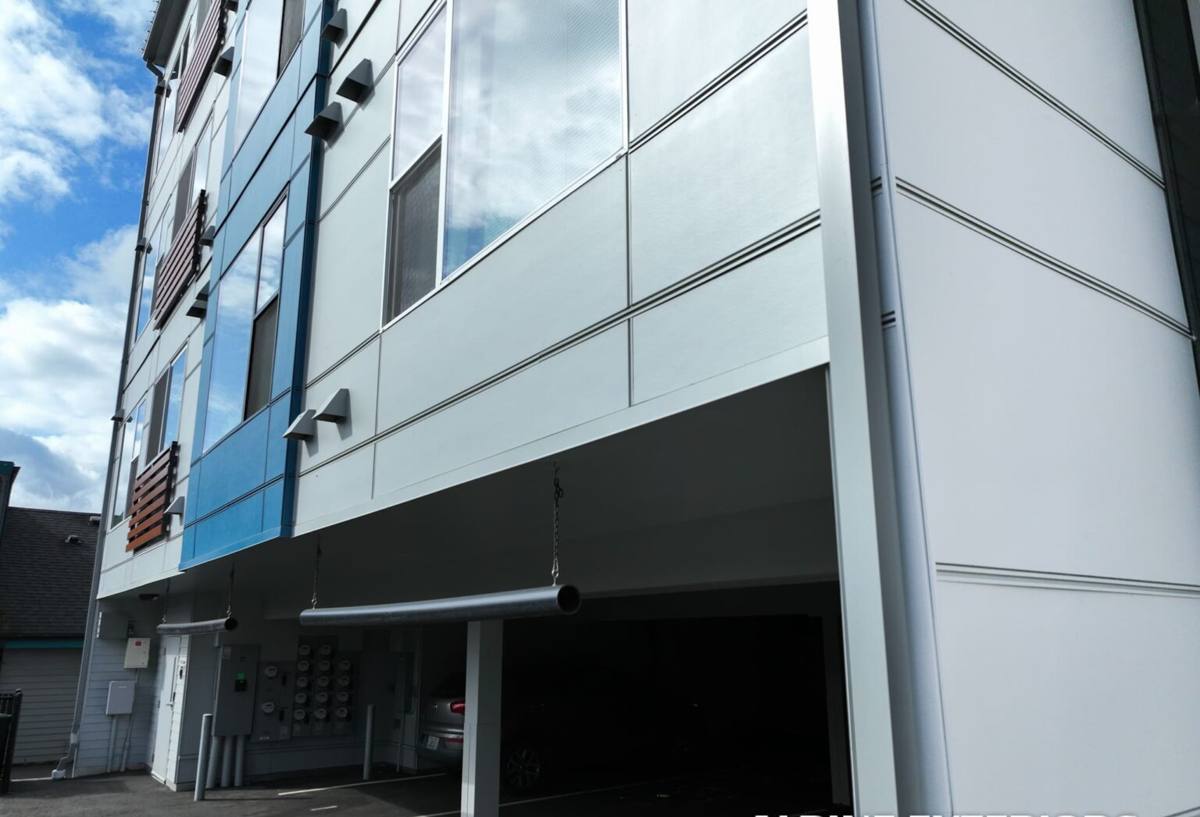
What Salt Air, Driving Rain, and Moss Season Actually Do to a Window
Salt Air
Airborne salt is corrosive to exposed metal hardware — hinges, cranks, locks, and especially aluminum frames or components that aren't fully protected. It also breaks down some sealants and finishes faster than they'd wear in a dry inland climate. This is a slow process, but it's cumulative, and it's part of why frame material matters more here than it would somewhere landlocked.
Driving Rain
Wind-driven rain doesn't just sit on a window and run off — it gets pushed sideways and even upward against the glass and frame, which stresses the flashing and sealant details around the opening far more than a straight vertical downpour would. A window that's watertight in a calm rain can still leak under sustained wind-driven conditions if it wasn't flashed correctly to begin with.
Moss Season
Long stretches of damp, low-light weather keep moisture sitting on and around window frames and sills longer than in a drier climate. That extended dampness is what feeds moss, algae, and mildew growth on sills and trim, and it's also what finds its way into any gap in a weather barrier or sealant joint that isn't doing its job.
What "Energy-Efficient" Actually Means for a Window Here
Energy-efficient is a real, measurable term, not a marketing label. Every window sold in the U.S. carries an NFRC (National Fenestration Rating Council) label with a few numbers that matter more than the brand name on the sticker:
- U-factor — how well the window resists heat loss. Lower is better; this is the number that matters most for our mild-but-damp winters.
- SHGC (Solar Heat Gain Coefficient) — how much solar heat passes through. In the Pacific Northwest this matters less than it does in sunnier climates, but it still affects west- and south-facing rooms.
- Air Leakage rating — how much air moves through the assembly. Lower matters a lot here, since draft loss compounds with the constant damp and wind we deal with.
A window can look identical to another on the showroom floor and perform very differently once you compare these ratings. Part of doing this job right is actually reading that label with you, not just quoting a model number.
Frame Material: What Holds Up in This Climate and What Doesn't
There's no single "best" frame material for every home — it depends on budget, the home's age and construction, and how exposed the windows are to wind and salt air. Here's how the common options actually compare for a Whatcom County home:
| Frame Material | Moisture & Salt-Air Performance | Maintenance | Typical Cost Position |
|---|---|---|---|
| Vinyl | Good — won't corrode or rot; seams are the main weak point if not installed well | Low | Most affordable |
| Fiberglass | Excellent — dimensionally stable, resists moisture and salt exposure well | Low | Mid to upper-mid |
| Wood-clad | Fair to good — cladding protects the exterior, but any breach exposes wood to rot risk | Moderate to high | Higher |
| Aluminum | Weaker in salt air unless well-finished — prone to corrosion and poor thermal performance | Low to moderate | Varies |
We steer most Samish homeowners toward vinyl or fiberglass unless there's a specific reason — historic trim detail, a design requirement — to go another direction. It's not that wood-clad or aluminum windows are bad products; it's that in a marine climate with this much sustained moisture and salt exposure, they carry more long-term maintenance burden and more risk if a seal or finish is ever breached. That's a trade-off worth being upfront about before you buy.
Signs Your Current Windows Are Already Costing You Money
Efficiency loss is gradual, so it's easy to miss. Walk your house and check for these:
- Condensation or fogging between the panes (not just on the surface) — this means the seal has failed and the insulating gas has escaped
- Visible drafts near the frame on a windy day, even with the window latched shut
- Moss, algae, or dark staining building up on sills or bottom rails faster than the rest of the trim
- Soft or discolored wood around the frame, especially at the bottom corners where water collects
- Difficulty opening, closing, or locking — hardware that's corroded or a frame that's swelled slightly out of square
- Rooms near windows that feel noticeably colder or draftier than the rest of the house
- A heating bill that's crept up without an obvious explanation
Any one of these on its own isn't an emergency. Several of them together, especially on the same window, usually means it's past the point where repair makes more sense than replacement.
What a Correct Installation Actually Involves
The window unit itself is only part of the job. Most leaks and premature failures we see trace back to installation details, not the product. Done right, a window replacement includes:
- Removing the old unit carefully to expose the rough opening and check the framing underneath for hidden rot or moisture damage before anything new goes in.
- Installing a sill pan so any water that does get past the window has somewhere to drain instead of soaking into the framing below.
- Integrating flashing with the existing weather-resistive barrier — lapped correctly, top to bottom, so water sheds outward at every layer rather than getting trapped behind the siding.
- Setting the window square and level, shimmed properly so it operates smoothly and seals evenly around the full perimeter.
- Insulating the gap between the frame and the rough opening without overfilling it, which can bow the frame and cause it to bind.
- Sealing the exterior with the right sealant for the substrate and finishing the interior trim to match the rest of the room.
Skip or rush any one of those steps and you can end up with a window that's a genuine efficiency upgrade on paper but still leaks air or water in practice. This is where driving rain exposure in particular tends to expose shortcuts a few seasons down the line.
Our Process, Start to Finish
We keep the process straightforward:
- Walk-through and estimate — we look at your existing windows, note condition, exposure, and any framing concerns, and talk through what actually fits your home and budget.
- Product selection — we go over frame material and performance ratings with you in plain terms, not just a glossy brochure.
- Scheduling — we plan installation around weather where we can, since window replacement goes best with a dry work window.
- Installation — removal, framing inspection, sill pan and flashing integration, setting, insulating, and sealing, done to the standard above on every unit.
- Final walkthrough — we check operation, seals, and finish work with you before we consider the job done.
Why It Matters That We Already Work in Samish
A window contractor who mostly works drier, inland areas can still install a window competently, but they're not necessarily thinking about salt air corrosion on hardware, or how a driving rain event off the water will stress a flashing detail, or how a shaded, damp lot will hold moisture around a sill longer than average. Working Whatcom County's coastal and near-coastal areas regularly means those factors are just part of how we plan every job here, not an afterthought.
It also means we're familiar with the kind of homes common to this area — their age, typical construction, and the moisture issues that tend to show up in older framing around window openings — so we're not guessing when we open up a wall and find something unexpected.
Living With Moss Season: Simple Upkeep That Protects Your Investment
Even a well-installed, energy-efficient window benefits from a little seasonal attention in a climate like this:
- Clear moss and debris from sills and weep holes so water has a clear path to drain
- Rinse salt residue off frames and glass periodically if you're close to open water
- Check exterior caulking annually for cracking or separation, especially after a hard winter
- Keep gutters and downspouts clear so runoff isn't sheeting directly across upper windows
None of this takes much time, and it goes a long way toward making sure a window that's efficient on installation day is still efficient ten years from now.
If your windows are drafty, fogged, or just older than you'd like to admit, we're happy to take a look and give you a straightforward, no-pressure estimate — no obligation, just an honest read on what your home actually needs. Fill out the form below and we'll get in touch.