 Whatcom County
 Building a Deck That Can Actually Handle Happy Valley Weather
A deck in Happy Valley doesn't live an easy life. Between the salt air drifting in off the water, long stretches of driving rain, and a moss season that can run from fall clear through spring, an outdoor structure here is under near-constant pressure to fail. Most of the deck problems we get called out to fix didn't start with bad luck — they started with a build that was designed for a drier, milder place and just happened to get installed in Whatcom County instead. A deck built for this specific setting looks different in a dozen small ways, from the fasteners used to the spacing between boards, and those small differences are what separate a deck that lasts fifteen years from one that needs major repairs in five.
This page is about deck building specifically for Happy Valley properties — what the climate demands, what a correctly built deck actually involves, and how we approach the work so it holds up through repeated wet seasons instead of just surviving the first one.
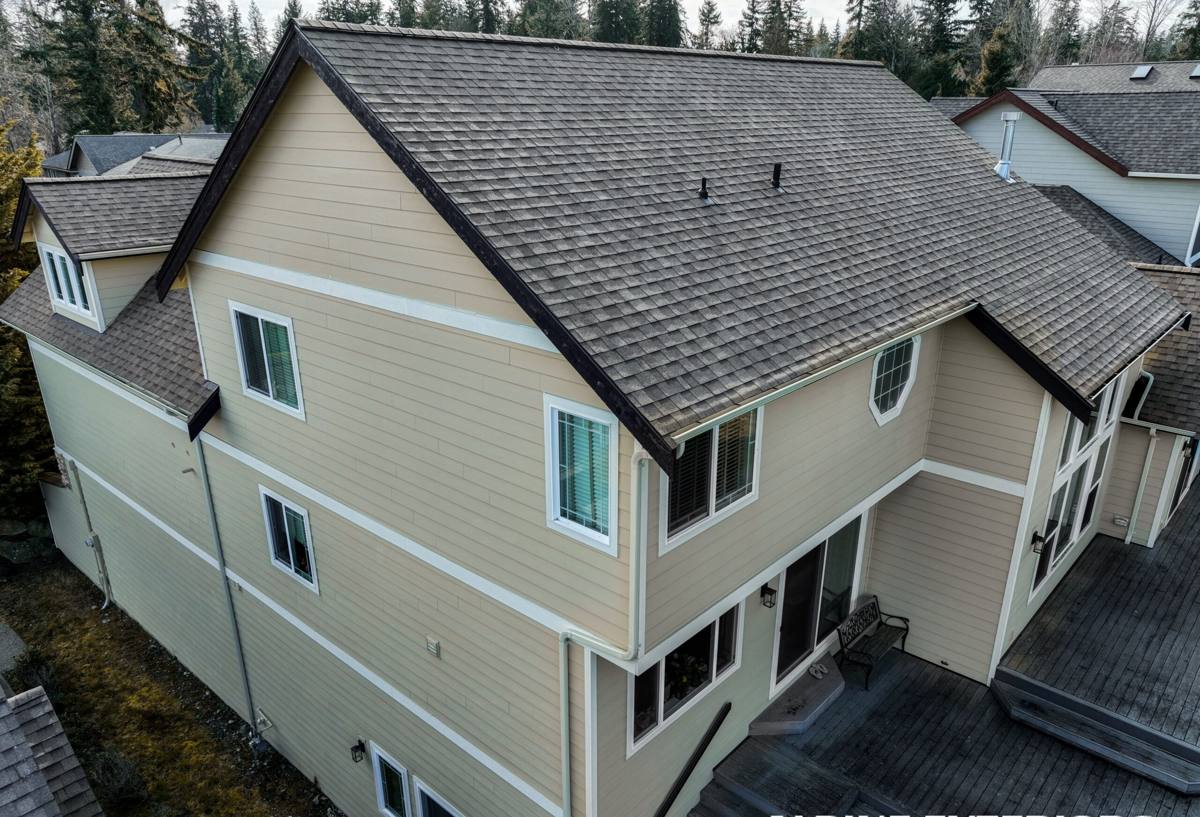
It Starts Below the Decking: Framing and Footings
The decking boards get all the attention, but the framing underneath is what determines whether a deck is safe and long-lived. In our wet climate, this structural layer takes the worst of the moisture exposure because it's shaded, slower to dry, and easy to under-build if a crew is rushing.
- Footings sized and set to the depth local code requires, not just poured to "what usually works"
- Ledger board properly flashed where it meets the house, so water is directed away from the wall rather than trapped behind it
- Joist hangers and structural connectors rated for exterior, coastal-adjacent use
- Pressure-treated framing lumber rated for ground contact where it's called for, not upgraded lumber substituted with untreated stock to save cost
- Joist spacing that matches the decking material's actual span rating, not a generic spacing applied to every job
None of this is visible once the deck is finished, which is exactly why it's the part most likely to get shortcut on a low-bid job. It's also the part that's expensive and disruptive to fix later, since fixing it means tearing up the decking to get at it.
Ledger Flashing Deserves Its Own Mention
The single most common failure point we see on older decks in this area is a ledger board that was never properly flashed, or was flashed with materials that broke down years ago. Water works its way behind the ledger, the rim joist underneath starts to rot, and the problem stays hidden until the deck develops a noticeable soft spot or sag. Correct flashing at this joint — done once, done right — is one of the cheapest insurance policies in the whole project.
Choosing a Decking Material for This Climate
There's no single "best" decking material — there's a best material for a given budget, maintenance appetite, and how much sun versus shade the deck actually gets. In Happy Valley's wet, moss-prone conditions, moisture behavior matters more than it does in drier parts of the state.
| Material | Moisture Behavior Here | Maintenance | Typical Lifespan |
|---|---|---|---|
| Pressure-treated wood | Absorbs and releases moisture with the seasons; prone to surface checking and mildew if not maintained | Annual cleaning, periodic sealing/staining | 10-15 years before major repair or replacement |
| Cedar | Naturally rot-resistant but still needs sealing to fight moss and graying in constant damp shade | Regular cleaning and refinishing to preserve appearance and rot resistance | 15-20 years with upkeep |
| Composite decking | Doesn't absorb water the way wood does, but shaded/damp areas still grow surface moss and algae if not cleaned | Periodic washing, no sealing or staining required | 25+ years, varies by product warranty |
| PVC decking | Fully moisture-resistant board, best option for consistently shaded or low-airflow deck areas | Low — occasional washing | 25-30+ years |
We don't push homeowners toward one material across the board. What we do push is honesty about trade-offs: a beautiful cedar deck in a shaded, damp corner of a Happy Valley lot is going to need more attention than the same deck on a sunnier, more exposed part of the property. If your site doesn't get much sun and airflow, that's a real factor in the material conversation, not a detail to skip past.
Moisture and Drainage: Where Most Deck Failures Actually Start
Given how much rain this area sees, drainage isn't an upgrade — it's a requirement for a deck that's going to last. A well-built deck manages water in three places: at the house connection, underneath the structure, and at the board level.
- Proper ledger flashing and a drainage gap where the deck meets the siding
- Joist tape over framing members to keep standing water from soaking into the wood grain at fastener points
- Adequate airflow underneath the deck so the framing has a chance to dry between rain events, rather than sitting damp for weeks at a time
- Correct board spacing so water sheds through rather than pooling on the surface
- Under-deck drainage systems where the space below is used as living or storage space and needs to stay dry
Skipping any one of these doesn't cause an immediate problem — it causes a slow one, which is worse. Rot and hidden moisture damage build quietly for years before they show up as a visible issue, and by then the repair is bigger than it needed to be.
Hardware, Fasteners, and Railings That Won't Corrode
Salt-laden air moves further inland than most homeowners expect, and it's hard on anything metal. Standard galvanized fasteners that would be fine in a drier inland climate can start showing rust streaks down decking boards within a few seasons in a coastal-influenced area like this one.
We build with stainless steel or high-grade coated fasteners rated for coastal exposure, and we use hidden fastener systems on composite and PVC decking where the product allows for it — both to protect the board surface and to keep corrosion stains from ever becoming a cosmetic issue. Railing systems get the same consideration: powder-coated aluminum and vinyl railings hold up with far less maintenance than uncoated steel or untreated wood railings in this climate, and cable railing systems need corrosion-resistant hardware specifically rated for the exposure, not a standard-grade kit.
Moss, Algae, and Keeping the Surface Safe
A long moss season is just part of living in Whatcom County, and a deck that sits in shade for much of the year is going to grow some moss and algae no matter what material it's built from. The goal isn't to eliminate that entirely — it's to build the deck so growth doesn't turn into a safety hazard or a long-term surface problem.
Board spacing and underdeck airflow reduce how much moisture lingers on the surface. Textured or grooved-face decking sheds moss buildup more easily than smooth boards, which matters in shaded spots. And a simple seasonal cleaning routine keeps growth from getting a foothold in the first place.
A basic seasonal deck maintenance checklist:
- Sweep debris and standing leaves off the deck surface regularly through fall
- Wash the deck surface at least once a year with a deck-safe cleaner to remove moss and algae before it builds up
- Check railings, stair treads, and any shaded corners for slip risk before winter rains set in
- Inspect ledger flashing and fastener heads once a year for early signs of water intrusion or corrosion
- Re-seal or re-stain wood decking on the schedule the product calls for — don't wait for visible graying
Our Deck-Building Process
Every deck we build in Happy Valley follows the same basic sequence, adjusted for the site:
- On-site visit to assess grade, drainage, sun/shade exposure, and how the deck connects to the house
- Design and material discussion, including honest trade-offs for the specific site conditions
- Permitting and, where the design calls for it, structural engineering sign-off
- Footings, framing, ledger flashing, and drainage systems installed and inspected before decking goes down
- Decking, railing, and hardware installation using fasteners and connectors rated for this climate
- Final walkthrough covering how the deck was built and what seasonal maintenance it will need
What a Happy Valley Deck Project Typically Costs
Deck pricing depends on more than square footage. These are the factors that move the number most in this area:
| Factor | Why It Affects Cost Here |
|---|---|
| Decking material choice | Pressure-treated wood costs less upfront than composite or PVC, but composite/PVC reduce long-term maintenance cost |
| Height and grade | Elevated decks need more substantial framing, footings, and often stairs and additional railing |
| Drainage complexity | Under-deck drainage systems or extensive flashing work add labor and materials but protect the space below |
| Railing type | Aluminum, cable, and vinyl railing systems each carry different material and installation costs |
| Permitting/engineering | Larger or elevated decks may require engineered plans, adding time and fees before construction starts |
We don't quote a number without seeing the site, because grade, existing structure, and access all change the labor involved. What we can say honestly: a deck built correctly for this climate — proper flashing, corrosion-resistant hardware, adequate drainage — costs somewhat more upfront than the bare-minimum version, and it's consistently the cheaper option over the life of the deck.
Why Hiring a Crew That Already Works Happy Valley Matters
A deck built to a generic spec sheet and a deck built for this specific area's rainfall, salt air, and moss season are not the same project, even if they look identical on the day they're finished. A crew that regularly works Happy Valley and the surrounding Whatcom County area already knows which flashing details actually hold up locally, which fastener grades are worth the extra cost, and how local permitting expectations apply to deck projects — none of which has to be re-learned or guessed at on your job.
That familiarity shows up in small decisions throughout the build, not in a sales pitch. It's the difference between a deck that gets built once and lasts, and one that needs its ledger flashing redone in year six.
If you're planning a new deck or replacing an aging one, we're happy to take a look at your property and put together a straightforward, no-pressure estimate — just fill out the form below to get started.