 Whatcom County
 Why Decks in Everson Wear Out Faster Than People Expect
Everson sits in the Nooksack River valley, and that location shapes what a deck goes through year-round. It's not just rain — it's the pattern of rain. Whatcom County gets long stretches of low-intensity, driving moisture that soaks into wood grain, settles into joints, and never fully dries out between storms. Add the marine-influenced air that moves through the whole county, and you get a slow, steady corrosion process working on fasteners, brackets, and any exposed metal hardware, even on decks that aren't right on the water.
Then there's moss and algae. Whatcom County's moss season isn't a few weeks — it's most of the fall, winter, and spring. Moss holds moisture against decking boards and railings far longer than open air would, and it grows fastest in the shaded, less-trafficked corners of a deck that homeowners don't walk on or inspect regularly. That's usually where we find the worst hidden damage.
None of this means a deck is doomed. It means a deck built or repaired without accounting for this cycle will fail years before it should. A deck repaired correctly for Everson's conditions can hold up for a long time — but the repair has to address moisture management, not just cosmetic damage.
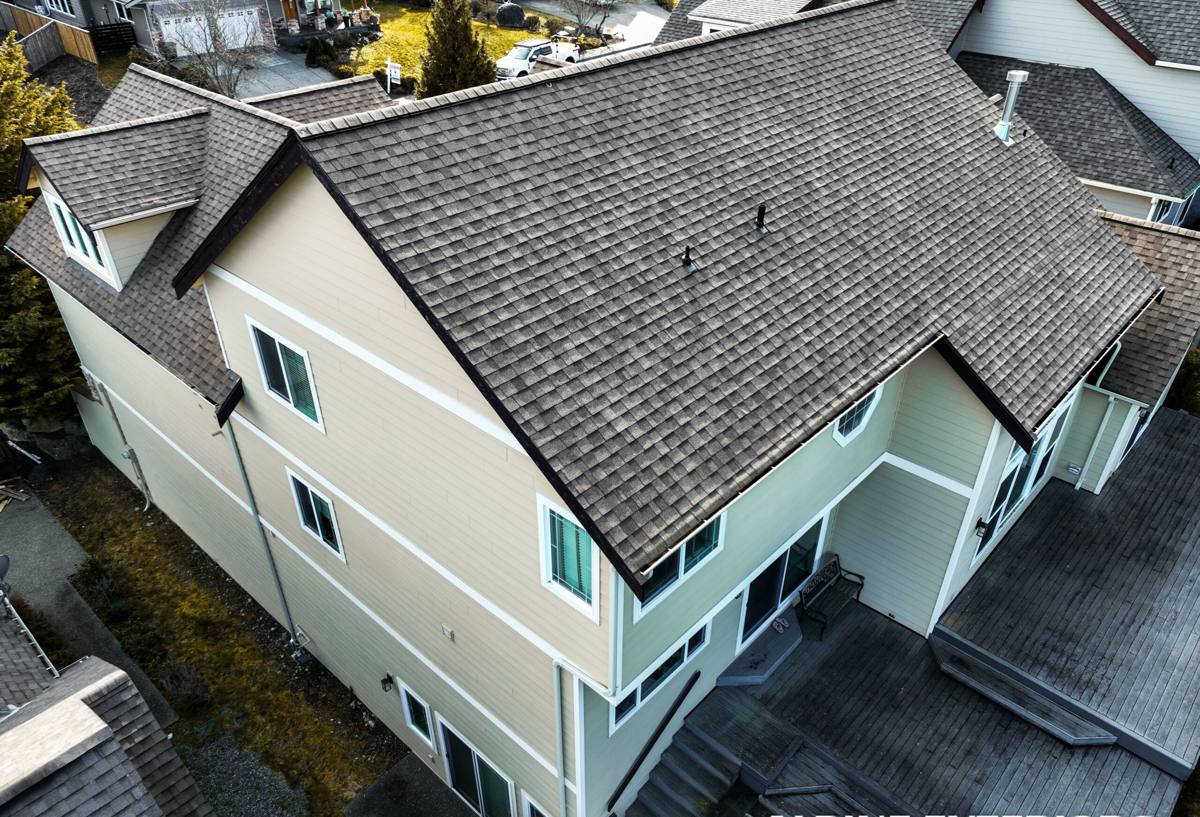
Signs Your Deck Needs Repair, Not Just a Cleaning
A lot of deck problems look cosmetic at first — a dark stain, a slightly springy board, a railing that wiggles a bit more than it used to. In our experience, those small signs are usually the visible tip of a moisture problem that's been developing underneath for a while. Here's what we look for and what it usually means:
- Soft or spongy decking boards — usually means moisture has gotten into the wood fiber and rot has started, even if the surface still looks intact.
- Rust streaks below fastener heads — a sign the fasteners are corroding, which weakens their grip on the framing underneath.
- Gaps or separation at the ledger board (where the deck attaches to the house) — this is a structural concern, not cosmetic, because the ledger carries a large share of the deck's load.
- Persistent green or black staining that won't scrub off — often means moss or algae has been established long enough to hold moisture against the wood continuously.
- Railings or posts that flex more than they used to — can indicate rot at the base of the post or loosening at the connection points.
- Standing water or slow drainage after a rain — points to a slope or gap problem that will keep re-wetting the same boards.
If you're seeing more than one or two of these, it's worth having someone look underneath the deck, not just at the walking surface. Most of the damage that shortens a deck's life happens where you can't see it from the top.
Surface Damage vs. Structural Damage
It's worth separating these two categories clearly, because they call for different responses. Surface damage — faded finish, minor staining, small splinters — is a maintenance issue. Structural damage — rot in framing members, corroded connectors, a failing ledger attachment — is a safety issue. A deck can look presentable on top while having real structural problems underneath, which is exactly why we check framing and connections before we ever talk about boards or railings.
What a Correct Deck Repair Actually Involves
A proper repair starts below the decking, not on top of it. Here's the order we work in and why each step matters for Everson's climate specifically:
1. Framing and Structural Inspection
We check joists, beams, and posts for rot, checking especially at points where wood meets wood or wood meets concrete — those junctions trap moisture the longest. Any framing member with soft spots or active rot gets addressed before anything else happens, because building new decking on top of compromised framing just hides the problem.
2. Ledger Board and Attachment Points
The ledger board connects the deck to the house, and it's one of the most common failure points on older decks, especially ones built before current flashing standards. We check for proper flashing that directs water away from the house wall rather than letting it channel behind the ledger, which is a slow, hidden path to rot in both the deck framing and the house's wall structure.
3. Fasteners and Hardware
Given the corrosion exposure in this region, we replace old or rusting fasteners with corrosion-resistant hardware rated for exterior and ground-contact use. Mixing metals (for example, older galvanized fasteners with newer stainless hardware) can actually accelerate corrosion through galvanic reaction, so we're deliberate about hardware compatibility across the whole repair.
4. Decking Boards and Railings
Only after the structure is sound do we move to decking boards, railings, and stair components. We replace what's damaged and reinforce or replace connections that have loosened over time.
5. Drainage and Moisture Management
Board spacing, slope away from the house, and gaps that allow airflow underneath the deck all matter more here than in drier climates. A repair that doesn't correct a drainage or airflow problem will usually show the same damage again within a few years.
Repair vs. Replacement: How We Help You Decide
Not every deck problem calls for a full rebuild, and not every deck is worth patching. Here's a general breakdown of the factors that push a decision one way or the other:
| Factor | Leans Toward Repair | Leans Toward Replacement |
|---|---|---|
| Framing condition | Solid, isolated soft spots only | Widespread rot in joists or beams |
| Ledger board | Sound attachment, minor flashing fix needed | Separation, rot, or missing flashing |
| Age of deck | Under 15-20 years, built to reasonable code | Older, built before current attachment standards |
| Extent of damage | Localized to a few boards or one railing section | Damage spread across multiple structural areas |
| Original construction quality | Proper flashing and fastener choices used | Signs of shortcuts (no flashing, undersized framing) |
We'll give you a straight answer on which category your deck falls into. If a repair genuinely makes sense, we'll say so — there's no reason to sell a full rebuild when a targeted fix will hold up.
Our Process for Everson Deck Repairs
We keep the process straightforward because homeowners generally want two things: an honest answer about what's actually wrong, and a clear sense of what it'll take to fix it.
- On-site inspection — we look at the deck from above and underneath, checking framing, ledger, fasteners, and drainage, not just the visible surface.
- Written assessment — we explain what we found, what's structural versus cosmetic, and what our recommendation is, in plain terms.
- Scope and estimate — a clear breakdown of what will be repaired, replaced, or reinforced, with realistic pricing.
- The repair work — done in the order that protects the structure first, then addresses appearance and function.
- Final check — we walk the deck with you before we consider the job done, so you know exactly what was fixed and what to keep an eye on going forward.
Materials: What We Use and Why
Material choice matters as much as workmanship in a climate like this. A few honest trade-offs worth knowing about:
Pressure-Treated Lumber
Still a solid, cost-effective choice for framing and many decking applications when installed with proper drainage and corrosion-resistant fasteners. It requires periodic sealing to perform well long-term in this climate — that maintenance step isn't optional here.
Composite Decking
Composite boards resist rot and moss staining better than wood decking, which makes them appealing for a moss-heavy climate. The trade-off is a higher upfront cost and the need for correct spacing and ventilation underneath — composite doesn't rot, but trapped moisture can still cause other issues if airflow isn't accounted for during installation.
Fasteners and Connectors
We standardize on corrosion-resistant, exterior-rated hardware for repairs in this region rather than mixing whatever's on hand. It costs a bit more up front but avoids the premature hardware failure that's common with mismatched or under-rated fasteners in a wet, marine-influenced climate.
Maintenance Checklist Between Repairs
A repaired deck lasts longer with a little seasonal attention. This is the same checklist we'd hand any Everson homeowner:
- Sweep leaves and debris off the deck surface regularly through fall — trapped organic matter feeds moss and holds moisture.
- Check for moss buildup in shaded corners each winter and remove it before it spreads.
- Look underneath the deck once or twice a year for standing water, staining, or soft framing.
- Inspect fastener heads for rust streaks, especially near the ledger board.
- Reseal wood decking on the manufacturer's recommended schedule — don't stretch it out in this climate.
- Keep gutters and downspouts near the deck clear so runoff isn't draining directly onto or under it.
Why a Local Crew Matters for This Kind of Work
Deck repair done right depends on understanding how a specific climate attacks a specific structure over time. A crew that regularly works in Whatcom County has already seen how driving rain finds its way into ledger boards, how moss season behaves differently on a shaded north-facing deck versus a sun-exposed one, and which fastener and material combinations actually hold up here versus which ones look fine on paper but fail early. That local pattern recognition shortens the inspection, sharpens the diagnosis, and avoids repairs that address symptoms instead of causes.
If you're in Everson and dealing with a deck that's showing wear, soft spots, or damage you're not sure how to categorize, we're happy to take a look. We'll give you a straightforward assessment of what's going on and what it would take to fix it right — no pressure, no inflated scope. Reach out through the form below for a free estimate.