 Whatcom County
 Why Everson Roofs Take a Beating
Everson sits along the Nooksack River in the flatter, inland part of Whatcom County, and that location shapes what its roofs deal with. You don't get the direct salt spray that homes closer to Bellingham Bay or the county's western shoreline take on, but you still get the same driving rain, the same long stretch of wet months, and wind that funnels through the river valley with real force during fall and winter storms. Add in a moss season that runs longer here than almost anywhere else in the Lower 48, and you have a roof that's under quiet stress most of the year — then gets hit hard when an actual storm rolls through.
That combination matters for repair work. A roof that's already carrying moisture in its underlayment or has moss working into its shingle mat doesn't handle a windstorm or a heavy branch strike the same way a dry, well-maintained roof does. Storm damage in Everson is rarely just "wind ripped some shingles off" — it's usually storm damage on top of moisture damage that was already building.
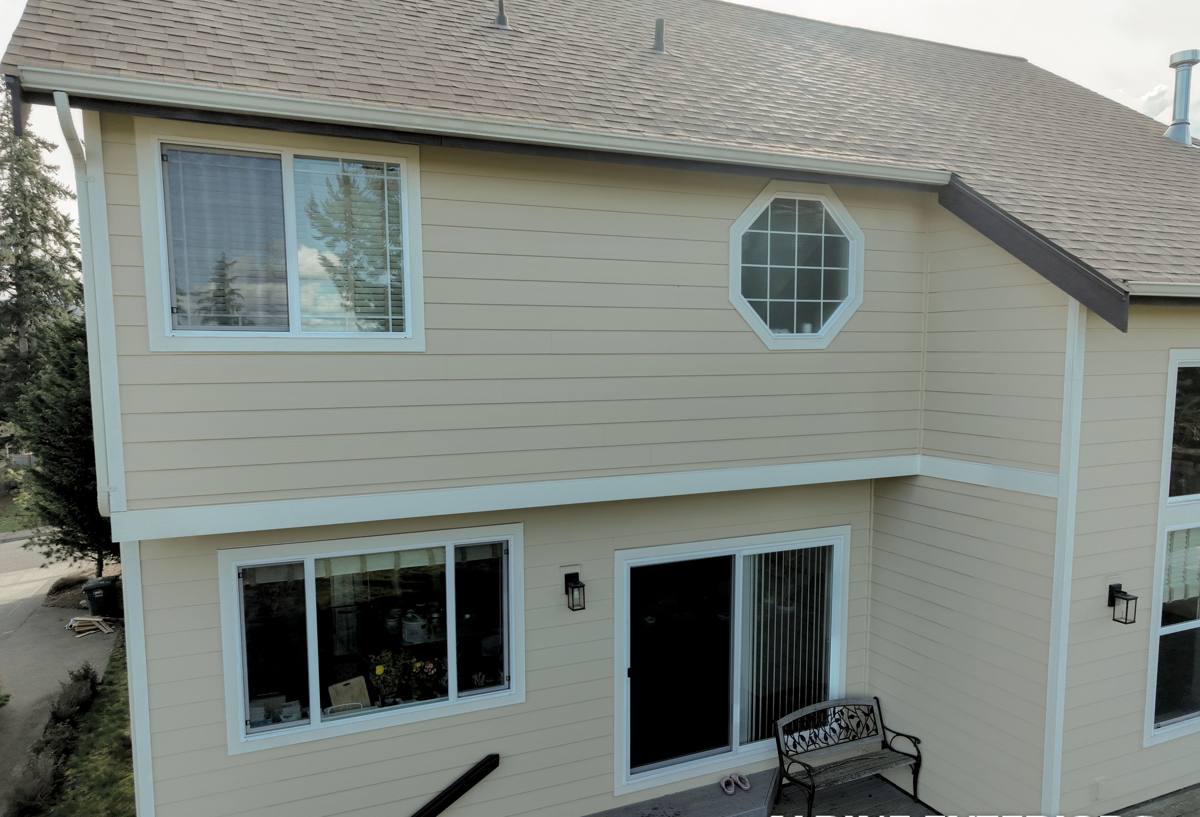
What Counts as Storm Damage on a Local Roof
Homeowners often think of storm damage as one dramatic event — a tree limb through the roof, a section of shingles peeled back overnight. Those happen here, but a lot of what we get called out for is less obvious.
Wind-related damage
- Shingles lifted, creased, or torn loose at the tabs, even if they didn't blow off completely
- Ridge cap shingles cracked or displaced along the roof's peak
- Flashing around chimneys, vents, and skylights bent or pulled away from its seal
- Fasteners backed out just enough to break the water seal without the shingle looking obviously wrong
Impact and debris damage
- Fir and cedar limb strikes, common with the mature trees around many Everson properties
- Bruised or fractured shingle mat that doesn't show a hole but has lost its granule protection
- Gutters torn loose or crushed, which then backs water up under the roof edge
Moisture-driven failure exposed by storms
This is the category people miss most. A roof with moss-related rot in the decking or sheathing can look fine until a storm's wind load or standing water finds the weak spot and pushes damage into the attic. What looks like "the storm caused this" is often the storm revealing something that had been developing for a while.
How We Assess Storm Damage the Right Way
A correct storm repair starts with an honest inspection, not a quick look from the driveway. We walk the roof when it's safe to do so, check the attic from below for water staining or daylight coming through, and look at flashing points and valleys specifically, since that's where storm damage most often turns into a leak.
| Inspection step | What it catches |
|---|---|
| Ground-level visual with binoculars | Obvious missing shingles, sagging lines, exposed decking |
| On-roof walk-through | Lifted or creased shingles, damaged flashing, loose fasteners |
| Attic check from inside | Water staining, wet insulation, daylight through the deck, active drips |
| Gutter and downspout check | Debris blockage, granule loss buildup, detached sections redirecting water |
| Moisture reading on decking (when accessible) | Soft spots or rot that a visual check alone would miss |
We document everything with photos and notes as we go, which matters twice over — it tells you exactly what's wrong before any work starts, and it gives you a paper trail if you're filing an insurance claim.
Repair vs. Replace: How We Actually Decide
Not every storm-damaged roof needs a full replacement, and we're not going to tell you it does. The decision usually comes down to a few honest factors.
| Factor | Leans toward repair | Leans toward replacement |
|---|---|---|
| Roof age | Under 10-12 years, otherwise sound | Already near or past expected lifespan |
| Extent of damage | Isolated section, single slope, or a few points | Widespread across multiple slopes or the whole field |
| Underlying condition | Decking dry and solid beneath the damage | Rot, moss intrusion, or moisture found in multiple areas |
| Shingle availability | Matching shingles still available or close enough | Discontinued product with no reasonable match |
| Insurance scope | Adjuster approves a repair-level scope | Adjuster approves full slope or full roof replacement |
We'll always tell you when a repair is the honest answer, even if a replacement would be the bigger job. A patch that's done right and matched well can hold up fine on a roof that still has years left in it.
Our Storm Damage Repair Process
- Initial assessment — full roof and attic inspection, documented with photos, usually within a day or two of your call for anything with active leaking
- Temporary protection if needed — tarping or emergency covering to stop water intrusion while we plan the permanent fix, especially important during an active weather pattern
- Written scope and estimate — a clear breakdown of what's damaged, what needs to be repaired or replaced, and what it will cost
- Insurance documentation support — we provide the photos, notes, and scope your adjuster will ask for if you're filing a claim
- The repair itself — removing damaged shingles and underlayment down to sound material, checking and repairing decking as needed, then rebuilding the section to match the surrounding roof
- Flashing and seal check — every repair includes a check of adjacent flashing, since a damaged section next to failing flashing will just leak again from a different point
- Final walk-through — we show you what was done and what to watch going forward
Materials and Methods We Use
For storm repairs, matching matters as much as the repair technique. We work with standard architectural and three-tab asphalt shingle lines that are widely stocked, which keeps color and profile matching realistic on a partial repair. When a full slope or full roof is warranted, we'll talk through options including higher-wind-rated shingle lines, since wind resistance is a real consideration for a valley location that still sees strong gusts during winter storm systems.
We use synthetic underlayment rather than older felt products on repair sections, mainly because it holds up better to the repeated wetting and drying this climate puts it through and gives better protection during the gap between tear-off and the new shingles going down. On flashing, we replace rather than reuse and reseal whenever a storm has actually disturbed it — a flashing piece that's been bent or pulled loose once is more likely to fail again, and it's a small cost compared to the water damage a repeat leak causes.
We don't rely on roof cement or sealant-only patches as a permanent fix. Those have a place as a short-term stopgap, but as a long-term repair they trap moisture, degrade faster than a proper shingle-and-flashing repair, and tend to hide problems rather than solve them — which just means a bigger repair bill later.
Signs You Need Storm Damage Repair Now, Not Later
- Water stains on ceilings or upper walls that appeared after a windstorm
- Visible shingles in the yard or gutters after high wind
- A branch or debris strike you can see from the ground
- Granules collecting heavily at downspout outlets, more than normal
- Daylight visible through the attic roof deck
- Ridge cap shingles that look lifted, cracked, or out of line
- Gutters pulled away from the fascia or sagging after a storm
Insurance and Documentation
Most storm damage claims in this area go smoother when the homeowner has clear photo documentation from before any repair work starts. We build that documentation as part of every assessment — dated photos, a written description of each damage point, and a scope that separates storm-caused damage from any pre-existing wear. That distinction matters to adjusters, and being upfront about it protects you from a claim getting disputed or denied later. We're happy to meet an adjuster on-site if that's useful, but the paperwork we hand you is built to stand on its own either way.
Why a Crew That Already Works Whatcom County Matters
Storm repair isn't just a technical skill, it's a local one. A crew that works Whatcom County regularly knows which shingle lines are actually stocked nearby for a fast match, understands how the moss and moisture cycle here affects decking underneath a storm-damaged section, and isn't guessing at what "normal wear" looks like on a roof that's ten years into this climate versus one that's ten years into a drier one. That local knowledge is the difference between a repair that just covers the hole and one that accounts for why the hole happened in the first place.
It also matters for timing. After a real storm event, response time is everything — a roof with active water intrusion doesn't wait well, and a crew based in the area can get a tarp on and a proper assessment done faster than one traveling in from outside the county.
Get a Straight Answer on Your Roof
If your roof took a hit in a recent storm, or you're not sure whether what you're seeing is storm damage or just age catching up with an older roof, we're glad to take a look. There's no pressure and no charge for an honest assessment — fill out the form below and we'll get back to you to schedule a time to come out.