 Whatcom County
 Why Siding Repair Looks Different in Bellingham
Bellingham sits close enough to Bellingham Bay that salt-laden air is a daily fact of life for anything mounted on the outside of a house, and the marine layer that sits over Whatcom County delivers long stretches of driving rain rather than quick summer downpours. On top of that, the region's damp, shaded, mild winters produce a moss season that can run from early fall well into spring. None of these three things is dramatic on its own, but together they work on siding year-round instead of in short seasonal bursts, and that changes what "siding repair" actually needs to mean here.
In drier climates, a repair often just means patching whatever is visibly broken. In Bellingham, a patch that ignores how water is moving behind the siding tends to fail again within a season or two. Salt air accelerates corrosion on fasteners and metal flashing. Constant moisture gives moss and algae a foothold on horizontal surfaces and butt joints, and that growth holds water against the siding instead of letting it shed. A repair that doesn't account for all three is a temporary fix, not a real one.
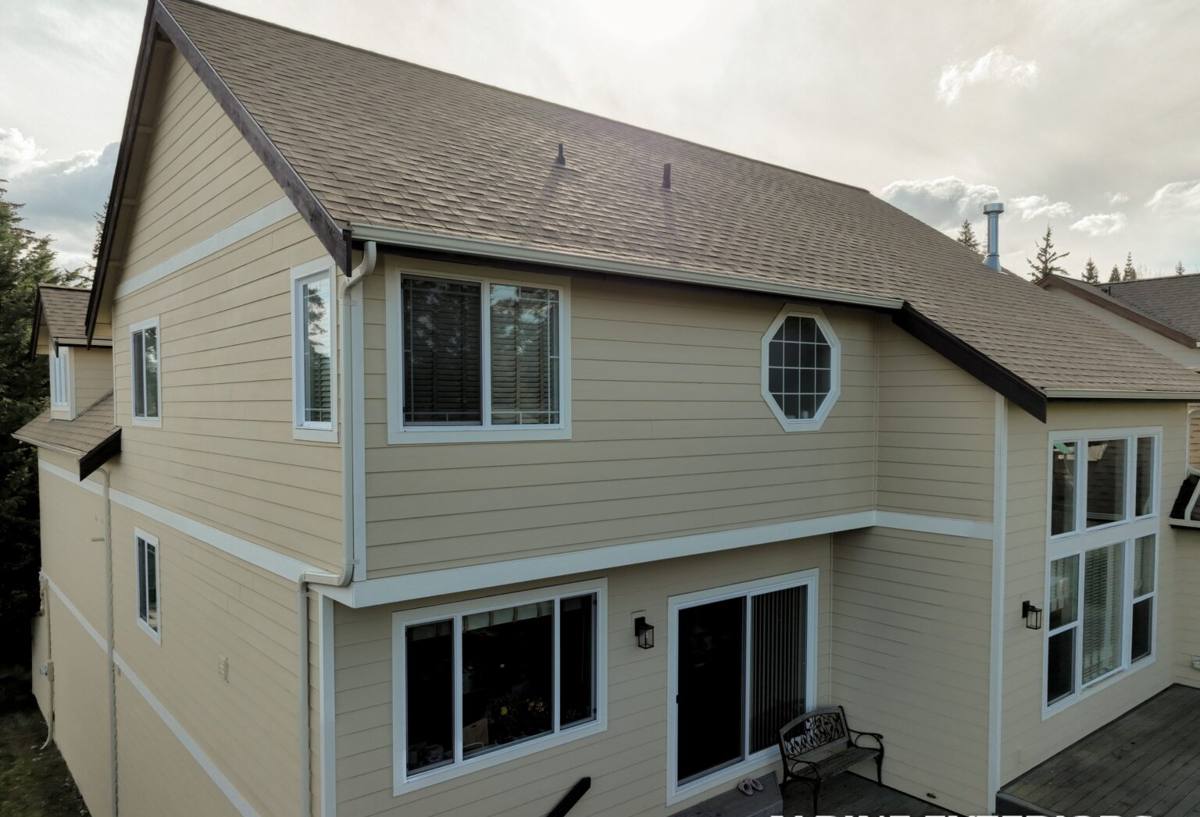
Signs Your Bellingham Home Needs Siding Repair
What You Can See From the Ground
- Cracked, split, or visibly warped siding boards or panels
- Paint that's peeling, bubbling, or chalking faster than the rest of the house
- Dark streaking or green-black growth concentrated on north-facing or shaded walls
- Gaps opening up at seams, corners, or trim where caulking has shrunk or pulled away
- Boards that look slightly buckled or "waved" along a wall
What's Often Hiding Behind the Siding
The damage you can't see from the ground is usually the damage that matters most. Soft or spongy spots when you press on the siding, musty smells near exterior walls, and interior drywall staining below a window or at a wall-to-roof intersection are all signs that moisture has already gotten past the exterior layer. By the time those symptoms show up, the sheathing or framing underneath may already be affected, which is why a repair estimate should never be based on a quick look from the driveway.
What a Correct Siding Repair Actually Involves
Diagnosing the Cause, Not Just the Symptom
Replacing a cracked board without figuring out why it cracked just buys time. A correct repair starts by tracing the water: is it coming from a failed kick-out flashing, a caulk joint that was never sealed properly, a clogged gutter overflowing onto the wall below, or moss holding moisture against the surface long enough for it to work its way in? The visible damage is the symptom. The repair has to address the cause or it's going to come back.
Matching Material, Profile, and Finish
Any patch that doesn't match the existing siding's profile, reveal, and color stands out immediately, and mismatched material can also behave differently in the weather, expanding and contracting at a different rate or absorbing moisture differently than what's around it. Getting the match right matters as much for the siding's long-term performance as it does for how the wall looks.
Flashing and Moisture Barrier Work
Siding is only one layer of a wall's defense against water. Behind it should be a weather-resistant barrier and, at every horizontal joint, window, and penetration, flashing that directs water back out rather than letting it wick inward. A repair that reinstalls siding over compromised flashing or a torn barrier is cosmetic, not structural, and in a climate with as much sustained rain as Whatcom County gets, that distinction shows up again within a year or two.
Repair or Replace? How We Help You Decide
Not every problem area needs a full re-side, and not every repair is worth doing instead of replacing a section outright. We walk homeowners through the same factors every time:
| Factor | Favors Repair | Favors Replacement |
|---|---|---|
| Age of existing siding | Under 10–15 years, still generally sound | Near or past expected service life |
| Extent of damage | Isolated to one or two sections | Spread across multiple walls or elevations |
| Underlying sheathing | Dry, solid substrate found on inspection | Soft, rotted, or water-stained sheathing |
| Original material | Still available or reasonably matched | Discontinued, mismatched, or a product we don't stand behind |
| Cause of damage | A single, fixable source (one flashing detail, one joint) | Systemic — poor original installation, wrong material for the climate |
If the damage is contained and the wall behind it is dry, a targeted repair is the honest recommendation and the right use of a homeowner's money. If the damage traces back to a material or installation issue that's going to keep producing new problem spots, we say so plainly rather than patching the same wall repeatedly over several years.
Why We Repair and Rebuild With James Hardie Fiber Cement
We install James Hardie fiber cement siding exclusively — we don't install vinyl, LP SmartSide, primed spruce, cedar, or other fiber cement brands. When a repair calls for replacing a damaged section, or when the right answer turns out to be a broader re-side rather than a patch, that's the material we use, for the same reasons we chose it as our standard in the first place.
Fiber cement doesn't feed moss and algae the way some wood-based products can, it's non-combustible, and it doesn't swell, rot, or delaminate the way engineered wood siding can when it takes on repeated moisture. James Hardie's HZ5 product line is specifically formulated for climate zones like ours, and the factory-applied ColorPlus finish holds its color and resists the kind of chalking and peeling that bare-primed products are prone to in a wet climate. It also carries a strong, transferable warranty backed by a large manufacturer, which matters when a repair is meant to last rather than just get the house through another season.
We're not going to tell a homeowner that vinyl or engineered wood is a bad product across the board — each has real advantages, including upfront cost. What we will say is that after years of doing exterior work in this specific climate, we standardized on one material because it holds up here with the least maintenance and the fewest callbacks, and we'd rather install fewer products well than a lot of products with reservations.
Our Bellingham Siding Repair Process
- Inspection. We look at the visible damage and check the areas around it — corners, joints, and anything below the problem spot — for signs the issue has spread further than it appears.
- Diagnosis. We identify the actual water path or failure point, not just the symptom, and explain it in plain terms.
- Written scope and estimate. You get a clear breakdown of what needs to happen, what it costs, and why — including whether repair or replacement is the better call for that section.
- Material and color match. For repairs, we source matching Hardie profiles and ColorPlus finishes wherever possible so the fix blends in rather than standing out.
- The repair itself. Damaged material comes out, flashing and the moisture barrier get corrected where needed, and new siding goes in to spec — not just nailed over the old problem.
- Cleanup and walkthrough. We clear debris and walk the work with you before calling it done.
Why a Local Whatcom County Crew Matters for This Kind of Work
Siding repair is diagnostic work as much as it's carpentry, and that diagnosis is easier to get right when a crew has already seen how homes in this specific area weather. A contractor who works Bellingham and the surrounding Whatcom County communities regularly has a good sense of which details tend to fail first in this climate — which flashing points, which orientations, which materials — because they've opened up enough walls locally to see the pattern, not just read about it. That translates into faster, more accurate diagnosis and fewer surprises once a wall is opened up.
There's also a practical side: a local crew can respond faster if a repair needs to happen before the next round of rain moves in, and they're accountable in the same community they're working in, which tends to keep the work honest.
Keeping Repaired Siding Healthy in Whatcom County's Climate
A good repair should be close to a "fix it and forget it" situation, but a little seasonal attention goes a long way in this climate:
- Rinse moss and algae off siding before it builds up, rather than after it's stained the surface
- Keep gutters clear so water isn't overflowing directly onto siding below
- Trim back shrubs and trees that keep a wall shaded and damp longer than the rest of the house
- Do a quick visual check of caulk lines at joints and trim once a year, ideally before the rainy season sets in
- After a major windstorm, glance over the siding for anything knocked loose or cracked before it has a chance to let water in
If you're seeing cracked boards, staining, soft spots, or failing caulk on a Bellingham home, we're happy to take a look and give you an honest read on whether it calls for a repair or something more — no pressure, no upsell. Reach out for a free estimate using the form below.