 Whatcom County
 Roofing in Samish Has to Answer to the Weather, Not Just the Budget
Samish sits close enough to Bellingham Bay and the Salish Sea that homes here deal with a mix of coastal and inland-valley weather most roofers never have to plan for. You get salt-laden air drifting in off the water, long stretches of driving rain that comes in sideways more often than straight down, and a moss season that can run eight or nine months out of the year under the tree cover common to this part of Whatcom County. A roof that would hold up fine in a drier inland town can start showing problems here inside a few years if it wasn't built for this specific combination.
New roof installation is one job where cutting corners doesn't show up right away — it shows up in year three or four, as soft decking, streaked shingles, or a slow leak that's been running behind the wall for months before anyone notices the stain. Doing it right the first time, with materials and details matched to Samish conditions, costs less over the life of the roof than doing it twice.
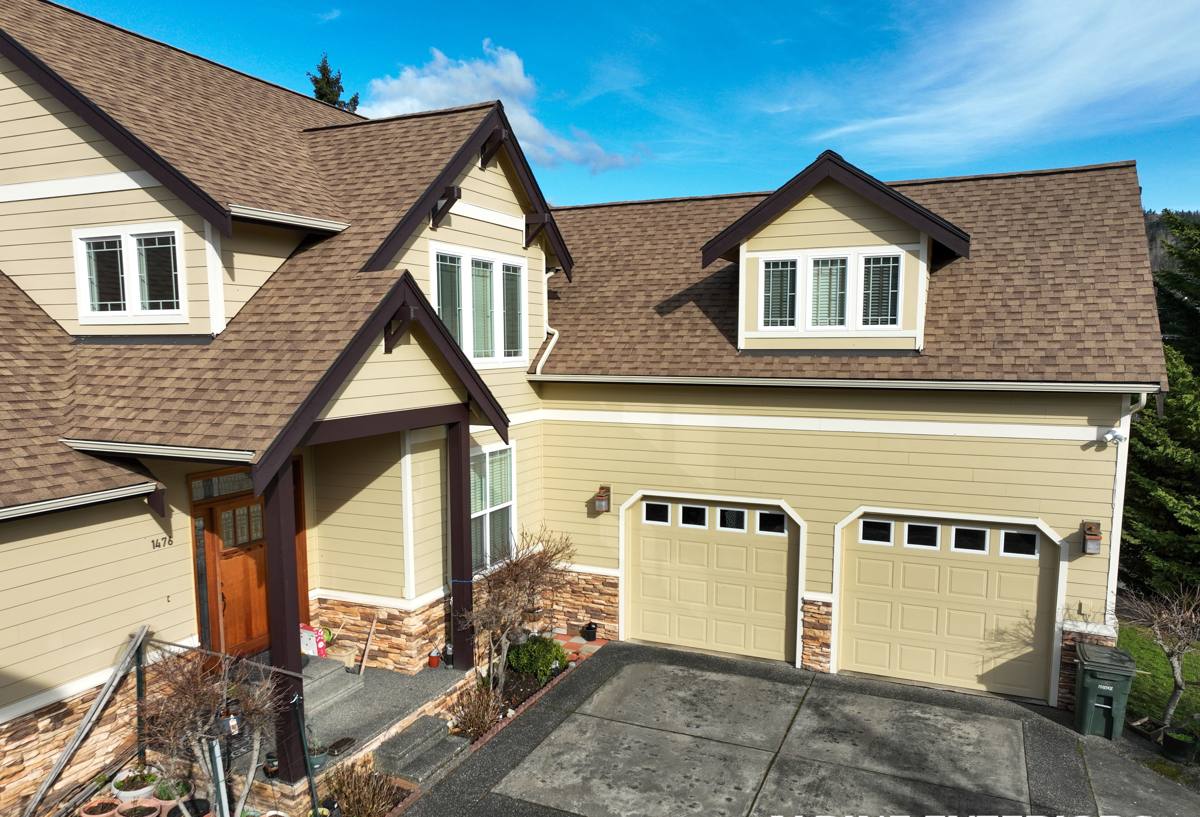
What the Samish Climate Actually Does to a Roof
Salt Air and Metal Fatigue
Being near tidal water means airborne salt settles on every exterior surface, roofs included. Exposed fasteners, unprotected flashing, and lower-grade metal components corrode faster here than they would ten or fifteen miles inland. This doesn't rule out metal roofing — it just means the metal, fasteners, and flashing all need to be rated for coastal exposure, not the cheapest option on the supplier's shelf.
Driving Rain and Wind-Driven Moisture
Whatcom County rain rarely falls straight down. Wind off the water pushes it sideways, which means it finds gaps that a vertical rain would never reach — under shingle tabs, around chimney flashing, behind poorly lapped step flashing at wall intersections. A roof system here needs underlayment and flashing details built for wind-driven rain, not just a standard low-slope package.
Moss, Shade, and Slow-Drying Roofs
Samish's tree cover keeps a lot of roof surfaces in partial shade most of the day. Combined with the region's rainfall totals, that shade means roofs stay damp longer after a storm, which is exactly what moss and algae need to take hold. Moss isn't just cosmetic — its root structure works into shingle granules and seams, holding moisture against the roof deck and shortening the life of the roofing material underneath it.
What a Correct New Roof Installation Includes
A proper tear-off and replacement in this area involves more than swapping old shingles for new ones. The parts that matter most are usually the ones you can't see once the job is done.
- Full tear-off to bare decking — never a layover, so we can inspect and repair the sheathing underneath
- Deck repair or replacement of any soft, delaminated, or water-damaged plywood/OSB before anything else goes down
- Ice-and-water shield membrane at eaves, valleys, and around penetrations, sized for our rainfall rather than the manufacturer's minimum
- Synthetic underlayment rated for extended exposure, since Whatcom County weather doesn't always allow same-day dry-in
- Balanced ventilation — intake at the eaves, exhaust at the ridge — sized to the attic, not just installed by habit
- Corrosion-resistant flashing and fasteners at every roof-to-wall, chimney, and skylight intersection
- Moss-resistant shingle selection or zinc/copper strips at the ridge on shaded roofs
- Final inspection of every penetration, vent boot, and flashing lap before cleanup
Choosing the Right Material for a Samish Roof
There isn't one universally "best" roofing material — there's a best fit for a given roof's exposure, slope, tree cover, and the homeowner's budget and maintenance appetite. Here's how the common options actually perform under Samish conditions.
| Material | Salt Air Performance | Moss Resistance | Typical Lifespan Here | Maintenance |
|---|---|---|---|---|
| Architectural asphalt shingle | Good with coastal-rated fasteners/flashing | Fair — benefits from zinc strips on shaded roofs | 20–30 years | Periodic moss treatment, gutter clearing |
| Standing seam metal | Very good, if metal and fasteners are coastal-rated | Excellent — sheds moisture, little for moss to grip | 40–50+ years | Low; occasional fastener/seam check |
| Synthetic/composite shingle | Good | Good, varies by product | 30–50 years | Low to moderate |
| Cedar shake | Fair — needs regular treatment near salt air | Poor without diligent upkeep | 20–30 years with maintenance | High — cleaning, treating, moss removal |
Most Samish homeowners land on architectural asphalt for the balance of cost and durability, or standing seam metal when they want the lowest long-term maintenance and plan to stay in the home for decades. We'll walk through the trade-offs for your specific roof rather than steering everyone toward one product — a heavily shaded, low-slope roof and a sunny, steep roof can call for different answers even on the same street.
Our Installation Process
1. On-Site Assessment
We inspect the existing roof, decking, ventilation, and flashing details in person before quoting anything. This is where we catch problems — soft decking, undersized ventilation, prior repair shortcuts — that a phone estimate would miss entirely.
2. Written Scope and Material Selection
You get a clear, itemized scope: tear-off, deck repair allowance, underlayment type, shingle or metal product, flashing and ventilation work, and cleanup. No vague line items.
3. Tear-Off and Deck Inspection
Old roofing comes off down to the deck. Any damaged sheathing gets flagged and replaced before dry-in — this is non-negotiable, since installing new roofing over compromised decking just hides the problem.
4. Dry-In and Weatherproofing Layer
Ice-and-water membrane goes down at vulnerable areas first, then underlayment across the full deck. Given how unpredictable Whatcom County weather can be mid-project, we plan the schedule to get the roof dried in as fast as conditions allow.
5. Roofing Installation
Shingles, panels, or shakes go on per manufacturer specification — correct nailing pattern and exposure, not just "close enough." This step is where warranty coverage is won or lost; manufacturers can deny claims over installation errors that are invisible from the ground.
6. Flashing, Ventilation, and Detail Work
Every chimney, skylight, wall intersection, and vent gets properly flashed and lapped for wind-driven rain. Ridge and soffit ventilation gets balanced to the attic's actual size, not installed on autopilot.
7. Cleanup and Final Walkthrough
Magnetic sweep for stray nails, full site cleanup, and a walkthrough where we point out what was done and answer questions before we consider the job finished.
Why It Matters to Hire a Crew That Already Works Samish
Roofing crews that mostly work drier, inland areas sometimes underestimate what this stretch of Whatcom County actually needs — lighter underlayment specs, standard fastener grades, ventilation sized for a "typical" attic rather than a shaded, damp one. A crew that regularly works Samish and the surrounding coastal-influenced neighborhoods already knows which details get skipped elsewhere and cause callbacks here. That's not a marketing point — it's the difference between a roof that needs moss treatment and gutter attention on a normal schedule, and one that starts showing soft spots and leaks years before it should.
Local crews also know the practical stuff: which permit and inspection steps the county requires, how to sequence a tear-off around our rain patterns so decking doesn't sit exposed longer than necessary, and what disposal and staging look like on the lots typical of this area.
What Drives the Cost of a New Roof
Every roof is priced on its own specifics, but the factors that move the number are consistent. We'll go through each of these during your estimate so there are no surprises.
| Cost Factor | Why It Matters |
|---|---|
| Roof size and complexity | More valleys, dormers, and penetrations mean more flashing labor and material |
| Existing deck condition | Rotted or delaminated sheathing found during tear-off adds repair cost |
| Material choice | Asphalt, metal, synthetic, and cedar all carry different material and labor costs |
| Pitch and accessibility | Steep or hard-to-access roofs take longer and require more safety setup |
| Ventilation upgrades | Adding or correcting intake/exhaust ventilation is easiest during a full re-roof |
| Layers to remove | Multiple existing layers add tear-off time and disposal cost |
Rough budget ranges vary widely by roof size and material, so we'd rather give you an honest number after seeing your specific roof than throw out a figure that doesn't apply to your house.
Signs Your Samish Roof May Be Due for Replacement
- Shingles that are cupping, curling, or losing granules in patches
- Moss buildup that comes back within months of cleaning
- Soft or spongy spots when walked on, or visible sagging
- Daylight visible through the attic decking, or damp attic insulation
- Flashing that's rusted, lifted, or separating from the roof surface
- Interior ceiling stains, especially near chimneys, skylights, or valleys
- A roof already past 20–25 years old, regardless of visible condition
If you're only seeing one or two of these, a repair may still be the right call — full replacement isn't always the answer, and we'll tell you honestly when a targeted fix makes more sense than tearing off a roof that still has years left in it.
Get a Straightforward Estimate
If your Samish home's roof is showing its age, dealing with recurring moss, or just due for an honest inspection, we're glad to take a look. The estimate is free, there's no pressure to commit, and you'll get a clear explanation of what your roof actually needs — use the form below to get started.