 Whatcom County
 Why Ferndale's Climate Is Hard on Exterior Siding
Ferndale sits close enough to the water that salt-laden air is a regular part of the weather, not an occasional event. Add in the driving, wind-blown rain that comes through Whatcom County during fall and winter storms, and the long stretch of damp, low-light months that let moss and algae get a foothold on roofs and walls, and you have a climate that is genuinely tough on a home's exterior. Siding here isn't just a cosmetic layer — it's the first line of defense against moisture intrusion, wood rot, and the slow surface breakdown that salt air causes on paint and lesser materials.
Homes in this area that were sided with wood, vinyl, or lower-grade composite products tend to show their age faster than the same products would in a drier inland climate. Caulk joints fail sooner. Paint chalks and fades. Moss finds every north-facing wall and shaded corner. None of that is a mystery — it's just what happens when a material isn't matched to the environment it's installed in.
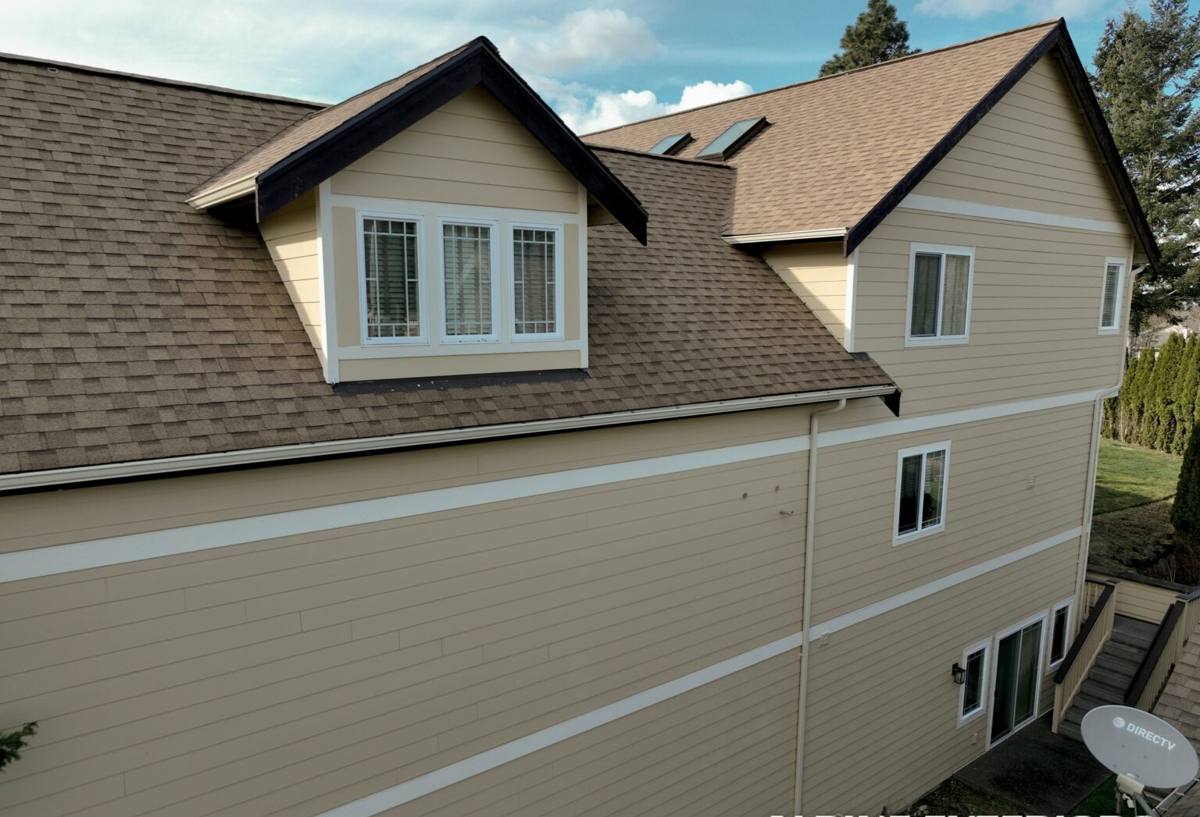
What James Hardie Siding Brings to a Ferndale Home
James Hardie fiber cement siding is engineered specifically to handle the kind of weather Whatcom County sees. It's non-combustible, dimensionally stable, and doesn't absorb moisture the way wood-based products can. For homes near the coast, that moisture resistance matters more than it does almost anywhere else in the state.
Climate-Engineered Product Lines
Hardie makes region-specific formulations under its HZ5 and HZ10 designations, engineered for different moisture and freeze-thaw conditions across the country. For the Pacific Northwest, that means a product built to handle sustained damp exposure rather than a one-size-fits-all formula. This isn't marketing language — it reflects real differences in how the cement formulation and engineered-for-climate specs are tuned for wet regions versus hot, dry ones.
ColorPlus Factory Finish
Most of the failures we see on aging siding trace back to the paint, not the substrate underneath. Hardie's ColorPlus finish is baked on at the factory in a controlled environment, which gives it better UV and fade resistance than a field-applied coat, along with a longer color warranty. In a climate with this much rain and salt exposure, a finish that's chemically bonded rather than brushed on site holds up noticeably longer.
What a Correct Installation Actually Involves
Fiber cement siding is only as good as the installation behind it. A product rated for this climate can still fail early if the water management details underneath it aren't right. This is where a lot of siding jobs — Hardie or otherwise — go wrong.
Weather-Resistant Barrier and Drainage Plane
Every wall needs a continuous weather-resistant barrier (WRB) behind the siding, lapped correctly from the bottom up so water sheds outward instead of working its way in. Behind that, a drainage gap or rainscreen lets any moisture that does get past the siding drain and dry out instead of sitting against the sheathing. In a region with as much sustained rainfall as Whatcom County gets, skipping or shortcutting this layer is one of the most common causes of hidden rot years down the road.
Flashing at Every Penetration
Windows, doors, hose bibs, light fixtures, and any other wall penetration need proper flashing integrated with the WRB, not just caulked over. Caulk is a maintenance item that will eventually fail; flashing is the permanent water management detail that keeps a house dry even after the caulk does.
Fastening, Gapping, and Clearance
Hardie's installation specs call for specific fastener types, spacing, and minimum clearances — including keeping the bottom edge of the siding a set distance above the roofline, deck surfaces, and grade so it never sits in standing water or gets buried under mulch or soil. Butt joints need to be back-primed or factory-sealed and properly sequenced with any flashing behind them. These aren't optional refinements; they're the difference between a 30-year installation and a 10-year one.
Matching the Right Hardie Product to the Home
Not every Ferndale home needs the same Hardie product. Matching the line to the style of the house and its exposure makes a real difference in both looks and performance.
- HardiePlank lap siding — the most common choice, available in several exposure widths and finishes, from smooth to a cedar-grain texture
- HardiePanel — vertical panel siding, often used for a modern look or combined with lap siding as an accent
- HardieShingle — a shingle-style profile for homes going for a more traditional or coastal aesthetic
- HardieTrim — matching trim boards for corners, window and door casing, and fascia, so the whole exterior system is consistent
On homes closest to open water and prevailing wind, we pay extra attention to exposure on windward walls — sometimes that means tighter fastening schedules or additional flashing detail at high-exposure elevations, even when the base product is the same across the house.
Salt Air, Rain, and Moss: Design Details That Matter Here
Salt Air and Finish Longevity
Salt air accelerates the breakdown of lesser paint systems and can pit or corrode the wrong fastener choice over time. We use fasteners rated for the exposure and rely on Hardie's factory-cured ColorPlus finish rather than field-painted siding, since a baked-on finish resists the chalking and fading that salt exposure speeds up.
Moss and Algae Management
Ferndale's long damp season is exactly the kind of environment moss thrives in. Fiber cement itself doesn't feed moss growth the way wood does, but shaded, poorly ventilated walls can still develop surface growth over time regardless of material. Good installation — proper drainage plane, adequate clearance from grade and landscaping, and correct flashing at horizontal trim — reduces the damp conditions moss needs to establish, and keeps the wall assembly drying out between storms instead of staying wet.
Driving Rain and Wall Orientation
Storms here often come with a strong horizontal component, which pushes water into laps, joints, and trim intersections that would stay dry in calmer weather. That's part of why lap orientation, caulk joint placement, and flashing sequencing get extra attention on west- and south-facing walls that take the brunt of incoming weather.
Our Process, Start to Finish
- On-site assessment — we look at the existing siding, sheathing condition, and any trouble spots (rot, past water intrusion, ventilation issues) before quoting anything
- Written estimate — a clear scope covering product line, color, trim details, and what's included, with no vague allowances
- Tear-off and sheathing check — removing old siding gives us a direct look at the sheathing and framing underneath, which is the only way to catch hidden damage before it's covered up again
- WRB and flashing installation — the water management layer goes in correctly the first time, since it's the part of the job nobody sees once the siding is up
- Hardie siding installation — installed to manufacturer spec for fastening, gapping, and clearance
- Trim, caulking, and final detail work — the finish details that determine how the job looks and how well it sheds water
- Final walkthrough — going over the completed work with the homeowner before calling the job done
Why Hiring a Crew That Already Works Ferndale Matters
Siding installation isn't purely a product question — it's a local-conditions question. A crew that regularly works Whatcom County jobs already knows how to sequence work around the region's rain patterns, what clearance and flashing details matter most on homes exposed to salt air, and how local permitting and inspection typically go. That familiarity shows up in fewer surprises mid-project and a finished exterior that's actually built for the weather it will face, not just installed to a generic national spec.
It also matters for warranty coverage. James Hardie's product warranty is tied to proper installation according to their published specifications — an installer who doesn't know the regional install requirements can unintentionally void or complicate a claim down the road. Working with a crew that installs Hardie exclusively, rather than as one option among several siding brands, means the installation details are second nature rather than an afterthought.
Cost Factors for a Ferndale Hardie Siding Project
| Factor | Why It Matters Locally | Effect on Cost |
|---|---|---|
| Tear-off vs. install over existing siding | Coastal moisture makes it important to check sheathing condition before covering it back up | Tear-off costs more upfront but avoids covering hidden rot |
| Wall exposure and elevation count | Windward walls facing prevailing storms may need extra flashing and fastening attention | Moderate increase for high-exposure elevations |
| Product line selection | Lap, panel, and shingle profiles have different material and labor requirements | Varies by profile and exposure width chosen |
| Trim and detail complexity | More corners, windows, and rooflines mean more flashing and trim work | Increases with home complexity |
| Sheathing or framing repair | Long-term moisture exposure sometimes reveals rot once old siding comes off | Added cost only if repair is needed, found during tear-off |
What to Check Before and After the Job
- Confirm the contractor is installing to James Hardie's published fastening, clearance, and flashing specifications, not a generic siding install
- Ask what weather-resistant barrier and drainage plane approach they use behind the siding
- Verify siding bottom edge clearance from grade, decks, and roof surfaces once installed
- Check that flashing, not just caulk, is used at windows, doors, and other penetrations
- Ask about the ColorPlus warranty terms versus a field-painted finish, and get them in writing
- Walk the finished exterior for consistent caulk lines, tight joints, and clean trim work before final payment
If your siding is showing its age, letting in moisture, or just isn't holding up to what Whatcom County weather throws at it, we're happy to take a look and walk you through what a correctly installed James Hardie system would involve for your specific home. Use the form below to request a free, no-pressure estimate.