 Whatcom County
 Roofing Built for Nooksack's Wet, Mossy Climate
An asphalt shingle roof in Nooksack works harder than the same roof would almost anywhere drier. The marine air that moves in off the Salish Sea carries fine salt and moisture well inland, and by the time it settles over Whatcom County it's combined with months of steady rain and short winter daylight that never quite dries a roof out. That combination is exactly what asphalt shingles struggle with when they're installed generically instead of for this specific climate: granule wear from constant damp-dry cycling, moss and algae staining, and slow water intrusion at the details that were never sealed correctly in the first place.
We install and repair asphalt shingle roofs specifically for this kind of weather. That means paying more attention to the parts of the job that don't show up in a quick quote — underlayment choice, flashing detail, and attic ventilation — because those are the pieces that decide whether a roof lasts its full service life here or starts showing problems in year eight instead of year twenty-five.
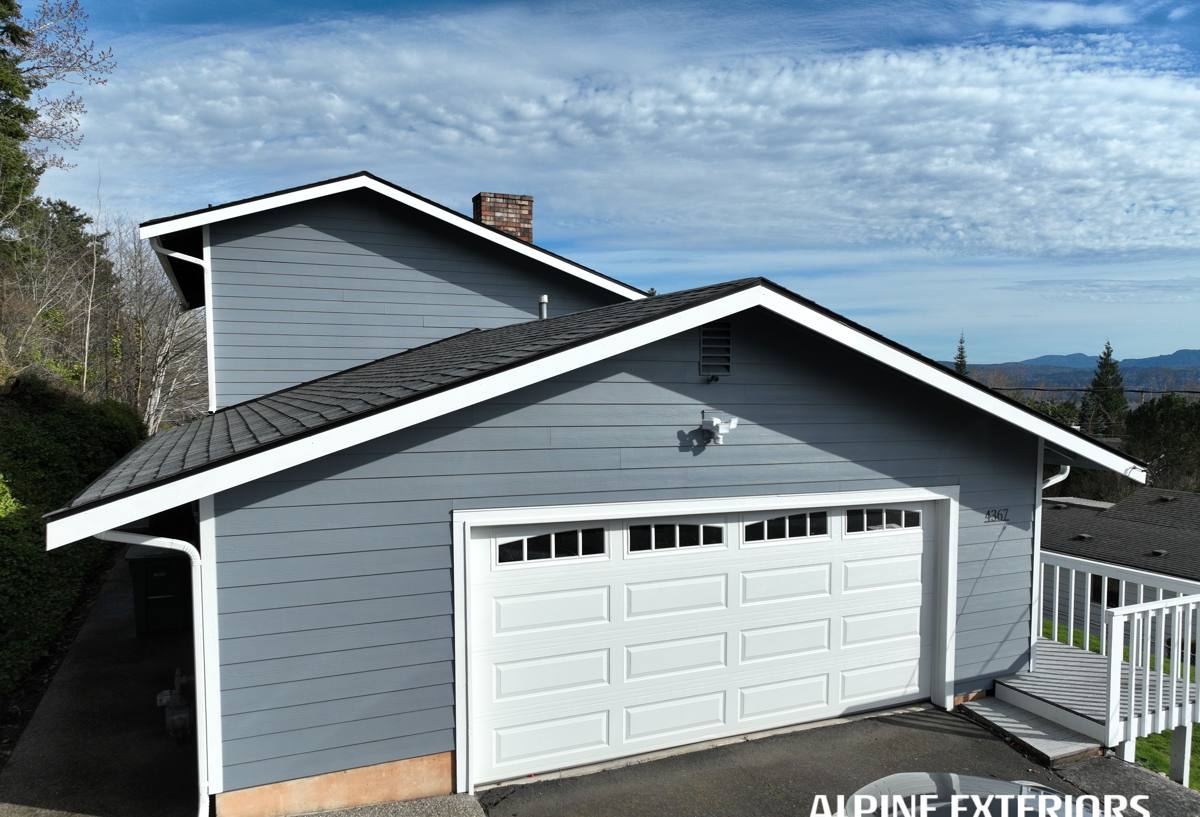
What Whatcom County Weather Does to a Shingle Roof
Moisture and a Long Moss Season
Moss doesn't just sit on top of shingles and look bad — its root structure lifts granules and holds water against the shingle surface long after a storm has passed. In Whatcom County, the moss season effectively runs most of the year, with only a few genuinely dry stretches in summer. A roof that isn't shedding water fast or getting enough airflow underneath will grow moss faster than the same roof a hundred miles inland, regardless of shingle brand.
Driving Rain and Wind
Storms coming through this part of Washington often bring rain sideways, not straight down. That matters because a roof that's fine in a calm downpour can still leak under wind-driven rain if the flashing, valleys, and shingle overlaps weren't built with that in mind. Driving rain finds the smallest gap around a chimney, skylight, or roof-wall intersection and works it over years, not days.
Salt Air and Material Fatigue
Salt-laden air accelerates corrosion on exposed metal — nail heads, flashing, vent stacks — faster than it would in a drier inland climate. A roofing system that relies on quality fasteners and properly coated metal at every penetration holds up; one built with the cheapest available hardware starts showing rust streaks and loosened flashing well before the shingles themselves are worn out.
Signs Your Nooksack Roof Needs a Second Look
Most roofing failures here don't start with a dramatic leak — they start small and get ignored because the visible damage takes a while to catch up to the underlying problem. Worth checking for:
- Moss or dark algae streaking on north-facing slopes, especially in shaded areas
- Granules collecting in gutters or at the base of downspouts
- Shingles that look cupped, curled, or have lifted edges
- Soft spots or staining on interior ceilings, particularly after a windy rainstorm
- Visible rust or streaking around vent stacks, flashing, or nail heads
- Daylight visible through the attic roof deck, or damp insulation near the eaves
- A roof approaching 18-20 years old that hasn't had underlayment or flashing checked recently
What a Correctly Installed Asphalt Shingle Roof Includes
Underlayment and Ice/Water Barrier
The shingles are the visible layer, but the underlayment underneath is what actually keeps a home dry when wind drives rain up under a shingle edge. In this climate we treat synthetic underlayment as the standard, not an upgrade, and we run self-adhered ice and water barrier along eaves, valleys, and any low-slope transitions where water is most likely to back up.
Flashing at Every Penetration
Chimneys, skylights, vent pipes, and any place a roof meets a wall are where leaks actually start — shingle failure in open field areas is rare by comparison. Correct flashing means new metal, not reused pieces, step-flashed properly into siding rather than caulked over the top of it, and sealed with materials rated for long-term exposure rather than a bead of roofing cement that will crack within a few seasons.
Ventilation
A roof deck that can't breathe traps moisture from inside the house against the underside of the shingles, which shortens shingle life and feeds mold and rot in the attic. Balanced intake at the eaves and exhaust at the ridge keeps that moisture moving instead of sitting, which matters more in a damp climate like this one than almost anything else in the assembly.
Fastening and Layout
Shingles nailed too high, too low, or with too few nails per shingle will not hold up to sustained wind, no matter how good the shingle itself is. We follow manufacturer nailing patterns exactly, because that's also what keeps a warranty valid if something ever does go wrong down the line.
Choosing the Right Shingle for This Climate
Not every asphalt shingle product is built the same way, and the differences matter more here than in a mild, dry climate. Here's how the common options compare for a Whatcom County home:
| Shingle Type | Typical Lifespan | Moss/Algae Resistance | Best Fit |
|---|---|---|---|
| 3-Tab (standard) | 15-20 years | Low unless treated | Budget-driven projects, outbuildings, rentals |
| Architectural/Dimensional | 25-30 years | Moderate, better with algae-resistant granules | Most Nooksack homes; best balance of cost and durability |
| Algae-Resistant Architectural | 25-30 years | High — copper/zinc granules resist staining | Shaded lots, north-facing roofs, homes near mature trees |
| Impact-Resistant (Class 4) | 30+ years | High | Homeowners prioritizing long-term durability over upfront cost |
For most homes in this area, we recommend an architectural shingle with algae-resistant granules as the baseline, not the upgrade. The cost difference over standard architectural shingles is modest, and it directly addresses the moss and staining issue that's most likely to bring a homeowner back to us within a few years if we skip it.
Our Process, Start to Finish
- Inspection: We walk the roof and attic, not just the ground-level view, and check for soft decking, existing moisture damage, and ventilation gaps before quoting anything.
- Written Estimate: A clear scope covering tear-off, underlayment, flashing, shingle choice, and ventilation — no vague "and materials" line items.
- Tear-Off and Deck Check: Full removal of old roofing so we can see the deck itself; any soft or rotted plywood gets replaced before anything new goes down.
- Installation: Underlayment, ice and water barrier, flashing, and shingles installed in that order, to manufacturer spec, with attention to the details that don't show up in photos but decide how long the roof lasts.
- Cleanup and Walkthrough: Magnetic nail sweep, debris haul-off, and a final walkthrough so you know exactly what was done and what the warranty covers.
Cost Factors for a Nooksack Roofing Project
Every roof is priced from its own measurements and condition, so we won't quote a number without seeing the job — but these are the factors that move a price up or down:
| Factor | Effect on Cost |
|---|---|
| Roof pitch and accessibility | Steeper or harder-to-reach roofs take longer and require more safety setup |
| Number of layers to remove | Tearing off two layers of old shingles costs more than one |
| Deck condition | Rotted plywood found during tear-off adds material and labor to replace |
| Shingle grade chosen | Standard vs. algae-resistant vs. impact-resistant shifts material cost |
| Roof complexity | More valleys, dormers, and penetrations mean more flashing work |
| Ventilation upgrades | Adding proper intake/exhaust venting where none existed is an added but worthwhile line item |
Maintenance That Actually Matters Here
A correctly installed roof still needs occasional attention in this climate, mostly around moss and debris rather than the shingles themselves failing outright. A few habits go a long way:
- Keep gutters clear so water isn't backing up under the shingle edge during heavy rain
- Have moss treated or gently removed before it builds up thick enough to hold water against the roof surface
- Trim back overhanging branches to cut down on shade and debris buildup on north-facing slopes
- Get a roof checked after any major windstorm, even if nothing looks obviously wrong from the ground
- Avoid pressure washing shingles — it strips granules and shortens the roof's life rather than protecting it
Why a Local Whatcom County Crew Makes the Difference
A roofing crew that only sees Nooksack once every few years quotes and builds roofs the same way they would anywhere else. A crew that works Whatcom County regularly knows which details matter here specifically — where moss builds up fastest, which flashing details fail first under driving rain, and why ventilation gets treated as standard rather than optional. That local pattern recognition shows up in fewer callbacks and a roof that's still doing its job well past the point a generic installation would be showing problems.
It also matters for the parts of the job that happen after installation — warranty questions, a follow-up check after a bad storm, or advice on when moss treatment is worth it versus premature. A crew that's still around and still working in the area is a very different experience than chasing down an out-of-town installer two years later.
If you're weighing a repair against a full replacement, or just want a straight answer on what your roof actually needs, we're happy to take a look. Reach out for a free, no-pressure estimate using the form below.