 Whatcom County
 Roof Repair Built for Everson's Weather, Not a Generic Fix
Everson sits inland from Bellingham Bay along the Nooksack River, but it still gets the full Whatcom County treatment: long, wet winters, heavy fall rain, and enough humidity most of the year to keep moss and moisture problems active on almost every roof in the area. A roof repair here has to account for that reality. Patching a leak without addressing why the roof is holding moisture in the first place just buys a homeowner a few dry months before the same spot fails again.
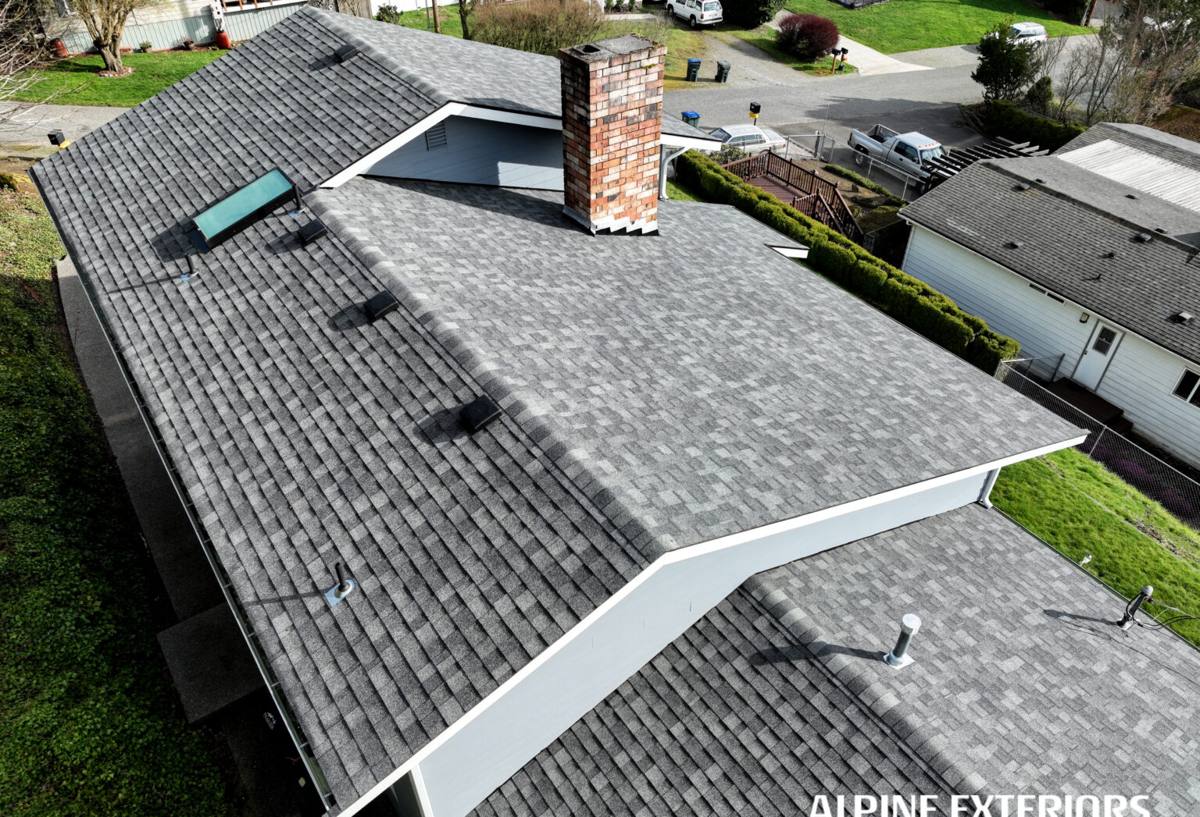
We do roof repair work throughout Whatcom County, and Everson roofs tend to show a consistent set of problems: moss buildup on north-facing slopes and shaded valleys, flashing that's worked loose from repeated freeze-thaw and wind cycles, and gutter or valley backups that push water under shingles during heavy rain events. None of that is unusual for this part of Washington — it's just what happens to a roof that spends most of the year wet.
Why Local Roofs Fail the Way They Do
Moss and Organic Growth
Moss doesn't just sit on top of shingles looking bad — it holds water against the roofing material, lifts shingle edges as it grows, and works its way under tabs and around fasteners. On shaded roofs or slopes that don't get much direct sun, moss can take hold within a couple of seasons of a roof cleaning. Left alone, it accelerates granule loss and shortens the life of asphalt shingles significantly.
Driving Rain and Wind-Driven Water
Whatcom County storms often come with enough wind to push rain sideways under flashing, at ridge caps, and around penetrations like vent pipes and chimneys. A roof that would shed water fine in a calm rain can leak during a wind-driven storm if flashing laps or sealant have started to fail. This is one of the most common reasons we get called out for a "mystery leak" that only shows up during certain storms.
Freeze-Thaw and Temperature Swings
Everson doesn't see extreme cold most winters, but the repeated cycle of near-freezing nights and wet days causes sealants, caulking, and even nail fasteners to expand and contract. Over years, that movement opens small gaps that let water in gradually rather than all at once — which is why a lot of roof damage here shows up as a slow-growing stain rather than a sudden leak.
What a Correct Roof Repair Actually Involves
A roof repair that holds up in this climate goes beyond sealing the visible gap. Here's what we check and address on a typical repair visit:
- Identify the actual water entry point — which is often several feet from where the stain shows up inside
- Inspect and replace damaged or missing shingles, not just patch around them
- Check flashing at all penetrations: chimneys, vent stacks, skylights, and wall-to-roof transitions
- Clear moss and debris from valleys, gutters, and shaded slopes so water has a clear path off the roof
- Inspect the underlying decking for soft spots or rot where water has been sitting
- Confirm ventilation isn't trapping moisture in the attic, which accelerates decking and shingle failure from underneath
- Match repair materials to the existing roof as closely as possible for both function and appearance
Skipping any of these steps is how a "repaired" roof ends up leaking again within a year or two. A patch over a soft deck, or new shingles over a flashing problem that was never fixed, doesn't solve anything — it just delays the next call.
Our Process for Everson Roof Repairs
1. Inspection and Honest Diagnosis
We start by getting on the roof (weather permitting) or using a close visual and photo inspection to trace the leak or damage back to its source. We'll tell you plainly whether this is a spot repair, a larger repair, or something that's pointing toward a roof nearing the end of its service life. We're not going to sell a full re-roof when a repair will genuinely hold, and we're not going to patch something we know will fail again in six months without telling you that up front.
2. A Clear, Written Scope
Before any work starts, you'll know what's being repaired, what materials we're using, and roughly what it will cost. No surprise add-ons once we're already on the roof.
3. The Repair Itself
Depending on the issue, this might mean replacing a section of shingles, resetting or replacing flashing, sealing penetrations properly, or addressing a decking issue if water has been sitting long enough to cause rot. We work efficiently but don't rush flashing and sealant work — those are the details that determine whether a repair lasts one season or ten.
4. Cleanup and Walkthrough
We clear debris and old material from the site and walk you through what was done, what to watch for, and any maintenance — like moss treatment or gutter clearing — that will help the repair last.
Repair vs. Replacement: How We Help You Decide
Not every roof problem needs a full replacement, and not every roof problem should be patched forever. Here's a general framework we use when talking with Everson homeowners:
| Situation | Usually a Repair | Usually Points Toward Replacement |
|---|---|---|
| Isolated leak, single flashing or shingle section | Yes | — |
| Moss on an otherwise sound roof under 15 years old | Yes, plus cleaning | — |
| Widespread granule loss and multiple soft spots | — | Yes |
| Roof is 20+ years old with recurring leaks in different spots | — | Yes |
| Storm damage limited to one slope or section | Often | Depends on age and extent |
| Decking rot found during repair | Sometimes (localized) | Yes, if widespread |
Cost is a real factor for most homeowners, and it's fair to ask about it directly. Repairs typically run from a few hundred dollars for a simple flashing or shingle fix up to a few thousand for larger sections involving decking replacement. We'll give you an actual number after inspection rather than a guess over the phone — roof damage varies too much to price accurately sight unseen.
Signs an Everson Homeowner Shouldn't Ignore
Roof problems in this climate rarely announce themselves with a dramatic leak on day one. More often, they show up as smaller signs that get written off until the problem is bigger and more expensive to fix. Worth a call if you're seeing any of these:
- Dark streaks or thick moss growth on north-facing or shaded roof sections
- Granules collecting in gutters or at downspout outlets
- A ceiling stain that appears or grows after wind-driven storms specifically
- Shingles that look curled, lifted, or cracked when viewed from the ground
- Daylight visible through the attic roof deck
- Sagging in the roofline or in gutters pulling away from the fascia
- Increased heating bills that might point to attic moisture or ventilation issues
Materials and Repair Approach
Most Everson homes we work on have asphalt composition shingle roofing, and that's what most repairs involve. Matching shingle color and profile as closely as possible matters for how the repair looks, and it's something we account for when discussing options — older roofs sometimes have discontinued shingle lines, in which case we'll be upfront about the best available match rather than promising a perfect one.
For flashing, we use metal flashing systems rather than relying on sealant alone to do the job long-term. Sealant has its place, but it's a component of a flashing repair, not a substitute for properly lapped and fastened metal. This is a professional standard we hold to because sealant-only repairs tend to need redoing within a few years as the material dries out and cracks — a maintenance burden we'd rather you avoid.
Why Hire a Crew That Already Works Whatcom County
Roofing problems here are shaped by this specific climate — the moss cycle, the rain patterns off the bay and the Nooksack valley, the temperature swings through fall and spring. A crew that works Everson and the surrounding Whatcom County towns regularly has already seen how local roofs age and fail, which means less guesswork diagnosing your specific problem and a repair approach that's built around how this weather actually behaves, not a generic checklist.
Local presence also matters for follow-through. If a repair needs a callback, or you want a second look before a big storm season, you're not waiting on a crew that has to drive in from out of the area. We're set up to handle roof repair work as an ongoing part of home maintenance here, not a one-time transaction.
Maintenance That Extends the Life of a Repair
A repair lasts longer when it's not fighting the same conditions that caused the original damage. A few habits make a real difference for Everson roofs:
- Clear gutters and valleys at least twice a year, more often if you're near mature trees
- Have moss treated or removed before it spreads across a full slope, not after
- Trim overhanging branches that keep roof sections shaded and slow to dry
- Check attic ventilation isn't blocked by insulation or debris
- Walk the roofline visually after major windstorms for lifted shingles or displaced flashing
None of this replaces a professional inspection, but it reduces how often you need one for an emergency rather than routine upkeep.
Get a Straight Answer on Your Roof
If you're dealing with a leak, moss buildup, or storm damage on an Everson roof, we're happy to take a look and give you an honest read on what it needs — repair, and what kind, or something more. There's no pressure and no cost to get an estimate; we'd rather you have real information before deciding anything.