 Whatcom County
 Asphalt Shingle Roofing in Sehome: Built for This Specific Climate
Sehome sits close enough to Bellingham Bay that salt-laden air is a daily fact of life, and far enough into the hills that tree cover and shade are part of nearly every roofline. That combination is harder on a roof than either factor alone. Salt air accelerates corrosion on exposed metal fasteners and flashing. Shade and tree cover keep roof surfaces damp longer after every rain, which in Whatcom County means damp for a very large share of the year. Put those together and you get the two things that shorten an asphalt shingle roof's life here faster than anything else: metal components that rust from the inside out, and moss and algae that take hold in shaded, slow-drying areas and start lifting shingles from underneath.
None of that means asphalt shingles are the wrong choice for a Sehome home — they're still the most cost-effective, most repairable, and most widely available roofing material for this region, and a correctly installed and maintained shingle roof holds up fine against everything Whatcom County weather throws at it. The issue is almost never the shingle itself. It's installation shortcuts, wrong-grade fasteners, missing or undersized ventilation, and flashing details that were never built for a marine climate. This page covers what a shingle roof actually needs to perform in Sehome, what a correct installation looks like, and how we approach the job.
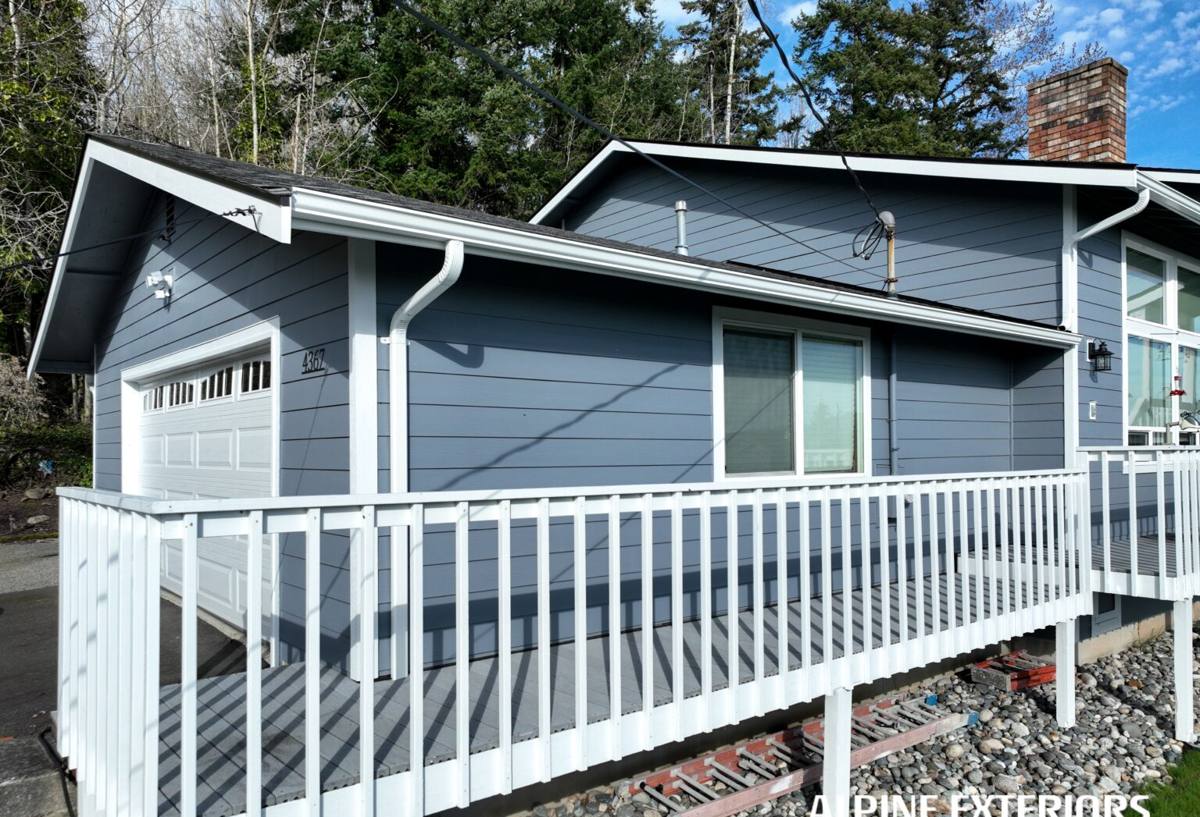
What Local Weather Does to a Shingle Roof
Salt Air and Metal Fatigue
Roofing nails, drip edge, step flashing, and vent flashing are all metal, and metal exposed to salt-carrying coastal air corrodes faster than the same material would inland. Once a fastener or flashing piece starts to rust, it loses its grip strength and its ability to shed water cleanly. That's why the fastener and flashing spec matters as much as the shingle brand on a job this close to the water — cutting corners here is invisible on install day and expensive five years later.
Driving Rain and Wind-Driven Water
Storms here don't just drop rain straight down; wind pushes it sideways and up under laps, edges, and penetrations. A shingle roof has to resist that at every seam — ridge, valley, sidewall, chimney, vent pipe, and eave. Any one weak point becomes the path water takes into the deck.
Moss Season
Whatcom County's long wet season, paired with tree cover common in established neighborhoods like Sehome, gives moss and algae months of ideal growing conditions on north-facing and shaded slopes. Moss doesn't just look bad — its root structure works into the shingle surface and lifts tabs, which opens the door for water intrusion at exactly the spots moss likes best: valleys, low-slope sections, and areas under overhanging branches.
What a Correct Asphalt Shingle Roof Includes
A shingle roof is a system, not a single product. Every layer below the visible shingle does specific work, and in a climate like this, skipping or downgrading any one of them is where premature leaks and short roof lifespans come from.
- Underlayment: a synthetic or felt water-resistant barrier under every shingle, providing backup protection if wind or wear ever compromises the surface layer.
- Ice-and-water shield at vulnerable zones: self-adhering membrane at eaves, valleys, and around penetrations — the areas that take the most standing and driven water.
- Drip edge and flashing: metal at every roof edge, valley, and wall intersection, sized and fastened to shed water outward instead of trapping it.
- Proper fastening: corrosion-resistant nails, correct count per shingle, driven flush (not overdriven or underdriven) — both mistakes are common causes of blow-offs and leaks.
- Balanced attic ventilation: intake at the eaves and exhaust at the ridge, working together to keep the deck dry from underneath and prevent the moisture buildup that leads to premature shingle failure and deck rot.
- Shingle quality and rating: algae-resistant shingles with an adequate wind rating for coastal exposure.
Shingle Options Compared for Sehome Conditions
| Factor | 3-Tab (Economy) | Architectural (Standard) | Architectural (Premium/Impact-Rated) |
|---|---|---|---|
| Typical lifespan here | 15–20 years | 25–30 years | 30+ years |
| Wind resistance | Lower | Good | Best |
| Algae/moss resistance coating | Sometimes optional | Usually standard | Standard, higher-grade |
| Appearance | Flat, uniform | Dimensional, shadow-line | Dimensional, heavier profile |
| Best fit | Budget-driven projects, secondary structures | Most Sehome homes | Exposed or high-tree-cover sites, longer hold periods |
For most Sehome homes we recommend a mid-to-premium architectural shingle with algae-resistant granules. The cost difference over a basic 3-tab is modest relative to the total project, and it directly addresses the moss and algae pressure this area sees.
Our Process for a Sehome Roof
1. Roof and Attic Inspection
We look at the whole system, not just the shingle surface — deck condition, existing ventilation, flashing details, and any signs of past moss or moisture damage. This tells us whether it's a straightforward re-roof or whether deck repair or ventilation upgrades need to be part of the scope.
2. Honest Scope and Estimate
You get a written estimate that spells out materials, underlayment and flashing details, ventilation plan, and timeline — no vague "roofing package" language. If we find deck rot or ventilation problems during the estimate, we tell you before the contract, not after tear-off when you have no choice but to say yes.
3. Tear-Off and Deck Inspection
Full tear-off lets us actually see the deck. Any soft, rotted, or delaminated sheathing gets replaced before a single shingle goes down — covering a bad deck with new shingles just hides the problem for a year or two.
4. Installation to Spec, Not to Shortcut
Ice-and-water shield at eaves and valleys, correct drip edge and step flashing at every wall and penetration, manufacturer-spec nailing pattern, and balanced intake/exhaust ventilation. This is the stage where climate-appropriate detailing either happens or doesn't.
5. Cleanup and Walkthrough
Magnetic sweep for stray fasteners, full site cleanup, and a walkthrough so you understand what was done and what maintenance, if any, to expect going forward.
Why a Crew That Already Works Sehome Matters
Roofing crews that mostly work drier, inland climates tend to under-spec ventilation and skip the moss-prevention details because those problems don't show up fast where they're used to working. A crew that regularly works Whatcom County roofs knows which flashing details actually hold up against driving coastal rain, which shingle lines perform against algae over years — not just on the spec sheet — and where moss tends to establish first on a shaded, tree-covered lot like the kind common in Sehome. That local track record shows up in fewer callbacks and a roof that's still doing its job a decade in, not just on install day.
Maintenance That Actually Extends Roof Life Here
A correctly installed shingle roof in this climate still benefits from basic upkeep. None of this is complicated or expensive, but skipping it is how a 30-year shingle turns into a 20-year roof.
- Keep gutters and valleys clear of needles and debris so water has a clean path off the roof
- Trim back overhanging branches to cut down on shade, debris, and moss-friendly conditions
- Have moss treated (not scraped or pressure-washed) before it establishes a heavy root mat
- Schedule a visual inspection every couple of years, or after any major windstorm
- Address small flashing or fastener issues promptly — they're cheap fixes early and expensive leaks later
Signs Your Sehome Roof Needs Attention
Most shingle roof problems give warning signs well before an actual leak shows up inside the house. Granules collecting in gutters in larger-than-normal amounts, shingle edges curling or lifting, dark streaking or moss patches on north-facing slopes, and daylight visible around flashing or vent boots from the attic are all worth a professional look. Catching these early is almost always a repair; ignoring them turns into a deck replacement.
Cost Factors for a Sehome Re-Roof
Every roof is priced on its own specifics, but the main variables that move the number are consistent: roof size and pitch, number of penetrations and valleys, current deck condition, shingle tier selected, and whether ventilation upgrades are needed. We won't quote a number without seeing the roof, but we will always walk you through exactly what's driving your estimate so there are no surprises in the contract.
If your Sehome roof is due for a look — whether it's a full replacement, a suspicious leak, or just moss that's gotten out of hand — we're happy to come take a look and give you a straightforward, no-pressure estimate. Use the form below to get started.