 Whatcom County
 Building New in Everson Means Getting the Windows Right the First Time
New construction is the one chance to install windows correctly before walls are closed up and finished. Everson sits in the Nooksack River valley, on the inland side of Whatcom County, where farmland gives way to foothill lots heading toward Mt. Baker. It's a different setting than downtown Bellingham, but the same wet, marine-influenced climate governs the whole county: long stretches of steady winter rain, humid air that moves inland off the Sound and the Strait, and a moss season that can run from fall through spring. Windows installed on a new build here don't just need to look good and meet code — they need a flashing and drainage system that will hold up to years of that weather without anyone ever having to think about it again.
On a remodel or replacement job, an installer is working around what's already there. On new construction, there's no excuse for a shortcut — the wall is open, the sheathing is exposed, and every layer of the water-management system can be built in the right order. That's the opportunity, and it's also where a lot of production-built homes quietly go wrong.
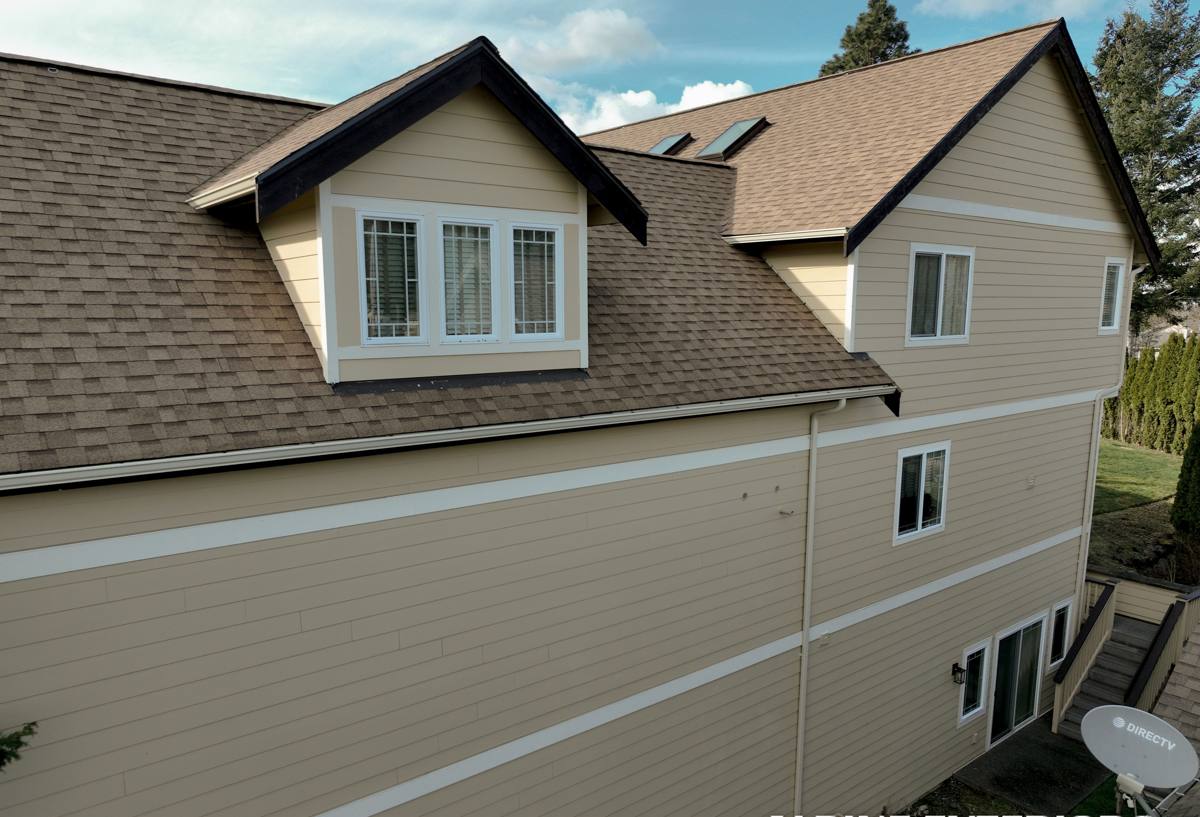
New-Construction vs. Retrofit: Why the Distinction Actually Matters
"New-construction windows" isn't just a marketing term — it refers to windows built with a nailing flange (fin) around the frame, designed to be integrated into the wall's weather-resistive barrier (WRB) and flashing system before siding goes on. Retrofit or "pocket" windows are made to slide into an existing frame with minimal disturbance to the surrounding wall — useful for remodels, wrong for new builds.
Using the wrong window type, or installing the right window with the wrong technique, is one of the most common sources of long-term water intrusion in new homes. Because the damage happens behind the wall, it can go unnoticed for years — which is exactly the kind of problem a coastal Washington climate is good at finding and exploiting.
- Nail-fin (new-construction) windows: installed flush to the sheathing, fin fastened over a WRB and integrated with flashing tape — the standard for new builds.
- Flange-less / block-frame windows: common in masonry or specific architectural details, requiring a different flashing approach.
- Retrofit windows: not appropriate for new construction — they're built for a different water-management strategy entirely.
The Installation Sequence That Actually Keeps Water Out
Sill Pan First, Always
Every rough opening should get a sloped sill pan — either a manufactured pan flashing or a properly built-up and sealed sill — before the window ever goes in. In a climate that gets driving, wind-pushed rain for days at a time, the sill is where water collects if it gets past the window at all. A sill pan gives that water somewhere to go besides your framing.
Flashing in the Right Order
Weather-resistive barrier and flashing tape have to be layered like shingles — each piece overlapping the one below it — so water is always directed outward and down, never trapped behind a seam. Jamb flashing goes on before the window; the head flashing and WRB go on after, lapping over the top nailing fin. Get this order backwards and you've built a pocket that collects water instead of shedding it.
Sealant Is a Backup, Not the Plan
Caulking around a window is meant to be a secondary defense, not the primary water barrier. Homes that rely on sealant alone — with no sill pan or properly lapped flashing underneath — tend to develop hidden rot at the sill and king studs within a few years, especially in a climate where the wall assembly rarely gets a long enough dry stretch to fully recover from a missed detail.
Choosing a Window for a Whatcom County New Build
Frame material matters more here than in a drier climate, because whatever's installed will spend months of the year damp, shaded, and slow to dry — conditions that also favor moss and algae growth on horizontal surfaces and north-facing walls. We steer new-construction clients toward materials that handle sustained moisture without maintenance creeping up every year.
| Frame Material | Moisture Behavior | Maintenance | Best Fit |
|---|---|---|---|
| Vinyl | Won't rot; can flex slightly with big temperature swings | Low — occasional cleaning | Budget-conscious builds, rental or spec homes |
| Fiberglass | Dimensionally stable, excellent moisture resistance | Low | Custom homes wanting longevity with minimal upkeep |
| Wood, clad exterior | Good if the cladding and flashing details are done correctly; exposed wood is a liability here | Moderate — interior wood may need occasional attention | Homeowners wanting a wood interior look with a protected exterior |
| Aluminum | Conducts cold and can condense in our damp, cool winters | Low, but thermal performance suffers | Limited residential use; better suited to specific architectural or commercial applications |
We don't recommend bare or minimally clad wood exteriors on new builds in this part of the county — not because wood is a bad material, but because a wood exterior surface that stays damp for extended stretches each winter demands a level of upkeep most homeowners don't want to sign up for. That's a maintenance trade-off we're upfront about, not a knock on any manufacturer.
Energy Performance and Washington's Energy Code
Washington's state energy code sets minimum performance requirements for new-construction windows, and those requirements are stricter than what many older Everson-area homes were originally built with. On a new build, this isn't optional — window U-factor and solar heat gain coefficient (SHGC) have to be documented and typically factor into the whole-house energy compliance path your builder or designer is using.
Beyond code minimums, a well-performing window in this climate should:
- Hold up against sustained wind-driven rain without air or water infiltration at the frame joints
- Resist condensation on the interior glass during cold, damp snaps — a common complaint in underperforming windows here
- Keep U-factor low enough to avoid cold spots near the glass in winter
We work from the manufacturer's tested performance numbers rather than sales claims, and we'll walk through what those numbers mean for a specific build before anything is ordered.
Our Process on a New-Construction Job in Everson
1. Plan Review and Rough Opening Verification
We review window schedules and rough opening sizes against the actual framed openings before windows are ordered — catching sizing mismatches on paper is a lot cheaper than catching them on site.
2. Pre-Window Wall Prep
WRB is installed and inspected, sill pans are built, and jamb flashing goes on before a single window is set.
3. Window Installation and Flashing
Windows are set plumb, level, and square, fastened per the manufacturer's schedule, then flashed and integrated with the WRB in the correct shingle-lap order.
4. Documentation
We photograph flashing details at each rough opening before siding closes the wall — a record that's useful for the builder, the homeowner, and anyone doing warranty work down the road.
5. Trim-Out and Final Seal
Once siding is on, exterior trim and final sealant beads finish the assembly, and interior trim work follows.
What to Ask Before Windows Go In: A Pre-Drywall Checklist
Whether you're a homeowner managing your own build or working through a general contractor, these are the details worth confirming before the wall closes up:
- Is there a sill pan flashing at every rough opening, not just a bead of caulk?
- Is the WRB lapped over the window's top nailing fin, and under the flashing at the jambs and sill?
- Do the window's U-factor and SHGC ratings match what's listed in the energy code compliance documents for the house?
- Were fasteners installed per the manufacturer's schedule (spacing and type), not just "enough to hold it"?
- Is there photo documentation of the flashing before siding covers it?
- Are window and door head flashings integrated with any water table or transition trim above them?
Why Hire a Crew That Already Works in Everson and Whatcom County
A crew that only occasionally works this far inland from Bellingham may not have a feel for how Everson's river-valley conditions differ subtly from the coast — more standing humidity and fog in low spots, slower drying after a storm, and the same moss and algae pressure on shaded exteriors that shows up countywide. That familiarity shapes small decisions: how much drying time to allow between steps in wet weather, which flashing tapes hold up in cool, damp conditions during install, and how to sequence work around a valley that can hold moisture longer than higher ground nearby.
It also means fewer surprises for the builder. We know the inspection expectations in this part of the county, we're used to coordinating around other trades on a new-build schedule, and we're not learning the region's weather patterns on your project.
Get a Straightforward Estimate for Your Everson Build
If you're framing a new home in Everson or elsewhere in Whatcom County, we're glad to walk through window selection and installation details before your rough openings are even framed. There's a free, no-pressure estimate form below — reach out and we'll talk through what your build actually needs.