 Whatcom County
 New-Construction Windows in Samish: What This Job Actually Involves
"New-construction windows" is a specific job, not just a bigger version of a window swap. It means installing windows into open stud framing before the siding or exterior finish goes on — usually on a new build, an addition, or a gut remodel down to the studs in the Samish area of Whatcom County. Because the wall isn't finished yet, you get one real chance to build the water-management details correctly around every opening. Get it right, and the window becomes part of a continuous drainage plane. Get it wrong, and you've built a leak path into the wall that won't show up for years.
This is different from a retrofit or pocket replacement, where an existing window is swapped inside an existing frame and the surrounding wall finish stays put. New construction gives more access and more control, but it also puts more responsibility on the crew doing the flashing and integration work, since there's no old window and trim hiding a sloppy detail.
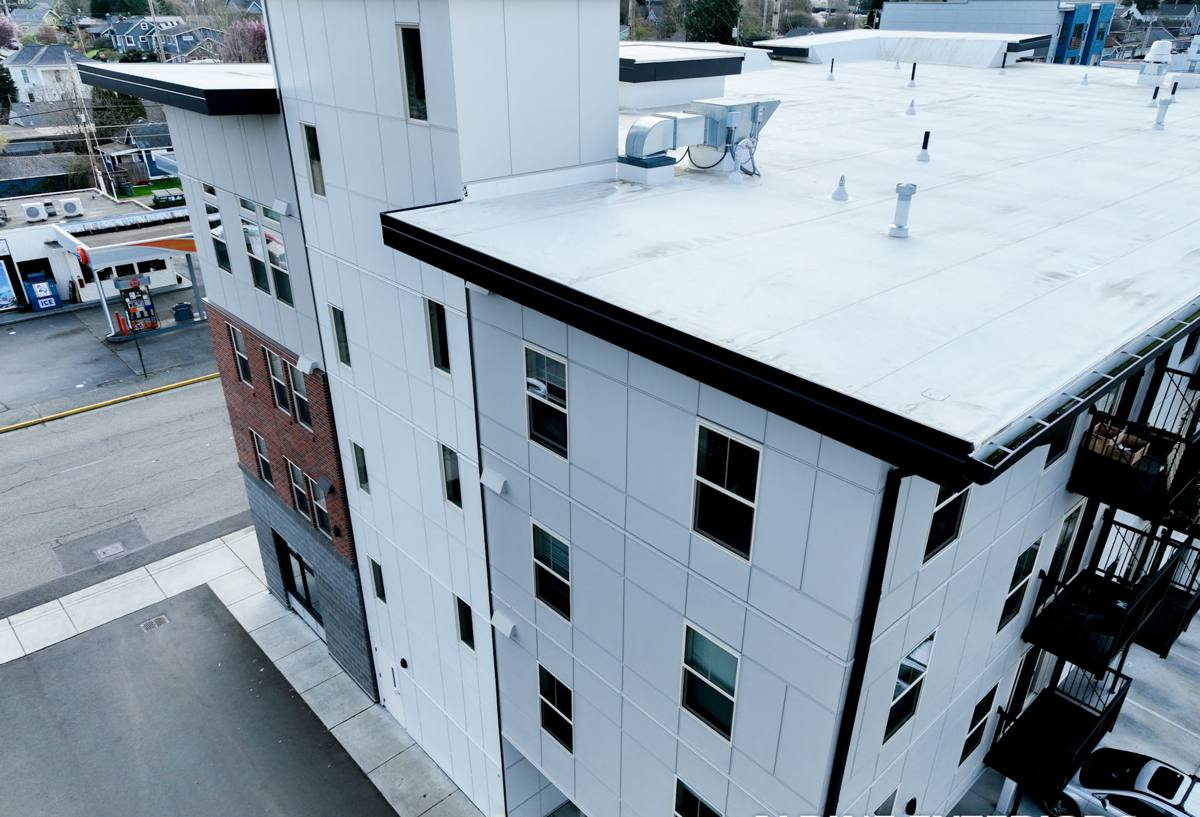
Why Samish's Climate Changes the Job
Samish sits close enough to the water that homes deal with salt-laden air on top of everything else Whatcom County throws at a building envelope. That combination shows up in three ways that matter for new-construction windows:
- Driving rain: Wind off the water pushes rain sideways into wall assemblies, not just straight down. Flashing details that would be adequate in a drier, calmer climate need to shed water that's actively being blown uphill against the siding.
- Salt air: Airborne salt accelerates corrosion on fasteners, flashing metal, and hardware. Materials and fastener choices that hold up fine inland can pit or streak faster this close to the water.
- Extended moss season: Whatcom County's mild, wet stretch runs long, and moss doesn't just grow on roofs. It colonizes horizontal trim, sills, and any ledge on the exterior where organic debris and moisture sit still. Around windows, that means sills and head trim need real slope and drainage, not just a flat surface that looks fine on install day.
None of this means Samish is an unusually hard place to build. It means the margin for error on flashing and drainage details is smaller than in a drier climate, and a window install that's "mostly right" tends to reveal its weak points sooner here than it would somewhere drier.
What Happens When These Details Are Skipped
The failures we get called about later aren't usually the window unit itself failing — modern windows are generally reliable products. It's water finding a way behind the flashing at a corner, a sill pan that wasn't sloped to drain, or a nailing fin that was sealed instead of properly lapped with the house wrap. In a wet, wind-driven climate, those small gaps get tested constantly instead of occasionally.
What a Correct New-Construction Window Install Involves
A proper install follows a sequence, and skipping steps or doing them out of order is where problems start. The core elements:
- Sill pan flashing: A sloped, watertight pan under the window opening so any water that gets past the window has somewhere to go — out, not into the wall cavity.
- Correct shimming and leveling: The window has to sit plumb, level, and square in the rough opening before it's fastened, or it won't operate correctly and won't seal evenly.
- Proper fastening: Following the manufacturer's fastening schedule matters for both structural performance and warranty coverage — this isn't a place to freelance.
- Flashing integration with the water-resistive barrier: The window's nailing fin needs to be flashed and lapped into the house wrap in the correct shingle-style order (sides over the sill flashing, head flashing over the sides) so water always sheds outward and downward.
- Air sealing at the interior: A continuous, gap-free seal on the inside of the rough opening controls condensation and drafts — this is a separate step from the exterior flashing, not a substitute for it.
- Exterior sealant as backup, not primary defense: Caulk should be the last line of defense, sealing gaps at the trim and cladding interface — not the thing doing the actual waterproofing work. Flashing does that job; sealant just cleans up the edges.
New-Construction vs. Retrofit Installs: Key Differences
| Factor | New-Construction Install | Retrofit / Pocket Replacement |
|---|---|---|
| Access to framing | Full access to studs and sheathing | Limited — works inside existing frame |
| Flashing control | Built correctly from scratch, full control | Constrained by existing details, often can't fully redo flashing |
| Best used for | New builds, additions, gut remodels | Swapping failing windows without touching siding |
| Risk if done poorly | Hidden wall-cavity water damage over years | Usually more contained, but can still leak at the head or sill |
| Typical timing in a project | After framing, before siding/exterior finish | Any time on an existing, finished building |
Choosing Windows for a Samish Home
Material and glass choice matter here more than in a drier inland climate. A few honest trade-offs worth knowing before you pick:
- Vinyl: Cost-effective and low-maintenance, and modern vinyl frames handle moisture well. Fine choice for most Whatcom County homes when installed correctly.
- Fiberglass: Higher upfront cost, but very stable dimensionally and resists the freeze-thaw and moisture-cycling stress this climate puts on frames over decades.
- Wood-clad: Attractive and a good fit for certain architectural styles, but the maintenance burden goes up in a salt-air, high-moisture environment — any gap in the exterior cladding on a wood window is a bigger long-term liability here than inland. We'll tell you honestly if a wood-clad unit isn't a good match for an exposed elevation.
- Glass package: Low-E coatings and argon or krypton gas fills help with both energy performance and comfort near single-pane cold spots. For a home exposed to wind and driving rain, we also look at the window's design pressure (DP) rating, not just its energy numbers — a window can be efficient and still not be rated for the wind load on an exposed wall.
- Hardware and fasteners: Given the salt air, we favor corrosion-resistant fasteners and hardware finishes on exposed elevations rather than defaulting to whatever's cheapest, since replacing corroded hardware later means disturbing a sealed install.
Our Process on a Samish New-Construction Job
Working With Your Builder or GC
Most new-construction window jobs happen on someone else's schedule — a general contractor's framing and siding sequence. We coordinate directly with the GC so windows go in at the right point: after the wall is framed and wrapped, before siding or exterior trim closes things up. We also flag any framing opening that's out of square or undersized before we install, rather than forcing a window into a bad opening and hoping caulk fixes it later.
On-Site Steps
- Verify rough openings are square, plumb, and correctly sized for the specified window units.
- Install sloped sill pan flashing at every opening.
- Set, shim, level, and fasten each window per the manufacturer's schedule.
- Integrate flashing with the house wrap in proper shingle-lap order.
- Air-seal the interior perimeter.
- Walk every opening with the builder or homeowner before siding closes it up — this is the last point anyone can see the flashing.
Common Mistakes We See in This Climate
Most of the callbacks and repair jobs we get on new-construction windows trace back to a short list of recurring issues:
- Flat or unsloped sill pans that trap rather than drain water.
- House wrap taped over the nailing fin instead of properly lapped, which traps water against the fin instead of shedding it.
- Caulk used as the primary seal instead of a backup to proper flashing.
- Standard fasteners used on salt-exposed elevations where corrosion-resistant hardware would hold up longer.
- Flat trim or sills with no slope, which collect moss and standing water during the long wet season.
Protecting the Investment After Install
A correctly installed window still needs basic upkeep in this climate. A short annual checklist:
- Clear moss and debris off sills, trim, and any horizontal surface near windows before it holds moisture through the wet season.
- Check exterior sealant beads for cracking or separation, especially on elevations that take direct weather.
- Look for streaking or discoloration on metal flashing and hardware, an early sign of salt-air corrosion worth addressing before it spreads.
- Confirm weep holes (if applicable to the window system) stay clear so any incidental water can drain out.
Why a Local Whatcom County Crew Matters Here
Flashing details that work in Arizona or even in drier parts of Washington don't automatically hold up against wind-driven rain and salt air near the Samish shoreline. A crew that works this specific stretch of Whatcom County regularly has already seen which details fail here and which ones hold up over time — that's not something you can fully substitute with a manufacturer's generic install manual. Local experience also means faster, more realistic scheduling around the wet months, since pouring flashing sealant or house wrap in the wrong weather window can compromise the install before it's even finished.
If you're building, adding on, or working with a GC on a project in the Samish area and want the window openings done right the first time, we're happy to take a look at your plans or framing and give you a straightforward, no-pressure estimate — just fill out the form below.