 Whatcom County
 Why Everson Homes Need Siding Built for This Climate
Everson sits in a part of Whatcom County that sees more wet weather than most homeowners expect when they move in. Long stretches of driving rain, damp winters, and a moss season that can run from fall through spring put real, sustained stress on exterior materials. Add the moisture-laden air that moves inland off the Salish Sea and settles into the Nooksack Valley, and you have a climate that rewards siding built to shed water fast and punishes anything that doesn't.
Wood-based siding products — cedar, primed spruce, and even engineered wood options like LP SmartSide — depend on paint film and edge sealing to keep moisture out. In a climate where surfaces stay damp for days at a time and moss and algae get a real foothold on north-facing walls and shaded elevations, that paint film is under constant attack. Once water finds a seam, a fastener head, or a cut edge that wasn't sealed, wood-based products swell, delaminate, or rot from the inside out — often before it's visible from the ground.
This is the core reason we standardized on James Hardie fiber cement siding for every home we work on in Everson and the surrounding county. It's not a marketing preference — it's a response to what actually holds up here.
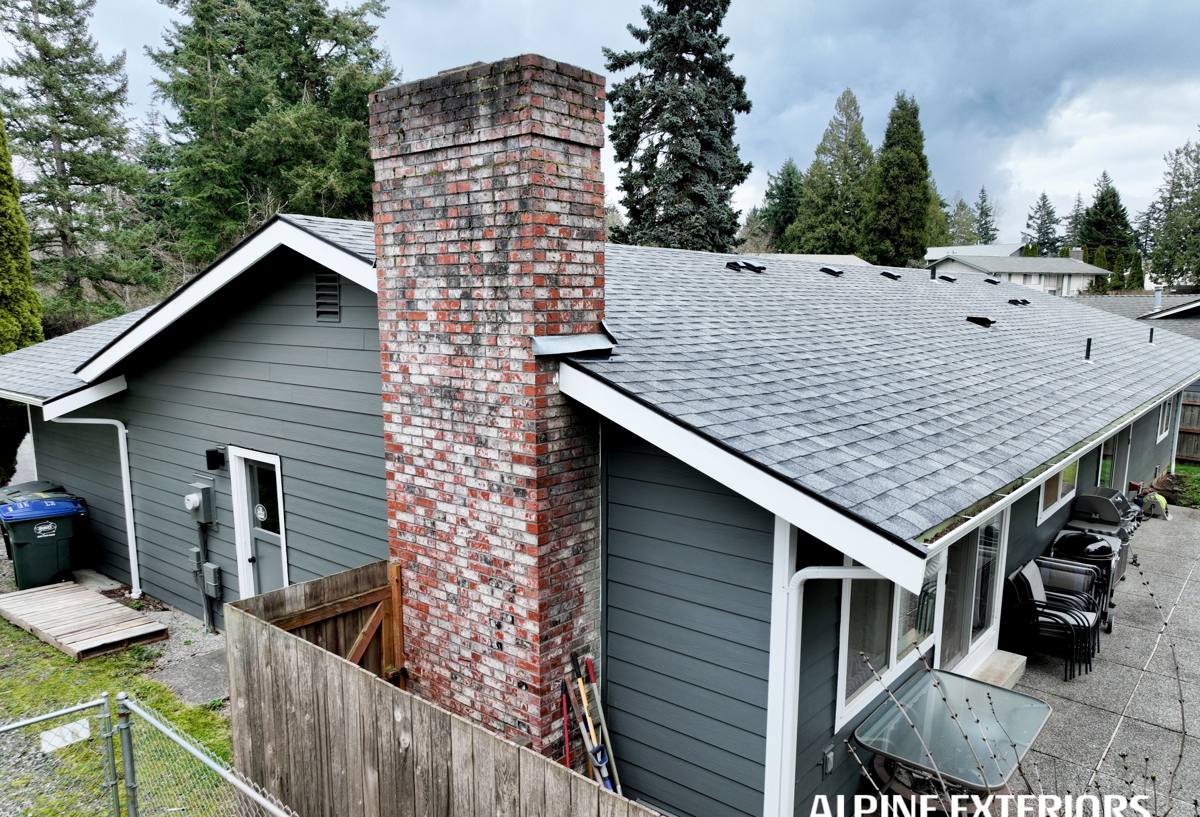
What James Hardie Brings to a Home in This Climate
James Hardie fiber cement is made from cement, sand, and cellulose fibers, cured into a dense, stable board. It doesn't absorb water the way wood does, it won't rot, and it isn't a food source for the mold and mildew that thrive in our damp winters. For a home in Everson, that means the siding itself stops being the weak link in the wall assembly — the flashing, house wrap, and installation details become what matters most, rather than fighting a losing battle against a material that's inherently vulnerable to moisture.
Hardie also engineers its products by climate zone under the HardieZone system. Homes in our region fall into the HZ5 zone, which accounts for freeze-thaw cycling and sustained moisture exposure. The boards, the recommended fastening patterns, and the factory finish are all specified with this kind of weather in mind — it's not a one-size-fits-all product shipped the same way to Arizona and western Washington.
ColorPlus Factory Finish
Most Hardie siding we install carries the ColorPlus finish — a baked-on, multi-coat finish applied under factory conditions rather than painted on-site. In a climate where field-applied paint has to cure and adhere in unpredictable, often damp weather, a factory finish removes that variable entirely. It also resists the fading and moss-friendly surface texture that flat-painted wood siding tends to develop over a few wet winters.
Choosing the Right Hardie Product Line for Everson
Not every Hardie profile fits every home, and part of doing this job right is matching the product to the house — its style, its exposure, and how much of the wall faces prevailing wind-driven rain.
| Product Line | Best Use | Why It Fits This Climate |
|---|---|---|
| HardiePlank Lap Siding | Traditional and modern homes, most common choice | Overlapping profile sheds water efficiently; wide range of textures and exposures |
| HardiePanel Vertical Siding | Modern facades, accent walls, gable ends | Fewer horizontal joints where water can collect on exposed elevations |
| HardieShingle | Craftsman and cottage-style homes | Staggered or straight-edge look without the moisture vulnerability of real cedar shingles |
| Board and Batten | Farmhouse and rural-style homes common in this area | Clean vertical lines that hold up on exposed rural properties without repainting |
Many homes in and around Everson have larger lots with less tree cover to block wind-driven rain, which makes correct panel selection and joint placement on exposed walls especially important.
What Correct Installation Actually Involves
Hardie siding is only as good as the installation behind it. The material is durable, but the details around it — flashing, clearances, and fastening — are exactly what determine whether a wall stays dry for decades or develops hidden problems in five years.
The Details That Actually Prevent Water Damage
- Proper weather-resistive barrier (house wrap) installed and lapped correctly before any siding goes up
- Flashing at every window, door, and roofline intersection, integrated with the house wrap — not just caulked over
- Minimum clearance maintained between siding and grade, decks, patios, and roof lines so water can't wick upward
- Correct fastener type, spacing, and placement per Hardie's published installation specs for our climate zone
- Factory-cut and field-cut edges properly sealed, since a raw cut edge is the one place the board can absorb water
- Proper joint treatment at butt seams and inside/outside corners to prevent gapping as the house settles
Skipping any one of these steps doesn't show up on install day. It shows up two or three wet seasons later, as staining, soft spots, or paint failure at specific points on the wall — almost always the same points that were cut corners during installation.
Our Process on an Everson Home
1. Inspection and Assessment
We start by walking the exterior, checking the condition of the existing siding, house wrap, and any trim or window flashing that will be exposed once the old material comes off. This is also when we look for the underlying moisture damage that often prompts a siding replacement in the first place.
2. Tear-Off and Sheathing Check
Once old siding is removed, we inspect the sheathing underneath. This is the point where hidden rot or water intrusion from a previous installation gets caught — and it needs to be addressed before anything new goes back on the wall.
3. Weather Barrier and Flashing
We install or repair the house wrap and integrate flashing at every penetration before a single piece of Hardie siding is hung. This step is invisible once the job is done, but it's the single biggest factor in how the wall performs over the next 30 years.
4. Siding Installation
Panels or planks go up per Hardie's fastening and clearance specifications for our HZ5 zone, with attention to joint placement on the elevations that see the most wind-driven rain.
5. Trim, Caulking, and Final Walkthrough
We finish with trim work and targeted caulking at transitions, then walk the completed job with the homeowner before calling it done.
Maintenance: What to Actually Expect
One of the real advantages of Hardie siding in a climate like ours is how little ongoing maintenance it demands compared to wood-based alternatives.
- Rinse the siding periodically to keep moss and algae from establishing on shaded or north-facing walls
- Inspect caulking at trim and window transitions every year or two, since caulk is the one component that does wear out over time
- Watch for any staining below downspouts or roof valleys, which usually points to a drainage issue rather than a siding problem
- No repainting cycle required with ColorPlus finish under normal conditions
Why a Crew That Already Works in Everson Matters
Siding installation isn't just about the product — it's about knowing how the local climate, local permitting, and local building patterns interact. A crew that regularly works Everson and greater Whatcom County already knows which elevations on a typical home take the worst of the winter rain, what moss buildup looks like before it becomes a real problem, and how local inspectors expect flashing and clearance details to be documented. That familiarity shows up in fewer callbacks and a job that's specified correctly the first time, rather than adjusted after something fails.
What Affects the Cost of a Hardie Siding Job in This Area
| Factor | Why It Matters |
|---|---|
| Home size and wall complexity | More corners, gables, and dormers mean more cuts, trim, and labor time |
| Condition of existing sheathing | Hidden rot discovered during tear-off adds repair work before new siding goes up |
| Product line and profile | Lap siding, panel, shingle, and board-and-batten carry different material and labor costs |
| Trim and finish detail | Custom trim, corner treatments, and accent elements add time beyond field siding |
| Access and site conditions | Multi-story walls, tight lot lines, or landscaping obstacles affect labor and staging |
Because every home is different, we don't quote off square footage alone — an accurate number comes from actually walking the property.
If you're weighing a siding replacement on your Everson home, we're happy to walk the property, point out anything our climate has already done to your current siding, and put together a straightforward, no-pressure estimate using the form below.