 Whatcom County
 Roofing in Everson: What the Climate Actually Does to a Roof
Everson sits in the part of Whatcom County where weather comes off the water and gets funneled up the Nooksack Valley, which means homes here see a steady diet of driving rain, damp shoulder seasons, and long stretches where roofs simply never fully dry out. Add in the marine-influenced air that moves through the county and you get conditions that are hard on asphalt, hard on flashing, and very good at growing moss. A roof that would hold up fine in a drier climate can start showing problems here years ahead of schedule if it wasn't built for this specific environment.
That's the core issue with roof replacement in Everson: it's not just about swapping old shingles for new ones. It's about choosing materials and installation details that account for wind-driven rain finding every gap, moisture sitting on north-facing slopes that don't get much sun, and moss taking hold in valleys and under trees where debris collects. Get those details right and a roof will do its job for decades. Get them wrong and you're looking at leaks, rot, and a shortened lifespan no matter how good the shingles looked on day one.
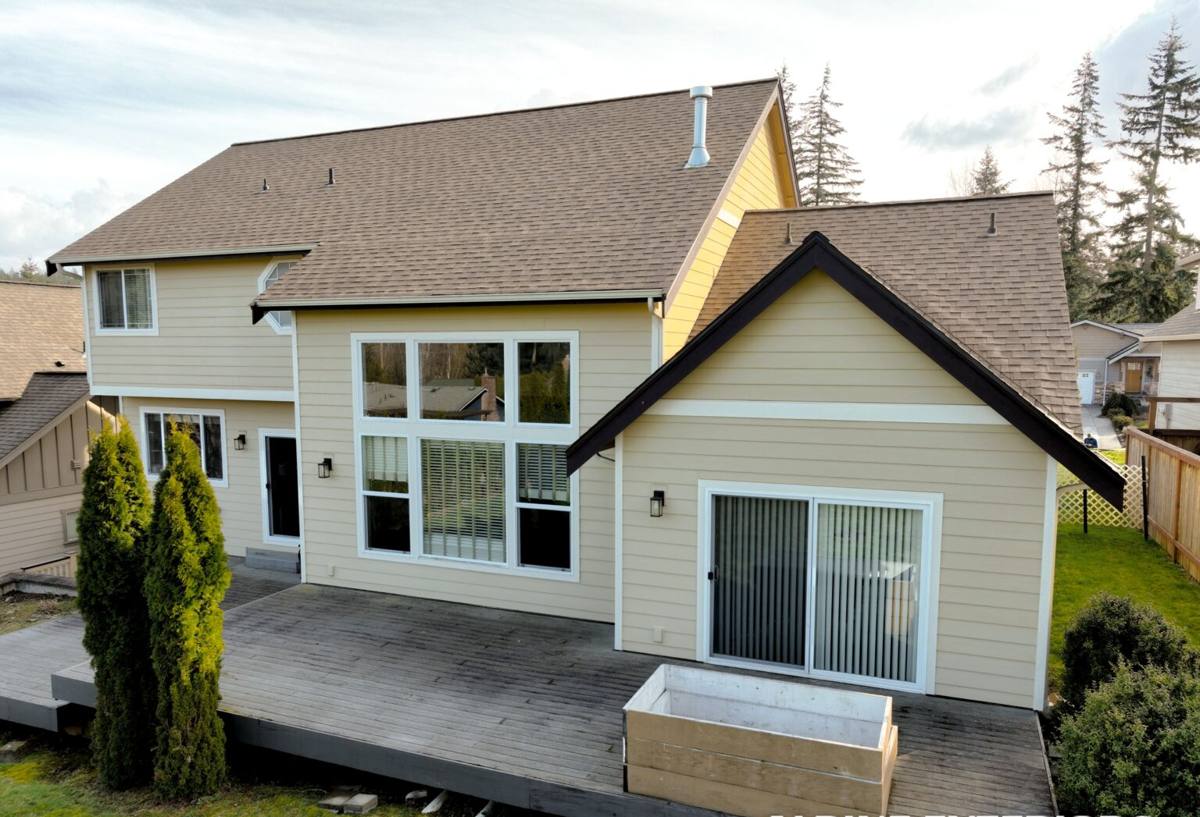
Signs an Everson Roof Needs Replacing, Not Just Patching
Not every roof problem calls for a full replacement, and we'll tell you honestly when a repair is the right call. But there are signs that point to a roof at the end of its useful life rather than one with an isolated issue:
- Granule loss heavy enough that you're finding grit in gutters and downspouts every season
- Shingles that are curling, cracking, or lifting at the edges, especially on south- and west-facing slopes
- Moss and algae staining that keeps coming back within a year or two of cleaning
- Soft spots in the decking you can feel underfoot, or sagging visible from the ground
- Daylight visible through the attic roof boards, or insulation that's damp or matted
- Multiple repair calls in the same few years for different leaks
- A roof that's 20+ years old and has never had a full tear-off, only repairs and re-layers
If you're seeing two or more of these, it's worth having someone look at the whole system rather than chasing individual leaks one at a time.
What a Correct Roof Replacement Involves Here
Tear-Off and Deck Inspection
We don't install new roofing over old. A full tear-off lets us actually see the roof deck, which in a climate this wet is where the real problems hide. Soft or delaminated sheathing, especially around old flashing points and valleys, gets replaced before anything new goes down. Skipping this step is one of the most common shortcuts in the trade, and it's the one that causes the most expensive problems five or ten years later.
Underlayment That Matches the Climate
In a region with this much sustained rain, we use synthetic underlayment and self-adhered ice-and-water membrane at the vulnerable spots — eaves, valleys, around chimneys and skylights, and anywhere water tends to back up or pool. This is the layer that protects the house if wind ever drives rain up under the shingles, and it matters more here than in drier parts of the state.
Flashing Done Right
Most roof leaks don't come from the field of the roof — they come from flashing that was reused, undersized, or installed with the wrong laps. Chimneys, sidewalls, valleys, and any roof penetration get new flashing as part of the job, not patched-over old flashing hidden under new shingles.
Ventilation That Actually Balances
Attic ventilation is easy to overlook and expensive to get wrong. Balanced intake at the eaves and exhaust at the ridge keeps moisture from condensing in the attic, which matters a great deal in a climate where humid air is the norm for much of the year. Poor ventilation shortens shingle life from underneath, which is exactly the kind of damage you don't see until it's advanced.
Moss Prevention Built In
Given how much of the year Everson roofs stay damp, we install zinc or copper strips near the ridge on new roofs where appropriate. Rain washing over these strips releases a small amount of metal ion that discourages moss and algae growth on the slopes below — a passive defense that reduces (though doesn't eliminate) the need for cleaning and treatment down the road.
Roofing Material Options for Whatcom County Homes
| Material | Typical Lifespan Here | Notes for This Climate |
|---|---|---|
| Architectural asphalt shingle | 25–30 years | Good moisture and wind performance for the price; most common choice in the area |
| 3-tab asphalt shingle | 15–20 years | Lower upfront cost but less wind resistance and shorter service life in a wet, gusty climate |
| Standing seam metal | 40–50+ years | Excellent water shedding and moss resistance; higher upfront cost, fewer seams for water to find |
| Synthetic/composite shingle | 30–50 years | Good moisture resistance and impact durability; higher material cost |
We install a range of these depending on the home, the budget, and the roof's specific exposure. For steeper roofs with heavy shade and persistent moss issues, we'll often steer homeowners toward metal or a moss-resistant shingle line, because the maintenance savings over time can offset the higher install cost. For most single-family homes in Everson, a quality architectural shingle with the right underlayment and flashing package is the practical, cost-effective choice.
Why We Avoid Certain Products, Not Brands
We won't install every product on the market, and it's worth being upfront about why. Some low-end shingle lines, cheap synthetic underlayments, and stapled-instead-of-nailed installations save money on the day of installation but create problems that show up as leaks or premature failure in a climate this consistently wet. It's not that any particular manufacturer is bad — it's that certain product tiers and installation shortcuts aren't a good match for driving rain and near-constant moisture. We'd rather explain the trade-off up front than have a homeowner deal with a failed roof at year eight.
Our Process for Everson Roof Replacements
- On-site assessment. We inspect the existing roof, attic ventilation, and any trouble spots, and take measurements for an accurate quote.
- Written estimate. You get a clear breakdown of materials, scope, and cost — no vague allowances or surprise add-ons later.
- Material selection. We walk through shingle, metal, or composite options based on your roof's exposure, budget, and how long you want it to last.
- Scheduling around the weather. Roofing in this climate means watching forecasts closely and staging materials so the deck isn't exposed longer than necessary.
- Tear-off and deck repair. Old roofing comes off, decking is inspected, and any damaged sheathing is replaced before anything new goes on.
- Installation. Underlayment, flashing, ventilation, and roofing material go in per manufacturer specs and the details this climate actually demands.
- Final walkthrough. We review the completed roof with you, cover warranty paperwork, and answer any maintenance questions.
What Homeowners Should Ask Before Hiring a Roofing Crew
A roof replacement is one of the larger investments a homeowner makes, and it's also one where poor workmanship doesn't show itself right away — it shows up as a leak two winters later. Before hiring anyone for a roof replacement in Everson, it's reasonable to ask:
- Are you licensed and insured to work in Washington State, and can you provide proof?
- Do you use full tear-off, or will you install over the existing roof?
- What underlayment and flashing details do you use at valleys, chimneys, and eaves?
- How is attic ventilation handled as part of the job, not as an afterthought?
- What's the manufacturer's warranty, and what's your own labor warranty?
- Do you have experience with roofs in this specific climate, not just roofing in general?
A crew that's used to working in Whatcom County will have straightforward answers to all of these without hesitation, because they run into these exact conditions on every job.
Why Local Experience Matters for This Job
Roofing crews that mostly work drier inland climates tend to under-detail flashing and underlayment because they can get away with it where they're from. That doesn't work here. A crew that already does roof replacement work throughout Whatcom County knows which slopes hold moss the longest, which valleys need extra membrane, and how to sequence a tear-off so a sudden rain shower doesn't turn into water damage inside the house. That local knowledge is the difference between a roof that's technically installed to code and one that's actually built for the conditions it has to survive year after year.
If your Everson home needs a new roof, or you're not sure whether it needs a repair or a full replacement, we're happy to take a look and give you a straight answer. Reach out for a free, no-pressure estimate using the form below.