 Whatcom County
 Siding Replacement in Everson: What Local Homes Are Up Against
Everson sits inland from Bellingham Bay but still lives inside the same wet Pacific Northwest weather pattern that defines Whatcom County: long stretches of drizzle, seasonal fog off the Nooksack River valley, and a moss season that can run from fall through spring. Add in occasional wind-driven rain events, and you have a climate that is patient but relentless about finding weak points in a home's exterior. Siding here doesn't fail dramatically — it fails slowly, through years of moisture cycling that most homeowners don't notice until paint is peeling, boards are soft, or a contractor points out rot during an unrelated repair.
That slow failure pattern is exactly why siding replacement decisions in Everson should be made with the local climate in mind, not with a generic national playbook. What holds up in a dry inland climate is not automatically the right call for a house that spends a third of the year under cloud cover and damp air.
How Whatcom County's Climate Actually Attacks Siding
Moisture, Not Heat, Is the Enemy
Unlike siding failures driven by UV and heat cycling in hotter climates, Everson siding problems are almost always moisture problems. Water gets behind panels through failed caulking, poor flashing, or absorbent materials, and then it doesn't dry out quickly because the air itself stays humid for months at a stretch. Wood-based products — real cedar, primed spruce, engineered wood products like LP SmartSide — are all vulnerable to swelling, delamination, and rot when moisture exposure outpaces drying time. That's a structural concern, not just a cosmetic one.
Moss and Organic Growth
A long moss season means algae and moss don't just grow on roofs — they take hold on siding surfaces, especially on north-facing walls and areas shaded by trees or neighboring structures, both common in Everson's more rural and tree-lined lots. Porous or textured siding surfaces give moss more to grip. Smooth, factory-finished surfaces shed it more easily and are far easier to clean without damaging the finish.
Wind-Driven Rain and Panel Gaps
Storms moving through the county can push rain sideways, forcing water into seams, laps, and butt joints that would stay dry in calmer weather. Any siding replacement in this area needs correct lap spacing, sealed joints, and proper house wrap detailing behind the cladding — not just a new surface layer over the same old weaknesses.
Signs an Everson Home Needs Siding Replacement, Not Just Repair
- Soft or spongy spots when pressed, especially near the bottom courses and around window trim
- Paint that keeps failing within a couple of years no matter how often it's repainted
- Visible warping, bowing, or panels pulling away from the wall
- Persistent moss or dark staining that returns quickly after cleaning
- Rising energy bills tied to drafts, especially on the sides of the house facing prevailing weather
- Rot discovered at corners, seams, or anywhere two materials meet
One or two of these on their own might mean a targeted repair is enough. Multiple signs, especially combined with the age of the siding, usually mean the underlying material has reached the end of its useful life and repair would just be a stopgap.
What a Correct Siding Replacement Involves
Replacing siding correctly is not a cosmetic swap. In a climate like Whatcom County's, the work happening underneath the new siding matters as much as the siding itself.
Tear-Off and Inspection
Full removal of the old siding lets us actually see the sheathing underneath. This is often the point where hidden moisture damage from years of a marginal siding job gets discovered — soft sheathing, rusted fasteners, or compromised framing. Skipping this step and installing over existing siding hides problems instead of solving them.
Water-Resistive Barrier and Flashing
A properly lapped house wrap, correctly integrated window and door flashing, and attention to every penetration point (vents, hose bibs, light fixtures) are what actually keep water out of the wall assembly. Siding is the visible layer, but the barrier system behind it does most of the real work.
Material Selection and Installation to Spec
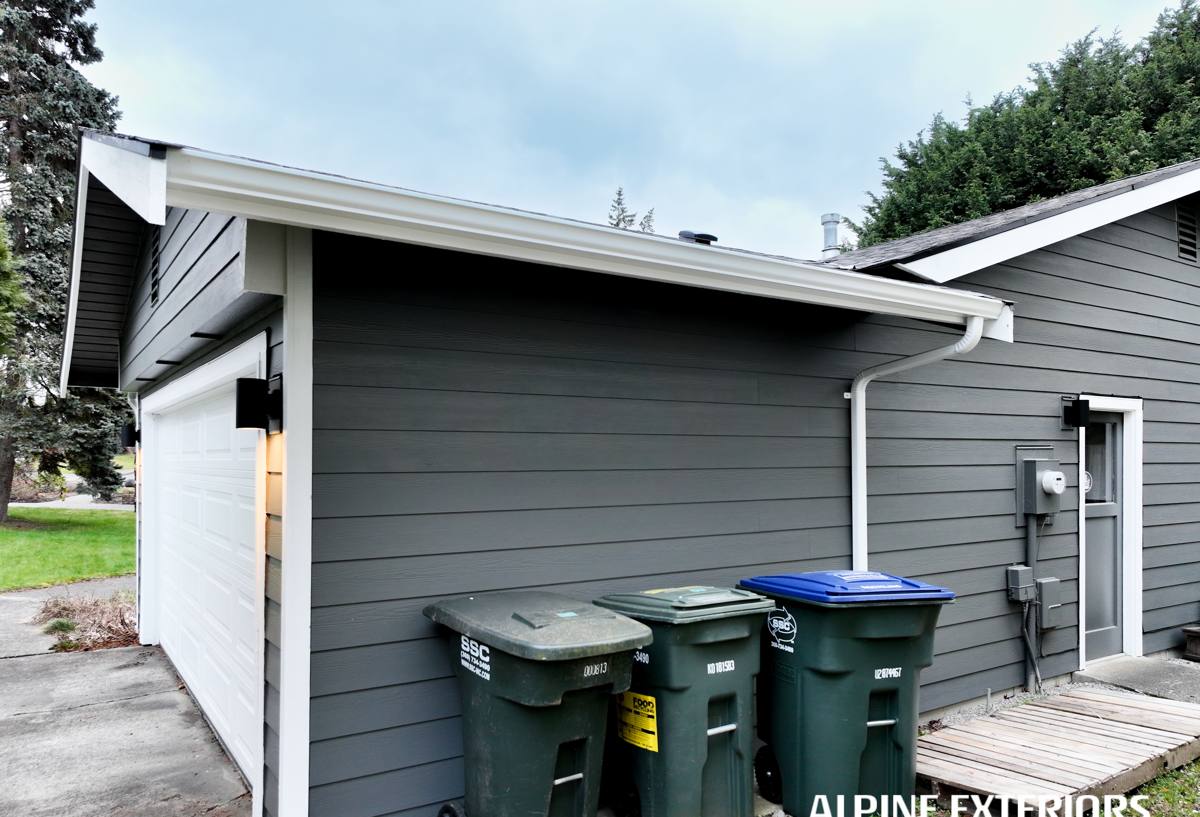
We install James Hardie fiber cement siding exclusively, using their HZ5 climate-engineered product line, which is formulated specifically for wetter, harsher weather zones like ours. Installation follows Hardie's published specifications for fastener placement, clearances above grade and roof lines, and gapping at joints — details that directly affect how well the siding performs over the next several decades in this climate.
Trim, Caulking, and Paint System
ColorPlus factory-finished panels arrive with the color baked on, which removes the weakest link in most siding failures: field-applied paint that fails at the seams first. Trim and touch-up work still needs to be done correctly, with the right sealants rated for exterior exposure in a wet climate.
Why We Install Only James Hardie Fiber Cement
We get asked why we don't offer vinyl, LP SmartSide, cedar, or other fiber cement brands like Cemplank or Allura. It's a fair question, and the honest answer is that after years of installing and repairing siding in this exact climate, we standardized on one product because it performs consistently here.
- Vinyl is affordable and low-maintenance in mild climates, but it can warp under temperature swings, and its seams and J-channels give wind-driven rain more opportunities to find a way behind the panel.
- LP SmartSide and other engineered wood products perform well when installation and maintenance are perfect, but they're wood-based, and wood-based siding is inherently more vulnerable to the moisture cycling that defines our winters.
- Cedar and primed spruce look great initially but demand ongoing maintenance — recoating, caulking, moisture monitoring — that most homeowners underestimate until the first signs of rot appear.
- Other fiber cement brands compete on price but don't offer the same factory-finish warranty structure or the region-specific HZ5 formulation that James Hardie backs specifically for high-moisture climates like ours.
James Hardie fiber cement is non-combustible, holds up structurally in sustained moisture exposure far better than wood-based alternatives, and comes with a strong transferable warranty that reflects the manufacturer's confidence in the product. For a home in Everson, where the material will spend a good portion of every year damp, that combination matters more than upfront cost alone.
Cost Factors for Siding Replacement in Everson
Every home is different, but the price of a siding replacement project is driven by a consistent set of factors. Understanding them helps homeowners evaluate quotes and avoid surprises mid-project.
| Factor | Why It Affects Cost |
|---|---|
| Home size and wall complexity | More square footage and more corners, gables, and dormers mean more material and labor time |
| Extent of hidden damage | Rotted sheathing or framing found during tear-off requires repair before new siding goes on |
| Siding profile chosen | Lap width, texture (smooth vs. cedar-look), and panel vs. plank systems vary in material cost |
| Trim and detail work | Window casings, corner boards, and fascia detailing add labor beyond flat wall coverage |
| Access and site conditions | Steep lots, mature landscaping, or limited equipment access can add labor time |
| Removal and disposal | Full tear-off of old siding, especially older materials, adds a disposal cost |
We provide itemized, honest estimates so homeowners can see exactly where the cost is going rather than a single lump number.
Our Process, Start to Finish
- On-site assessment — We walk the exterior, check for existing moisture damage, and talk through what's driving the replacement decision.
- Written estimate — A clear scope of work and pricing, with any anticipated risk areas (like likely hidden rot) flagged up front.
- Material selection — Choosing the right Hardie profile, texture, and ColorPlus finish for the home.
- Tear-off and inspection — Full removal of old siding and a real look at the sheathing underneath before anything new goes up.
- Water barrier and flashing install — The unglamorous work that determines how the house performs in wet weather for the next 30-plus years.
- Siding installation to manufacturer spec — Fastener placement, clearances, and joint gapping done to James Hardie's published requirements.
- Final walkthrough — We review the finished work with the homeowner before calling the job complete.
Why Hiring a Crew That Already Works in Everson Matters
Siding installation quality depends heavily on whether the crew understands the specific climate conditions they're building against. A crew that primarily works in drier regions may not think twice about clearance heights above grade, moisture barrier lapping direction, or how much gap to leave at butt joints for expansion in a persistently damp environment. Those details are exactly the ones that determine whether siding lasts 10 years or 40 in a place like Whatcom County.
Working regularly in Everson and the surrounding Whatcom County area also means familiarity with how local permitting and inspection processes run, and a realistic understanding of how weather windows affect scheduling — tear-off and barrier installation need dry stretches, and a crew that knows the local weather patterns plans around that instead of getting caught mid-project when the rain moves back in.
Get a Straight Answer About Your Siding
If your Everson home is showing signs of siding wear — soft spots, recurring moss, paint that won't hold, or rising energy bills — it's worth getting an honest, no-pressure look before deciding between repair and replacement. We'll walk the exterior, tell you what we actually see, and give you a clear estimate for James Hardie fiber cement replacement built for this climate. Reach out below for a free estimate.