 Whatcom County
 Fiber Cement Siding Built for Birchwood's Climate
Birchwood homes sit in a stretch of Whatcom County where weather doesn't take a season off. Salt-laden air drifts in off the water, driving rain comes sideways more often than straight down, and a long stretch of gray, damp months each year keeps moss and algae looking for anywhere they can get a foothold. Siding here isn't just a cosmetic choice — it's the first line of defense between that weather and the framing, sheathing, and insulation behind it. We install James Hardie fiber cement siding specifically because it holds up to this combination of conditions better than the alternatives we've chosen not to install.
This page is about one service, in one area: fiber cement siding installation and replacement for homes in and around Birchwood. If you're comparing materials, weighing a repair against a full replacement, or just trying to understand what a correct installation looks like in this climate, this is written for you.
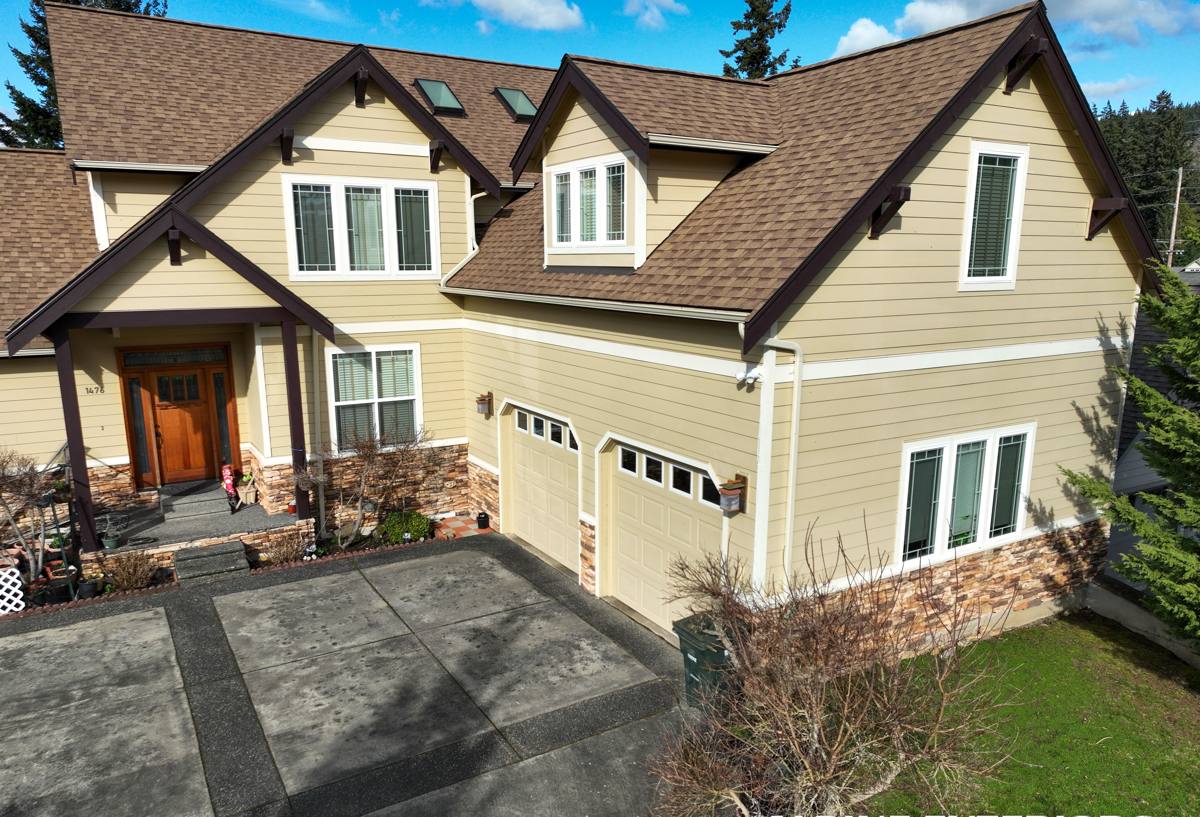
What Whatcom County Weather Does to Siding
Every siding material eventually meets its limits somewhere. In Birchwood, the specific stresses are predictable if you've worked here long enough:
- Salt air: Moisture carrying salt accelerates corrosion on fasteners, flashing, and trim, and it speeds up the breakdown of finishes that aren't built to resist it.
- Driving rain: Wind-driven rain doesn't just fall on siding, it pushes against it and finds its way into any gap, unsealed seam, or poorly lapped joint. Water intrusion behind siding is one of the most common causes of rot in this region, and it's rarely visible until the damage is advanced.
- Extended moss and algae season: The combination of shade, moisture, and mild temperatures common to Whatcom County gives organic growth a long window to establish itself on north-facing walls, under eaves, and anywhere airflow is limited.
- Temperature swings and freeze-thaw cycling: Fewer than some inland climates, but still enough cycles per year to stress materials that expand and contract differently than the wood or sheathing behind them.
A siding system that handles one of these well and fails at another isn't really solving the problem. Fiber cement, installed correctly, is engineered to resist all four at once.
Why We Install Only James Hardie Fiber Cement
We don't install vinyl, LP SmartSide, primed wood, cedar, or other fiber cement brands like Cemplank or Allura. That's a deliberate standard, not a matter of preference, and it's worth explaining honestly rather than just asserting it.
What the alternatives get right — and where they fall short here
Vinyl siding is inexpensive and low-maintenance in mild climates, but it's a petroleum-based product that can warp under heat and become brittle in cold, and its seams and panel joints give wind-driven rain more opportunities to work behind the cladding. Wood and cedar siding look excellent and are a legitimate traditional choice, but they require an ongoing maintenance commitment — repainting, resealing, and watching for rot — that most Birchwood homeowners don't want to sign up for given how much moisture this area sees. Engineered wood products like LP SmartSide perform well when the factory treatment stays fully intact, but any breach in that treatment (a cut edge, a fastener hole, a scuff during installation) creates a path for moisture absorption into a wood-based substrate.
Other fiber cement brands aren't a different category of risk in the same way — they're closer cousins to what we install. But we've standardized on James Hardie specifically for its ColorPlus factory finish, its HZ5 product engineering for Pacific Northwest moisture exposure, and the strength of its transferable warranty when installation follows Hardie's own specifications. Consistency in the product line lets our crews install to the same standard on every job, rather than relearning quirks between brands.
Why fiber cement wins in this specific climate
| Factor | Fiber Cement (James Hardie) | Vinyl | Wood/Cedar |
|---|---|---|---|
| Moisture absorption | Very low; not wood-based | Not absorbent, but seams leak | High if finish fails |
| Salt air resistance | Strong; factory finish resists fading and breakdown | Moderate; can chalk and discolor | Weak without frequent refinishing |
| Moss/algae resistance | Good with proper finish and gap detailing | Moderate; smooth but seams trap moisture | Poor; organic material feeds growth |
| Fire resistance | Non-combustible | Combustible, can melt | Combustible |
| Maintenance | Occasional wash; repaint on decades-long cycle | Low, but limited repair options | Regular repainting/sealing |
What a Correct Fiber Cement Installation Involves
Fiber cement is only as good as the installation behind it. Most siding failures we're called to diagnose in Whatcom County aren't material failures — they're installation shortcuts that let water in behind a perfectly good product. A correct job includes:
Water management first
Before a single piece of siding goes up, the wall needs a properly lapped weather-resistant barrier, correctly integrated flashing at every window, door, and penetration, and a drainage plane that lets any moisture that does get behind the cladding find its way back out rather than pooling against the sheathing. In a driving-rain climate like this one, this step matters more than the siding itself.
Fastening and clearances to spec
James Hardie has specific fastening patterns, nail types, and minimum clearances from grade, roofing, and adjacent surfaces. Skipping these — fastening too close to panel edges, using the wrong fastener, or leaving no gap at the bottom of the wall — is exactly the kind of shortcut that leads to cracking, buckling, or moisture entry within a few years.
Joint and seam treatment
Butt joints, corners, and trim intersections need to be caulked and sealed according to spec, not just butted together and painted over. In a salt-air, high-rain environment, these are the first spots to fail if rushed.
Finish and touch-up
ColorPlus factory-finished panels are engineered to resist fading and moisture better than field-applied paint, but cut edges and any job-site touch-up need to be sealed with the correct touch-up product to maintain that protection.
Our Process for Birchwood Homes
- On-site assessment: We walk the exterior, check for existing moisture damage, evaluate the current water management details, and note anything specific to the home's exposure — shaded north walls prone to moss, areas that take the brunt of wind-driven rain, and so on.
- Scope and product selection: We recommend the appropriate James Hardie product line and profile for the home's style and exposure, and walk through color options in the ColorPlus finish system.
- Tear-off and sheathing check: Where we're replacing existing siding, we inspect the sheathing underneath for rot or damage before anything new goes up. Covering a moisture problem instead of fixing it just delays a bigger repair.
- Weather barrier and flashing installation: This is done to manufacturer spec, not shortcut, with particular attention to window and door integration.
- Siding installation: Installed to James Hardie's fastening, clearance, and joint-treatment specifications, panel by panel.
- Final inspection and cleanup: We check caulking, trim, and touch-up work before calling the job done.
Why a Crew That Already Works Birchwood Matters
Installation quality depends on judgment calls that generic training doesn't cover — how much clearance to leave at grade on a lot with poor drainage, how to detail a wall that takes direct wind-driven rain off the water, where moss is likely to become a problem based on how much shade and moisture a particular wall gets through the wet season. A crew that has done this work across Whatcom County, and specifically around Birchwood, has already seen how these conditions play out on real homes over multiple seasons. That's different from a crew that installs the same product the same way regardless of where the house sits.
It also matters for warranty support. James Hardie's transferable warranty depends on installation meeting manufacturer specifications — having a local crew that installed the job, knows the home, and stands behind the work if a question comes up later is worth more than the lowest bid from an out-of-area contractor.
Signs Your Birchwood Home May Need New Siding
- Visible moss or algae buildup that returns quickly after cleaning
- Soft spots, bubbling paint, or discoloration near seams and corners
- Cracked, warped, or buckled panels
- Gaps opening up at trim, corners, or window edges
- A musty smell or visible staining on interior walls near exterior siding
- Siding that's simply past its expected service life and showing its age
Any one of these on its own might be minor. Several together, especially combined with the home's age, usually means it's worth a proper assessment before small problems become structural ones.
What Affects Cost on a Birchwood Project
| Factor | Why it matters |
|---|---|
| Home size and wall complexity | More corners, dormers, and trim details mean more labor and material waste |
| Existing siding removal | Tear-off and disposal of old material adds time versus installing over open sheathing |
| Sheathing or framing repair | Hidden moisture damage found during tear-off needs to be fixed before new siding goes up |
| Product line and profile | Lap width, texture (smooth vs. cedar-shake style), and trim choices affect material cost |
| Site access | Tight lots, slopes, or limited staging area can affect labor time |
We give exact numbers after seeing the home in person — broad ranges without an inspection tend to be more misleading than helpful.
If you're weighing a repair, a partial replacement, or a full re-side for a Birchwood home, we're happy to take a look and give you a straightforward, no-pressure estimate. Use the form below to get started.