 Whatcom County
 Roof Repair Built for Birchwood's Weather, Not Just Any Roof
Birchwood sits inside Whatcom County's marine climate belt, which means roofs here deal with a specific combination of stresses that inland homes never see: salt-laden air drifting off Bellingham Bay, long stretches of driving rain that comes in sideways during winter storms, and a moss season that can run eight months or longer in shaded, north-facing sections of a roof. None of these problems are dramatic on their own. That's exactly why they're dangerous — they work slowly, and by the time a homeowner notices a stain on the ceiling, the underlying damage has usually been building for a season or two.
A roof repair done right in this neighborhood isn't the same job as a roof repair in a dry inland climate. It has to account for moisture that lingers, organic growth that holds water against shingles and flashing, and metal components that corrode faster near the coast. This page focuses specifically on what that means for homes in Birchwood and how we approach repairs here.
What Whatcom County's Climate Does to a Roof Over Time
Salt Air and Metal Fatigue
Homes closer to the water pick up airborne salt that settles on exposed metal — flashing, vent boots, gutter fasteners, nail heads. Over years, that accelerates corrosion in ways a homeowner rarely sees until a fastener backs out or a flashing seam starts leaking. It's not a reason to panic about every metal roof component, but it is a reason to have someone check those spots more often than you would in a drier region.
Driving Rain and Wind-Driven Water
Whatcom County storms often bring rain at an angle, not straight down. That matters because a roof can be in decent shape and still leak if water is being pushed sideways under shingle edges, around chimneys, or through poorly sealed transitions. Repairs that only address the "obvious" spot and ignore wind direction tend to fail again in the next storm.
Moss, Moisture, and Shaded Roof Sections
Birchwood's tree cover is part of what makes the neighborhood pleasant to live in, but it also means shaded roof slopes stay damp longer after every rain. Moss and algae take hold in those conditions, and as moss mats grow, they lift shingle edges and hold water against the roof deck. Left alone long enough, this turns a surface issue into a rot problem underneath.
Signs a Birchwood Roof Needs Repair
Most roof problems give warning signs well before they become emergencies. Here's what we tell homeowners in this area to watch for between inspections:
- Granules collecting in gutters or at downspout outlets (a sign shingles are aging or were storm-damaged)
- Dark streaking or green/black patches on north-facing or shaded slopes
- Visible moss mats, especially along ridge lines or in valleys where debris collects
- Soft or spongy spots when walking a roof (never do this yourself if you're not experienced — call us instead)
- Water stains on interior ceilings, especially near chimneys, skylights, or where two roof planes meet
- Lifted, cracked, or missing shingles after a windstorm
- Rusted or separating flashing around vents, chimneys, or wall intersections
- Sagging in the roofline, which usually points to deck-level moisture damage and needs prompt attention
What a Correct Roof Repair Actually Involves
A proper repair isn't just patching the spot where a leak showed up inside the house. Water travels — it can enter at one point and show up on a ceiling several feet away. Our repair process always starts with tracing the actual entry point, not just treating the symptom.
Diagnosis Before Anything Else
We look at the roof from the outside and, where safe and useful, check the attic or crawlspace from inside for moisture patterns, staining, or deck softness. This tells us whether we're dealing with a flashing failure, worn shingles, a ventilation issue, or moss-related moisture — each requires a different fix.
Addressing the Cause, Not Just the Symptom
If moss has been lifting shingles, removal alone isn't enough — we check for granule loss and deck moisture underneath before closing things back up. If flashing has corroded from years of salt exposure, we replace it with materials suited to coastal conditions rather than a quick sealant patch that will fail again within a season or two.
Matching Materials and Technique to the Existing Roof
Repairs on an older roof need to account for how the existing material has weathered. Mismatched shingles, incompatible sealants, or fasteners that don't suit the existing decking can create new problems even when the original issue gets fixed.
Repair Approaches by Roofing Material
Whatcom County homes are covered in a mix of roofing types, and the right repair approach depends on what's already on the roof.
| Roof Type | Common Local Issues | Repair Approach |
|---|---|---|
| Asphalt composition shingle | Granule loss, moss lifting edges, wind-lifted tabs | Spot shingle replacement, moss removal, resealing tabs, flashing checks |
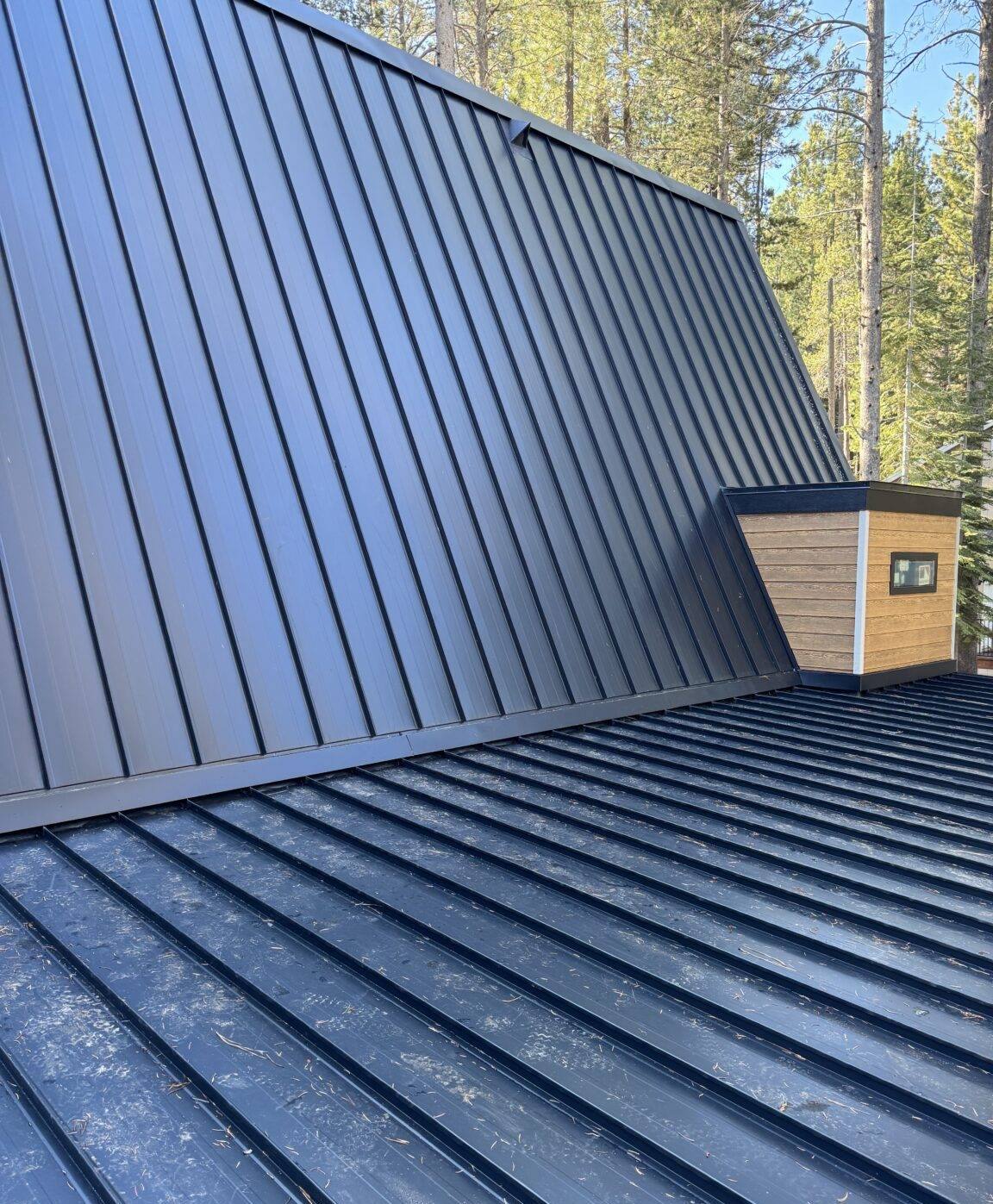
| Metal roofing/panels | Fastener corrosion, seam separation near coast | Fastener replacement with coastal-rated hardware, seam resealing |
| Wood shake/shingle | Moisture retention, moss and rot in shaded areas | Selective shingle replacement, improved airflow, moss treatment |
| Flat or low-slope sections | Ponding water, membrane wear at seams | Membrane patch or seam repair, drainage correction |
Moss and Algae: The Ongoing Maintenance Side
Repair and prevention go hand in hand in a climate like this one. A repaired roof that goes back into the same shaded, damp conditions without any follow-up maintenance will likely develop the same moss issues within a couple of seasons. We're upfront about this with Birchwood homeowners: a single repair visit fixes what's damaged now, but keeping gutters and valleys clear of debris and addressing moss growth before it mats down are what actually extend the life of the fix.
We don't push aggressive pressure-washing as a moss solution — high-pressure water can drive moisture under shingles and strip protective granules, which shortens roof life rather than extending it. Our standard is gentler removal methods paired with treatments that slow regrowth, especially on the shaded slopes that tend to hold moisture longest.
Our Repair Process
- Inspection and diagnosis — we walk the roof (weather permitting) and check attic-side conditions where relevant to find the actual source of the problem.
- Honest assessment — we tell you plainly whether this is a repair situation or whether the roof's age and condition mean a repair would just be a short-term patch on a bigger problem.
- Written scope and estimate — you know what's being done and why before any work starts.
- The repair itself — matching materials, proper flashing work, and attention to how water actually moves across your specific roof.
- Follow-up guidance — practical notes on what to watch for and how often to check problem areas, particularly shaded sections prone to moss.
Repair vs. Replacement: How We Help You Decide
Not every roof problem in Birchwood needs a full replacement, and not every leak is fixable with a small patch. The honest answer depends on a few factors we walk through with every homeowner.
| Factor | Leans Toward Repair | Leans Toward Replacement |
|---|---|---|
| Roof age | Within expected material lifespan | Near or past typical service life for the material |
| Extent of damage | Localized — one section, one cause | Widespread across multiple slopes |
| Decking condition | Solid, dry decking under the damaged area | Soft, rotted, or repeatedly wet decking |
| History of leaks | First or isolated occurrence | Recurring leaks in different spots over time |
We'll never recommend a full replacement when a repair genuinely solves the problem, and we'll tell you directly if a repair is only going to buy you a season or two before bigger work is needed. That kind of straight talk is worth more than a quick sale.
Why It Matters to Hire a Crew That Already Works in Birchwood
Roofing crews unfamiliar with this specific stretch of Whatcom County sometimes underestimate how much moss, salt exposure, and driving rain affect repair decisions here compared to drier parts of Washington. A crew that regularly works Birchwood and the surrounding Bellingham-area neighborhoods already knows which roof orientations tend to hold moisture, which flashing details fail first in this climate, and how aggressive moss growth can get if it's not addressed at the right stage. That local pattern recognition shows up in faster, more accurate diagnosis and repairs that actually hold up through the next wet season rather than needing a repeat visit.
Get a Straight Answer on Your Roof
If you're dealing with a leak, moss buildup, storm damage, or just want a second opinion on a roof's condition, we're happy to take a look. We'll give you a clear, no-pressure assessment of what's actually going on and what it would take to fix it properly. Use the form below to request a free estimate for your Birchwood home.