 Whatcom County
 James Hardie Siding for Birchwood Homes
Birchwood sits in the kind of Pacific Northwest microclimate that's hard on exterior building materials year-round. Homes here deal with salt-laden air moving in off the water, long stretches of driving rain, and a moss season that can stretch from fall clean through spring. Whatever siding goes on a Birchwood home has to shrug off all three of those conditions at once, every year, for decades. That's a tall order, and it's a big part of why we install James Hardie fiber cement siding exclusively and don't offer vinyl, LP SmartSide, Cemplank, Allura, or wood alternatives. This page walks through what Birchwood homes specifically need from their siding, what a correctly done Hardie installation looks like, and how our process works from first call to finished wall.
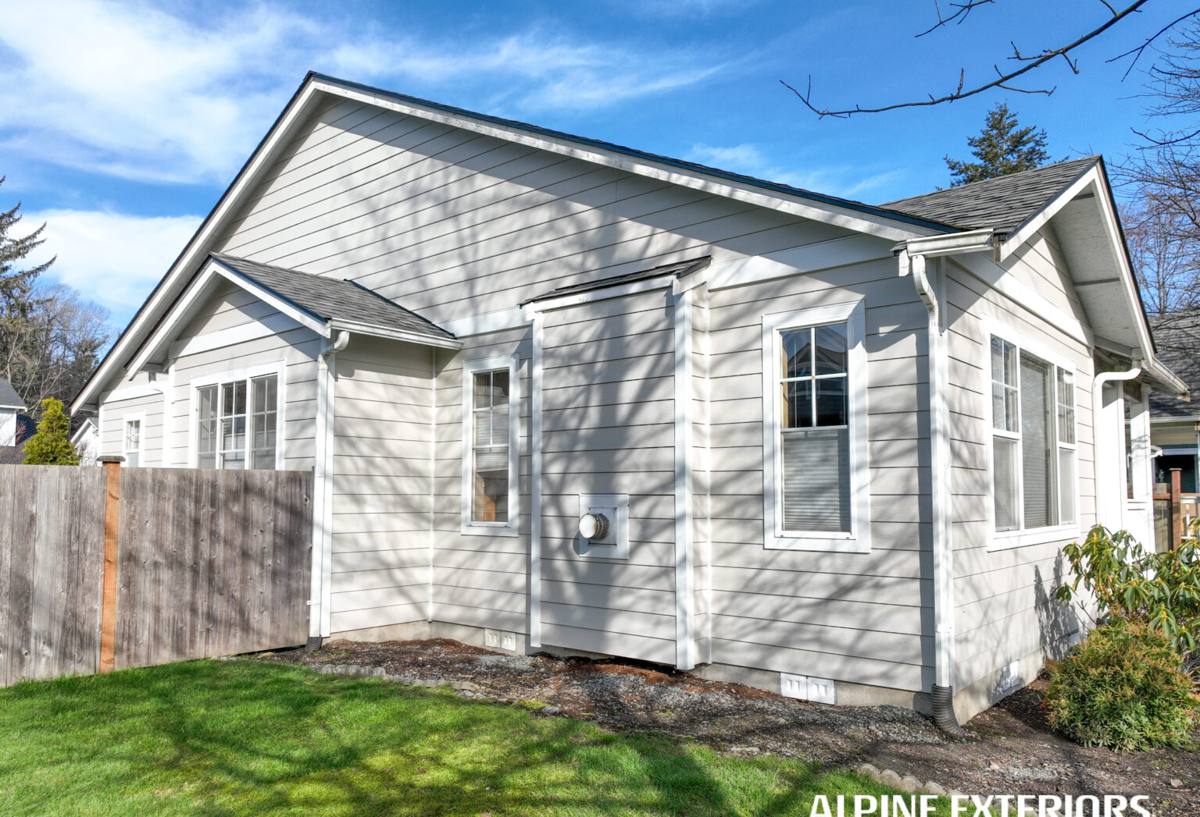
What Birchwood's Climate Actually Does to Siding
Salt Air
Proximity to Puget Sound and the Strait of Georgia means airborne salt is a real factor for exterior materials in and around Birchwood, not just for homes right on the waterfront. Salt accelerates corrosion of fasteners and metal trim, and it can degrade certain paints and coatings faster than inland exposure would. Siding systems that rely on caulked seams or exposed metal fastening are more vulnerable to this kind of slow deterioration than a system engineered with corrosion-resistant fastening and a factory-cured finish.
Driving Rain
Whatcom County doesn't just get a lot of rain — it gets a lot of wind-driven rain, which behaves differently than a straight-down downpour. Wind-driven rain gets pushed sideways into laps, seams, and butt joints that would stay dry in calmer weather. This is where installation detail matters as much as the product itself: flashing, house wrap integration, and proper overlap at every joint determine whether water gets behind the siding or stays out of the wall assembly.
Moss and Sustained Moisture
A long, cool, wet season means siding surfaces in Birchwood spend a lot of the year damp, especially on north-facing walls and under tree cover. That sustained moisture is exactly what moss, algae, and mildew need to establish themselves on a siding surface. Materials that absorb moisture or that develop a porous, weathered surface over time give moss more to grip onto. A siding surface that sheds water and holds its factory finish resists that buildup far better.
Why James Hardie Fits This Climate
James Hardie fiber cement is engineered around exactly these pressures. It's a cement-based composite, not wood or wood-derived, so it doesn't swell, rot, or feed fungal growth the way organic materials can. Hardie's HZ5 product line, in particular, is engineered for climates with more moisture exposure and freeze-thaw cycling — which fits Whatcom County's weather pattern well. The ColorPlus factory finish is baked on under controlled conditions rather than field-applied, which gives it more consistent coverage and better long-term color retention than a job-site paint job, and it holds up better against the kind of fading and chalking that salt air and UV exposure cause over time.
None of that means Hardie siding is maintenance-free. It still needs to be installed to spec, caulked and painted at any field-cut edges, and periodically rinsed off to keep moss and grime from building up. But the underlying material gives a Birchwood home a real head start against conditions that wear down lesser products faster.
What a Correct Installation Actually Involves
Fiber cement siding is only as good as the installation behind it. A rushed or under-detailed Hardie job can still trap moisture, crack at fastener points, or fail early — which is why we treat installation as at least as important as the product choice itself.
- Proper weather-resistive barrier: A correctly lapped house wrap or equivalent barrier behind the siding, integrated with window and door flashing so water has a path out, not in.
- Rainscreen or drainage gap where called for: Given how much rain Birchwood gets, a drainage plane behind the siding helps any incidental moisture escape instead of sitting against the wall sheathing.
- Correct fastener pattern and type: Hardie specifies fastener spacing, embedment depth, and corrosion-resistant fastener types. Getting this wrong is one of the most common causes of premature siding failure, and it's not something you can see once the wall is finished.
- Proper clearances: Minimum gaps at grade, roof lines, decks, and other siding-to-material transitions so water and debris don't sit against the bottom edge of the boards.
- Sealed and primed field cuts: Any cut edge exposes raw fiber cement that needs to be primed and caulked or trimmed correctly, or it becomes a moisture entry point.
- Correct joint and seam treatment: Butt joints, inside and outside corners, and penetrations (vents, lights, hose bibs) all need to be detailed so wind-driven rain can't work its way behind the panel.
Skipping any one of these doesn't necessarily show up in year one. It shows up in year five or ten, as staining, soft spots, or premature paint failure — which is a much more expensive problem to fix than it would have been to install correctly the first time.
Our Process for a Birchwood Job
1. Assessment and Measurement
We walk the exterior, note existing conditions (old siding type, sheathing condition, trim and flashing details, any signs of prior moisture intrusion), and take accurate measurements for material ordering.
2. Product and Color Selection
We go over the relevant Hardie product line, board profile (lap siding, shingle-style panels, vertical board-and-batten, etc.), and ColorPlus color options, factoring in how the home is oriented and how much moisture and sun exposure each elevation gets.
3. Tear-Off and Substrate Check
Old siding comes off and we check the sheathing underneath for rot or damage before anything new goes up. Covering a compromised substrate with new siding just hides a problem instead of fixing it.
4. Weather Barrier and Flashing
House wrap, window and door flashing, and any drainage plane components get installed and integrated correctly before a single piece of siding goes on. This step is invisible once the job is done, but it's the step that determines how the wall performs in a driving rainstorm five years from now.
5. Installation
Siding goes up to Hardie's fastening, spacing, and clearance specifications, with careful attention at corners, joints, and penetrations.
6. Finish Detail and Walkthrough
Field-cut edges get sealed, trim gets finished out, and we walk the property with the homeowner to review the finished work before calling the job complete.
Comparing Approaches: What Determines Long-Term Performance
| Factor | Why It Matters in Birchwood |
|---|---|
| Material composition | Fiber cement resists moisture absorption and doesn't feed rot or fungal growth the way wood-based products can in a wet, cool climate. |
| Factory-applied finish | A cured factory finish holds color and resists salt-air fading better than a field-applied coating. |
| Fastener corrosion resistance | Salt air accelerates corrosion of low-grade fasteners, which can lead to streaking and loosened boards over time. |
| Drainage detailing | Wind-driven rain finds gaps; a properly detailed drainage plane gives moisture somewhere to go besides the wall cavity. |
| Installer experience with the product | Fiber cement has specific handling, cutting, and fastening requirements that differ from wood or vinyl — unfamiliarity shows up as callbacks. |
Why a Crew That Already Works Birchwood Matters
Siding installation isn't one-size-fits-all across a county, even within a relatively compact area like Whatcom County. A crew that has already worked on homes in and around Birchwood has a practical sense of which elevations tend to take the worst of the wind-driven rain, how much moss pressure to expect on shaded north walls, and what kind of substrate condition is common under the older siding types found on homes in the area. That local pattern recognition doesn't replace careful assessment on every individual job, but it does mean fewer surprises and a more accurate estimate from the start. It also means a crew that's accountable locally — not a fly-by-night outfit that's hard to reach if something needs attention after the job wraps.
Maintenance Expectations After Installation
Even correctly installed Hardie siding benefits from basic upkeep, especially in a climate prone to moss and sustained moisture:
- Periodic gentle rinsing (garden hose, not high-pressure washing directly into seams) to keep moss and algae from establishing.
- Keeping gutters clear so overflow doesn't run down and saturate siding repeatedly in one spot.
- Trimming back vegetation and tree cover that keeps a wall section shaded and damp longer than the rest of the house.
- Periodic visual check of caulked joints and trim for cracking or separation, particularly after a hard winter.
- Repainting field-finished trim as needed — the ColorPlus siding itself typically outlasts standard trim paint cycles.
Get an Estimate
If you're weighing a siding replacement on a Birchwood home and want a straight assessment of what your walls actually need, we're glad to take a look. There's no pressure and no cost to get an estimate — just an honest read on your home's condition and what correct James Hardie installation would involve for your specific property.