 Whatcom County
 Why Decks in Birchwood Wear Out Faster Than You'd Expect
Birchwood sits in a part of Whatcom County where the weather doesn't do decks any favors. Salt-laden air off the water, long stretches of driving rain, and a moss season that can run from fall clear through spring all work on exterior wood and hardware at the same time. A deck that would last two decades in a drier inland climate can start showing real structural problems in Birchwood in twelve to fifteen years if it wasn't built with this specific climate in mind.
The damage is rarely dramatic at first. It's a soft spot near a post base, a slight spring in the decking when you walk across it, fasteners that have started to weep rust stains, or a green film that keeps coming back no matter how many times you scrub it. By the time any of that is visible from the surface, there's usually more going on underneath — at the ledger board, the framing connections, or the footings.
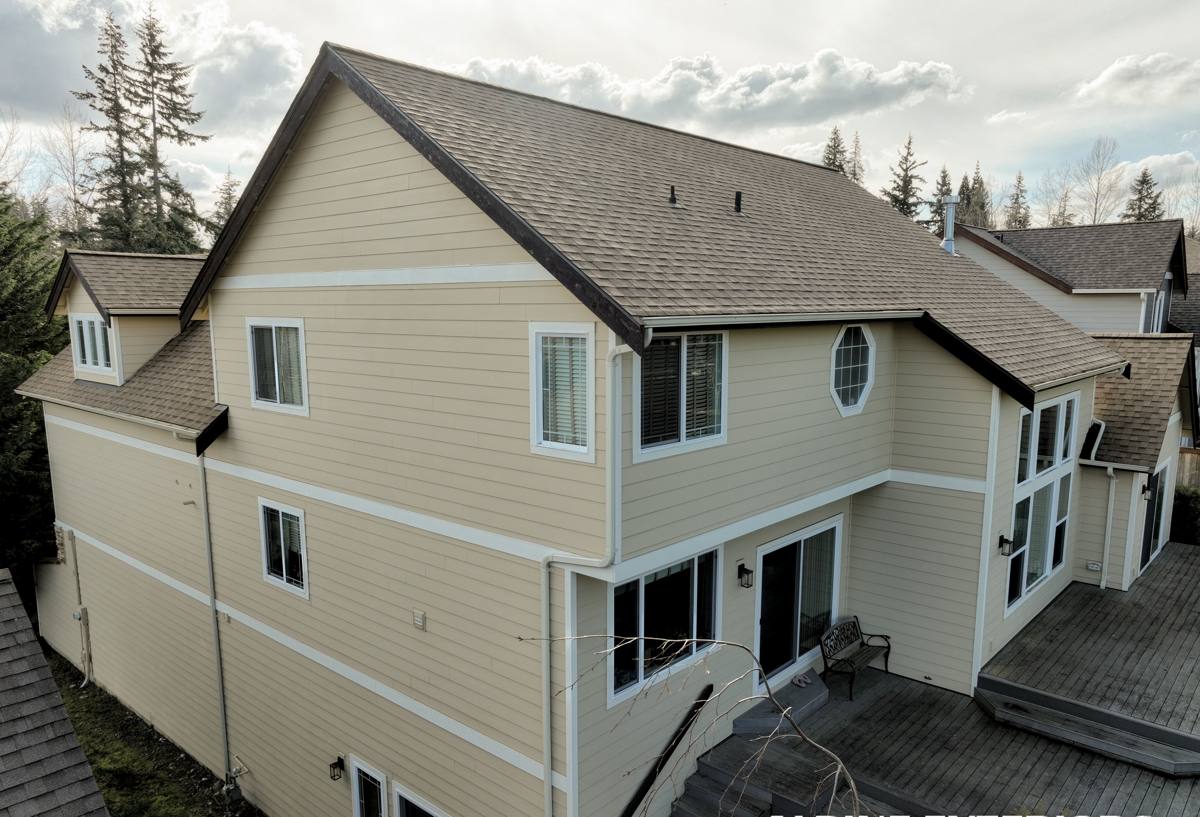
The Three Climate Factors That Drive Replacement in This Area
Salt Air
Even a few miles inland, salt-laden moisture carried off Puget Sound accelerates corrosion on fasteners, joist hangers, and structural screws. Once galvanized coatings start to break down, rust works from the inside of the connection outward — which means the hardware can look fine on the surface while it's already failing where it matters.
Driving Rain
Whatcom County doesn't just get a lot of rain — a good share of it comes in sideways, driven by wind off the water. That matters for decks because wind-driven rain gets pushed up under fascia boards, behind ledger flashing, and into end grain and fastener holes that a straight-down rain would never reach. Decks that were only detailed for vertical rainfall tend to develop rot at exactly those pressure points.
Moss and Sustained Dampness
A long moss season means deck boards, especially anything shaded by trees or the house itself, can stay damp for weeks at a time. Moss and algae hold moisture against the wood surface, which accelerates decay in traditional lumber and creates a genuinely dangerous slip hazard underfoot. This is one of the biggest factors we weigh when we recommend a decking material for a Birchwood project.
Repair or Replace? How We Make That Call
Not every tired-looking deck needs a full replacement, but there's a point where patching individual boards or sistering a joist is just delaying the inevitable — and spending money that doesn't actually solve the underlying problem. We look at a handful of specific things before we recommend either path:
- Condition of the ledger board connection to the house — this is the single most common failure point and the most serious one
- Whether footings have shifted, heaved, or lost contact with solid bearing soil
- Rot or soft spots in main structural joists and beams, not just surface decking
- Corrosion on structural hardware — joist hangers, post bases, and fasteners
- How much of the decking surface itself is affected versus isolated boards
- Whether the current framing meets current load and attachment requirements at all
If the framing and ledger connection are sound and it's really just surface decking that's failed, a resurface can make sense. If we're finding problems at the structural level, replacement is the honest answer — and it's usually more cost-effective than repeated patch repairs over a few years.
What a Correct Deck Replacement Actually Involves
A deck replacement done right in this climate is not just swapping old boards for new ones on the same frame. The parts of the job that don't show are the parts that determine whether the new deck lasts.
Ledger Board and Flashing
Where the deck attaches to the house is the number one spot for hidden rot in this region, because it's a joint that's exposed to wind-driven rain and easy to under-flash. Proper ledger flashing — installed correctly against the house's water-resistive barrier, not just caulked over — is non-negotiable on every replacement we do.
Framing and Fasteners
Given the corrosion risk from salt air, we use fasteners and structural hardware rated for the exposure this area actually sees, not just the minimum the lumber tag calls for. Joist hangers, post bases, and structural screws all get selected with that in mind.
Footings
Footings need to be sized and set below frost depth and on undisturbed, load-bearing soil. On older decks we sometimes find footings that were poured shallow or on fill — that gets corrected during replacement, not carried forward.
Drainage and Airflow Under the Deck
Standing moisture under a low deck is a major contributor to the moss and mildew problems homeowners deal with on the surface. Grading, gapping, and ventilation under the structure all factor into how well the new deck resists that.
Choosing a Decking Material for Birchwood's Climate
There's no single "best" decking material — there's a best material for your budget, your maintenance appetite, and how much sun and shade the deck actually gets. Given the moss and moisture factors here, we walk every homeowner through the real trade-offs rather than defaulting to whatever's cheapest to install.
| Material | Moss/Moisture Resistance | Maintenance | Typical Lifespan Here |
|---|---|---|---|
| Pressure-treated lumber | Moderate — needs sealing to perform well | Annual cleaning and periodic re-sealing | 12–18 years |
| Cedar | Good natural resistance, but surface still hosts moss if shaded | Regular cleaning, occasional oil/stain | 15–20 years |
| Composite decking | Very good — doesn't absorb moisture like wood | Periodic washing to prevent surface algae film | 25–30 years |
| PVC/capped polymer | Excellent — fully moisture-sealed surface | Low — occasional rinse | 25–30+ years |
We install pressure-treated framing on essentially every job regardless of the decking choice on top, because it's the structural standard for this climate. For the visible decking surface, we'll be straightforward about which option fits your budget and how much upkeep you're realistically willing to do — composite and PVC cost more up front but shed the moss problem far better than any wood surface, treated or not.
Our Deck Replacement Process
- On-site assessment of the existing deck, including a hands-on check of the ledger connection, framing, and footings — not just a visual walk-around
- Honest repair-vs-replace recommendation with the reasoning explained, not just a quote
- Material selection walkthrough based on your budget, sun/shade exposure, and maintenance preference
- Permit handling with Whatcom County or the applicable local jurisdiction where required
- Removal of the old structure and correction of any footing, framing, or flashing issues found underneath
- Construction of the new deck to current structural standards, with hardware rated for this area's exposure
- Final walkthrough covering care and maintenance specific to the material installed
Permits and Local Considerations
Deck replacement in Whatcom County often requires a permit, particularly when the deck is attached to the house, elevated, or being rebuilt to a different footprint than the original. Requirements can vary depending on the specific jurisdiction your property falls under and the deck's height and size. We handle the permit process as part of the job so you're not left figuring out county requirements on your own — and so the finished structure is documented as up to code, which matters when you go to sell the house.
Keeping a New Deck From Losing the Fight With Moss
Replacement solves the structural problems, but ongoing care is what keeps moss from taking hold again. A few habits make a real difference in this climate:
- Sweep debris and fallen leaves off the surface regularly, especially in shaded areas
- Clean the deck surface at least once a year with a wood- or material-appropriate cleaner, not just a pressure washer on high
- Trim back overhanging branches to let more sun and airflow reach the deck
- Check and clear gaps between boards so water isn't trapped against the framing
- Re-seal wood decking on the schedule appropriate to the product — don't wait until it's visibly gray and dry
- Inspect the ledger board area once a year for any signs of staining or softness
Why Hire a Crew That Already Works in Birchwood
Deck problems in this neighborhood tend to follow patterns — the same ledger flashing mistakes, the same shallow footings, the same moss-prone shaded corners — because homes here were built facing the same weather. A crew that regularly works decks throughout Whatcom County has already seen how local homes fail and builds accordingly, rather than applying a generic approach that ignores the salt air and rain patterns specific to this area. That local pattern recognition is often the difference between a deck that needs attention again in eight years and one that holds up for two or three decades.
Cost Factors to Expect
| Factor | Why It Matters |
|---|---|
| Deck size and height | Larger and elevated decks require more framing, more footings, and more labor |
| Decking material | Composite and PVC cost more upfront than wood but reduce long-term maintenance |
| Structural repairs found underneath | Footing or framing corrections add cost but are not optional if found |
| Railing and stairs | Code-compliant railing and stair systems add material and labor |
| Permit requirements | Attached and elevated decks typically require permitting and inspection |
Every deck is different, and the only way to give you an accurate number is to see the existing structure in person. If you're noticing soft spots, rust stains, persistent moss, or you just know your Birchwood deck has been through a lot of Whatcom County winters, we're happy to come take a look and give you a straightforward, no-pressure estimate on what it would take to replace it right.