 Whatcom County
 Roof Replacement in Birchwood: Built for This Climate, Not a Catalog
Birchwood sits close enough to the water and the tree line that its roofs take a beating most inland homes never see. Salt-laden air moves in off the Sound, rain comes sideways as often as it comes straight down, and the shade from mature evergreens keeps roof surfaces damp long after a storm has passed. A roof replacement here isn't a generic swap-the-shingles job — it's a system that has to hold up to a specific combination of moisture, wind, and organic growth, year after year, in Whatcom County's marine climate.
We've worked enough roofs in this neighborhood to know which details actually matter and which ones are just upsells. This page walks through what Birchwood homes need, what a correct replacement looks like, and how we handle the job from first look to final cleanup.
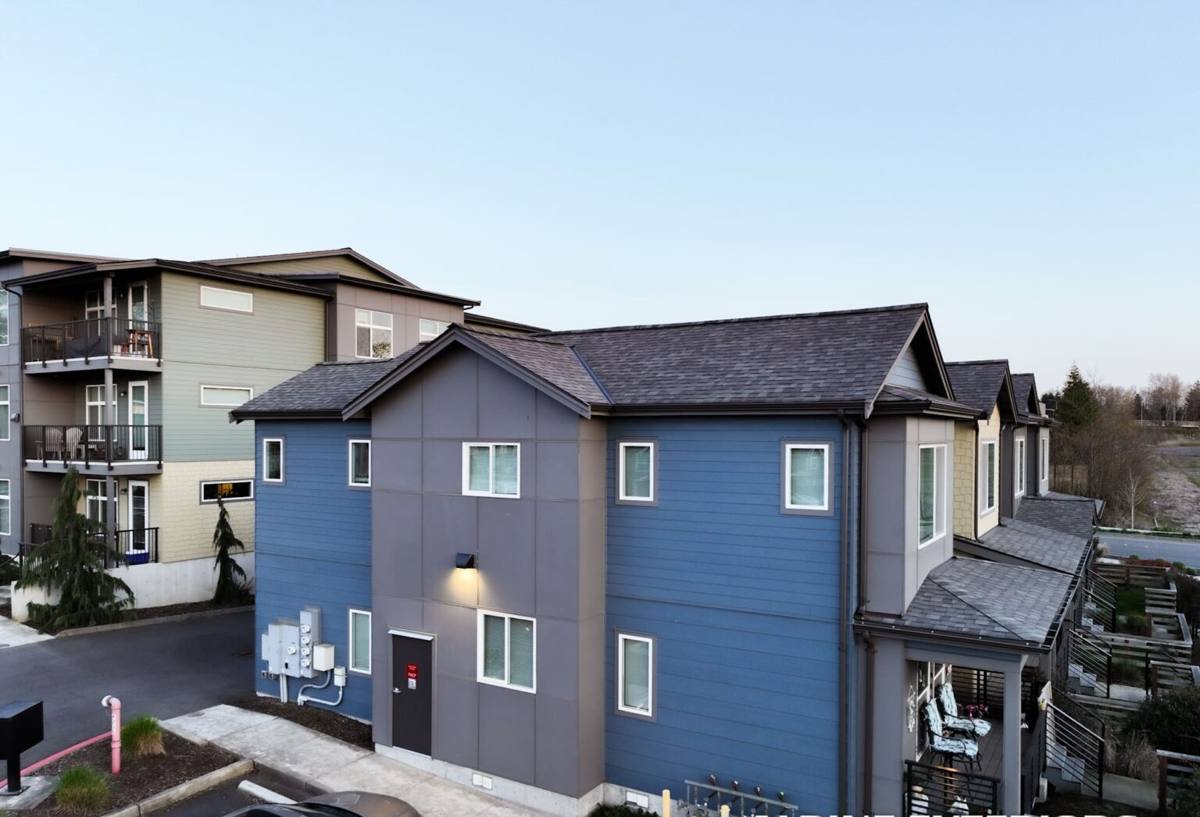
The Climate Factors That Wear Out Birchwood Roofs
Salt Air
Proximity to saltwater accelerates corrosion on any exposed metal — fasteners, flashing, vent caps, gutter hardware. Roofs installed with standard-grade fasteners or thin galvanized flashing tend to show rust streaks and pinhole corrosion years before the shingles themselves are due. This is one of the most overlooked factors in coastal Whatcom County roofing, and it's rarely mentioned on a generic roofing page.
Driving Rain and Wind-Driven Moisture
Storms off the water often bring rain at an angle, not straight down. That means water gets pushed up under shingle edges, into valleys, and around penetrations that would stay dry in a calmer climate. A roof that's only detailed for vertical rainfall will leak here even when every shingle looks intact.
Moss and a Long Damp Season
Birchwood's tree cover and the region's extended wet season give moss and algae a long runway to establish themselves. Moss doesn't just look bad — it holds moisture against the roofing material, lifts shingle edges as it grows, and can work its way under the surface layer over several seasons. Homes with heavy shade see this faster and more aggressively than open, sun-exposed lots nearby.
Signs a Birchwood Roof Needs Replacement, Not Just Repair
Repair makes sense for isolated damage. Replacement is the right call when the wear is systemic — spread across the whole roof rather than confined to one spot. Common signs we see on Whatcom County homes include:
- Granule loss heavy enough that you can see bare asphalt in multiple spots, not just one patch
- Moss established in more than one or two areas, especially along shaded slopes
- Soft or spongy decking felt underfoot during an inspection walk
- Rust staining or visible corrosion at flashing, vents, or fastener heads
- Shingles that are cupping, curling, or cracking across multiple courses
- Daylight visible through the attic decking, or damp insulation below the roofline
- A roof already past 20-25 years old, regardless of surface appearance
If only one or two of these show up in a single area, repair is often the honest answer. When they're spread across the roof, patching becomes a short-term fix that costs more over time than doing the replacement right the first time.
What a Correct Roof Replacement Involves
Full Tear-Off, Not Overlay
Layering new shingles over old is sometimes allowed by code, but it traps moisture, hides deck problems, and shortens the life of the new roof. On a climate like this one, where moisture management is the whole game, we tear off down to the deck so nothing is hidden and nothing is trapped underneath.
Deck Inspection and Repair
Once the old roofing is off, the decking gets inspected board by board. Any wood that's soft, delaminated, or water-stained gets replaced before anything new goes down. Skipping this step is the single most common shortcut that leads to early failure — a new roof over a compromised deck is still a compromised roof.
Ice and Water Shield at Vulnerable Areas
Valleys, eaves, and penetrations get a self-adhering waterproof membrane underneath the primary underlayment. Given how much wind-driven rain Birchwood sees, this layer is what stops water that gets past the shingle surface from reaching the deck at all.
Ventilation That Actually Balances
Intake at the eaves and exhaust at the ridge need to work together, not just exist independently. Poor ventilation traps moisture in the attic, which feeds mold, accelerates deck rot from underneath, and can void manufacturer warranties. In a damp climate, this is not optional — it's part of what makes the roof last.
Flashing and Fastener Grade
Given the salt air here, we treat flashing and fastener corrosion resistance as a real spec decision, not an afterthought. Corrosion-resistant flashing and fasteners cost a little more up front and save a full flashing replacement a decade sooner.
Roofing Material Comparison for This Climate
There's no single "best" roofing material — the right choice depends on budget, roof shape, shade exposure, and how long you plan to own the home. Here's how the common options actually perform in Whatcom County's marine conditions.
| Material | Moss/Moisture Resistance | Coastal Durability | Typical Lifespan | Maintenance Burden |
|---|---|---|---|---|
| Architectural asphalt shingle | Moderate — benefits from algae-resistant granules | Good with corrosion-resistant flashing | 25-30 years | Periodic moss treatment on shaded slopes |
| Standing seam metal | Excellent — sheds moisture fast, little surface for moss to grip | Very good with proper coating and fastener spec | 40-50+ years | Low; occasional fastener/seam check |
| Composite/synthetic shingle | Good | Good | 30-40 years | Low to moderate |
| 3-tab asphalt shingle | Weaker — less resistant to prolonged damp | Fair; more fastener exposure per square | 15-20 years | Higher; more frequent moss issues in shade |
We don't push a single product on every roof. A sun-exposed, simple gable roof might do perfectly well with a quality architectural shingle. A heavily shaded roof with several valleys tends to earn back the extra cost of metal or composite over the life of the home. We'll walk you through the honest trade-offs for your specific roof rather than defaulting to whatever's easiest to install.
Our Process, Start to Finish
- Walk-through and assessment — We inspect the roof surface, decking condition (where accessible), attic ventilation, and flashing points, and take note of shade patterns and drainage on the property.
- Written estimate — You get a clear scope: material options, what's included, timeline, and price — no vague allowances.
- Scheduling around weather — Given how much rain this area gets, we plan tear-off days around forecasts and stage materials so the deck isn't left exposed longer than necessary.
- Tear-off and deck repair — Old roofing comes off, decking is inspected and repaired as needed, and the site is protected throughout.
- Underlayment, flashing, and ventilation install — The waterproofing system goes in first, followed by properly balanced intake and exhaust ventilation.
- Roofing material installation — Installed to manufacturer spec, with attention to nailing pattern and exposure — details that affect wind and moisture performance more than most homeowners realize.
- Final inspection and cleanup — Magnetic sweep for stray fasteners, gutter check, and a walkthrough so you know exactly what was done and where.
Why a Crew That Already Works Birchwood Matters
A roofer who's worked several Birchwood roofs already knows which slopes stay shaded longest, which lots catch the worst of the wind off the water, and which older homes in the area tend to have undersized original ventilation. That's not something you can fully judge from a single site visit — it comes from having actually been on roofs in this specific pocket of Whatcom County before.
It also means faster, more accurate estimates. We're not guessing at how the local climate will treat a given material — we've seen how it plays out on roofs a few streets over.
Cost Factors to Expect
Every roof is different, so we won't quote a number without seeing yours. But these are the variables that most affect price on a Birchwood roof replacement:
| Factor | Why It Matters |
|---|---|
| Roof size and pitch | More surface area and steeper pitches mean more material and labor time |
| Number of valleys and penetrations | Each one needs extra flashing and waterproofing detail — more labor per square |
| Decking condition | Rot or soft spots found during tear-off require replacement boards before install |
| Material choice | Asphalt, composite, and metal carry different material and labor costs |
| Existing ventilation | Undersized or unbalanced systems may need upgrading to meet code and protect the new roof |
| Access and site conditions | Tree cover, steep lots, or tight access can add setup and safety measures |
Questions to Ask Before You Hire
Whether you go with us or someone else, these are worth asking any contractor before signing:
- Do you tear off down to the deck, or do you overlay existing shingles?
- What underlayment and ice/water shield do you use, and where do you install it?
- How do you handle ventilation balance, not just shingle replacement?
- What's your fastener and flashing spec for coastal/salt-air exposure?
- Are you licensed and insured to work in Washington, and can you provide proof?
- What's the manufacturer warranty, and what does your own workmanship warranty cover?
- How do you handle unexpected deck repair costs found during tear-off?
A contractor who answers these clearly and specifically, without dodging into vague reassurances, is generally one worth trusting with your roof.
Get a Straight Answer on Your Roof
If your Birchwood roof is showing moss, granule loss, or age, it's worth getting an honest look before deciding between repair and replacement. We offer free, no-pressure estimates — just a real assessment of your roof's condition and a clear explanation of your options. Fill out the form below to get started.