 Whatcom County
 Why Windows Take a Beating in Nooksack's Climate
Nooksack sits in the river valley in the northeastern part of Whatcom County, and while it's a few miles inland from Bellingham Bay, it doesn't escape the weather pattern that defines this whole corner of Washington. Salt-laden air off the Sound works its way up the lowlands, driving rain rolls through on a south or southwest wind for months at a stretch, and the cool, damp winters here grow moss on anything that holds moisture — roofs, siding, and window sills included. Even away from the water, Nooksack homes fight the same battle: wood trim that never fully dries out between storms, glazing putty that cracks and lets water behind the frame, and vinyl or aluminum frames that were never sealed correctly to begin with.
Windows are usually the first place this shows up. A window is a hole cut into the exterior wall, and every seam around it — the frame-to-siding joint, the sill, the corners — is a place water can find its way in if the installation wasn't done right the first time. In a drier climate, a mediocre install might last twenty years before anyone notices a problem. In Whatcom County, the same mistake can show up as soft trim or a fogged pane in five to eight years.
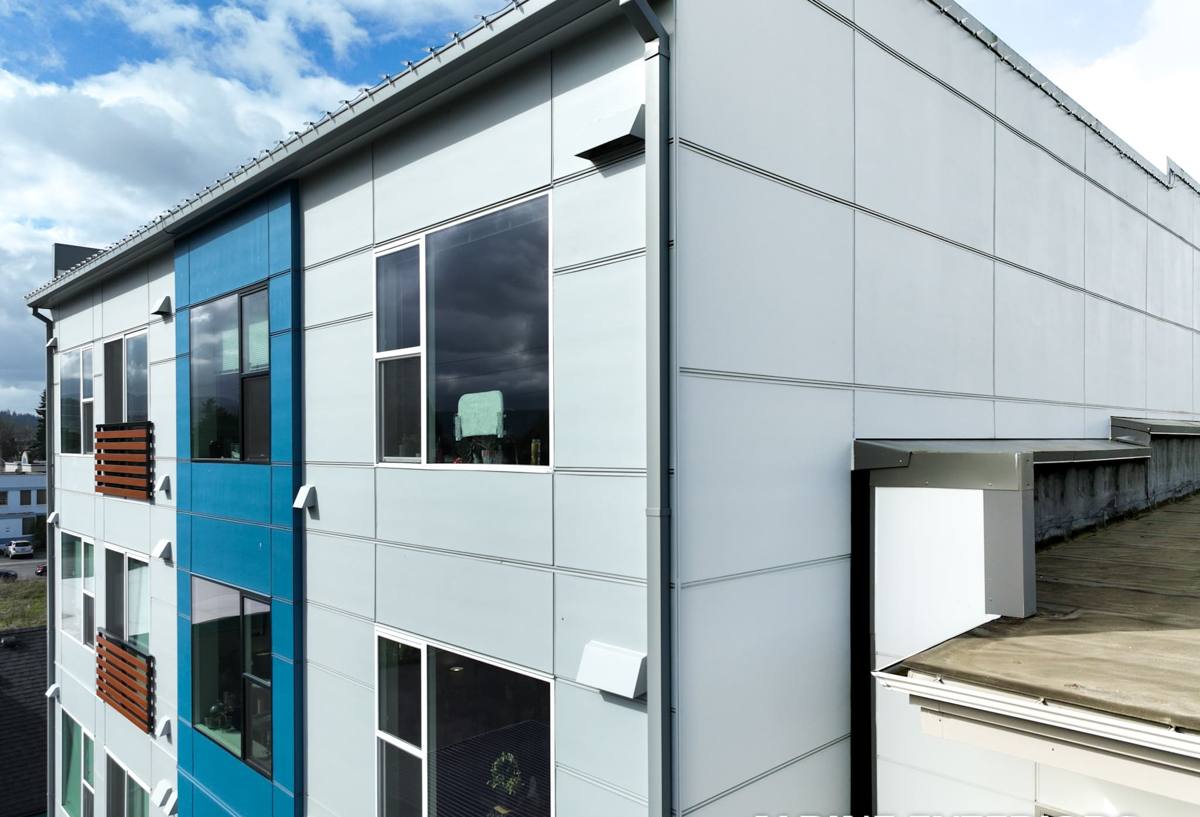
Signs Your Nooksack Home Needs Window Replacement
Some of these show up gradually, others all at once after a hard winter. Worth checking each fall before the rainy season sets in for good.
- Fogging or a milky haze between the panes of a double-pane window — the seal has failed and the gas fill is gone
- Soft or dark-stained wood on the interior sill or exterior trim
- Windows that are hard to open, close, or lock — frames have swelled or racked
- Visible daylight or a draft you can feel with your hand along the frame edge
- Moss or black streaking building up on the sill or the siding just below the window
- Condensation forming on the inside of the glass regularly, even with normal ventilation
- Paint that keeps peeling or bubbling on the trim no matter how often it's redone
Any one of these on its own might just need a repair. Two or three together, especially on a window over ten or fifteen years old, usually means the frame or seal has run its course and repair is just delaying the inevitable.
What a Correct Window Replacement Job Actually Involves
Full-Frame vs. Insert Replacement
There are two honest ways to replace a window, and the right call depends on the condition of what's already there. An insert (or "pocket") replacement drops a new window into the existing frame, leaving the old frame, sill, and exterior trim in place. It's faster and less invasive, and it's a fine option when the existing frame is still square, dry, and structurally sound. A full-frame replacement removes everything down to the rough opening — old frame, sill, and often the surrounding trim — and rebuilds it from scratch, including new flashing.
In our experience working this climate, a lot of older Nooksack homes that look like insert candidates turn out to have soft framing or old, hardened caulk hiding water damage once you open things up. We tell homeowners the truth about which one their house actually needs rather than defaulting to whichever is quicker to sell.
Flashing and Sealing — The Part No One Sees
The window itself is only part of the job. What actually keeps water out over the long run is the flashing — the layered system of tape, pan flashing, and house wrap integration that directs water down and away from the opening instead of behind it. This is the step that gets rushed or skipped on cheap installs, because it doesn't show once the trim goes back on, and it's also the single biggest reason windows fail early in a wet climate like this one. A correct job means sill pan flashing under the window, properly lapped weather-resistive barrier at the sides and head, and sealant used at the right joints — not everywhere, and not nowhere.
Choosing the Right Window for Whatcom County Weather
Material matters here more than in drier parts of the state. The table below reflects how each common option actually holds up under sustained damp, moss-prone conditions rather than manufacturer marketing claims.
| Material | How It Handles Local Moisture | Maintenance | Typical Lifespan Here |
|---|---|---|---|
| Vinyl | Good — won't rot, but can warp if a lower-quality frame gets direct afternoon sun/heat cycling | Low — occasional cleaning | 20–30 years |
| Fiberglass | Very good — dimensionally stable, holds paint and seals well over time | Low | 30–40 years |
| Wood (unclad) | Poor to fair without diligent upkeep — the material this climate is hardest on | High — repainting/sealing every few years | Highly variable |
| Wood-clad (vinyl or aluminum exterior) | Good — exterior face is protected, interior keeps wood look | Moderate | 25–35 years |
| Aluminum | Fair — durable but a poor insulator and prone to condensation in cold, damp winters | Low | 20–30 years |
We steer most Nooksack homeowners toward vinyl or fiberglass for the exterior-facing material, not because other options are bad products, but because they hold up with the least ongoing maintenance in a climate that doesn't give painted wood much of a break between rain events.
Glass Packages That Matter Here
The frame keeps water out; the glass package handles comfort and condensation. Double-pane with a low-E coating and argon fill is the standard baseline for this region and performs well for most homes. Triple-pane adds real value on north-facing walls, rooms that run cold, or homes closer to open, wind-exposed ground — it costs more up front but cuts condensation risk and reduces the cold-glass feeling near the window on a January morning. What we don't recommend is skipping the low-E coating to save a little money — in a climate with this much grey, damp weather, it's one of the few upgrades that pays for itself in comfort every single day, not just on the coldest week of the year.
Our Process for a Nooksack Window Replacement
- On-site assessment — we look at every window being considered, check the framing condition, and tell you honestly whether it needs an insert or full-frame approach
- Written scope and quote — material, glass package, and flashing method spelled out, not a vague lump sum
- Scheduling around the weather — we work with dry-window forecasts where possible and never leave an opening exposed overnight
- Removal and prep — old unit and, if needed, surrounding frame material removed; rough opening checked and repaired if there's hidden rot
- Flashing and installation — sill pan, house wrap integration, and the new window set level, plumb, and square
- Insulation and interior/exterior trim — gaps properly filled (not overpacked with spray foam, which can bow a frame) and trim finished to match
- Final walkthrough — every window opened, closed, and locked with you before we call it done
What Affects the Cost
Every home is different, but these are the main factors that move the number up or down on a Nooksack job.
| Factor | Why It Matters |
|---|---|
| Insert vs. full-frame | Full-frame takes more labor and materials but is sometimes the only correct option if framing is damaged |
| Number and size of windows | Larger openings and specialty shapes (bay, arched) cost more than standard sliders or single-hungs |
| Glass package | Triple-pane and specialty low-E coatings add cost per unit |
| Hidden rot or framing damage | Not knowable until the old window comes out; we flag this possibility upfront rather than surprise you later |
| Access and height | Second-story or hard-to-reach windows take more setup time |
| Trim and finish work | Matching existing interior trim profiles or repainting adds labor |
We'd rather walk your specific windows and give you real numbers than throw out a broad range that doesn't mean much for your house.
Why a Crew That Already Works Nooksack Matters
A window installer who mostly works in a drier climate, or who treats every job the same regardless of region, is more likely to skip or under-build the flashing detail that actually matters here. Crews who work Whatcom County regularly have already seen what happens when that step gets cut corners — the callback five years later with rot behind the trim — and build accordingly the first time. Familiarity with local permitting, typical framing styles found in this area's older farmhouses and newer builds alike, and the realistic weather windows for getting an opening closed back up safely all come from doing this work here repeatedly, not from a manual.
After Installation — Keeping Windows Performing
A correctly installed window still benefits from basic upkeep in this climate. A short annual routine goes a long way:
- Clear debris and moss from sills and the drainage weep holes at the base of the frame each fall
- Check exterior caulk lines for cracking or gaps once a year and touch up as needed
- Wipe down tracks and hardware so they don't stick or corrode from trapped moisture
- Watch for condensation patterns that change over time — a sign a seal may be starting to fail
- Keep gutters and downspouts clear so runoff isn't sheeting directly across upper-story windows
None of this takes much time, but skipping it is how a good installation slowly turns into a problem one anyway.
If your Nooksack home has windows showing any of the signs above, or you're just planning ahead before the next wet season, we're happy to take a look and give you a straightforward, no-pressure estimate. Fill out the form below and we'll get in touch.