 Whatcom County
 Why Nooksack Roofs Wear Out Faster Than the Manufacturer's Warranty Suggests
Every asphalt shingle, metal panel, and roofing membrane sold in this country comes with a warranty written for average conditions somewhere in the Midwest. Nooksack doesn't have average conditions. Sitting out in the Whatcom County lowlands, homes here deal with a long, wet marine climate: moist air moving inland off the Salish Sea, months of low-intensity rain that never really stops, and enough shade and humidity to keep moss and algae growing on north-facing slopes almost year-round. Add in salt-tinged air that corrodes exposed metal faster than it would inland, and you've got a roof environment that's genuinely harder on materials than most manufacturers account for.
None of that means a roof here is doomed to fail early. It means the repair work has to account for how this climate actually behaves — not just patch what's visible and hope for the best. That's the difference between a repair that lasts a few seasons and one that lasts the rest of the roof's service life.
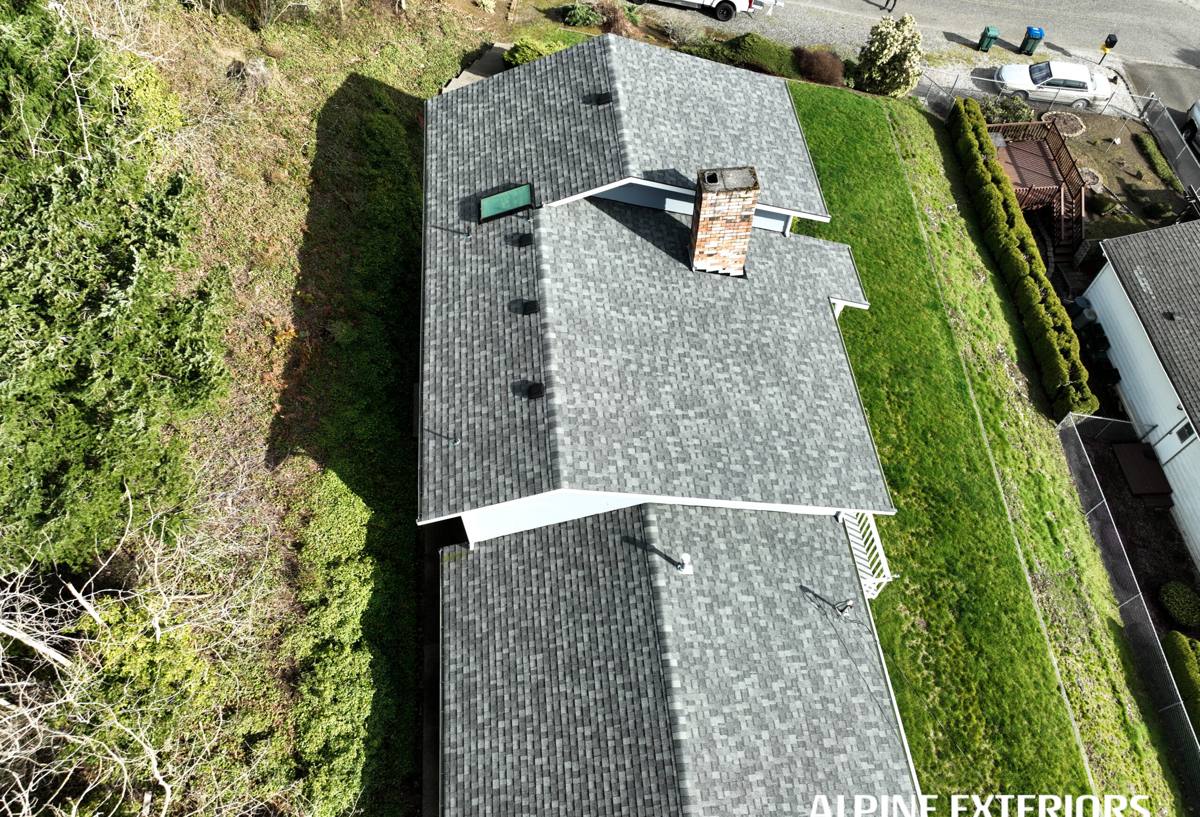
What Whatcom County's Climate Actually Does to a Roof
Moss and Organic Growth
Moss doesn't just sit on top of shingles looking bad. Once it establishes itself, its root structure lifts shingle edges, holds moisture against the roof deck, and works granules loose over time. A roof that looks "mostly fine" from the ground can have moss-driven damage underneath that's already compromised the waterproofing layer.
Driving Rain and Wind-Driven Moisture
Straight-down rain is easy for any roof to shed. Driving rain — pushed sideways by wind off the valley and coastal weather systems — finds its way under shingle tabs, around flashing, and into any gap that wouldn't matter in a calmer climate. This is why flashing and underlayment details matter more here than in drier regions.
Salt Air and Metal Corrosion
Exposed fasteners, flashing, vent caps, and gutter hardware all corrode faster when they're regularly exposed to salt-carrying air. Once corrosion starts on a fastener or flashing seam, it creates a path for water that wasn't there when the roof was installed.
Freeze-Thaw and Temperature Swings
Whatcom County doesn't get brutal winters, but it gets enough freeze-thaw cycling — especially at night in the colder months — to stress any repair that wasn't sealed and fastened correctly the first time.
Signs a Nooksack Roof Needs Repair Now, Not Later
- Moss or dark algae streaking on shingles, especially on shaded or north-facing slopes
- Granules collecting in gutters or at downspout outlets
- Shingles that are curling, cupping, or lifting at the edges
- Water stains on interior ceilings or in the attic, especially after a windy rain
- Soft or spongy spots when walking the roof (a sign the decking underneath is compromised)
- Rusted or corroded flashing around chimneys, vents, and skylights
- Daylight visible through the roof deck from inside the attic
- Sagging rooflines or valleys where water tends to pool
Any one of these on its own might be minor. Two or three together usually mean the roof has been dealing with moisture intrusion for a while and needs a proper look, not a surface patch.
What a Correct Repair Actually Involves
A lot of roof "repairs" in this region amount to caulking a visible gap and calling it done. That approach fails here specifically because of the climate — sealant alone can't compensate for wind-driven rain finding a path under a flashing edge or a shingle that's already lost its seal. A repair that's actually going to hold needs to address:
The Deck, Not Just the Surface
If water has been getting under the roofing material, the plywood or OSB decking underneath may be soft, delaminated, or rotted. Covering damaged decking with new shingles just hides the problem until it reappears, usually as a leak somewhere else.
Flashing and Transition Points
Most leaks in this climate don't happen in the open field of a roof — they happen at transitions: chimneys, vent pipes, skylights, valleys, and where a roof meets a wall. Flashing at these points needs to be re-integrated with the surrounding roofing material, not just sealed over.
Moss Treatment, Not Just Removal
Scraping moss off without treating the surface and addressing the shade or drainage issue that let it grow just invites it back within a season or two.
Ventilation
Poor attic ventilation traps moisture underneath the roof deck, which accelerates rot and shortens the life of any repair. A repair on a poorly ventilated roof is treating a symptom, not the cause.
Our Roof Repair Process
- Inspection. We walk the roof (when safely accessible) and check the attic from inside, looking for moisture staining, deck condition, and ventilation issues — not just the visible surface problem.
- Diagnosis. We identify the actual source of the leak or damage, which is often several feet from where the water stain shows up inside the house.
- Written scope. We tell you plainly what needs to be repaired, what's optional, and what we'd watch but leave alone for now. No pressure to replace more than necessary.
- Repair. Deck replacement where needed, correct flashing integration, matching roofing material where possible, and moss/algae treatment on affected slopes.
- Final check. We confirm the repair sheds water correctly and walk you through what we found before we leave.
Repair or Replace? What Actually Drives That Decision
| Factor | Leans Toward Repair | Leans Toward Replacement |
|---|---|---|
| Age of roof | Under 15 years, or well-maintained older roof | Near or past expected material lifespan |
| Extent of damage | Localized — one slope, one flashing point | Widespread granule loss, multiple leak areas |
| Deck condition | Solid, dry decking under the damaged area | Soft, rotted, or repeatedly repaired decking |
| Moss/algae history | First occurrence, treatable | Recurring despite past treatment |
| Storm or impact damage | Isolated to a small area | Scattered across the whole roof |
We'll give you an honest read on where your roof falls on this table. Most of the calls we get in Nooksack turn out to be legitimate repair situations — full replacement is only the right call when the numbers actually support it.
Materials and Our Standards for This Climate
We match repair materials to what's already on the roof wherever possible, since mixing incompatible products can create its own moisture problems. When a repair calls for new material choices — new flashing metal, underlayment, or shingle type — we lean toward products with a track record in wet, moss-prone marine climates rather than whatever's cheapest at the moment. That's a maintenance and moisture-performance decision on our part, not a brand endorsement one way or the other; every product has trade-offs in installation sensitivity, upkeep, and how it ages under constant moisture, and we'll walk you through those trade-offs for your specific roof rather than push a single answer.
A Quick Checklist Before You Hire Anyone for Roof Repair in Nooksack
- Do they inspect the attic from inside, not just the roof surface?
- Do they give you a written scope of what's actually being repaired?
- Are they licensed and insured to work in Washington State?
- Do they explain why they're recommending repair versus replacement?
- Have they worked on roofs in this specific climate before, not just roofs in general?
Why a Crew That Already Works Nooksack Matters
Roofing is roofing anywhere, but the failure patterns are regional. A crew that mostly works in drier climates will spot obvious damage but may not recognize the early signs of moss-driven granule loss, or may under-spec ventilation for a house that sits in a shaded, moisture-heavy spot common around the Whatcom County lowlands. Working this area regularly means we've seen how local weather actually stresses a roof over years, not just what a manual says should happen. That translates into repairs that account for what's coming next season, not just what's failing today.
Keeping a Repaired Roof Healthy
A good repair buys you time, but a little upkeep buys you more of it. Keep gutters clear so water isn't backing up under the roof edge. Have moss treated before it establishes a heavy root mat, not after. Trim back tree cover where it's keeping a section of roof shaded and damp longer than the rest. And have the roof looked at after any major wind event — driving rain and wind together are the combination most likely to find a weak point.
If you're seeing signs of trouble, or just want an honest opinion on the condition of your roof, we're happy to take a look. Reach out for a free, no-pressure estimate using the form below.