 Whatcom County
 Why Decks in the Nooksack Area Wear Out Faster Than Homeowners Expect
A deck in Nooksack doesn't fail the same way a deck fails in a dry climate. Out here, the damage is patient. It starts underneath, in the framing and fasteners nobody sees, long before the surface boards look bad enough to worry about. Whatcom County gets a long, wet season every year, and the Nooksack Valley's mix of river-bottom moisture, tree cover, and fog adds extra hours of dampness on top of the rain itself. Wood doesn't need to be soaked to rot — it just needs to stay damp longer than it gets to dry, and that's exactly what happens to a deck that sits in shade near the river or under mature trees for half the year.
Add in the moss. Anything horizontal in this part of Washington grows moss if it isn't sealed or ventilated properly, and moss holds moisture against wood and composite decking alike. On top of that, homes closer to Puget Sound and the Strait deal with salt-laden air that speeds up corrosion on fasteners, brackets, and any exposed metal hardware. Even a few miles inland, that salt exposure combined with constant humidity is enough to eat through cheap or improperly rated screws and joist hangers well before the decking on top of them shows any wear.
The result is a pattern we see over and over in this area: a deck that looks fine from a distance but has soft joists, rusted hardware, or a ledger board pulling away from the house. Replacement isn't just about swapping old boards for new ones — it's about correcting the moisture and ventilation problems that caused the failure in the first place.
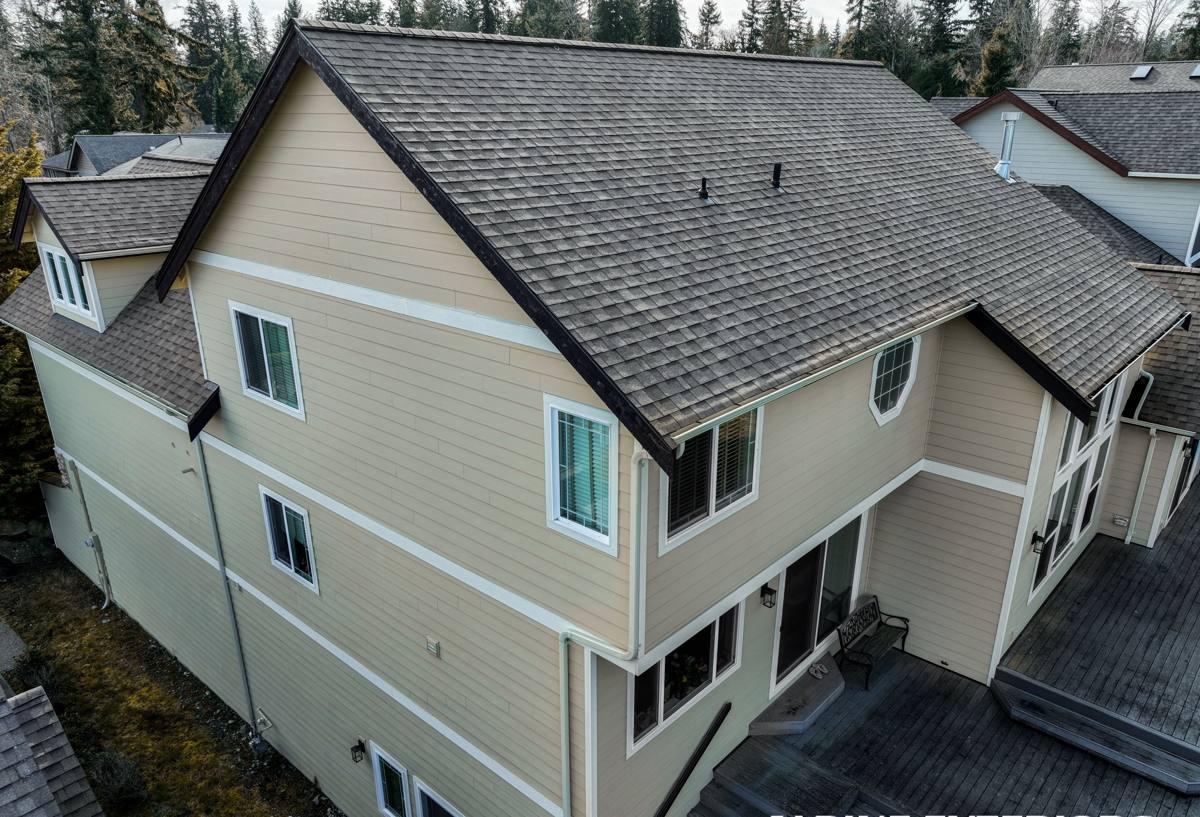
Signs a Nooksack Deck Needs Replacement, Not Just Repair
Not every tired-looking deck needs a full teardown. But there are signals that mean patching individual boards is just delaying a bigger, more expensive problem.
- Soft or spongy spots underfoot, especially near the house or stair landings
- Visible gaps or rust streaks around fasteners and hardware
- A ledger board separating from the siding or showing water staining behind it
- Persistent moss or algae that returns within weeks of cleaning
- Posts that wobble or footings that have shifted or heaved
- Boards that are cupping, splitting, or delaminating across large sections rather than isolated spots
If the problems are limited to a handful of boards and the structure underneath is sound, repair can make sense. But once the framing, ledger, or footings are compromised, patching the surface just hides a structural issue behind new lumber. An honest inspection should tell you which situation you're actually in before any work starts.
What a Correct Deck Replacement Actually Involves
Starting Below the Surface
A deck replacement done right starts with what's underneath, not what's on top. That means checking footings for frost heave or settling, confirming posts are set to current code depth, and inspecting or replacing joists that show any soft spots. In a climate like ours, this is also where we address the moisture problems that likely caused the original failure — improving airflow under the deck, correcting drainage around footings, and making sure nothing traps water against wood long-term.
The Ledger Connection
The ledger board — where the deck attaches to the house — is one of the most common failure points in this region, and one of the most dangerous to get wrong. It needs proper flashing that directs water away from the house, not into the wall assembly behind the siding. We see decks fail here specifically because the original ledger flashing was skipped or installed incorrectly, letting water track behind the siding for years before anyone noticed.
Fasteners and Hardware
Given the salt air and near-constant humidity in Whatcom County, we use fasteners and structural hardware rated for coastal or wet-climate exposure, not standard interior-grade hardware. This is a small cost difference upfront that prevents the rust-driven failures that shorten the life of a lot of decks in this area.
Decking, Railing, and Final Details
Once the structure is sound, the decking surface, railings, and stairs go on with attention to drainage gaps, proper spacing for wood movement, and secure railing connections that meet current code for height and baluster spacing.
Choosing the Right Decking Material for This Climate
Every decking material handles Whatcom County's rain and moss season differently. There's no single "best" choice — it depends on your budget, how much upkeep you want to do, and how much sun or shade the deck gets.
| Material | How It Handles Our Climate | Maintenance |
|---|---|---|
| Pressure-treated wood | Affordable and strong, but needs consistent sealing to resist moisture and moss in shaded, damp spots | Annual cleaning and resealing recommended |
| Cedar | Naturally moisture- and insect-resistant, ages well but still needs care in constantly damp areas | Periodic cleaning and staining/sealing |
| Composite decking | Resists rot and doesn't need sealing, but can still grow surface moss in shaded, poorly ventilated areas | Occasional washing; no staining or sealing |
| PVC decking | Fully moisture-resistant, performs well in wet, shaded conditions with minimal upkeep | Simple rinsing; higher upfront cost |
We're honest with homeowners about trade-offs. Composite and PVC cost more upfront but remove the yearly sealing chore that wood requires — a real consideration if your deck sits under trees near the river where moss and shade are constant. Wood costs less initially but demands ongoing attention to actually last in this climate. We'll walk you through what fits your property and your maintenance appetite rather than pushing one material as a default.
Our Deck Replacement Process
- On-site inspection: We check footings, framing, the ledger connection, and hardware condition before quoting anything, so you know exactly what's driving the recommendation.
- Honest scope and estimate: You get a clear breakdown of what's structural, what's cosmetic, and what your material options cost, with no pressure toward the most expensive option.
- Permitting: We handle the permit process for you where required, since deck height, footing depth, and railing specs are all governed by local building code.
- Demolition and disposal: Old decking, framing, and hardware are removed and hauled off, with care taken to protect the surrounding yard and landscaping.
- Structural rebuild: Footings, posts, joists, and ledger flashing are installed or corrected to current code, using climate-appropriate fasteners and hardware.
- Decking and railing installation: Your chosen material goes on with proper spacing, drainage, and secure railing and stair connections.
- Final walkthrough: We go over the finished deck with you and explain any maintenance specific to the material you chose.
Permits and Code Considerations in Whatcom County
Most deck replacements that involve structural changes — new footings, altered height, or attached decks over a certain size — require a building permit locally. Railing height, guard spacing, and stair rise/run also have to meet current code, which has changed over the years, so a deck built decades ago may not meet today's standard even if it looks structurally fine. Skipping the permit process might save time upfront, but it can create real problems later, from insurance issues to complications when you sell the house. We handle this as a standard part of the job rather than treating it as an afterthought.
Deck Maintenance Checklist for the Nooksack Valley
Whatever material you choose, a little seasonal attention goes a long way in this climate. Here's what we recommend to homeowners after a replacement:
- Clear leaves and debris from between boards regularly, especially in fall
- Rinse or scrub moss growth promptly rather than letting it establish
- Check under the deck once a year for standing water or blocked drainage
- Inspect the ledger flashing area near the house annually for staining or gaps
- Reseal or restain wood decking on the schedule your material requires
- Tighten or replace any hardware showing early rust before it spreads
Cost Factors to Expect
| Factor | Why It Affects Cost |
|---|---|
| Deck size and height | Larger decks and multi-level or elevated decks require more framing, footings, and railing |
| Decking material | Composite and PVC cost more upfront than wood but reduce long-term maintenance spending |
| Structural condition | Rotted joists, failed footings, or ledger damage add rebuild costs beyond surface replacement |
| Access and site conditions | Slopes, tree cover, or limited equipment access near the river can affect labor and disposal costs |
| Permitting requirements | Structural or height changes typically require permitting fees and inspections |
Exact numbers depend on what we find once we're on-site, but these are the variables that move a deck replacement estimate up or down. We'd rather walk you through the real drivers than throw out a number that doesn't hold up once the old decking comes off.
Why Hiring a Crew That Already Works in Nooksack Matters
Deck problems in this area follow patterns — which sides of a house catch the most driving rain, which yards hold moisture longer because of tree cover or proximity to the river, which older homes were built with ledger flashing that doesn't meet today's standard. A crew that works in Whatcom County regularly recognizes these patterns immediately instead of treating your deck as a generic project. That familiarity shows up in small decisions throughout the job: where to add extra ventilation underneath, which hardware grade actually holds up here, and how to flash a ledger board so it doesn't become next decade's hidden problem. It also means we're not guessing at local permitting requirements or code specifics — we deal with them regularly.
If your deck is showing its age, we're happy to take a look and give you a straightforward assessment of what it actually needs. Reach out for a free, no-pressure estimate using the form below, and we'll tell you honestly whether you're looking at a repair or a full replacement.