 Whatcom County
 Siding Built for Nooksack's Weather, Not Just Its Curb Appeal
Nooksack sits in a part of Whatcom County where the weather doesn't take a season off. Homes here deal with a long stretch of wet months, wind-driven rain that finds every gap in a wall system, occasional salt-tinged air moving in off the Sound, and a moss and algae season that can run most of the year on a shaded elevation. Siding in this environment isn't just a cosmetic layer — it's the single biggest factor in whether the wall behind it stays dry, structurally sound, and free of rot for the next few decades.
When we talk about siding installation in Nooksack, we're talking about one product, installed one way: James Hardie fiber cement, installed to the manufacturer's fastening, clearance, and flashing specifications. We don't install vinyl, LP SmartSide, cedar, primed spruce, or other fiber cement brands. That's not a marketing angle — it's a standard we hold because we've seen what this climate does to siding that isn't built or installed to handle it.
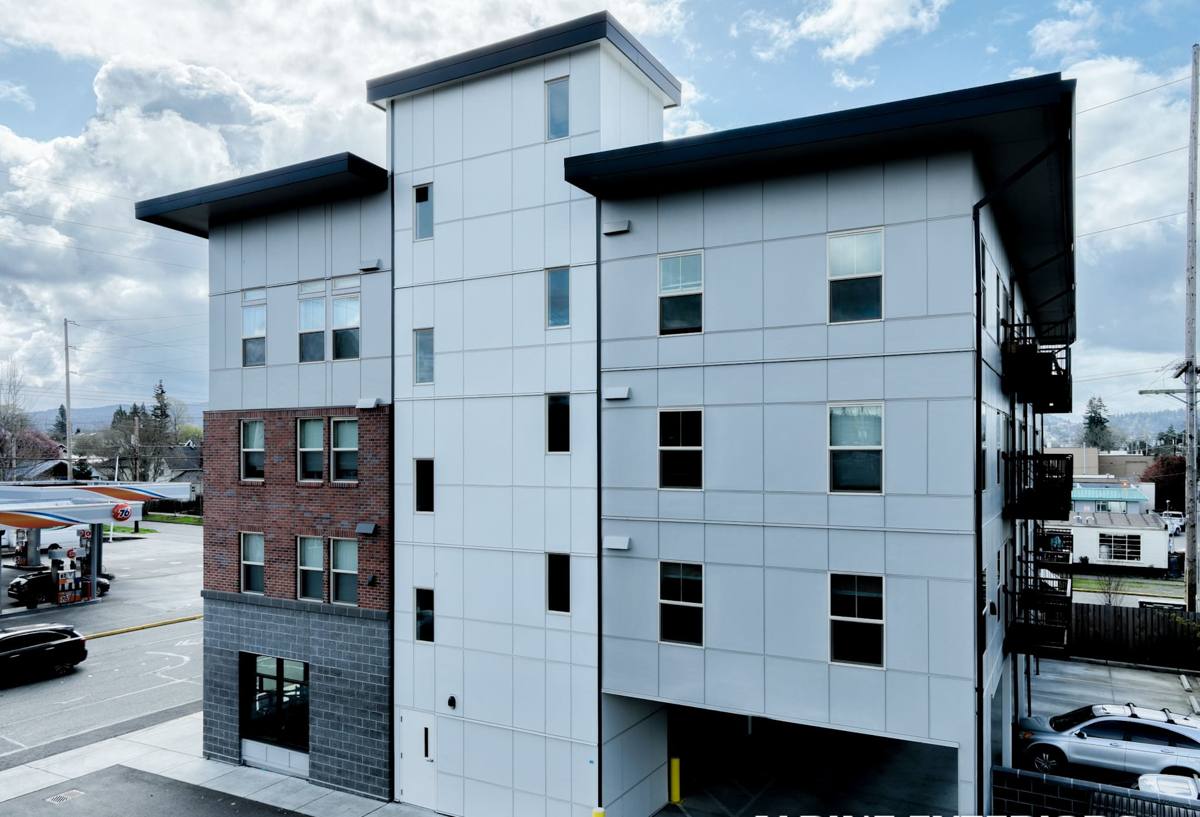
What Whatcom County's Climate Actually Does to Siding
It helps to be specific about the stresses at play, because generic "rainy Pacific Northwest" advice misses some of what's unique to this area.
Driving Rain and Wind-Loaded Moisture
Whatcom County storms frequently come with real wind behind the rain, which pushes water sideways into wall assemblies instead of letting it simply run down and off. Siding that relies on face-sealing with caulk, or that has butt joints and seams that aren't properly lapped and flashed, lets that wind-driven moisture behind the cladding. Once water gets behind siding and can't dry out, you get sheathing rot, mold, and eventually structural repairs that cost far more than the siding itself.
Extended Moss and Algae Season
Shaded, north-facing, or tree-covered walls in this area can stay damp for weeks at a time, which is exactly what moss and algae need to establish. On some siding materials, that persistent moisture also softens the substrate underneath the growth, compounding the problem. Fiber cement doesn't feed mold or rot the way wood-based products can, which matters a lot on the shaded sides of a Nooksack lot.
Salt-Influenced Air
Whatcom County isn't a beachfront environment everywhere, but proximity to the Sound and regional weather patterns bring salt-tinged moisture further inland than people expect. Salt air accelerates corrosion on fasteners and metal flashing and can degrade certain coatings and finishes faster than a landlocked climate would. This is one more reason fastener selection and flashing details matter as much as the siding panel itself.
Freeze-Thaw Cycling
Whatcom County winters bring repeated freeze-thaw swings rather than one long deep freeze. Any moisture that's already trapped behind or within siding gets a chance to freeze, expand, and work joints and fasteners loose over multiple cycles each winter. A material that resists moisture absorption in the first place removes this failure mode almost entirely.
Why We Standardized on James Hardie Fiber Cement
We install James Hardie exclusively because it's engineered specifically to handle the combination of moisture exposure, temperature swings, and biological growth that defines this region.
- Non-combustible core: Fiber cement doesn't burn, rot from within, or provide food for fungal growth the way wood-based sidings can.
- Climate-engineered HZ5 formulation: Hardie's HZ5 product line is formulated for regions with damp, temperate climates like ours, with moisture resistance built into the material itself, not just a surface coating.
- ColorPlus factory finish: A baked-on finish applied under controlled factory conditions holds color and resists fading, chalking, and moisture intrusion better than field-applied paint on many alternative products.
- Dimensional stability: Fiber cement expands and contracts far less than wood or wood-composite siding with humidity and temperature changes, which means joints, caulk lines, and fastener holes stay tighter over time.
- Strong transferable warranty: Hardie's warranty coverage is a meaningful backstop for homeowners, and it's transferable if the home changes hands — a real factor in resale.
We're not going to pretend other products don't have their own strengths — vinyl is inexpensive, cedar has genuine natural appeal, and engineered wood siding is lighter to handle. But when we weigh those advantages against long-term moisture performance in a Whatcom County climate, fiber cement installed correctly is what we're willing to put our name behind.
What a Correct Siding Installation Actually Involves
The material is only half the equation. A huge share of siding failures we get called to diagnose in this region trace back to installation shortcuts, not the product itself. A correct James Hardie installation includes:
Water-Resistive Barrier and Flashing First
Before a single piece of siding goes up, the wall needs a properly lapped weather-resistive barrier, correctly integrated window and door flashing, and flashing at every horizontal transition — roof-to-wall intersections, deck ledgers, and trim board tops. This is the layer that actually keeps water out; the siding is the second line of defense, not the first.
Manufacturer-Specified Clearances
Hardie specifies minimum clearances from grade, roof lines, decks, and other horizontal surfaces so that splashback and standing water don't sit against the bottom edge of the siding. Skipping these clearances to "make it look tighter" is one of the most common causes of premature bottom-edge damage we see on homes that weren't installed to spec.
Correct Fastening
Fastener type, spacing, and penetration depth all matter — over-driven or under-driven nails, wrong fastener material, or incorrect spacing can void warranty coverage and create points where water works its way in. Given the salt exposure in parts of the county, corrosion-resistant fasteners aren't optional.
Joint Treatment and Caulking Discipline
Butt joints need to be treated correctly, not just butted and caulked. Over-reliance on caulk as a primary water barrier, rather than proper lapping and flashing, is a shortcut that fails predictably once the caulk ages in our wet climate.
Trim, Corners, and Penetrations
Every place something interrupts the siding field — outlets, vents, hose bibs, light fixtures — is a potential water entry point if it isn't flashed and sealed correctly. These small details are where a lot of "why is my sheathing wet" calls actually originate.
Our Process for Nooksack Homes
| Step | What Happens |
|---|---|
| 1. On-site assessment | We walk the exterior, check existing siding and sheathing condition, look at drainage, roof lines, and shaded elevations that see more moisture and moss. |
| 2. Scope and product selection | We spec the appropriate Hardie product line, profile, and finish for the home, and identify any sheathing or flashing repairs needed before new siding goes on. |
| 3. Written estimate | You get a clear, itemized estimate — materials, labor, and any repair work called out separately, no vague allowances. |
| 4. Prep and moisture barrier | Old siding removal (where applicable), sheathing repair, and a properly installed and lapped weather-resistive barrier with flashing at every penetration and transition. |
| 5. Installation to spec | Panels, fasteners, clearances, and joint treatment all installed per James Hardie's published specifications — not shortcuts. |
| 6. Final walkthrough | We review the finished job with you, cover care and maintenance basics, and make sure warranty documentation is in your hands. |
Why Hiring a Crew That Already Works in This County Matters
Siding installation isn't uniform across climates, and a crew that mostly works drier or milder regions can miss details that matter here. A contractor already working Whatcom County jobs knows:
- Which elevations on a given lot orientation tend to hold moisture longest and need extra attention to clearances and drainage.
- How local permitting and inspection processes work, so the job doesn't stall waiting on paperwork.
- What existing sheathing and moisture damage typically looks like on homes of the age and construction type common in this area.
- How to sequence work around the realistic rain windows in a Whatcom County installation season.
That local familiarity translates into fewer surprises mid-project and a wall system that's actually built for the weather it's going to face for the next 30-plus years.
Signs Your Current Siding May Already Be Struggling
Homeowners in Nooksack often call us after noticing one or more of the following. None of these are things to ignore, especially heading into another wet season:
- Soft or spongy spots when you press on siding, especially near the bottom edge or below windows.
- Persistent moss, algae, or dark staining that keeps coming back after cleaning.
- Visible warping, buckling, or gaps opening up at seams and corners.
- Paint that's peeling or bubbling in patterns that trace window and door openings.
- A musty smell in an interior room along an exterior wall.
- Visible daylight or drafts around trim and penetration points.
Any of these can indicate moisture has already gotten behind the cladding, which is worth having assessed before it becomes a sheathing or framing repair.
Cost Factors Homeowners Should Understand
We won't quote a number without seeing the home, but the real cost drivers on a Nooksack siding installation are consistent:
| Factor | Why It Matters |
|---|---|
| Existing wall condition | Rotted sheathing or hidden moisture damage found during tear-off adds repair scope beyond the siding itself. |
| Home size and wall complexity | More corners, gables, and roof intersections mean more flashing detail work and labor time. |
| Product line and profile | Hardie offers multiple plank widths, textures, and panel styles; some cost more in material and installation time than others. |
| Trim and accessory scope | Corner boards, window trim, and fascia work done alongside siding affects total project cost. |
| Access and site conditions | Steep grades, limited access, or multi-story sections can add equipment and labor time. |
Maintenance: What Ownership Looks Like After Installation
Fiber cement is low-maintenance compared to wood siding, but "low" isn't "none," especially in a climate like this one. A yearly rinse to knock down moss and algae buildup, prompt attention to any caulk lines that start to crack or separate, and periodic visual checks around windows, penetrations, and the bottom clearance line will keep a correctly installed system performing for decades. If you ever see a section that stays wet longer than the rest of the wall after a storm, that's worth a quick inspection rather than waiting.
If you're weighing a siding project on a Nooksack home, we're happy to take a look and walk you through what your specific walls need. Reach out for a free, no-pressure estimate — there's a form right below this page.