 Whatcom County
 Roofing in Nooksack: A Different Climate Than It Looks
Nooksack sits up against the foothills in the Nooksack River valley, and that location shapes what a roof here has to deal with. It's not the same exposure you'd get right on the water in Blaine or Birch Bay, but Whatcom County's marine air still moves up the valley — cool, damp, and slow to dry out. Add in tree cover from the surrounding farmland and timber, valley fog that can sit low well into the morning, and a rainy season that stretches from fall through spring, and you get roofs that stay wet longer than homeowners often expect.
That combination is exactly why roof replacement decisions in Nooksack shouldn't be made off a generic checklist. A roof spec'd for a dry inland climate, or even one spec'd for a typical suburban lot with full sun exposure, doesn't perform the same way on a shaded, moisture-prone property out here. The right replacement accounts for how slowly this valley dries, not just how much rain falls in a year.
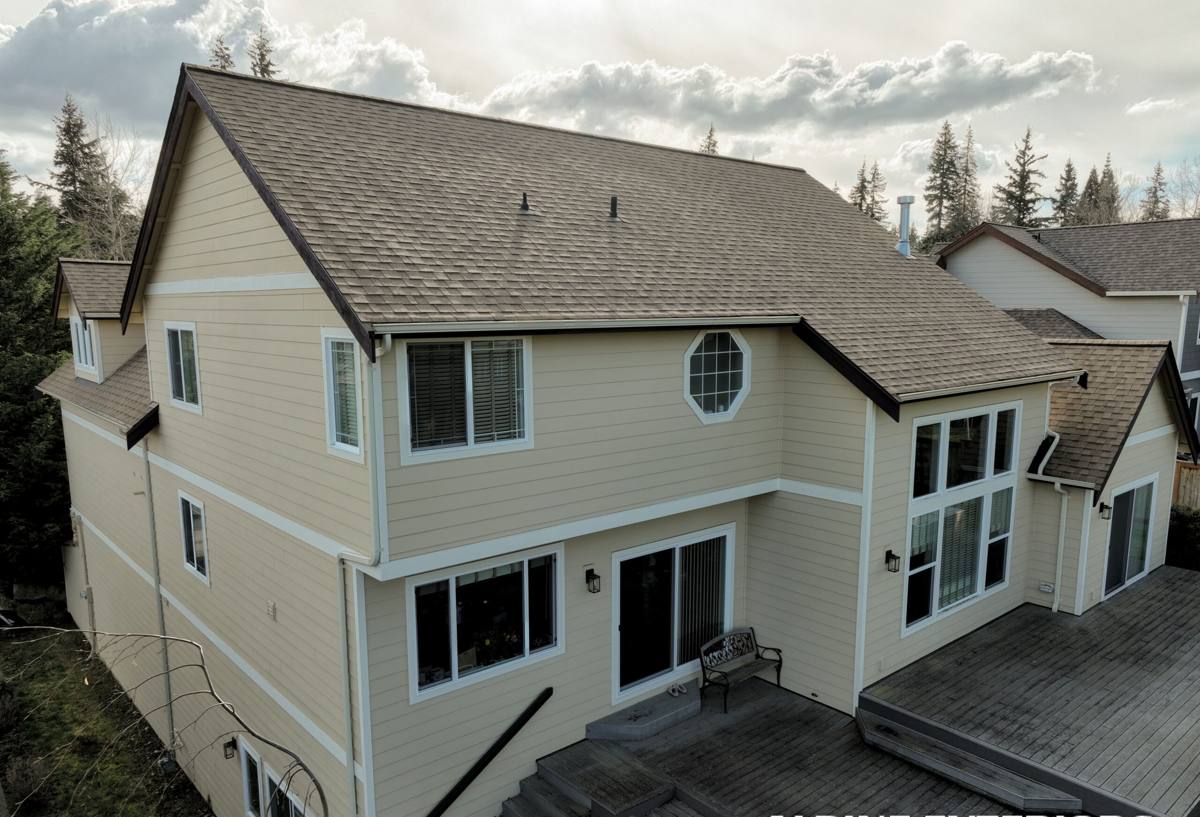
What the Local Climate Does to a Roof Over Time
Moss and Organic Growth
Moss is the most visible sign of Whatcom County's long wet season, and Nooksack's tree cover and valley humidity make it worse, not better. Moss holds moisture against the shingle surface, works into granule layers, and over years lifts shingle edges enough for wind-driven rain to get underneath. A roof that looks "just a little green" from the ground is often further along than it appears.
Driving Rain and Wind-Driven Moisture
Storms coming through the valley don't just fall straight down — wind pushes rain sideways under shingle tabs, around flashing, and into any gap in the underlayment. Roofs that were installed to minimum code, without attention to flashing detail and underlayment overlap, tend to develop leaks first at valleys, chimneys, and skylights — exactly where wind-driven rain concentrates.
Slow Drying and Trapped Attic Moisture
Because the air stays damp for long stretches, a roof deck that isn't ventilated well doesn't get the chance to dry between rain events. That trapped moisture is what leads to soft decking, delaminating plywood, and mold on the underside of the roof — problems you won't see from the ground but that a contractor doing a real inspection will catch.
Repair or Replace? How to Tell
Not every roof problem in Nooksack means a full replacement. But there's a point where patching stops making financial sense and starts masking a bigger issue. Some signs point clearly toward replacement:
- Granules collecting in gutters or at downspout outlets in noticeable amounts
- Shingles that are curling, cupping, or cracking across multiple areas of the roof, not just one spot
- Daylight visible through the roof deck from inside the attic
- Soft or spongy spots when walked (a contractor should check this, not a homeowner on a wet roof)
- Moss that keeps returning within a season or two of cleaning, even after treatment
- A roof approaching or past the end of its material's realistic service life, especially if it was installed with minimal underlayment or flashing
- Multiple past repairs in different locations — a pattern that usually means the whole system is aging out, not just isolated spots
If only one or two of these apply and they're localized, a repair can be the right, honest answer. We'll tell you that when it's true. Replacement makes sense when the roofing system as a whole — deck, underlayment, and covering — is past the point where repairs buy meaningful time.
What a Correct Roof Replacement Actually Involves
A roof replacement is more than swapping old shingles for new ones. On a Nooksack property, where moisture management is the whole game, the details underneath the visible surface matter as much as the shingle itself.
Full Tear-Off and Deck Inspection
We remove the existing roofing down to the deck rather than layering over it. That's the only way to actually see the plywood or sheathing underneath — and given how much moisture this valley sees, deck damage under old, worn roofing is common enough that skipping this step is a real risk. Any soft or rotted decking gets replaced before anything new goes down.
Underlayment Built for Wet Climates
Given how long this area stays damp, we don't treat underlayment as an afterthought. Synthetic underlayment with proper overlap, and self-adhered ice-and-water membrane at valleys, eaves, and around penetrations, gives the roof a real second line of defense if wind-driven rain gets past the shingles.
Flashing Done Right
Chimneys, skylights, sidewalls, and valleys are where most roof leaks actually start — not in the open field of shingles. Properly formed and sealed flashing at every one of these transitions is non-negotiable on a wet-climate roof.
Ventilation That Matches the Attic
Balanced intake and exhaust ventilation lets the attic and roof deck dry out between rain events instead of staying damp for weeks. We size ventilation to the actual attic, not a one-size-fits-all vent count, because under-ventilated roofs are one of the most common causes of premature deck failure we see on older Nooksack homes.
Material Options for This Climate
There's no single "best" roofing material for every home — it depends on the roof's exposure, the home's structure, and the homeowner's budget and priorities. Here's how the common options compare for a moss-prone, wet-winter property like the ones in and around Nooksack.
| Material | Moss/Moisture Resistance | Typical Lifespan | Notes for This Area |
|---|---|---|---|
| Architectural asphalt shingle | Good with proper underlayment and ventilation | 25–30 years | Most common choice; performance depends heavily on installation quality, not just the shingle itself |
| Standing seam metal | Very good — sheds moss and debris better than shingles | 40–50+ years | Higher upfront cost, lower long-term maintenance; performs well on steep-pitch, tree-shaded roofs |
| Cedar shake | Poor without diligent maintenance | Varies widely by upkeep | Traditional look but a heavier maintenance burden in a wet, mossy climate — we're honest about that tradeoff upfront |
| Synthetic/composite shingle | Good, consistent performance | 30–50 years depending on product | Worth considering where impact resistance or a specific appearance matters |
For most Nooksack homes, a quality architectural shingle installed correctly, or standing seam metal on more exposed or heavily shaded roofs, gives the best balance of cost, appearance, and moisture performance. We'll walk through the real tradeoffs for your specific roof rather than pushing one product.
Our Roof Replacement Process
- On-site inspection — we get on the roof (not just a driveway estimate) and check the deck, flashing, ventilation, and any interior signs of moisture before quoting anything.
- Honest scope and written estimate — you get a clear breakdown of materials, underlayment, flashing, and ventilation work, with no vague allowances.
- Scheduling around the weather — we plan tear-off in windows that minimize how long your deck is exposed, and we protect the home during work regardless.
- Full tear-off and deck repair — old roofing removed, deck inspected and repaired as needed before anything new is installed.
- Underlayment, flashing, and ventilation installed to spec — the parts that determine whether the roof actually performs in this climate.
- New roofing installed and detailed — clean lines, proper nailing pattern, and attention to every valley, edge, and penetration.
- Final walkthrough and cleanup — we review the finished roof with you and make sure the property is left clean, including a magnetic sweep for stray nails.
Cost Factors to Understand Before You Get Quotes
Roof replacement costs vary a lot based on the specifics of the home, so broad national averages aren't very useful. What actually moves the price on a Nooksack roof:
| Factor | Why It Matters Here |
|---|---|
| Roof pitch and complexity | Steeper pitches and more valleys/dormers mean more labor and more flashing detail |
| Deck condition | Moisture damage found during tear-off can add plywood replacement — we flag this honestly rather than guessing at the estimate stage |
| Material choice | Asphalt shingle, metal, and composite options span a wide cost range |
| Ventilation upgrades | Older homes often need added intake or exhaust vents to meet a healthy ventilation ratio |
| Tree cover and access | Heavily shaded or hard-to-access roofs, common on rural Nooksack lots, can affect labor and cleanup time |
We give real numbers after we've actually seen the roof — not a phone estimate based on square footage alone.
Why It Matters That We Already Work in Nooksack
A contractor who regularly works Whatcom County properties, including the smaller communities like Nooksack that sit away from the main coastal towns, already knows how differently a valley roof ages compared to one closer to the water or in a drier region. That means fewer surprises during tear-off, ventilation specs that are sized correctly the first time, and material recommendations based on how roofs in this specific area actually hold up — not on a national average.
It also means accountability. We're not a crew passing through the county on a storm-chasing route; we're here for the callback if something needs attention after the job, and for the next project down the road, whether that's this roof again in twenty years or the siding on the same house.
A Straightforward Checklist Before You Decide
- Get an actual on-roof inspection, not just a drive-by estimate
- Ask what underlayment and flashing details are included, not just the shingle brand
- Confirm the deck will be inspected during tear-off, with any repairs itemized honestly
- Ask how ventilation will be assessed and sized for your specific attic
- Get the material warranty and workmanship warranty explained separately — they're not the same thing
- Check that cleanup, including a nail sweep, is part of the scope
If you're weighing repair versus replacement, or just want an honest read on where your roof stands, we're happy to take a look. Estimates are free and there's no pressure — just a clear picture of what your roof needs and what it would take to fix it right.