 Whatcom County
 Why Metal Roofing Makes Sense for Nooksack
Nooksack sits in the Nooksack River valley, tucked against the Whatcom County foothills with heavy tree cover and a lot of standing moisture in the air for much of the year. Homes here don't get a break between fall rains and spring rains — the wet season runs long, and roofs are the first thing that pays for it. Metal roofing holds up well in that kind of environment because it sheds water fast, doesn't absorb moisture the way organic shingle mat does, and gives moss and algae far less to grab onto than a traditional asphalt roof.
That doesn't mean metal is automatically the right call for every house on every budget. It's a bigger upfront investment than asphalt shingles, and it only performs the way it's supposed to when the underlayment, flashing, and ventilation underneath it are done correctly. We'll walk through what that actually looks like below, because the panel itself is the easy part — the details around it are what determine whether a metal roof lasts twenty years or fifty.
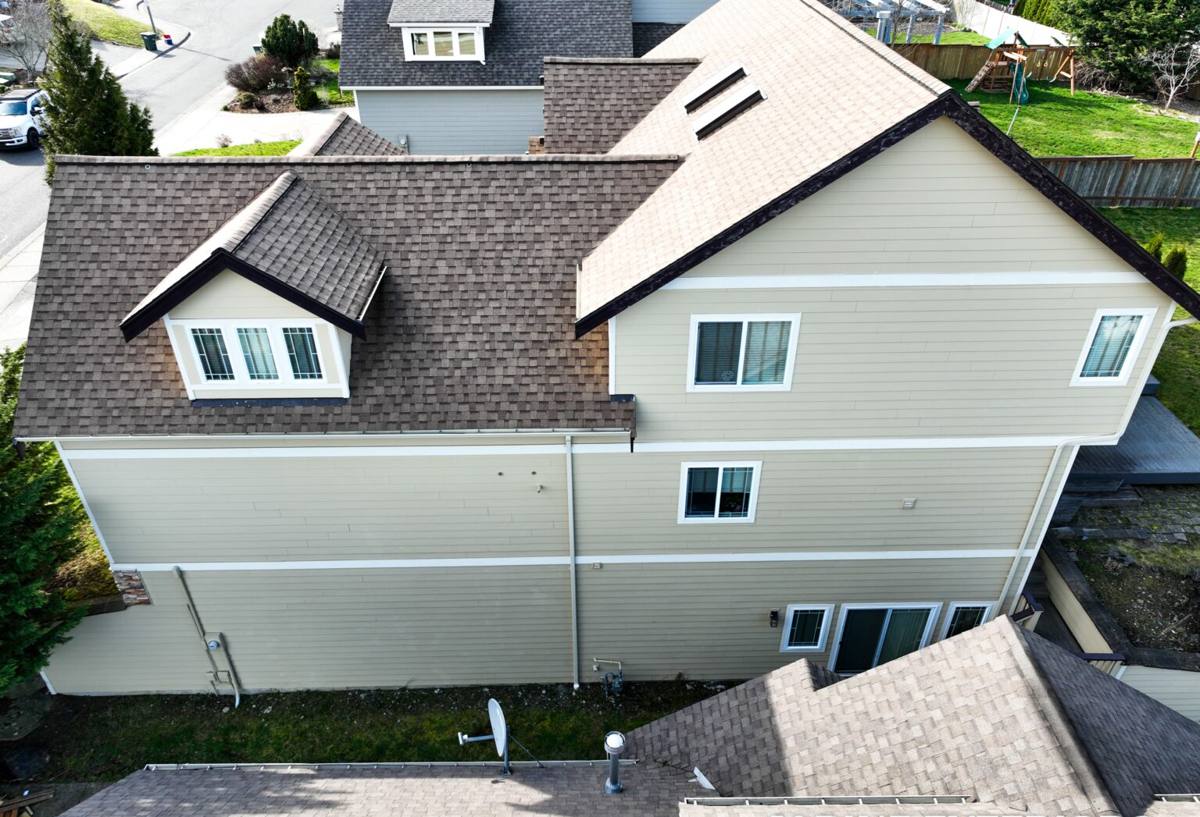
What Whatcom County Weather Does to a Roof
Whatcom County's climate is a mix of driving Pacific rain, cooler foothill air, and — closer to the coast — salt air that accelerates corrosion on fasteners and exposed metal. Nooksack is inland along the river, so salt exposure isn't as direct here as it is in Blaine or Birch Bay, but the moisture load is still significant, and it shows up in the same places: valleys, eave edges, and anywhere water can pool or wick behind flashing.
The Long Moss Season
Between the tree canopy and the persistent damp, moss and algae growth on roofs in this part of the county isn't a maybe — it's a matter of when. On asphalt shingles, moss roots into the granule surface and holds moisture against the roof deck, which shortens the life of the shingle and can work its way into fastener penetrations over time. Metal panels give moss spores far less to attach to, and what does grow on the surface rinses off far more easily than it comes off shingle.
Driving Rain and Wind-Driven Water
Rain in this area rarely falls straight down. Wind pushes it sideways and up under laps, ridge caps, and anywhere a seam isn't sealed correctly. A roof that looks fine from the ground can still be letting water in at a badly lapped seam or an under-flashed penetration — which is why the installation details matter as much as the material choice.
Standing Seam vs. Exposed Fastener Metal Roofing
Most metal roofing on residential homes in this area falls into one of two categories. Both are legitimate options — the right one depends on budget, roof pitch, and how long you want to go without maintenance.
| Factor | Standing Seam | Exposed Fastener |
|---|---|---|
| Fasteners | Hidden, clipped under the seam | Screwed through the panel face |
| Long-term weak point | Seam quality at install | Fastener gaskets wear and need re-tightening or replacement over time |
| Typical lifespan | 40–60+ years | 25–40 years |
| Upfront cost | Higher | Lower |
| Best fit | Homes where long-term, low-maintenance performance matters most | Budget-conscious projects, outbuildings, shops |
Exposed fastener panels aren't a bad product — they're a different maintenance commitment. Every screw penetration has a rubber washer that will eventually harden and shrink, and on a house with a lot of roof penetrations that adds up to a lot of spots that need periodic checking. Standing seam removes that variable entirely because there are no fasteners through the panel face to fail. We'll tell you honestly which one fits your roof and your budget rather than pushing the higher-margin option.
What a Correct Metal Roof Installation Involves
Underlayment
Metal panels are not, by themselves, a complete waterproofing system — the underlayment underneath is what protects the deck if wind-driven rain or ice-damming ever gets past the panel seams. In a climate like Whatcom County's, we use a high-temperature synthetic or self-adhered underlayment rather than old-style felt, which degrades faster under sustained moisture.
Fastening and Panel Attachment
Panel spacing, clip placement, and fastener torque all affect how the roof handles thermal expansion. Metal panels expand and contract with temperature swings, and a roof fastened too tight or with the wrong clip spacing will eventually buckle or work fasteners loose. This is one of the most common shortcuts on rushed installs, and it's not something you can see from the ground once the roof is finished.
Flashing and Penetrations
Valleys, chimneys, vent stacks, and skylight curbs are where the vast majority of roof leaks actually start — not in the open field of the roof. Correct flashing detail work, not the panel itself, is what keeps water out at these transitions.
Ventilation
A metal roof installed over a poorly ventilated attic can trap moisture underneath it just as easily as any other roofing material. Balanced intake and exhaust ventilation keeps condensation from forming on the underside of the deck, which matters in a county where indoor-outdoor temperature and humidity differences are significant for much of the year.
Signs Your Current Roof Is Ready for a Metal Upgrade
- Moss buildup that returns within a season or two of cleaning
- Granule loss visible in gutters after asphalt shingles
- Recurring leaks at the same valley or penetration despite prior repairs
- Shingles that are curling, cracking, or losing their seal at the edges
- A roof original to the home that's approaching or past its rated lifespan
- Interest in reducing long-term maintenance and moss-related upkeep
Our Process for a Nooksack Metal Roofing Project
- On-site inspection of the existing roof, deck condition, and ventilation setup
- Honest recommendation on panel type based on your roof's pitch, exposure, and budget
- Written estimate with material and labor broken out — no vague lump-sum pricing
- Deck inspection and any necessary repair once tear-off begins, documented before covering it
- Underlayment, flashing, and panel installation to manufacturer spec
- Final walkthrough where we point out what was done, not just tell you it's finished
What Metal Roofing Costs and What Drives the Price
Metal roofing costs more upfront than asphalt shingles — that's a fair trade-off for the lifespan difference, but it's worth understanding what actually moves the number.
| Factor | Effect on Cost |
|---|---|
| Panel type | Standing seam runs higher than exposed fastener due to labor and hidden clip systems |
| Roof complexity | More valleys, dormers, and penetrations mean more flashing labor |
| Deck condition | Rotten or undersized decking found at tear-off adds repair cost |
| Roof pitch and access | Steep or hard-to-access roofs take longer and require more safety setup |
| Panel gauge and coating | Heavier gauge steel and premium paint finishes cost more but last longer |
As a broad range, homeowners in this area typically see residential metal roofing land somewhere in the high single digits to upper teens per square foot installed, depending on the factors above — asphalt shingles run lower upfront but need replacement sooner. We'll always give you a specific written number for your roof rather than a generic estimate, because the factors above genuinely change the price roof to roof.
Maintaining a Metal Roof in Whatcom County
- Clear debris and needles from valleys and gutters at least once a year — tree cover in this area makes buildup fast
- Check exposed fasteners (if applicable) every couple of years for backing out or gasket wear
- Inspect flashing around chimneys and vents after major wind events
- Trim overhanging branches that keep panels damp and shaded, which slows drying and encourages moss
- Rinse off moss or algae growth rather than pressure-washing aggressively, which can damage seams and coatings
Compared to an asphalt roof, this is a light maintenance list — that's a large part of why metal makes sense in a county where moss and moisture are constant rather than occasional problems.
Why Hire a Crew That Already Works in Nooksack
Roofing crews that mostly work drier parts of the state don't always plan for how much moisture load a Whatcom County roof deals with year-round, or how aggressively moss establishes itself under the tree cover common around Nooksack. A crew that regularly works this part of the county already knows to spec underlayment and ventilation for sustained damp conditions rather than a drier regional average, and has seen firsthand which flashing details hold up here and which ones fail within a few wet seasons. That local pattern recognition is worth more than it sounds like on paper — it's the difference between a roof that's technically installed correctly and one that's installed correctly for this specific climate.
If you're weighing metal roofing for a home in Nooksack, we're glad to come take a look, walk the roof with you, and give you a straight answer on what it needs — no pressure, no sales script. Reach out below for a free estimate.