 Whatcom County
 New Roof Installation in Nooksack: Built for This Climate, Not Just Any Climate
Nooksack sits close enough to the water and the foothills that its roofs take a different kind of beating than roofs a hundred miles inland. You get salt-tinged air drifting in off the Strait and the Sound on top of Whatcom County's long, wet winters, plus the shade and moisture that let moss take hold on anything that stays damp for more than a day or two. A new roof installed here needs to be specified and built with all three of those factors in mind from the start, not patched together with whatever's on the truck. This page covers what that actually looks like for a Nooksack home: what the climate demands, what a correct installation involves step by step, and why the crew you hire matters as much as the shingles you pick.
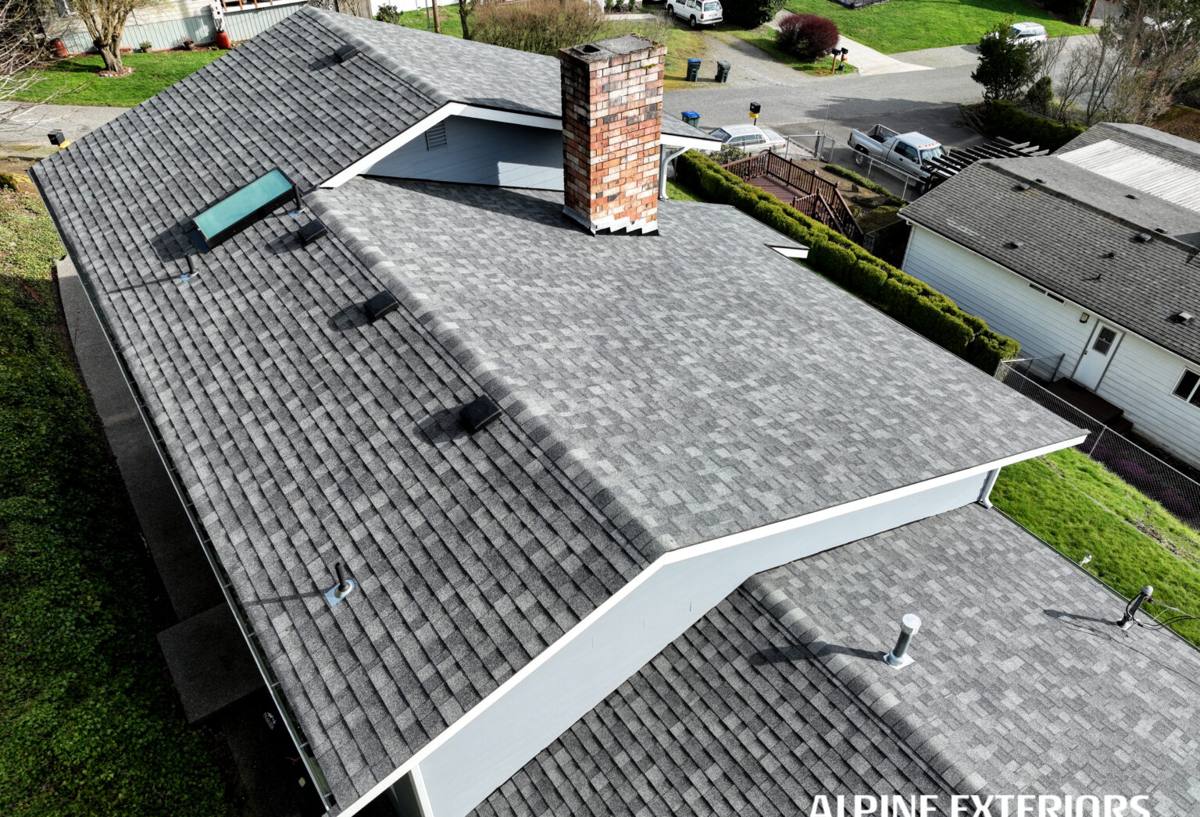
What Nooksack's Climate Actually Does to a Roof
Salt Air and Corrosion
Even well inland from open saltwater, airborne salt travels on wind and settles on exposed metal. Over years, that accelerates corrosion on unprotected fasteners, flashing, and vents. It's not dramatic — no one's roof rusts out in a season — but cheap or mismatched metal components will show pitting and streaking well before a quality roof's other components are due for attention. Fastener and flashing choice matters more here than in a dry inland climate.
Driving Rain, Not Just Rain
Whatcom County doesn't just get a lot of rainfall — it gets rain pushed sideways by wind off the water and the passes, which finds its way under underlayment laps, around poorly sealed vents, and into any nail placed a half-inch off spec. A roof built for "normal rain" and one built for driving, wind-blown rain aren't the same job, even though they can look identical from the ground.
Moss: The Long Season
Shaded pitches, north-facing slopes, and anything under overhanging trees stay damp for extended stretches much of the year in this part of the county. That's exactly what moss and moss-adjacent algae need to establish. Once moss gets a foothold under shingle tabs, it lifts them, holds moisture against the deck, and shortens the life of the roof underneath it — regardless of how good the shingle itself was.
What a Correctly Installed Roof Needs Here
- Underlayment rated for high-wind, high-moisture exposure, installed with full manufacturer-spec overlaps — not just enough to pass a glance-over
- Corrosion-resistant flashing and fasteners at every valley, penetration, and edge, sized and material-matched to resist salt-air degradation over decades, not years
- Proper attic and roof-deck ventilation, so moisture from inside the house doesn't add to what's already coming from outside
- Ice-and-water shield or equivalent membrane at eaves, valleys, and low-slope transitions where wind-driven rain is most likely to get pushed backward under shingles
- A shingle or roofing material with real algae/moss resistance built in, not just marketing language, where the roof plan has any shaded or north-facing exposure
- Sealed and counter-flashed penetrations for every vent, stack, and skylight — the single most common source of slow leaks on otherwise sound roofs
Our Installation Process, Step by Step
1. Inspection and Deck Assessment
Before we talk shingle color, we look at the roof deck itself. Any water intrusion, soft spots, or rot from a prior roof's failures gets identified and addressed here — installing a new roof over a compromised deck just moves the problem underneath the new material, where it's harder and more expensive to catch later.
2. Tear-Off and Deck Repair
Full tear-off to bare deck on most jobs. This lets us actually inspect sheathing, replace any damaged boards, and start the new roof system on a solid, dry base — something you can't verify with a roof-over.
3. Underlayment and Water-Barrier Installation
Synthetic underlayment across the field, with ice-and-water membrane at eaves, valleys, and any low-slope section. Given how much of Nooksack's weather comes in sideways, this layer is where a lot of the roof's real weather resistance comes from — well before the shingles ever go down.
4. Flashing, Vents, and Penetrations
New flashing at every valley, wall intersection, chimney, and pipe boot — matched to resist salt-air corrosion over the roof's service life. This is the step that determines whether you get a slow leak in five years or a dry attic in twenty-five.
5. Roofing Material Installation
Shingles (or the chosen roofing material) installed to manufacturer nailing pattern and exposure specs, with attention to wind-rated fastening given how exposed some Nooksack lots are to open wind runs off the valley floor.
6. Ventilation Check and Final Walkthrough
We confirm intake and exhaust ventilation is balanced, clean up the site, and walk the finished roof with you before calling the job done.
Choosing Materials: What We Recommend and Why
For most Nooksack homes, a quality architectural asphalt shingle with algae resistance built into the granules is the most cost-effective choice that still stands up to the local moss pressure. Metal roofing is a strong option for homeowners wanting a longer service life and simpler moss shedding, provided the fasteners and flashing are specified for coastal-influenced air rather than generic inland hardware. We steer away from lower-grade three-tab shingles on shaded or north-facing pitches in this area — not because the product is defective, but because its thinner profile and lack of algae-resistant granules mean it loses the moss fight faster here than in a drier climate, which shows up as maintenance and shortened lifespan rather than any single failure.
Material Comparison for Nooksack Conditions
| Material | Moss/Algae Resistance | Wind-Driven Rain Performance | Typical Lifespan Here |
|---|---|---|---|
| Architectural asphalt (algae-resistant) | Good, with treated granules | Strong when properly flashed | 25–30 years |
| Standard 3-tab asphalt | Fair to weak on shaded pitches | Adequate | 15–20 years |
| Standing-seam metal | Excellent — sheds moss growth | Excellent | 40–50+ years |
| Composite/synthetic shake | Good | Strong when properly flashed | 30–40 years |
Cost Factors Homeowners Should Know
Every roof quote depends on a handful of concrete variables. Understanding them helps you evaluate any estimate you get, including ours.
| Factor | Why It Matters |
|---|---|
| Roof size and pitch | Steeper and larger roofs take more material, labor time, and safety setup |
| Number of layers to remove | Tear-off cost rises with each existing layer of roofing on the deck |
| Deck condition | Rotted or soft sheathing requires replacement before new roofing goes on |
| Material choice | Asphalt, metal, and composite materials carry different upfront costs and lifespans |
| Roof complexity | Valleys, dormers, skylights, and multiple penetrations add flashing labor |
| Access and site conditions | Tree cover, steep lots, and limited staging area affect setup time |
We give a written, itemized estimate before any work begins, so you can see exactly where the cost is going rather than a single lump number.
Why a Crew That Already Works Nooksack Matters
Roofing crews who work across very different climates tend to install to a generic standard — technically code-compliant, but not tuned to what actually shortens a roof's life in this specific part of Whatcom County. A crew that regularly works Nooksack and the surrounding area already knows which fastener and flashing grades hold up against the salt-tinged air here, which pitches on a given lot layout are going to fight moss for their whole service life, and how local wind patterns off the valley and water push rain into places a textbook installation wouldn't anticipate. That local pattern recognition is the difference between a roof that needs attention in year six and one that doesn't need real attention until year twenty.
Maintenance After Installation
A correctly installed roof still benefits from basic upkeep in this climate:
- Keep gutters clear so water isn't backing up under eave flashing during heavy rain events
- Have moss growth removed gently (not pressure-washed, which can strip granules) if it appears on shaded sections
- Trim back overhanging branches that keep sections of the roof shaded and damp
- Schedule a visual inspection every couple of years, especially after major windstorms
- Address any small leak signs — a stain on a ceiling, a damp attic smell — promptly rather than waiting for it to spread
Get a Straight Answer About Your Roof
If you're weighing a new roof for a Nooksack home, we're glad to come take a look, walk you through what your specific roof plan and exposure call for, and give you a straightforward written estimate — no pressure, no upsell script. Reach out through the form below to get started.