 Whatcom County
 Board & Batten Siding for Nooksack Homes
Board and batten is one of the most recognizable siding profiles in Whatcom County — wide vertical panels with narrow battens covering the seams, giving farmhouses, barns-turned-homes, and newer builds around Nooksack that clean, linear look. It's a style that fits the area's rural and semi-rural character well, whether you're on acreage near the Nooksack River corridor or in a tighter residential lot closer to town. But the same vertical lines that make board and batten attractive also make it a profile that punishes a sloppy install. Every seam, every batten strip, every piece of flashing behind it either sheds water correctly for thirty years or becomes a slow leak point that rots sheathing from the inside out.
We install board and batten in Nooksack and the surrounding Whatcom County towns regularly enough to know which details matter here specifically — not in a generic Pacific Northwest sense, but in the specific combination of conditions this part of the county deals with.
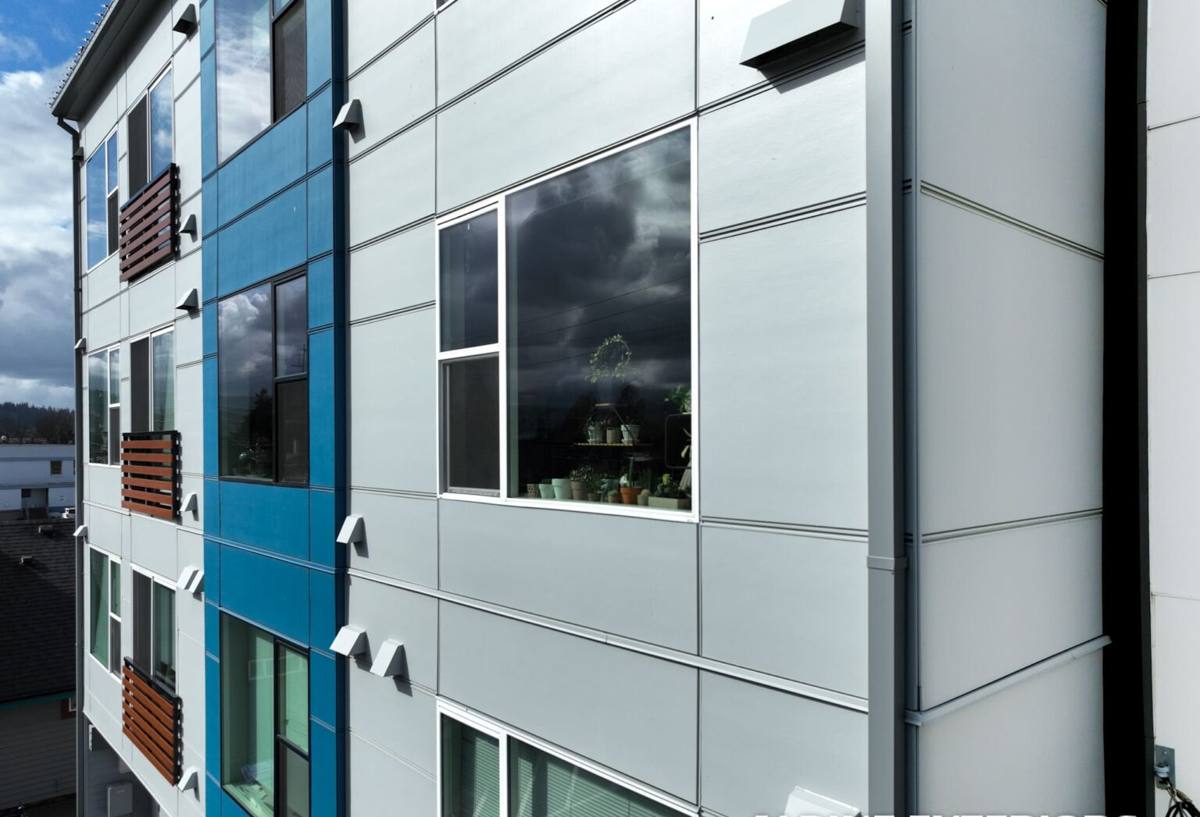
What Nooksack's Climate Does to Siding
Whatcom County sits in a transition zone — close enough to the Salish Sea to catch salt-laden air on windy days, far enough inland and up-valley to get harder, more sustained rain events than the immediate coastline, and shaded and damp enough for large stretches of the year to grow moss on almost anything that holds moisture. For a house near Nooksack, that means three separate stresses working on the siding at once:
- Salt air:
- Driving rain: Storms here don't just fall — wind pushes rain sideways into wall assemblies, especially on gable ends and the windward side of a house. Vertical board and batten has more seams per square foot than lap siding, so water management behind the panels has to be right the first time.
- Moss season: Long, mild, wet stretches from fall through spring keep north-facing and shaded walls damp for weeks at a time. Moss and algae don't just look bad — they hold moisture against the siding surface and, on organic materials, accelerate decay.
None of that is unique to Nooksack alone, but the combination — salt exposure plus valley rain plus extended damp season — is a real regional profile, and it's why we don't treat every siding job the same way we might in a drier inland climate.
Why This Matters More for Board & Batten Specifically
Lap siding sheds water in one direction, down and out, with fewer vertical breaks. Board and batten introduces a vertical seam every 12 to 24 inches depending on the pattern. Each of those seams is a potential path for wind-driven rain to get behind the cladding if the underlying water-resistive barrier, flashing, and fastening aren't done correctly. On a house that also has to deal with salt air corroding fasteners and moss holding moisture at the base of battens, a marginal install doesn't fail dramatically — it fails slowly, over years, usually behind the wall where you can't see it until there's a soft spot or a stain showing up inside.
Why We Only Install James Hardie
We install James Hardie fiber cement exclusively — not LP SmartSide, not vinyl, not Cemplank or Allura, not primed spruce or cedar board and batten. That's a deliberate standard, not a sales preference, and it's worth explaining honestly rather than just asserting it.
Wood board and batten — cedar or primed spruce — can look excellent when new, but it's an organic material in a climate that stays damp for months at a time. It needs regular repainting, careful caulking at every seam, and vigilant moss and mildew control, or it starts absorbing moisture, cupping, and rotting at the battens and bottom edge. Vinyl board and batten sheds water fine but is a thin plastic product that becomes brittle in cold snaps, fades under UV over the years, and can't take the kind of impact or wind load that heavier materials handle without cracking. LP SmartSide is an engineered wood product — better moisture resistance than raw wood, but it's still wood-based at its core, meaning cut edges and any breach in the factory coating are vulnerable points in a climate that doesn't give a wall much time to dry out between rain events.
James Hardie fiber cement is not organic, doesn't rot, and is non-combustible. Its ColorPlus factory finish is baked on under controlled conditions rather than field-applied, which matters in a climate where a same-day dry window for painting isn't guaranteed. Hardie's HZ5 product line is engineered specifically for cold, wet climate zones like ours, and the company backs it with a strong transferable warranty when installed to spec. It costs more upfront than vinyl or basic primed wood. We think that cost is worth it for a wall assembly that's going to sit under Whatcom County rain for the next several decades, and that's why it's the only board and batten product we put on a house.
What a Correct Board & Batten Install Actually Involves
The visible battens are the least important part of doing this right. What's underneath determines whether the siding lasts.
Water Management Comes First
Every correct install starts with a water-resistive barrier installed and lapped correctly, with flashing at every horizontal transition — window heads, door heads, roof-to-wall intersections, and the base of the wall. Board and batten in particular needs attention at the bottom termination, where battens meet the foundation or a lower roofline, since that's where wind-driven rain concentrates and where moss and standing moisture do the most damage over time.
Fastening and Spacing
James Hardie specifies fastener type, spacing, and embedment depth for a reason — get it wrong and you either split the board or leave gaps that let moisture behind the panel. In a salt-air environment, fastener material matters too; the wrong fastener corrodes and stains the siding face or loses holding strength years before the panel itself would fail.
Expansion Gaps and Caulking
Fiber cement moves slightly with temperature and moisture cycles. Correct gaps at trim and corners, filled with the right sealant, prevent the buckling and cracking you sometimes see on installs done by crews used to a different material.
Batten Layout
Even spacing and plumb lines are what make board and batten look intentional rather than improvised. This is a finish carpentry detail as much as a weatherproofing one, and it's where rushed jobs show.
Our Process for a Nooksack Board & Batten Job
- On-site assessment: We look at your current siding condition, wall sheathing where accessible, moisture history, and sun/shade exposure on each wall face — north walls near tree cover get different moss and moisture treatment than a south-facing gable.
- Water barrier and flashing plan: Before a single board goes up, we plan out flashing details at every window, door, and roofline intersection specific to your house.
- Install to Hardie spec: Correct fasteners, spacing, and expansion gaps, following James Hardie's published installation requirements — this is what keeps the warranty valid and the siding performing.
- Trim and batten finish: Even, plumb batten spacing and clean corner and trim details for the finished look.
- Final walk-through: We go over the finished work with you before we consider the job done.
Comparing Board & Batten Materials for This Climate
| Material | Moisture Behavior Here | Maintenance Burden | Typical Lifespan |
|---|---|---|---|
| James Hardie Fiber Cement | Non-organic, doesn't rot, handles driving rain well when installed correctly | Low — occasional wash for moss/algae | Decades, per warranty terms |
| Cedar / Primed Spruce | Absorbs moisture, prone to cupping and rot in extended damp seasons | High — repaint and reseal cycles | Shorter without diligent upkeep |
| Vinyl | Sheds water but can warp/crack with impact or cold | Low, but limited repairability | Variable, UV-dependent fading |
| LP SmartSide | Better than raw wood but still wood-based; vulnerable at cut edges | Moderate — coating maintenance | Shorter than fiber cement in wet climates |
Why a Crew That Already Works Nooksack Matters
Board and batten done wrong in a dry climate might last a decade before problems show. Done wrong here, with salt air corroding fasteners, driving rain testing every seam, and moss holding moisture against the wall for months at a stretch, problems can surface much sooner — and often behind the siding, where you don't see them until there's real damage. A crew that works this part of Whatcom County regularly already knows which walls need extra flashing attention, which fastener specs hold up against the salt exposure, and how to sequence a job around the region's rain patterns instead of fighting them. That local repetition is what separates a board and batten job that looks good on install day from one that still looks and performs well fifteen years later.
What to Ask Before Hiring Anyone for This Job
- Are they installing to James Hardie's published specifications, including fastener type and spacing?
- Do they have a specific plan for flashing at your windows, doors, and roof intersections — not just a general answer?
- Can they explain how they'll handle moss-prone, shaded wall faces differently from sun-exposed ones?
- Are they licensed and insured to work in Washington, and can they show it?
- Do they install other siding materials, and if so, do they have a clear, honest reason your project should or shouldn't use board and batten?
If you're considering board and batten siding for a home in or around Nooksack, we're happy to take a look, walk the property with you, and talk through what a correct install would involve for your specific walls and exposure. There's no pressure and no cost for the estimate — just a straight answer about what your house needs.