 Whatcom County
 Building a Deck That Actually Holds Up in Nooksack
Nooksack sits in a part of Whatcom County where the weather doesn't do a homeowner any favors. Long stretches of driving rain, a marine-influenced climate that keeps humidity high most of the year, and a moss season that can run from fall through spring all put real stress on outdoor structures. A deck here isn't just a weekend carpentry project — it's a structure that has to shed water, resist rot, and stay safe to walk on year after year in conditions that are noticeably damper than most of the country deals with.
We build custom decks specifically with this in mind. That means paying attention to details that get skipped in drier climates — flashing, drainage, fastener choice, and material selection — because in Whatcom County, those details are the difference between a deck that lasts fifteen-plus years and one that's soft and spongy in five.
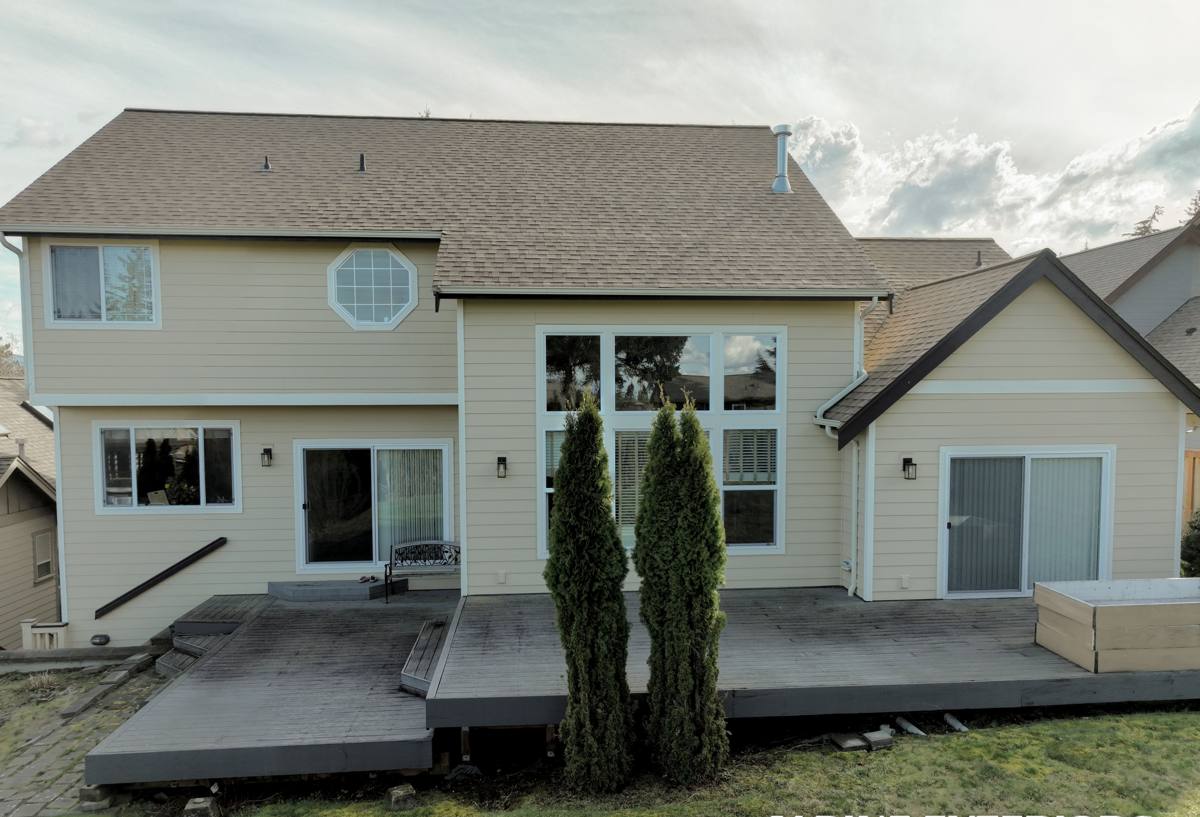
What Whatcom County's Climate Does to an Outdoor Deck
Homes closer to the water deal with salt-laden air that accelerates corrosion on anything metal — fasteners, brackets, railing hardware. Further inland, including areas like Nooksack, the bigger everyday enemy is sustained moisture: rain that doesn't just fall but lingers, soaking into end grain and pooling in spots where drainage wasn't planned for. Add in a long moss season where shaded, north-facing, or low-airflow areas stay damp for weeks at a stretch, and you've got a recipe for decking that looks fine on the surface while rotting from the inside.
The practical result: decks in this region fail in predictable ways. Ledger boards rot where they attach to the house because water got behind the flashing. Joists check and soften on top where water sits instead of running off. Fasteners bleed rust streaks down composite or wood decking. Moss builds up on boards that don't get afternoon sun, turning walking surfaces slick and accelerating surface decay. None of this is inevitable — it's what happens when a deck is built to a generic spec instead of to the conditions it will actually face.
What a Correctly Built Deck Involves Here
Ledger Attachment and Flashing
The ledger board — where the deck attaches to the house — is the single most common failure point on decks in wet climates. If it isn't properly flashed with a water-resistant barrier and correctly lapped so water sheds outward and down, moisture works its way behind the siding and into the rim joist. This is slow, hidden damage that often isn't visible until a deck starts to feel spongy near the house. Correct flashing detail at this joint is non-negotiable for us, regardless of what the original plans call for.
Footings and Frost Considerations
Footings need to be sized and set to local frost depth and soil conditions, not just poured to a minimum. In this part of Whatcom County, soil drainage varies a lot from lot to lot, and a footing that sits in standing water after a wet winter is a footing that will eventually heave or settle unevenly. We evaluate the actual site rather than assuming one footing spec fits every yard in the area.
Joist Protection
Untreated joist tops are one of the fastest ways to shorten a deck's life in a wet climate. A joist tape or cap over the top of each joist keeps water from soaking directly into cut and drilled surfaces where deck screws penetrate — those penetration points are exactly where rot tends to start first.
Drainage Under and Around the Deck
Water needs somewhere to go. That means grading away from the house, gaps between boards sized to shed water rather than trap it, and — for decks close to the ground — enough airflow underneath to let framing dry out between rain events instead of staying perpetually damp.
Decking Material Options for This Climate
There's no single "best" decking material — there's a best material for a given budget, maintenance appetite, and how much shade and moisture a particular deck location will see. Here's how the common options actually perform in Whatcom County conditions:
| Material | How It Handles Local Moisture | Maintenance | Rough Cost Range |
|---|---|---|---|
| Pressure-treated lumber | Resists rot when properly sealed; needs re-sealing to stay ahead of moisture | Annual cleaning and periodic re-staining/sealing | Lowest upfront cost |
| Cedar | Naturally moisture- and insect-resistant, but still needs sealing to prevent graying and surface checking | Regular cleaning, re-oil or re-seal every couple years | Mid-range |
| Composite decking | Doesn't absorb water or rot, but can trap moss/algae on the surface if not cleaned | Occasional cleaning, no sealing or staining required | Higher upfront, lower long-term upkeep |
| PVC/capped polymer | Fully moisture-resistant surface, best resistance to staining and mold growth | Lowest maintenance of the group | Highest upfront cost |
For homeowners in Nooksack who want to minimize the seasonal maintenance treadmill — sealing, staining, scrubbing moss off wood every spring — composite or capped polymer decking tends to pay for itself in saved time and avoided repairs, even though the upfront number is bigger. For homeowners who want the classic look and don't mind the annual upkeep, cedar or well-maintained pressure-treated lumber is still a solid, honest choice.
Hardware and Fasteners Matter More Than People Think
A deck is only as good as what's holding it together. Standard zinc-coated screws and brackets corrode faster in this region's humidity than most homeowners expect, leading to rust streaking on decking and, eventually, weakened connections. We use stainless steel or heavy-coated fasteners rated for exterior and ground-contact use, along with corrosion-resistant structural hardware for ledger connections, post bases, and joist hangers. It costs a bit more upfront and it's the kind of detail that's invisible until it fails — which is exactly why it gets skipped by crews trying to hit a lower bid.
Moss and the Long Wet Season
Moss season in Whatcom County isn't a minor cosmetic issue — moss holds moisture directly against the decking surface, which accelerates decay in wood and creates a genuinely slick, dangerous walking surface on any material when wet. Deck orientation, shade from nearby trees, and airflow underneath all affect how much moss buildup a given deck will see. Where we can, we design and orient decks to get more sun exposure and airflow specifically to reduce moss pressure over the life of the structure, rather than leaving it purely as an after-the-fact cleaning problem.
Practical Moss Management
- Sweep debris and standing organic matter (leaves, needles) off the deck regularly through fall and winter
- Rinse or lightly scrub green, shaded areas before moss gets a chance to establish
- Keep nearby vegetation trimmed back to improve sun exposure and airflow
- Reseal wood decking on schedule — a sealed surface sheds moss far more easily than bare, weathered wood
- Check gaps between boards periodically to make sure they haven't clogged with debris that traps moisture
Permits and Local Requirements in Whatcom County
Most new decks above a certain height off grade, or decks attached to the house, require a building permit in Whatcom County — the exact thresholds and requirements depend on the specific jurisdiction and the size and design of the deck. Structural elements like footing depth, ledger attachment, guardrail height, and stair geometry are all things a permit reviewer will check. We handle the permit process as part of the build rather than leaving homeowners to sort it out on their own, and we design footings and framing to meet code the first time rather than needing rework after inspection.
Our Process for a Nooksack Deck Project
- On-site assessment — we look at the actual lot: sun exposure, drainage, soil, existing structure condition if this is a replacement.
- Design and material discussion — we walk through decking material options, layout, and any structural constraints specific to the site.
- Written estimate — a clear scope and price before any work starts, no vague allowances.
- Permit handling — we prepare and submit what's needed for the local jurisdiction.
- Build — footings, framing with joist protection, correct ledger flashing, decking installation, railings, and finish work.
- Final walkthrough — we go over the finished deck with the homeowner before calling the job done.
Signs an Existing Nooksack Deck Needs Attention
If you already have a deck and aren't sure whether it needs repair or full replacement, a few warning signs are worth checking for before they turn into a safety issue:
- Soft or spongy spots when walking across the deck, especially near the house
- Visible gaps, staining, or bubbling in the flashing where the deck meets the siding
- Rust streaking running down from screw heads or metal hardware
- Persistent moss or dark staining in the same spots season after season
- Loose railings or posts that move when pushed
- Cracked, splintering, or delaminating boards, particularly on composite decking near seams
Any of these on their own might just mean a repair. Several at once, especially near the ledger or main support posts, usually means it's time for a real structural evaluation rather than a patch job.
Why a Crew That Already Works Nooksack Matters
A lot of deck problems in this region trace back to a build crew that didn't account for local conditions — often because they don't normally work here and applied a generic spec instead. A crew that regularly works Whatcom County knows which flashing details actually hold up through a real wet season, which fastener grade is worth the extra cost, and what the local permitting process expects before submission rather than after a rejected application. That local familiarity shows up less in the sales pitch and more in how the deck performs five winters in.
If you're planning a new deck or need an honest look at one that's showing its age, we're happy to come take a look. There's no pressure and no obligation — just a straightforward assessment and a written estimate you can use to make a good decision. Use the form below to request your free estimate.