 Whatcom County
 Deck Repair Built for Nooksack's Climate
Nooksack sits in one of the wetter corners of Whatcom County, tucked near the river and surrounded by farmland and tree cover that keeps decks shaded and damp for long stretches of the year. That combination — moisture that lingers, limited direct sun to dry things out, and wind that occasionally carries salt-tinged air inland from the Sound during fall and winter storms — is hard on any exterior wood structure. A deck that would hold up fine in a drier climate can start showing soft spots, loose fasteners, and surface decay within a handful of seasons out here if it wasn't built or maintained with this environment in mind.
We work on decks throughout Whatcom County, and the repair issues we see in Nooksack track closely with what we see across the rest of the region: moisture trapped where it shouldn't be, moss and algae eating away at finishes, and fasteners or connections that were never rated for this kind of long-term wet exposure. Deck repair here isn't just about patching what's broken — it's about understanding why it broke in the first place and making sure the fix doesn't fail the same way again.
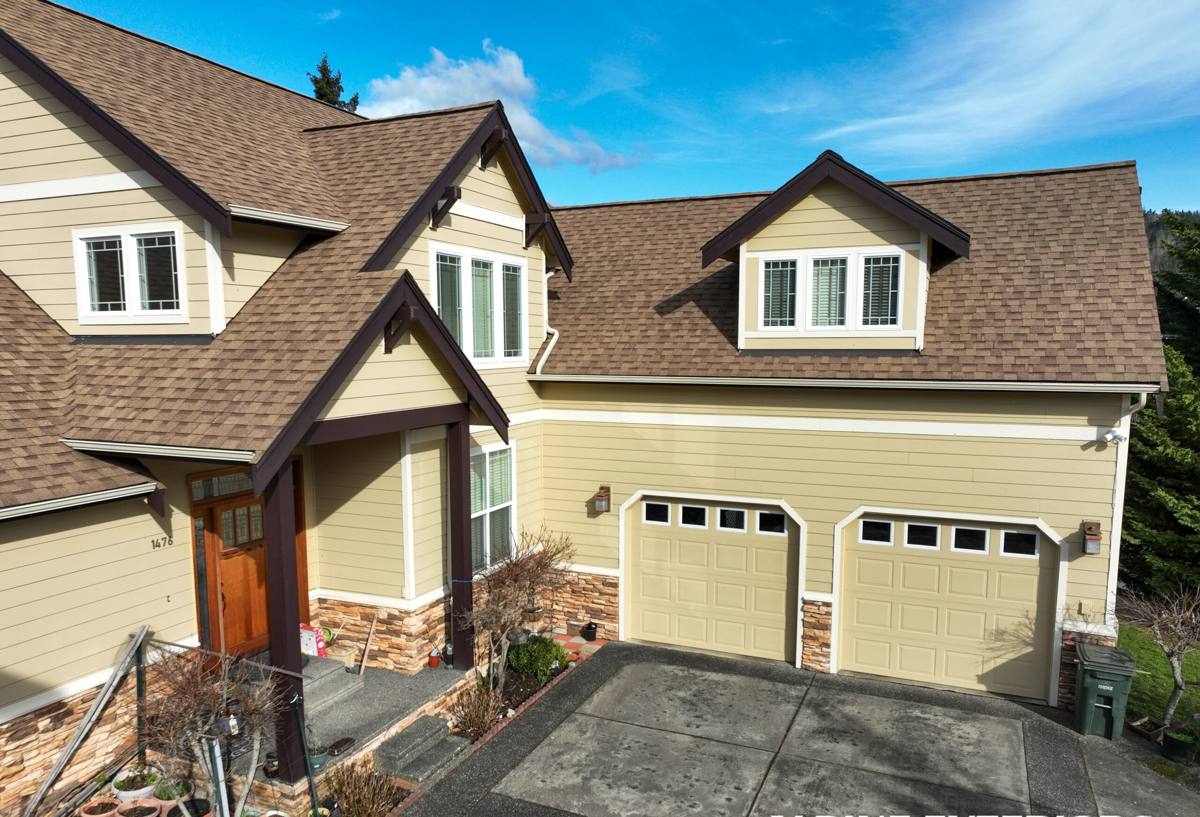
What Whatcom County's Weather Does to a Deck
Driving Rain and Standing Moisture
Whatcom County doesn't just get a lot of rain — it gets rain pushed sideways by wind often enough that water finds its way into places a calm rainfall never would. Ledger boards where the deck meets the house, joist hangers, and the underside of decking are common spots where driving rain gets past surface protection and settles in. Once wood stays wet for days at a time instead of drying out between storms, rot sets in even under paint or stain that still looks fine from a few feet away.
A Long Moss Season
Moss doesn't just make a deck look neglected — it holds moisture directly against the wood surface and blocks airflow, which speeds up decay underneath. In Nooksack's shaded, tree-lined lots, moss season can run most of the year rather than just the wet months. Left alone, moss growth on deck boards, stair treads, and railings also creates a slip hazard on top of the structural problem.
Salt Air and Metal Fasteners
Homes further inland like Nooksack get less direct salt exposure than waterfront properties, but wind off the Sound and Strait of Georgia still carries salt-laden moisture into Whatcom County during storm systems, and it accumulates over years. Fasteners, brackets, and hardware that aren't rated for coastal-adjacent exposure can corrode from the inside out — which is dangerous because corrosion at a joist hanger or ledger bolt often isn't visible until the connection has already weakened.
Common Deck Problems We Find in This Area
- Soft or spongy decking boards, especially near the house or in shaded corners that don't dry out between rains
- Rotted ledger board connections where the deck attaches to the house — often the single most safety-critical spot on the whole structure
- Rusted or corroded fasteners and joist hangers, sometimes with little visible surface damage until you look closely at the connection points
- Moss and algae buildup on boards, stairs, and railings that's more than cosmetic — it's trapping moisture
- Loose or wobbly railings and posts from wood movement and fastener failure over repeated wet-dry cycles
- Failed flashing at the ledger board, allowing water to run behind siding and into the house framing, not just the deck
- Warped, cupped, or split boards from repeated soaking and drying without adequate sealing
What a Correct Deck Repair Actually Involves
A repair that's done right starts with figuring out how much of the problem is surface-level and how much is structural. We don't assume a deck needs a full rebuild just because it looks rough, and we don't patch over a structural issue just to make it look better temporarily. That distinction matters, and it's the difference between a repair that lasts and one that fails again in a year or two.
Inspection First
Before any repair work starts, we check the ledger connection, the posts and footings, the joists underneath, and the condition of the decking and railings. A lot of deck problems in this climate hide underneath — a board can look fine on top while the joist beneath it has been sitting wet for years.
Address the Moisture Source, Not Just the Symptom
If a deck is rotting because water is pooling against the house or because flashing failed, replacing boards without fixing the water path just buys a few more years before the same repair is needed again. Correct repair means tracing moisture back to where it's getting in and fixing that first.
Match Materials to the Exposure
Fasteners, hardware, and connectors used in repairs should be rated for the wet, occasionally salt-influenced conditions found across Whatcom County — not just whatever is cheapest or most common. The same goes for any replacement lumber: it should be treated appropriately for ground or moisture contact where relevant, not just cosmetically matched to the existing boards.
Repair vs. Replacement: How We Decide
| Condition | Usually Repairable | Usually Needs Replacement |
|---|---|---|
| Decking boards | A few soft or split boards, isolated | Widespread soft spots or rot across most boards |
| Ledger board | Minor surface decay, structure sound | Soft wood at bolts, visible separation from house |
| Joists/framing | Localized rot near one connection | Multiple joists compromised or sagging |
| Railings/posts | Loose hardware, minor wobble | Rotted post bases or split railing structure |
| Fasteners/hardware | Isolated corrosion, easy to swap | Widespread rust affecting multiple connections |
The honest answer is that most decks we look at fall somewhere in between — sound overall structure with a handful of trouble spots. That's the ideal repair scenario: fix what's actually failing, reinforce what's borderline, and leave the sound parts of the deck alone rather than tearing into wood that doesn't need it.
Our Process for Deck Repair Work
- On-site inspection of decking, framing, ledger connection, posts, footings, and hardware condition
- Honest assessment of what's structural versus cosmetic, explained in plain terms — not upsold into a full rebuild if it isn't needed
- Moisture path review to identify where water is getting in, so the repair addresses the cause
- Repair or replacement of affected components using fasteners and materials suited to Whatcom County's wet, moss-prone conditions
- Final check of railings, stairs, and connections for stability and safety before we consider the job done
Maintenance That Extends the Life of a Repair
Even a well-executed repair benefits from basic upkeep in this climate. A little seasonal attention goes a long way toward not needing another repair call in a few years.
- Clear moss and debris from deck boards and between gaps at least once or twice a year, more often in heavily shaded areas
- Keep gutters and downspouts near the deck functioning so runoff isn't dumping directly onto or under the structure
- Reapply sealant or finish on the schedule appropriate for the product used — UV and moisture both break it down faster here than in drier climates
- Check railings and stair connections periodically for looseness, especially after a hard winter storm season
- Trim back vegetation that's shading the deck and keeping it from drying out between rains
Why Hire a Crew That Already Works in Whatcom County
Deck repair isn't the same job in every climate. A crew that mostly works in drier regions may not think twice about a moisture path that's obvious to someone who repairs decks in Nooksack and the surrounding Whatcom County area every season. We've seen how driving rain finds its way into ledger connections, how long moss season really lasts here, and which hardware holds up versus which corrodes early under this area's damp, occasionally salt-tinged conditions. That local pattern recognition is part of what makes a repair actually last instead of becoming a recurring expense.
We also know that homeowners in this area don't want to be sold a full deck replacement when a targeted repair will do the job — and we don't want to build a reputation doing that either. Straightforward assessments and repairs that address the real cause are what keep us working in this community.
Get a Straightforward Deck Assessment
If your deck in Nooksack has soft spots, moss buildup, loose railings, or you're just not sure how much life it has left, we're happy to take a look. Reach out for a free, no-pressure estimate — we'll tell you honestly what needs attention and what doesn't, using the form below.