 Whatcom County
 Windows in South Hill Take a Different Kind of Beating
South Hill sits inside a stretch of Whatcom County where marine air, sideways rain, and a moss season that seems to run half the year all work on a house at the same time. Windows are usually the first place that shows it. A window that would last decades in a dry inland climate can start failing in half that time here if it wasn't installed with this specific weather in mind. That's not a knock on any particular window brand — it's just what happens when a building product designed for a general market meets a genuinely wet, salt-tinged, low-sun coastal environment.
We install windows in this neighborhood regularly, and most of the calls we get aren't about a window that's simply old. They're about a window that's fogging between the panes, sticking in its frame, letting in a draft that wasn't there two winters ago, or showing soft, discolored trim underneath the sill. Almost all of that traces back to moisture finding a way in — either through the window unit itself or through a gap in the flashing and sealant around it.
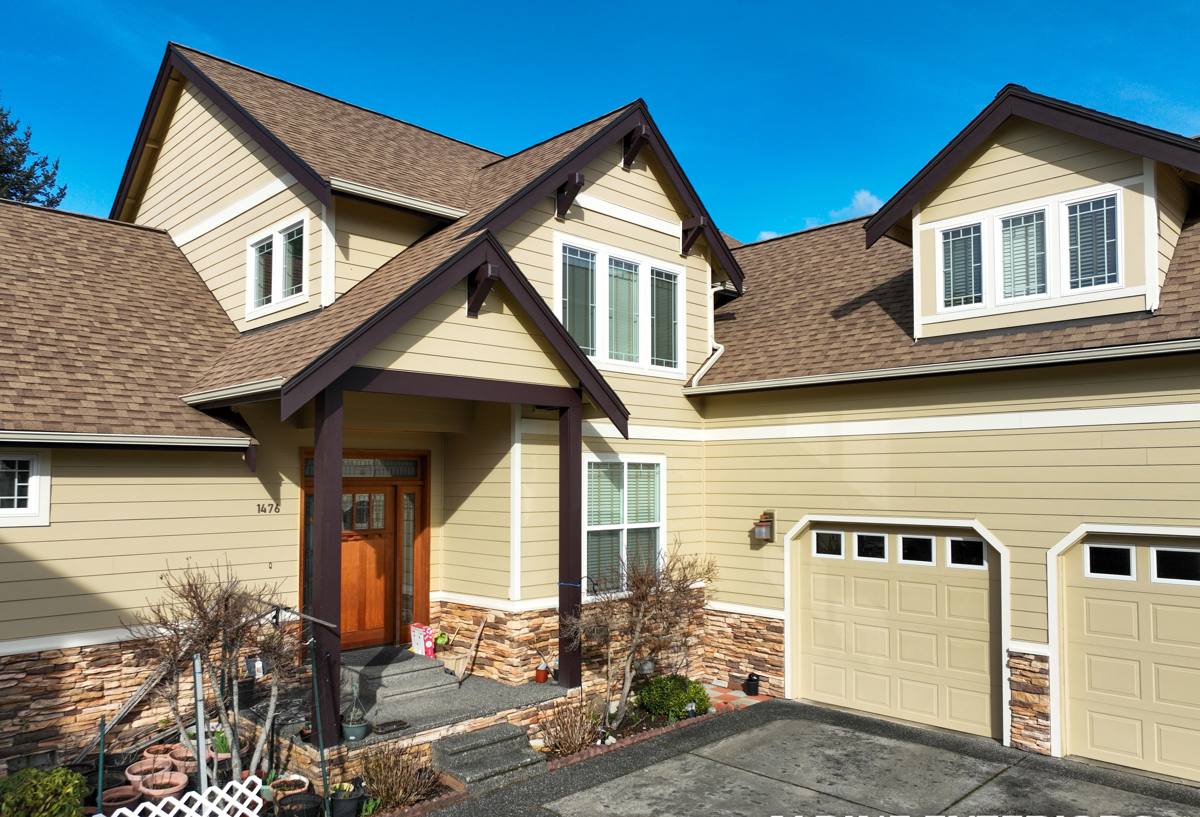
What Whatcom County Weather Actually Does to a Window Over Time
Salt Air
Even a few miles inland from the water, salt-laden air carries fine particulates that settle on glass, hardware, and metal components. Over years, this accelerates corrosion on hinges, cranks, and screws, and it can dull or pit aluminum cladding and hardware finishes faster than manufacturers' warranties usually anticipate for "standard" climates.
Driving Rain
Rain that comes in sideways, pushed by wind off the water, doesn't behave like rain falling straight down. It gets forced up under sills and behind trim by wind pressure, which means a window's water management — the flashing, the sill pan, the sealant joints — has to actually work, not just look finished. A window that's caulked shut but not properly flashed will often pass a casual inspection and still leak during the next windstorm.
Moss and Sustained Damp
Long stretches of overcast, damp weather keep wood trim and sills wet for days at a time instead of drying quickly between rains. That's exactly the environment moss, algae, and wood rot need. Once moss gets a foothold on a sill or a window's exterior casing, it holds moisture against the wood constantly, which speeds up decay underneath paint that still looks fine on the surface.
Signs a South Hill Home's Windows Need Attention
- Fogging or a visible haze between the panes of a double-pane window — the seal has failed and the gas fill is gone
- Soft or spongy wood at the sill, corners, or trim when pressed with a finger
- Visible moss, algae, or dark streaking on the exterior of the window or the wall just below it
- A window that's hard to open, close, or lock — frames can swell or warp with repeated wetting
- Drafts or a noticeable temperature difference near the window on a windy day
- Paint that's bubbling, peeling, or chalking on the exterior casing
- Higher heating bills than neighbors in similar homes, with no other obvious cause
Any one of these on its own might not mean a full replacement. Several together, especially soft wood plus fogging, usually means the window and the water management around it have been compromised for a while.
What a Correct Window Installation Actually Involves
The window unit itself is only part of the job. In this climate, how it's installed matters as much as which window is installed. A correct installation includes:
- Removing and inspecting the old opening — checking the sheathing and framing underneath for hidden rot before anything new goes in
- A proper sill pan that directs any water reaching the opening back out, rather than letting it sit against the framing
- Correctly lapped flashing tape integrated with the house wrap or building paper, so water sheds down and over, not behind
- Low-expansion foam or backer rod and sealant around the frame for both air sealing and a secondary moisture barrier
- Exterior sealant joints sized and placed to handle wind-driven rain, not just cosmetic caulking
- Shimming and fastening so the window operates smoothly and doesn't rack or bind as the house settles
Skipping any one of these steps is usually invisible for the first year or two — the window looks fine and operates fine. The problems show up three, five, or ten years later, often as hidden rot that costs far more to fix than it would have to install correctly the first time.
Choosing a Window for South Hill's Climate
There's no single "correct" window brand or material for every home — it depends on the house, the budget, and how exposed the opening is to wind and rain. But some frame materials handle this specific climate more predictably than others.
| Frame Material | How It Handles This Climate | Maintenance |
|---|---|---|
| Vinyl | Won't rot; handles moisture well; performance depends heavily on installation quality | Low — occasional cleaning |
| Fiberglass | Very stable in wet, temperature-swinging conditions; resists warping | Low |
| Aluminum | Durable but conducts cold and can corrode faster in salt air without a good finish | Moderate |
| Wood / wood-clad | Attractive but the most exposed to rot risk if any seal fails; needs the most careful detailing | Higher — periodic painting/sealing |
We're upfront with clients about this: wood-frame windows can look great and we'll install them if that's what a home calls for, but we make sure customers understand the ongoing maintenance commitment that comes with it in a climate this wet. For most South Hill homeowners who want to reduce future maintenance, vinyl or fiberglass frames with a quality low-E glass package are the more predictable long-term choice.
Glass Package Matters Too
Double-pane, argon-filled, low-E glass is the practical standard for this region — it cuts down on heat loss during our long damp winters and reduces condensation on the interior glass, which is a common complaint in older single-pane or poorly sealed homes here.
Our Installation Process
- On-site assessment — we look at each opening individually, not just the window count, because exposure varies window to window on the same house
- Honest recommendation — we tell you which windows genuinely need replacing now versus which can wait
- Removal and structural check — old windows come out and we inspect the framing and sheathing before anything goes back in
- Repair any hidden damage — if we find soft wood or old water damage, we address it before installing the new window, not after
- Install with proper flashing and sealing — sill pan, flashing tape, and sealant sequenced correctly for wind-driven rain
- Interior and exterior finish work — trim, caulking, and touch-up so the job looks finished inside and out
- Final walkthrough — every window opened, closed, and locked in front of you before we call the job done
Cost Factors Homeowners Should Know
Every home and opening is different, so we don't quote sight-unseen, but these are the main things that move the price on a South Hill window job:
| Factor | Why It Matters |
|---|---|
| Number and size of openings | Larger and more numerous windows increase material and labor cost |
| Frame material chosen | Vinyl and fiberglass generally cost less upfront than wood or wood-clad |
| Condition of existing framing | Hidden rot found during removal adds repair time before the new window goes in |
| Wall height and access | Second-story or hard-to-reach openings take more time and equipment |
| Glass and hardware options | Upgraded low-E coatings, grids, or locking hardware add cost |
Broadly, homeowners should expect a wide range depending on these factors — a single straightforward vinyl replacement is a very different job than a full-house window replacement with rot repair. We'll walk through your specific numbers during a free estimate rather than guess in the abstract.
Why a Crew That Already Works South Hill Makes a Difference
Window installation isn't complicated in dry weather. It's the wet, windy stretches that separate a good installation from one that fails quietly over a few years. A crew that regularly works this part of Whatcom County has already seen how driving rain off the water pushes water into openings that a textbook installation wouldn't necessarily account for, and how quickly moss and damp can hide developing rot behind trim that still looks presentable. That's the kind of judgment that comes from doing the work here repeatedly, not from a general installation checklist.
We also stand behind the installation itself, not just the window manufacturer's product warranty. If flashing or sealant work is ever the source of a problem down the line, that's on us to make right.
Simple Upkeep That Extends the Life of New Windows
- Rinse pollen, salt residue, and grime off glass and frames a couple times a year
- Keep gutters and downspouts clear so overflow doesn't run down onto window trim
- Brush moss or algae off sills and casing before it spreads, using a soft brush rather than a pressure washer aimed directly at seals
- Check exterior caulk lines once a year for cracking or gaps and have them touched up before winter
- Trim back vegetation that keeps a window shaded and damp longer than the rest of the house
If your South Hill home has windows that fog, stick, feel drafty, or show soft trim, it's worth having them looked at before another wet season adds to the damage. We offer free, no-pressure estimates — fill out the form below and we'll take a look and give you a straight answer on what your windows actually need.