 Whatcom County
 Storm Damage Roof Repair Built for Silver Beach Conditions
Silver Beach sits close enough to the water that homes here take a different kind of beating than roofs a few miles inland. Wind off Bellingham Bay drives rain sideways into ridge caps and fascia, salt air accelerates corrosion on fasteners and flashing, and the shaded, tree-lined lots that make this neighborhood pleasant also keep roofs damp longer after every storm. That combination is exactly what shortens roof life here, and it's why a storm-damage repair done for a Silver Beach home needs to account for more than just the obvious hole or missing shingles.
We work storm damage across Whatcom County, but Silver Beach gets its own approach because the exposure is different from a roof in Bellingham's flatter, more sheltered neighborhoods. A repair that only patches what's visible from the ground often misses the secondary damage that shows up as a leak two or three storms later.
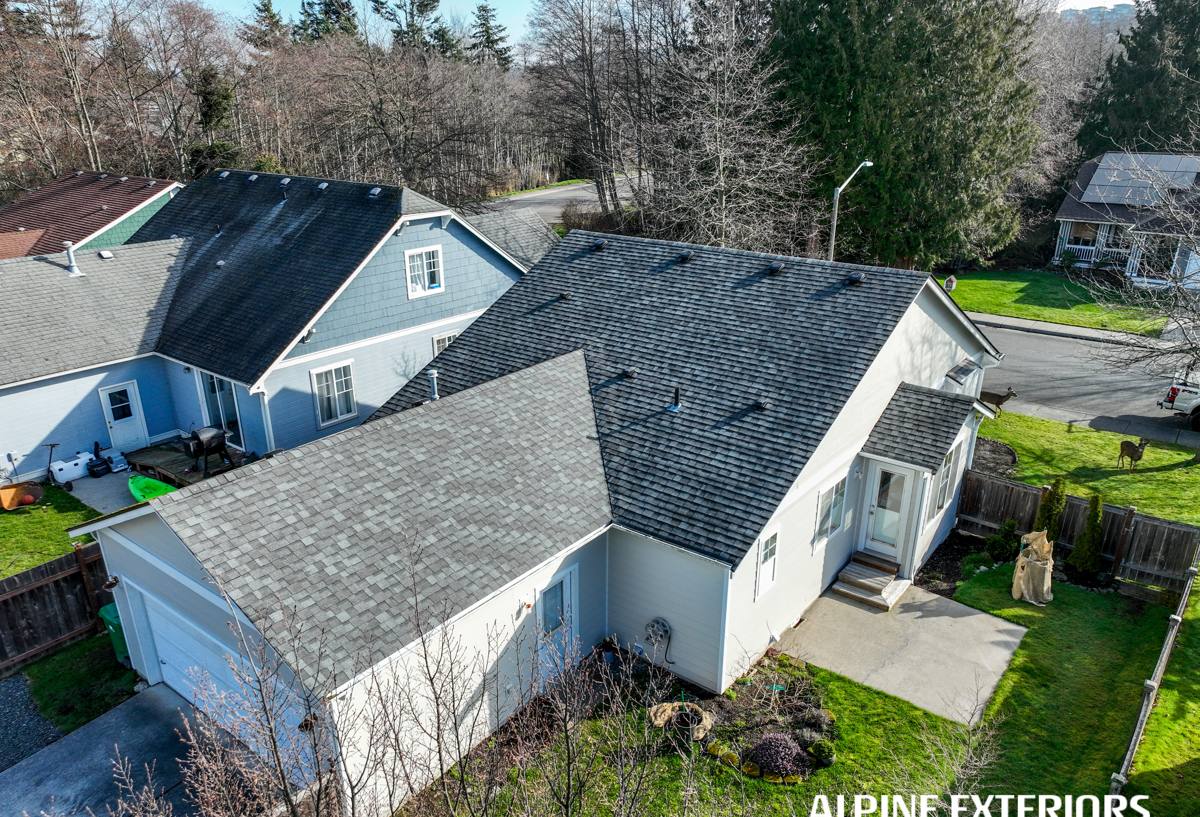
What Whatcom County Storms Actually Do to a Roof
Most of the storm damage we see in this area isn't from a single dramatic event — it's cumulative. A windstorm loosens a run of shingles or lifts a ridge cap just enough to break the seal, then the next heavy rain finds that opening. By the time a stain shows up on a ceiling, the underlying damage has usually been there for weeks.
Wind Damage
Gusty winter storms coming off the water can lift shingle tabs, crack or shift ridge caps, and pull flashing loose at chimneys and sidewalls. Wind damage is often patchy rather than uniform — one slope takes the brunt while the other looks fine, which is why a full-roof inspection matters even when only one area looks obviously hit.
Driving Rain and Wind-Driven Water Intrusion
When rain comes in at an angle instead of falling straight down, it can work under shingle edges, around vent boots, and into any gap in the flashing that would never leak in a calm rain. Homes exposed to open water or clearings, as many Silver Beach lots are, see this more than roofs tucked behind windbreaks.
Moss and Sustained Moisture
Whatcom County's long wet season and the shade common on Silver Beach lots create ideal moss conditions. Moss itself doesn't just sit on top of shingles — its root structure lifts shingle edges and holds water against the roof deck, which weakens shingles and accelerates granule loss. After a storm, moss-compromised areas are usually the first to show new damage because the shingles underneath were already softened.
Debris Impact
Falling branches and wind-blown debris are common in tree-lined neighborhoods. Impact damage can crack shingles, dent flashing, or puncture the roof deck outright — and it's not always visible unless someone gets up on the roof to look closely.
Signs a Silver Beach Homeowner Should Watch For After a Storm
You don't need to get on the roof yourself to catch early warning signs. Most homeowners can spot the first indicators from the ground or attic:
- Shingles or shingle granules collecting in gutters or on the ground after wind
- Visible gaps, curling, or missing shingles from the street or driveway
- Water stains or discoloration on ceilings, especially near chimneys, skylights, or exterior walls
- A musty smell in the attic, which often means moisture is getting in before it reaches the ceiling below
- Daylight visible through the roof deck when viewed from inside the attic
- Sagging or soft spots anywhere on the roof surface
- Moss buildup that's thicker or spreading faster than in previous seasons
None of these guarantee major damage, but any one of them is worth a professional look before the next storm rolls through.
What a Correct Storm Damage Repair Actually Involves
A quick patch job can stop an active leak, but it doesn't tell you whether the roof is sound underneath. Our process is built to find the actual extent of the damage before we touch a shingle.
1. Full-Roof Inspection, Not Just the Damaged Spot
We check the entire roof, not just the area you called about. Storm damage in one section often means stress on adjacent areas too, and we'd rather find a second problem now than have you call us back after the next windstorm.
2. Deck and Underlayment Check
If shingles have been missing or lifted for any length of time, the underlayment and roof deck underneath may already be wet or soft. Replacing shingles over a compromised deck just hides the problem — we check for soft spots and staining before deciding whether deck repair is needed.
3. Flashing and Penetration Review
Chimneys, vent pipes, skylights, and sidewalls are the most common leak points after a storm because flashing can shift or separate without any shingles being damaged at all. We check these areas specifically since they're easy to miss from a ground-level look.
4. Matching Repair Materials
Where possible, we match existing shingle color and style so the repair blends in rather than standing out as an obvious patch. When an exact match isn't available — which happens with older roofs — we'll tell you honestly and discuss options rather than let you find out after the work is done.
5. Moss and Debris Cleanup
If moss contributed to the damage, we address it as part of the repair, not as a separate afterthought. Leaving moss in place after a repair just sets up the same problem again next season.
Repair vs. Replacement: How We Help You Decide
Not every storm-damaged roof needs to be replaced, and we don't push replacement when a repair will genuinely hold up. The honest answer depends on the roof's age, how widespread the damage is, and what we find once we're actually up there.
| Factor | Favors Repair | Favors Replacement |
|---|---|---|
| Roof age | Under 10-12 years | Nearing or past expected lifespan |
| Extent of damage | Localized to one area or slope | Spread across multiple areas |
| Deck condition | Solid, no rot or soft spots | Soft, stained, or rotted decking found |
| Shingle condition elsewhere | Rest of roof still has good granule coverage | Widespread granule loss or brittleness |
| Moss history | Minor, manageable with cleaning | Long-term moss damage across the roof |
| Insurance situation | Damage doesn't meet claim threshold | Storm event qualifies for a claim covering full replacement |
We'll walk you through which of these apply to your roof specifically and give you a straight recommendation, not just an estimate for the most expensive option.
Working With Insurance on Storm Damage
Many storm damage repairs in Whatcom County involve a homeowner's insurance claim, especially after a named windstorm event. We can document damage with photos and a written assessment that your adjuster can use, and we're glad to meet an adjuster on-site if that's helpful. We don't inflate scope to chase a bigger payout, and we won't tell you that you need a full replacement if a targeted repair is the honest fix — our reputation in this area depends on that kind of straight dealing more than any single job does.
What a Repair Costs and What Drives the Price
Storm damage repair costs vary widely depending on what's actually found once we're on the roof. A localized shingle and flashing repair is a very different job from one that involves deck replacement or a full slope re-shingle. Rather than quote a number that won't mean much without seeing your roof, here's what actually moves the price:
- Size of the damaged area and number of separate locations affected
- Whether the roof deck needs partial replacement
- Roof pitch and accessibility — steep or high roofs take more time and equipment
- Shingle type and whether matching materials are readily available
- Extent of flashing work required around chimneys, vents, or skylights
- Amount of moss removal and cleanup needed
We give you a written estimate after the inspection, not before, so you're pricing the actual repair rather than a guess.
Why Local Storm Repair Experience Matters in Silver Beach
A crew that regularly works Silver Beach and the surrounding Whatcom County waterfront neighborhoods knows what to check for beyond the obvious damage — the flashing details that tend to fail in this exposure, how far moss typically spreads under shade cover here, and which materials actually hold up against salt air and driving rain year over year. That's the kind of judgment that only comes from doing this work repeatedly in this specific climate, not from a general storm-repair checklist. It also means faster response after a storm, since we're not routing crews in from outside the area.
Preventing the Next Round of Storm Damage
Once a storm-damage repair is done, a few simple habits reduce the odds of repeat damage:
- Keep gutters clear so water isn't backing up under the roof edge during heavy rain
- Trim overhanging branches that could drop debris in the next windstorm
- Schedule a roof check after any major wind event, even if nothing looks obviously wrong
- Address moss early in the season before it has time to root into shingles
- Have flashing checked every few years, since it's the most common quiet failure point
None of this eliminates storm risk on a home this close to the water, but it does catch small problems before they become expensive ones.
Get a Straight Assessment of Your Roof
If your Silver Beach home has taken storm damage, or you're just not sure whether recent weather did any harm, we're glad to come take a look. The estimate is free, there's no pressure to move forward, and you'll get an honest answer about what your roof actually needs — use the form below to get started.