 Whatcom County
 Why Window Installation in Sehome Isn't a One-Size-Fits-All Job
Sehome sits close enough to the water and to Whatcom County's marine weather patterns that windows here take a different kind of beating than windows in a dry inland climate. Salt-tinged air corrodes hardware and fasteners faster than manufacturers' warranties usually account for. Driving rain, pushed sideways by wind off the Sound, finds any gap in flashing or sealant that a sloppier install left behind. And the long stretch of grey, wet months that keeps moss growing on roofs and north-facing siding does the same thing to window sills, tracks, and trim — trapping moisture against wood and vinyl for weeks at a time.
None of that means Sehome homes need exotic products. It means the installation itself has to be done with the climate in mind — proper flashing sequencing, the right sealants, and attention to drainage details that matter more here than they would in a milder, drier region. A window that's "close enough" in a dry climate can fail here in a few wet seasons instead of a few decades.
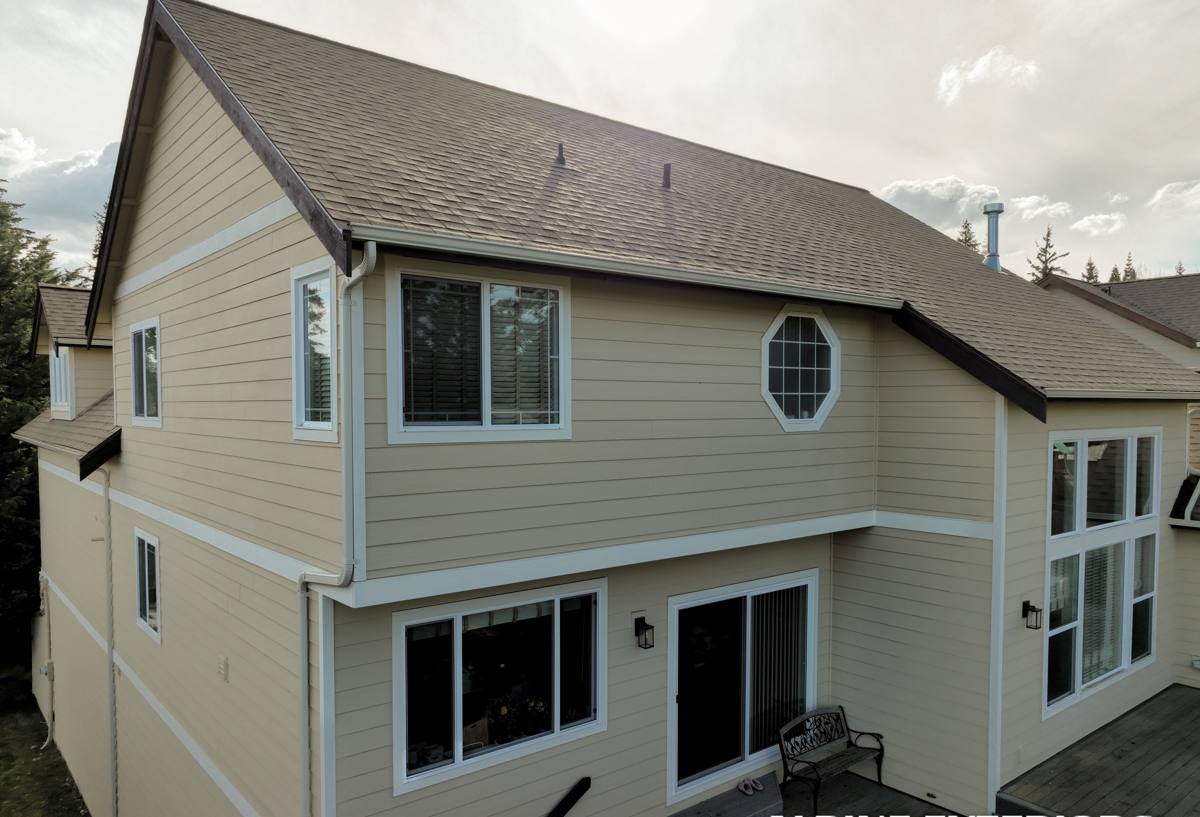
What Actually Goes Wrong With Windows in This Climate
Most of the window problems we get called out to look at in Whatcom County aren't due to bad windows — they're due to installation shortcuts or age catching up with older building practices. The patterns repeat:
- Wood sills and jambs that have soaked up moisture over years of driving rain and started to soften or rot, especially on the weather-facing side of the house
- Failed or missing flashing that lets water track behind the trim and into the wall cavity instead of shedding outward
- Condensation buildup on interior glass and sills during cold, damp stretches — often a sign of poor seals, single-pane glass, or inadequate ventilation rather than a defective window
- Hardware — locks, cranks, hinges — that's corroded or seized from years of salt-laden air, even on windows that otherwise still look fine
- Moss and organic buildup collecting in exterior tracks and sills, holding moisture against the frame and accelerating wear
Recognizing which of these you're dealing with matters, because a window that's structurally sound but has failed flashing needs a different fix than a frame that's actually rotted through.
What a Correct Window Installation Actually Involves
Window installation looks simple from the outside — pull the old one, set the new one, trim it out. The part that determines whether it lasts 5 years or 30 happens in between, and it's mostly invisible once the job is done.
The sequence that protects the wall behind the window
Before a new window ever goes in, the opening has to be prepped correctly: old caulk and failed sealant removed, the rough opening checked for square and for any hidden rot, and a proper water-resistive barrier and flashing tape integrated with the house wrap so water is directed out and down, never trapped behind the frame. This is the step that gets skipped or rushed on lower-quality jobs, and it's the one that actually prevents the rot and water intrusion problems that show up years later.
Fit, shimming, and insulation
The window has to be shimmed plumb and square, fastened per the manufacturer's specification (not just "wherever it feels solid"), and the gap between the frame and rough opening insulated properly — not overpacked with expanding foam, which can bow the frame, and not left as an open air gap that undermines the home's energy performance.
Exterior sealing and trim
The final exterior seal, trim, and any flashing pan at the sill are what stand between the house and Whatcom County's rain for the life of the window. Done right, water that reaches the window sheds away from the house. Done wrong, it's directed straight into the wall assembly.
Full-Frame vs. Insert Replacement
There are two basic approaches to replacing an existing window, and which one is right depends on the condition of what's already there.
| Approach | What it involves | Best fit |
|---|---|---|
| Insert (pocket) replacement | New window unit installed inside the existing frame, which stays in place | Existing frame is still sound, dry, and square — faster, less disruption to interior/exterior trim |
| Full-frame replacement | Old window and frame removed down to the rough opening, new unit installed with fresh flashing | Frame shows rot, water damage, or the opening needs to change size — the only real fix when moisture has already gotten behind the old frame |
In a lot of Sehome's older housing stock, we find the frame looks fine from inside but has taken on water damage at the sill or corners that an insert replacement would just seal back over. Part of an honest estimate is telling you which situation you're actually in before recommending one approach over the other.
Choosing Materials for a Marine Climate
Every window material has real trade-offs. None of them are "bad" — the right choice depends on your home, your budget, and how much upkeep you want to sign up for.
| Material | How it holds up here | Upkeep |
|---|---|---|
| Vinyl | Good moisture resistance, doesn't rot or corrode; solid standard choice for this climate | Low — occasional cleaning, no painting or sealing |
| Fiberglass | Very stable in temperature swings and moisture, holds paint well if you want a custom color | Low, similar to vinyl |
| Wood / wood-clad | Classic look, but the wood interior or components need protection from the moisture load our winters bring | Higher — periodic finishing/sealing to keep moisture out of the wood |
| Aluminum | Durable but conducts cold and can condense more readily in our damp winters unless thermally broken | Moderate — watch for condensation and check seals |
We'll walk through these honestly on a home-by-home basis rather than pushing one product line — the goal is a window that performs for your specific exposure, not the highest-margin option.
Energy Performance and Washington's Code Requirements
Washington State's energy code sets minimum performance requirements for replacement windows, generally referenced by U-factor (how well the window resists heat loss). In a climate with as many grey, cool months as Whatcom County has, a window's U-factor has a real, ongoing effect on comfort and heating costs — not just a paperwork requirement. Look for windows with sealed insulated glass units and low-E coatings rated for this climate zone, and be wary of any bid that doesn't reference code-compliant products at all. Part of doing this job correctly is making sure what's installed clears code, not just fits the opening.
Our Process, Start to Finish
- On-site assessment — we look at existing frames, sills, and flashing conditions, not just measure glass sizes, so we can flag hidden rot or water damage before work starts
- Honest recommendation — insert vs. full-frame, material options, and a clear explanation of why, based on what we actually find
- Written estimate — scope, materials, and timeline spelled out, no vague allowances
- Weather-aware scheduling — openings aren't left exposed during a stretch of driving rain; we plan around Whatcom County's weather rather than around ours
- Correct installation — proper flashing integration, shimming, insulation, and sealing at every opening
- Cleanup and walkthrough — debris hauled off, operation of every window checked with you before we call it done
Cost Factors Worth Understanding
Window installation pricing varies enough by project that a single flat number isn't honest. What actually moves the price:
| Factor | Why it matters |
|---|---|
| Insert vs. full-frame | Full-frame replacement involves more labor, flashing work, and often trim repair |
| Frame/wall condition | Hidden rot found once the old window is out can add scope — we flag likely issues at the estimate, not after the fact |
| Material chosen | Vinyl, fiberglass, and wood-clad carry different material costs |
| Window size and count | Larger units, custom shapes, or a whole-house project change labor and material needs |
| Access and height | Second-story or hard-to-reach openings take more time and equipment |
As a broad range, straightforward insert replacements tend to run less per window than full-frame jobs with flashing and trim repair — but the only way to know your actual number is a site visit, which is why we don't quote sight-unseen.
Why a Crew That Already Works Sehome Matters
A window installer who works across Whatcom County regularly has already seen how this specific climate treats window openings over time — where moss tends to build up, which sills fail first, how driving rain behaves against different house orientations. That's not something you can substitute with a generic national install checklist. It also means we're not guessing about local permit requirements or showing up without the right materials for our own weather. When we stand behind an installation here, it's because we've already seen how that installation holds up in this exact climate, on homes like yours, not just in a manufacturer's spec sheet.
Simple Upkeep That Extends the Life of Your New Windows
- Clear tracks and sills of moss, leaves, and debris a couple of times a year, especially heading into the wet season
- Check exterior caulking annually for cracking or gaps and have it addressed before the rainy months set in
- Wipe down hardware periodically to slow salt-air corrosion, especially on homes closer to open water
- Watch for condensation between panes — it usually signals a seal failure worth addressing under warranty, not a cleaning issue
- Keep gutters and downspouts clear so runoff isn't sheeting directly down onto window heads
If you're weighing whether it's time to replace aging windows or want a straight answer on what a correct installation should cost for your home, we're glad to take a look. Fill out the form below for a free, no-pressure estimate — we'll tell you what we actually see, not just what's easiest to sell.