 Whatcom County
 New-Construction Windows in Sunnyland: Why the Install Method Matters
Sunnyland sits close enough to Bellingham Bay that salt-laden air, wind-driven rain, and a moss season that can run eight months out of the year are just part of owning a home here. When you're building new or adding onto a house in this neighborhood, the windows you choose matter less than how they're installed. New-construction windows go in before the siding does, with a nailing flange that gets integrated directly into the wall's weather-resistive barrier. Get that sequence wrong and you've built a leak path into the framing that won't show up until years later, usually as rot, stained drywall, or a musty smell in a wall cavity.
We install new-construction windows on builds and additions throughout Whatcom County, and Sunnyland's mix of older lots being redeveloped and newer infill construction means we see both straightforward new builds and trickier additions tying into existing framing. Either way, the same principles apply: the window opening has to be built right, flashed right, and sequenced right with the rest of the building envelope.
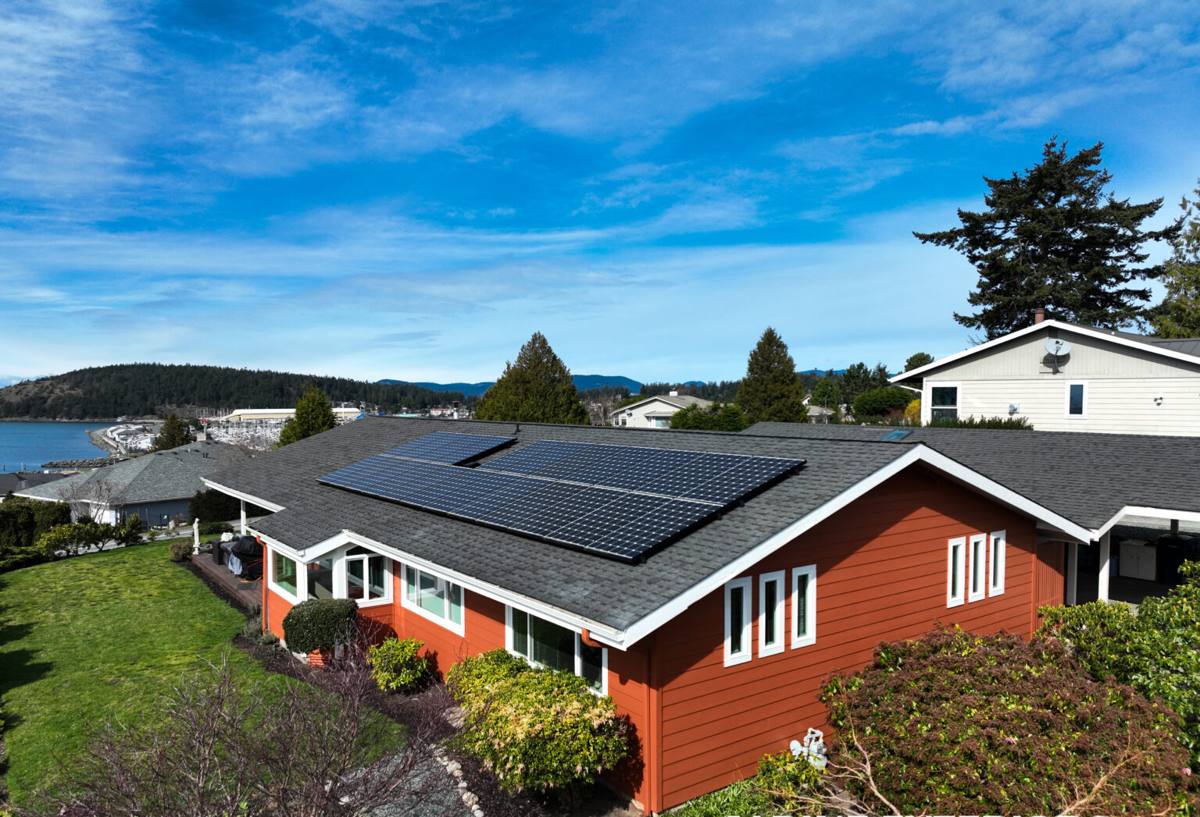
What Sunnyland's Climate Actually Does to a Window Install
It's easy to think of window installation as the same job everywhere. It isn't. A few things about this part of Whatcom County change how we approach it:
- Salt air accelerates corrosion on fasteners, flashing tape adhesives, and lower-grade hardware. Materials rated for inland climates can underperform here faster than their warranty numbers suggest.
- Driving, wind-driven rain means water doesn't just fall on a window — it gets pushed sideways and upward under sills and around trim. Flashing details that rely on gravity alone aren't enough.
- A long moss and mildew season keeps exterior surfaces damp for extended stretches, which is hard on any gap, seam, or sealant joint that wasn't done correctly the first time.
None of this means Sunnyland needs exotic products. It means ordinary, well-proven products installed with the right flashing sequence and sealant details, done in a way that assumes water will reach the wall — because eventually, on this coast, it will.
New-Construction vs. Replacement Windows: Why We Don't Treat Them the Same
A lot of homeowners lump all window work together, but new-construction and replacement windows solve different problems.
New-Construction Windows
These have a nailing flange around the perimeter and are designed to be set into a rough opening before the exterior wall covering (siding, house wrap details, trim) is finished. They tie directly into the wall's water management system — the weather-resistive barrier, flashing tape, and sill pan all overlap in a specific shingle-style order so water sheds outward at every layer.
Replacement (Retrofit) Windows
These are built to fit inside an existing frame, without disturbing the surrounding siding. They're the right call for a remodel where the exterior isn't being opened up. Installing a retrofit window where a new-construction window belongs — or vice versa — creates gaps in the water management plan and voids most manufacturer installation warranties.
For new builds and additions in Sunnyland, new-construction windows are almost always the correct product, because the wall is already open and there's no reason to skip the full flashing integration.
What a Correct New-Construction Window Install Involves
The window unit itself is often the easiest part of this job. The sequence around it is where quality is won or lost.
The Order of Operations
- Rough opening is checked for square, level, and correct dimensions — undersized or racked openings cause stress on the frame and poor operation later.
- A sloped sill pan is installed at the bottom of the opening so any water that gets past the window has somewhere to go besides the framing.
- The weather-resistive barrier is cut and folded into the opening before the window goes in, not patched around it afterward.
- The window is set, shimmed level and plumb, and fastened through the nailing flange per the manufacturer's schedule.
- Flashing tape is applied in the correct shingle-lap order — sides first, then the top — so every layer drains onto the one below it.
- Insulation and air-sealing are done around the interior of the frame without over-packing, which can bow the frame and affect how the window operates.
- Exterior trim and siding are installed last, tying into the flashing system rather than covering over gaps.
Pre-Siding Inspection Checklist
Before we let a wall get closed up with siding, we check for:
- Sill pan sloped correctly toward the exterior, with no low spots
- No exposed nailing flange or fastener heads left uncovered by flashing tape
- Flashing tape fully adhered with no wrinkles, gaps, or fishmouths at corners
- Weather-resistive barrier lapped correctly above and around the window, not just butted against it
- Window operates smoothly (opens, closes, and locks) after fastening — a sign it wasn't racked during install
- Interior shim spaces insulated without bowing the jamb
Choosing Materials for a Salt-Air, Wet Climate
Frame material and glass package both affect how a window holds up here. There's no single "best" choice for every project — it depends on budget, sun exposure, and how close the home sits to the water.
| Frame Material | How It Handles This Climate | Maintenance | General Cost Tier |
|---|---|---|---|
| Vinyl | Good moisture resistance, doesn't rust or corrode from salt air | Low — occasional cleaning | Lower to mid |
| Fiberglass | Excellent dimensional stability and corrosion resistance, holds paint well | Low | Mid to higher |
| Wood-clad | Attractive interior finish, but end grain and cladding seams need attention in wet, salty air | Higher — periodic inspection of cladding seams and interior finish | Higher |
Whatever frame material you choose, we pay close attention to hardware and fastener corrosion resistance — stainless or coated fasteners hold up far better than standard-grade hardware once salt air gets into the mix over a few winters.
Glass Packages
Double-pane with a Low-E coating is standard for most new construction in this region and performs well against our marine climate. Triple-pane adds cost and weight but can be worth it on north- or west-facing walls that take the brunt of driving rain and wind, or for homeowners prioritizing sound and energy performance. We'll talk through what actually makes sense for your specific elevations rather than upselling triple-pane across the board.
Our Process for Sunnyland New-Builds and Additions
We coordinate window installation as one step in a larger building envelope sequence, not an isolated task:
- Walkthrough and measure: We confirm rough opening sizes against the window order before anything is fabricated, catching framing errors early instead of at delivery.
- Timing with your framer or GC: Windows go in after the weather-resistive barrier is up and before siding starts. We work directly with your builder's schedule so there's no gap where the structure sits exposed.
- Install and flash: Full sill pan, flashing tape, and WRB integration as described above — no shortcuts, no "we'll seal it with caulk later."
- Documentation: We note flashing details as they're completed, which matters if a manufacturer warranty ever needs supporting documentation for a claim.
- Final check: Every window is tested for smooth operation and tight seal before we sign off, ahead of siding crews closing up the wall.
Timing: Why Sequencing With Your Build Schedule Matters
New-construction windows only perform correctly if they're installed at the right point in the build. Too early, and the opening may still be out of tolerance from framing settling. Too late, or out of sequence with the weather barrier, and crews end up patching flashing after the fact instead of building it in layer by layer. In a climate that gets sustained wind-driven rain for months at a time, an out-of-sequence install is exactly the kind of shortcut that turns into a warranty claim two or three winters down the road. We'd rather adjust our schedule to hit the right window in your build timeline than rush a step that can't be undone once siding covers it.
Why Hire a Crew That Already Works in Sunnyland
Window installation standards exist on paper everywhere, but how they hold up depends on whether the installer has actually dealt with this specific coastal, high-moisture environment. A crew that mostly works drier inland climates may not think twice about a flashing detail that matters a great deal a few miles from Bellingham Bay. Working regularly in Whatcom County means we're not guessing about how salt air treats hardware over time, how much driving rain a west-facing wall actually takes in a January storm, or how long moss season really runs here — we're accounting for it in every install, because we see the callbacks when it's skipped.
If you're planning a new build or addition in Sunnyland and want windows installed the right way the first time, we're happy to walk your plans, talk through material options, and give you a straightforward, no-pressure estimate using the form below.