 Whatcom County
 Why Storms Hit Roofs Harder in the Samish Area
Homes in and around Samish sit close to open water and low-lying farmland, which means wind off the bay hits roofs with less to slow it down than it would in a more built-up neighborhood. Add in Whatcom County's long wet season, and you get a combination that's tough on roofing: salt-laden air that speeds up corrosion on fasteners and metal flashing, driving rain that finds its way into any gap a normal roof would shrug off, and months of shade and moisture that let moss and lichen take hold on north-facing slopes. None of this means a roof is doomed — it means storm damage repairs here need to account for conditions a roofer working fifty miles inland doesn't have to think about.
A single windstorm rarely destroys a roof outright. More often it creates small openings — a lifted shingle tab, a bent flashing edge, a cracked pipe boot — that let water in slowly over the following weeks of rain. By the time a stain shows up on a ceiling, the damage has usually been building for a while. That's the pattern we plan repairs around.
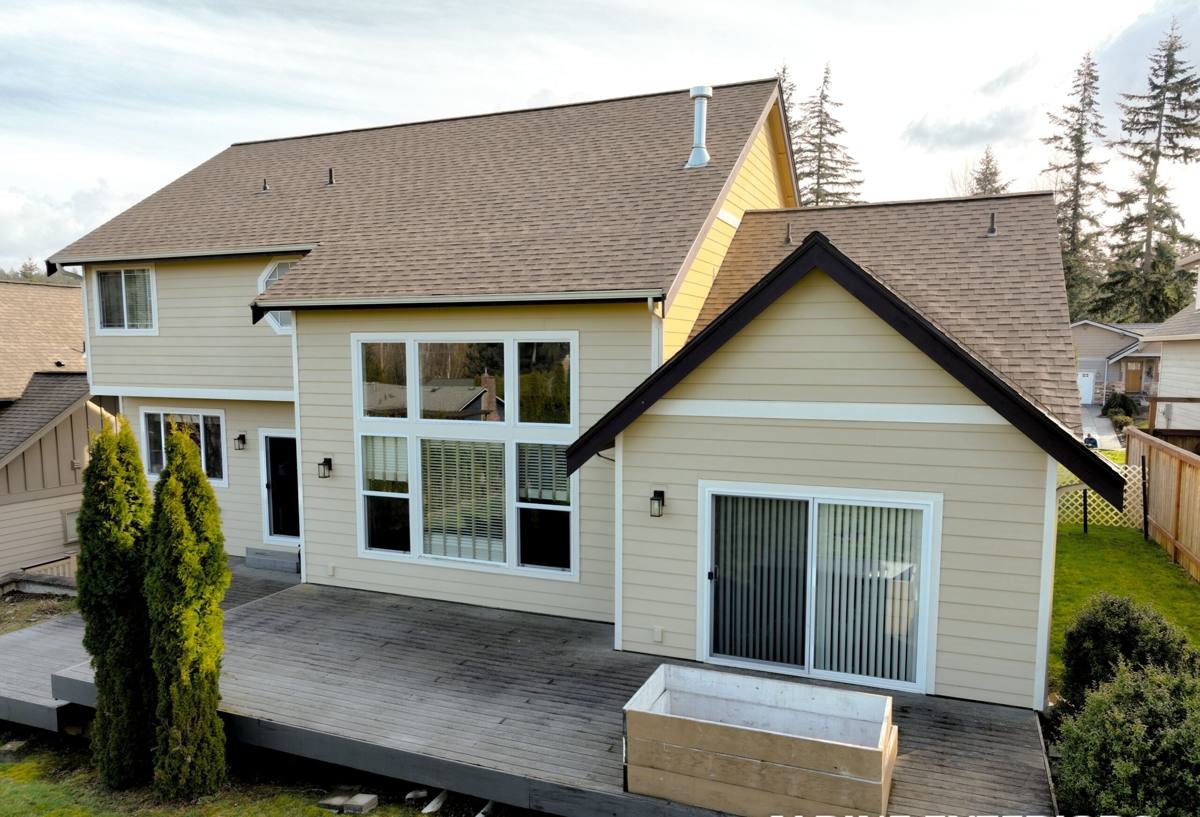
What Actually Counts as Storm Damage
Not every roof problem after a storm is obvious, and not everything that looks dramatic is actually serious. Storm damage generally falls into a few categories:
- Wind uplift — shingles or shakes lifted, cracked, or torn loose along their sealant line, often on the windward or upper slopes
- Impact damage — bruising, punctures, or cracked material from falling branches or wind-blown debris
- Flashing failure — bent, loosened, or separated flashing around chimneys, vents, skylights, and valleys, which is where most storm leaks actually start
- Granule loss — asphalt shingles stripped of their protective granule layer by wind and hail, which shortens their remaining life even if they don't leak yet
- Wind-driven rain intrusion — water forced sideways under shingles or through vents during a strong gust, rather than dripping straight down
Each of these needs a different repair approach, which is why a proper inspection matters more than a quick look from the driveway.
The Damage You Can't See From the Ground
Signs You Can Spot Yourself
After a storm, it's worth walking the perimeter of the house and looking for shingle pieces or granules in the gutters and flower beds, obvious gaps or discoloration on the roof plane, sagging sections, and any new water stains on interior ceilings or in the attic. These are useful clues, but they only tell part of the story.
Signs That Need a Closer Look
Loosened flashing, cracked sealant around penetrations, and soft or spongy decking underneath the roofing material usually aren't visible from ground level at all. Moss growth can also hide damage — a mat of moss holding moisture against shingles can mask a soft spot or a failed seal underneath it. This is the main reason we recommend an actual roof-level inspection after any significant windstorm, rather than relying on what's visible from the yard.
Repair, Partial Replacement, or Full Replacement?
Not every storm-damaged roof needs to come off. The right call depends on the roof's age, how widespread the damage is, and what condition the decking underneath is in. Here's how we generally think through it:
| Situation | Typical Approach | Key Factor |
|---|---|---|
| Isolated damage, roof under 10-12 years old | Targeted patch or shingle/flashing replacement | Decking is sound, matching material is available |
| Damage concentrated on one slope or section | Full-section (slope) replacement | Keeps the rest of the roof's remaining life intact |
| Widespread damage across multiple slopes | Full roof replacement | Patchwork repairs would cost more over time than one job |
| Roof near the end of its expected lifespan | Full replacement recommended even for moderate damage | Repair cost vs. remaining service life doesn't pencil out |
| Hidden decking rot found during inspection | Deck repair required before any new roofing goes on | Rotted decking won't hold fasteners or a warranty |
We'll walk you through which category your roof falls into and explain the reasoning — including when a smaller repair is genuinely the better choice, not just the cheaper one.
How We Handle a Storm Damage Repair Call
Our process is built around getting a leak stopped fast without cutting corners on the permanent fix:
- Inspection. We get on the roof (not just the ladder from the yard) and check the decking, flashing, and shingle condition, not just the obvious damage point.
- Temporary protection. If there's an active leak or exposed decking, we tarp or dry-in the area the same visit so the interior of the home isn't taking on more water while a permanent repair is scheduled.
- Written scope and estimate. You get a clear explanation of what's damaged, what needs to happen, and an honest range before any work starts.
- Repair. We match materials as closely as possible, replace flashing rather than just re-sealing it where it's failed, and check surrounding areas that took wind exposure even if they didn't fail yet.
- Final check. We confirm the repair is watertight and walk you through what we did and what to watch for going forward.
Documenting the Damage for Your Insurance Claim
Storm damage is one of the more common insurance-covered roof issues, but claims move faster and get approved more cleanly when the damage is documented properly. We take photos of the damage before and during repair, note the likely cause (wind, impact, etc.), and can provide a written estimate that adjusters typically ask for. We don't handle the claim itself — that's between you and your insurer — but we make sure you're not showing up to that conversation without solid documentation.
Materials and Methods That Hold Up in Salt Air and Moss Season
Given the exposure homes in this area deal with, we set a higher bar for a few specific details than a bare-minimum repair would use:
- Fasteners and flashing: we use corrosion-resistant fasteners and flashing metal, since standard-grade hardware degrades faster in salt-influenced air near the water
- Ice and water shield at eaves and valleys: a self-adhering waterproof membrane in the areas most prone to wind-driven rain and ice damming, even though hard freezes are rare here — the driving rain risk alone justifies it
- Proper flashing details: flashing that's step-, counter-, or kick-out flashed correctly rather than gapped and caulked, since caulk is a maintenance item, not a permanent fix
- Ventilation: balanced intake and exhaust ventilation, since a poorly ventilated attic traps moisture that feeds moss and rot from the underside of the roof, not just the top
None of this is about pushing a premium product for its own sake — it's about matching the repair to conditions the roof will actually face here for the next 10-20 years, not the conditions a generic repair spec assumes.
Post-Storm Roof Checklist for Samish Homeowners
After the next windstorm or heavy rain event, it's worth running through this before deciding whether to call anyone:
- Check gutters and the ground around the house for shingle fragments or a heavy amount of granules
- Look at the attic (if accessible) for new damp spots, daylight coming through the decking, or musty odor
- Note any new ceiling stains, even small ones, and when they appeared relative to the storm
- Check for visibly lifted or missing shingles, especially on upper and windward-facing slopes
- Look at flashing around the chimney, vents, and skylights for anything bent or separated
- Check downspouts are still securely attached and draining away from the foundation
- If moss is heavy on part of the roof, note it — it can hide damage underneath and should be addressed as part of any repair, not left in place
Why a Crew That Already Works in Samish Matters
A roofer who works this specific area regularly knows what wind exposure looks like on a waterfront or open-farmland property versus a sheltered lot, has a feel for which roof types and ages are common in the neighborhood, and isn't guessing at how the local climate affects material choices. That local familiarity shows up in faster, more accurate inspections and fewer surprises mid-repair. It also matters for response time — after a widespread windstorm, crews get booked up fast, and a company already routing through Whatcom County can usually get to a leaking roof sooner than one dispatching from farther away.
Reducing Storm Damage Before the Next Season
A little maintenance goes a long way toward keeping the next storm from turning into a repair call. Clearing moss before it builds into thick mats, trimming back branches that overhang the roofline, keeping gutters clear so wind-driven rain has somewhere to go, and having flashing and sealant checked every couple of years all reduce the odds of storm damage becoming interior water damage. We're happy to point out these kinds of maintenance items during any inspection, whether or not there's active storm damage to repair.
If you've had recent storm damage — or just want a roof checked over before the next one rolls through — we're glad to come take a look. The estimate is free, there's no pressure to move forward, and you'll get a straight answer about what your roof actually needs.