 Whatcom County
 Storm Damage Roof Repair for South Hill Homes
South Hill sits close enough to the water and high enough on the terrain that it catches the full range of what Whatcom County weather can throw at a roof. Salt-laden air off the bay accelerates corrosion on flashing and fasteners, driving rain during winter storms finds every weak seam, and a long, damp moss season works year-round to lift shingles and hold water against the deck. None of these are dramatic, one-time events — they're a slow accumulation of stress that eventually shows up as a leak, a soft spot, or a section of roofing that's simply worn out ahead of schedule. Storm damage repair in this neighborhood isn't just about patching what a single windstorm tore loose; it's about recognizing what our specific climate does to a roof over time and repairing it in a way that holds up to the next round.
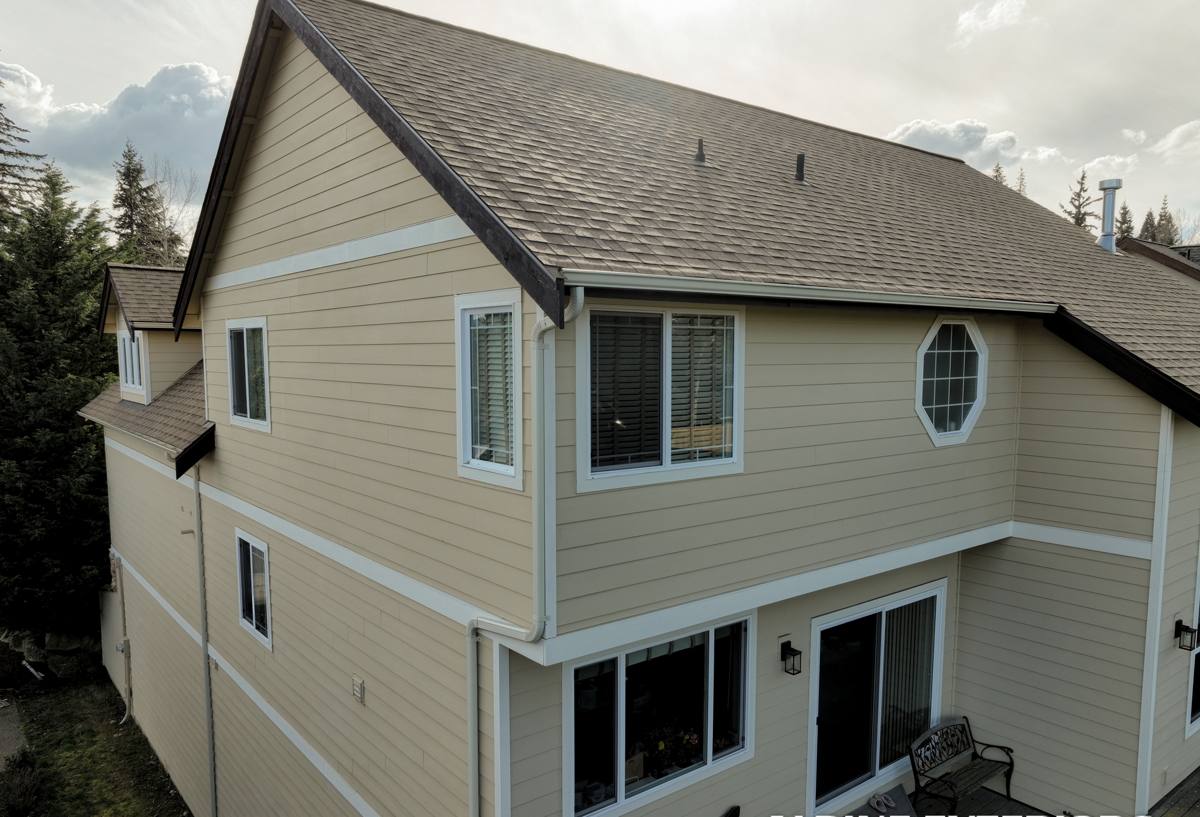
What Whatcom County Weather Does to a Roof
Every region has its own roofing challenges, and it's worth being specific about ours instead of treating storm damage as generic wear and tear.
Wind and Wind-Driven Rain
Storm systems moving through the area bring sustained wind combined with heavy rain, and that combination is more damaging than either one alone. Wind lifts the edge of a shingle or shake just enough to let rain drive underneath it sideways, past the point where gravity alone would keep water out. Once that seal is broken, it rarely reseals itself — the underlayment beneath takes on water with every subsequent storm, whether or not the wind is blowing at the time.
Salt Air and Corrosion
Being close to the water means metal components — nail heads, flashing, gutter fasteners, vent caps — corrode faster here than they would inland. A fastener that rusts through doesn't announce itself; it just quietly stops doing its job, and the first sign is often a leak that seems to come from nowhere near any visible damage.
Moss and Moisture Retention
Whatcom County's mild, wet climate supports moss growth for a large part of the year, especially on north-facing slopes and shaded sections of roof. Moss holds moisture against the roofing material long after a storm has passed, which softens shingles, degrades the surface granules that protect against UV and weather, and can work its way under tabs and shakes at the edges. A roof that looks intact from the ground can have real damage happening under a mat of moss that's been there for months.
Signs Your South Hill Roof Has Storm Damage
Storm damage isn't always obvious from the ground, and waiting for a visible leak inside the house usually means the damage has been progressing for a while. Watch for:
- Shingles that are curled, cracked, creased, or missing altogether after a wind event
- Granules collecting in gutters or at the base of downspouts
- Soft or spongy spots when the roof is walked (a job for a professional, not a homeowner)
- Water stains on ceilings or upper walls, especially after a storm
- Flashing around chimneys, vents, or skylights that's visibly bent, lifted, or separated
- Thick moss growth, particularly in shaded areas or on the north-facing slope
- Daylight visible through the roof deck from inside the attic
- Gutters pulling away from the fascia or sagging under debris and standing water
Any one of these on its own might be minor. Several together, or any sign paired with an interior leak, means the roof needs a proper inspection soon rather than at the next convenient opportunity.
What a Correct Storm Damage Repair Actually Involves
A rushed or surface-level repair after a storm is one of the most common ways homeowners end up paying for the same problem twice. Doing it correctly means going past the visible damage to check what's underneath it.
Full Assessment, Not Just the Obvious Spot
Wind and water damage rarely stay contained to one tidy area. A missing shingle at the ridge can mean water has already tracked several feet down the underlayment before showing up as a stain somewhere else entirely. A correct repair starts with checking the surrounding field, not just the spot that's visibly broken.
Underlayment and Deck Condition
If water has been getting underneath the roofing material, the underlayment and the deck itself need to be evaluated. Replacing shingles over compromised underlayment or a soft deck just hides the problem until it resurfaces, usually as a bigger repair.
Flashing Integrity
Flashing around penetrations — chimneys, vents, skylights, valleys — fails more often than the field of the roof itself, especially in a salt-air environment where fasteners corrode. Any storm repair should include a check of nearby flashing, not just the shingles.
Matching Materials
Repairs should use materials that match the existing roof in type, weight, and, where possible, color, so the repaired section performs the same as the rest of the roof and doesn't stand out as an obvious patch.
Our Process: From Inspection to Finished Repair
Homeowners in South Hill can expect a consistent process, whether the damage came from a single storm or built up gradually:
- Inspection: We walk the roof (weather permitting) and check the attic from inside, looking for both the source of any visible leak and any secondary damage nearby.
- Documentation: We record what we find with clear photos and notes, which also serves as useful documentation if an insurance claim is involved.
- Honest scope: We tell you plainly whether this is a repair, or whether the damage or the roof's overall age points toward a larger project. We don't pad a simple repair, and we don't undersell one that needs more attention.
- Repair: We remove and replace only the affected materials, check and reseal or replace flashing as needed, and confirm the underlayment and deck are sound before closing the roof back up.
- Cleanup and walkthrough: We clear debris, check gutters and downspouts for storm-related damage, and walk you through what was done.
Repair vs. Replacement: How We Make That Call
Not every storm-damaged roof needs to be replaced, and not every one can be reasonably repaired. The decision usually comes down to a few practical factors.
| Factor | Favors Repair | Favors Replacement |
|---|---|---|
| Extent of damage | Localized to one section or slope | Widespread across multiple areas |
| Roof age | Well within expected service life | Already near or past typical lifespan |
| Deck condition | Solid, no rot or soft spots | Soft decking or signs of long-term water intrusion |
| Material availability | Matching materials still available | Discontinued product, poor color/profile match |
| Underlying moss/moisture history | Isolated, recently addressed | Long-term, widespread moss with underlying granule loss |
We'll walk you through where your roof falls on these points rather than defaulting to whichever option is more profitable for us. A well-executed repair on a sound roof is money well spent; a repair patched onto a roof that's genuinely at the end of its life is money spent twice.
Materials and Methods We Use for Whatcom County Conditions
Given the salt air, rain, and moss exposure common throughout the region, we favor a few practices as our standard approach rather than the minimum required:
- Corrosion-resistant fasteners and flashing metals suited to a coastal-influenced climate
- Properly lapped and sealed underlayment at valleys and eaves, where wind-driven rain causes the most trouble
- Ice-and-water shield style membrane at vulnerable transition points, even outside the coldest months, because wind-driven rain behaves similarly to ice damming in how it forces water backward under roofing
- Careful attention to ventilation, since a roof that traps moisture underneath is more prone to both moss growth and premature material failure
We're straightforward about tradeoffs when they exist. Some materials look appealing but carry maintenance demands or moisture-handling quirks that don't hold up as well here as they might in a drier climate, and we'd rather explain that upfront than install something that causes callbacks in two years.
Insurance and Storm Claims: What Homeowners Should Know
Many storm repairs in this area are at least partially covered by homeowners insurance, particularly after a documented wind event. A few practical points:
Insurance adjusters look for clear evidence tying damage to a specific storm date, which is why prompt inspection and documentation matter — damage that's allowed to sit for months is harder to attribute to a single event. We provide photo documentation and a written scope of damage that homeowners can submit with a claim, and we're happy to walk an adjuster through what we found. We don't inflate estimates to match a policy limit, and we won't tell you damage is storm-related if it's actually the result of ordinary wear, age, or maintenance neglect — that's not a service to you, and it can jeopardize a legitimate claim down the line.
Why a Crew That Already Works in South Hill Matters
A roofer who works regularly in this specific neighborhood has a practical advantage over one who doesn't: familiarity with how the local mix of hillside exposure, tree cover, and coastal-influenced weather actually plays out on real roofs, rather than working from general assumptions. That translates into faster, more accurate diagnosis — knowing what moss patterns typically mean in this climate, what flashing failures tend to look like after a few winters of wind-driven rain, and which materials hold up reliably given the salt air and moisture here. It also means a contractor who has a reputation to maintain with neighbors, not just a one-time job to close out.
Reducing Future Storm Damage: A Homeowner's Checklist
Between storms, a few maintenance habits go a long way toward reducing how much damage the next one causes:
- Keep gutters and downspouts clear so wind-driven rain has somewhere to go
- Trim back tree limbs that overhang the roof, which reduces both impact risk and shaded moss growth
- Remove moss buildup before it spreads, using methods that don't damage the roofing surface
- Have flashing and roof penetrations checked periodically, not just after visible damage appears
- Address small leaks immediately rather than waiting for a bigger storm to make them obvious
- Schedule a roof inspection after any significant wind event, even if nothing looks obviously wrong
If a recent storm has you wondering about the condition of your roof, or you've noticed any of the warning signs above, we're glad to take a look. We offer free, no-pressure estimates for South Hill homeowners — just fill out the form below and we'll get in touch to schedule a time that works for you.